

Elon Musk Starlink Iran Free Service 2026: Defying the Great Firewall from Space
Elon Musk's Starlink provides free internet to Iran in 2026 to bypass a total communications blackout. Explore the tech battle between satellites and state jamming.
The stars are talking where the ground has gone silent. As a nationwide communications blackout grips Iran amid escalating protests, Elon Musk's Starlink is reportedly stepping in. The satellite internet service is bypassing Tehran's digital iron curtain by offering free connectivity to citizens, marking a significant escalation in the tech-driven tug-of-war over information control.
Impact of Elon Musk Starlink Iran Free Service 2026
According to sources familiar with the matter cited by Bloomberg, SpaceX hasn't publicly confirmed the move, but users on the ground are already accessing the network. Mahmood Amiry-Moghaddam, director of Iran Human Rights, told Al Jazeera that this access is "pivotal" for sharing proof of the government crackdown, where death tolls are estimated to have reached at least 2,571 by activists.
Jamming and the Sovereign Tech Battle

Tehran isn't sitting idly by. Analysis from Cloudflare shows that the current shutdown is more geographically extensive than previous incidents. Iranian authorities have reportedly begun jamming Starlink signals and confiscating terminals, labeling them as "electronic espionage items." This marks a departure from past blackouts, which focused primarily on domestic ISP control.
A Global Pattern of Satellite Intervention
Iran is just one front in Starlink's expanding geopolitical footprint. The company is also providing free broadband to Venezuela through February 3, 2026, following recent political unrest there. Despite its humanitarian potential, the International Communication Union (ITU) previously ruled in favor of Iran, declaring Starlink's unauthorized deployment illegal, highlighting the tension between corporate power and national sovereignty.
Authors
Related Articles
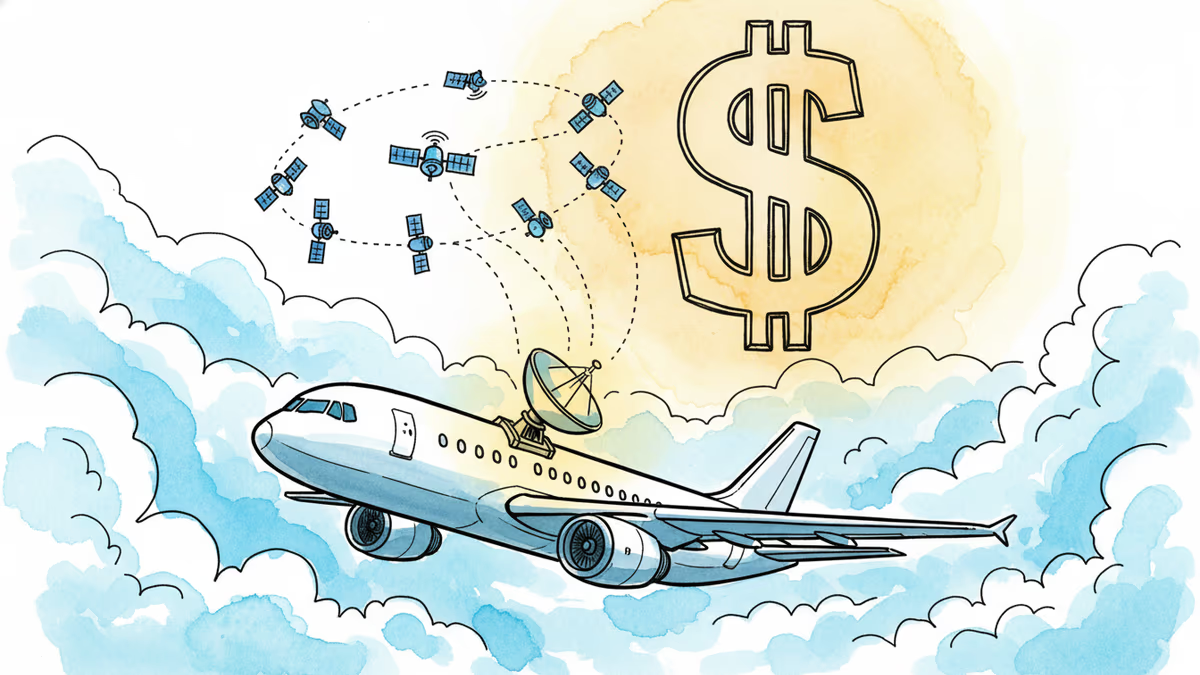
American Airlines just signed Starlink for 500+ aircraft. It's not just about faster inflight internet — it's a calculated move in the run-up to what could be the largest IPO in history.

SpaceX's upgraded Starship V3 completed its first test flight, deploying 20 Starlink simulators but losing the Super Heavy booster. With an IPO weeks away, the stakes just got higher.
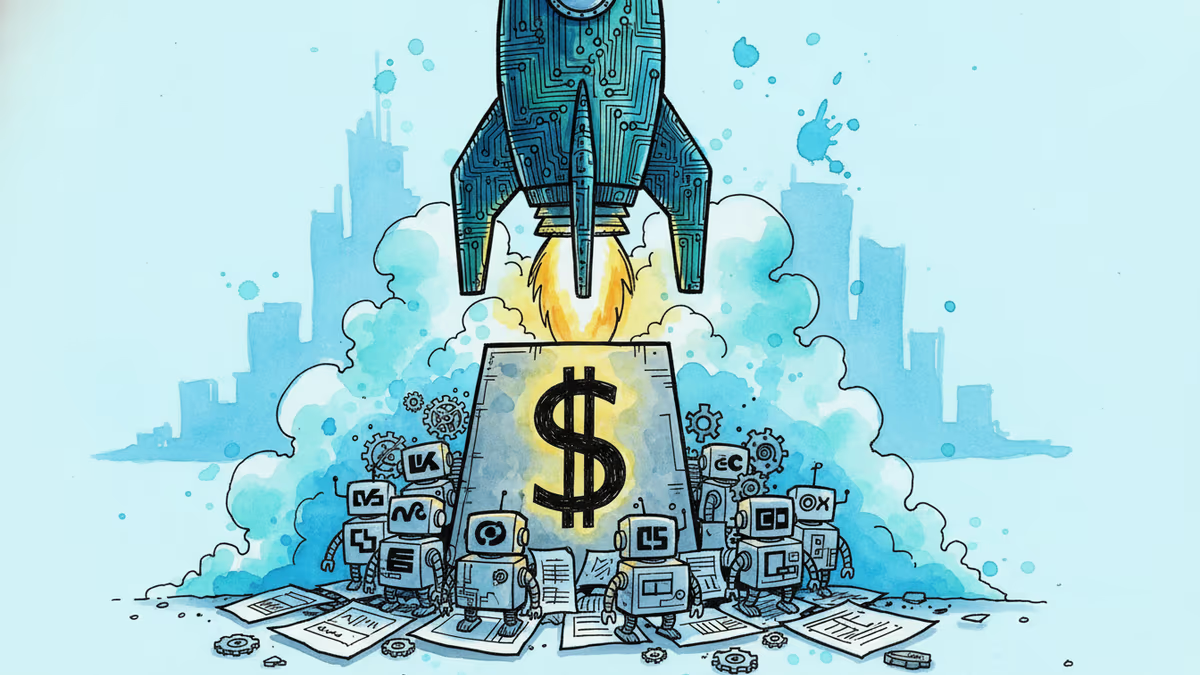
SpaceX's IPO filing puts AI at the center, claiming a $26.5 trillion market opportunity. But can Grok compete with OpenAI and Anthropic for enterprise customers?
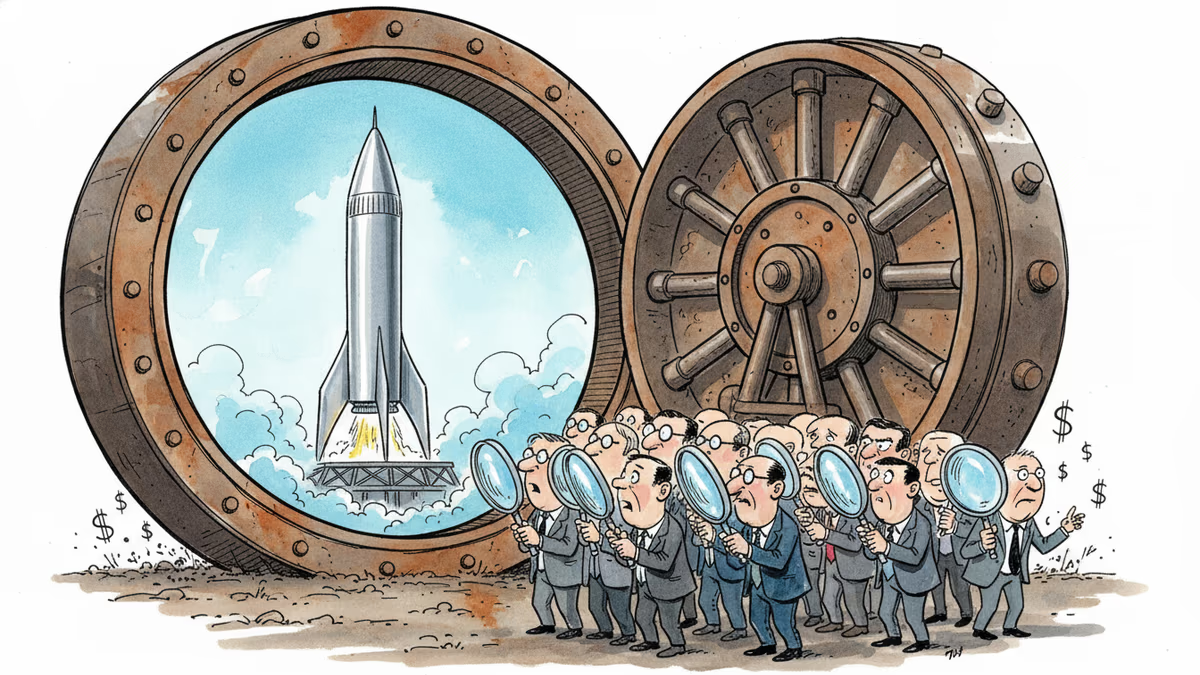
SpaceX filed a nearly 400-page S-1 with the SEC, targeting an IPO as early as June 12. Here's what the filing reveals—and what it doesn't.
American Airlines just signed Starlink for 500+ aircraft. It's not just about faster inflight internet — it's a calculated move in the run-up to what could be the largest IPO in history.
SpaceX's upgraded Starship V3 completed its first test flight, deploying 20 Starlink simulators but losing the Super Heavy booster. With an IPO weeks away, the stakes just got higher.
SpaceX's IPO filing puts AI at the center, claiming a $26.5 trillion market opportunity. But can Grok compete with OpenAI and Anthropic for enterprise customers?
SpaceX filed a nearly 400-page S-1 with the SEC, targeting an IPO as early as June 12. Here's what the filing reveals—and what it doesn't.
Thoughts
Share your thoughts on this article
Sign in to join the conversation