

Starlink Direct to Cell: The End of the Dead Zone and the Birth of a Telecom Behemoth
Starlink's Direct to Cell service isn't just about ending dead zones. It's a strategic move to become a global telecom backbone, challenging incumbents.
The Lede: Why This Is More Than Just a Feature Launch
SpaceX isn't just launching another service with Starlink's 'Direct to Cell' capability. It's activating a global, space-based cellular network that fundamentally redefines the concept of mobile coverage. By turning its satellite constellation into orbital cell towers, Starlink is making a strategic play to become the universal backbone for global telecommunications. For any executive in tech, logistics, or finance, this is a signal: the competitive landscape for connectivity is being redrawn from 250 miles above the Earth, and it will impact everything from IoT deployments to the valuation of traditional carriers.
Why It Matters: The Ripple Effects of Ubiquitous Connectivity
The immediate promise is the elimination of mobile dead zones for everyday consumers. However, the second-order effects are far more profound.
- The Telco 'Frenemy': Mobile Network Operators (MNOs) like T-Mobile and Rogers are partnering with Starlink to plug coverage gaps, a marketing coup that allows them to claim 100% coverage. In the short term, it's a symbiotic relationship. In the long term, Starlink is positioning itself as a potential global competitor that owns the most difficult part of the infrastructure: the sky.
- A Trillion-Dollar IoT Unlock: The true silent giant here is the Internet of Things. Previously, connecting sensors in remote agricultural fields, on shipping containers crossing the Pacific, or in mining operations was prohibitively expensive and complex. Direct to Cell promises a cheap, ubiquitous, low-bandwidth connection for billions of devices, unlocking operational efficiencies and data streams that were previously impossible.
- Redefining Emergency Services: While Apple's Emergency SOS introduced the concept, Starlink aims to commoditize it. This will have a massive impact on public safety, disaster response, and remote adventure, making reliable communication a baseline expectation, not a luxury.

The Analysis: Vertical Integration as the Ultimate Moat
The satellite-to-phone market is not without competitors. AST SpaceMobile, backed by AT&T and Vodafone, is building massive satellites to achieve a similar goal. But SpaceX's advantage is overwhelming and rooted in a decade of strategic execution: vertical integration.
SpaceX builds the rockets (Falcon 9), launches them at an unrivaled cadence and cost, and manufactures the satellites (Starlink) in-house. This gives them an unprecedented ability to iterate, deploy, and control the entire value chain. While AST SpaceMobile must contract for launches, SpaceX treats rocket launches as a routine operational task. This speed and cost advantage is a formidable, almost insurmountable, competitive moat.
Furthermore, Starlink's partnership strategy is a masterstroke. By signing up major national carriers, it gains immediate access to millions of users and, crucially, licenses to use the carriers' terrestrial spectrum. It's not fighting the telcos; it's co-opting them to build its global network before they realize it has become the foundation they all depend on.
PRISM's Take: The Ambient Connectivity Layer Is Here
Starlink's Direct to Cell is not merely an incremental improvement; it represents a paradigm shift. We are witnessing the creation of an ambient, global connectivity layer. Just as GPS became a silent, ubiquitous utility that spawned industries from Uber to precision agriculture, this persistent satellite-based network will become the substrate for the next wave of innovation.
The initial roll-out will be slow, starting with low-bandwidth text. But make no mistake: this is the beginning of the end for the concept of being 'offline'. The strategic implications are immense, raising new questions about digital sovereignty, the centralization of critical infrastructure, and the immense power wielded by a single company that will soon control the world's most advanced launch, satellite, and now, cellular network.
Authors
Related Articles
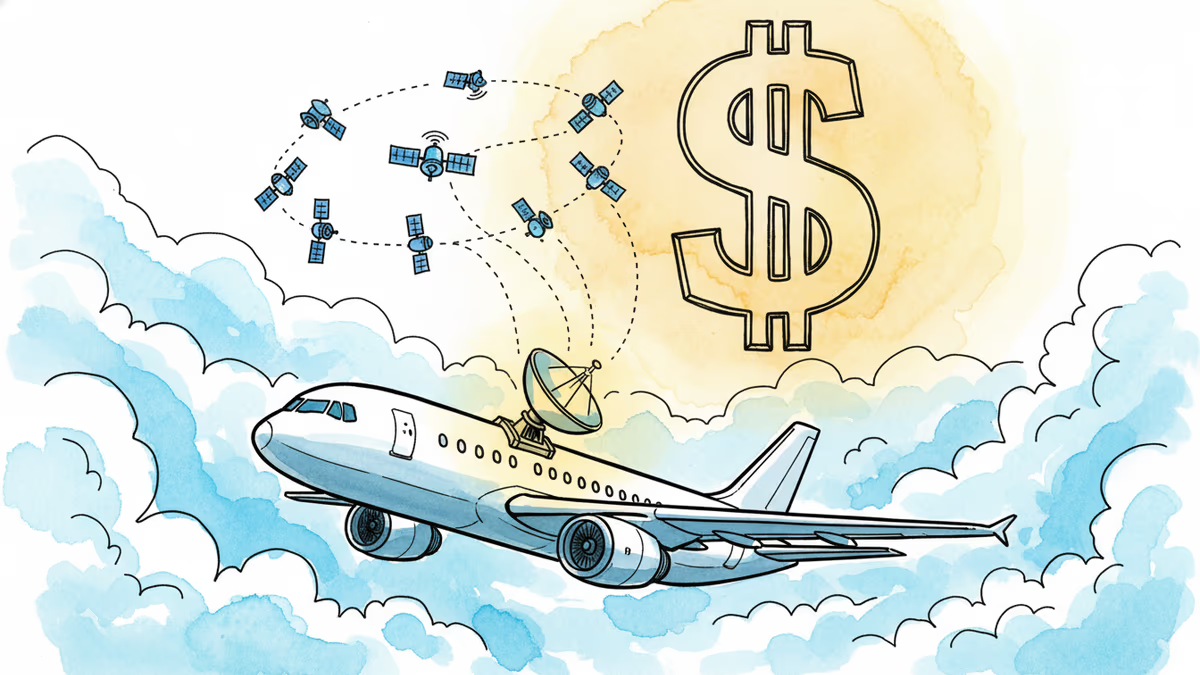
American Airlines just signed Starlink for 500+ aircraft. It's not just about faster inflight internet — it's a calculated move in the run-up to what could be the largest IPO in history.

SpaceX's upgraded Starship V3 completed its first test flight, deploying 20 Starlink simulators but losing the Super Heavy booster. With an IPO weeks away, the stakes just got higher.
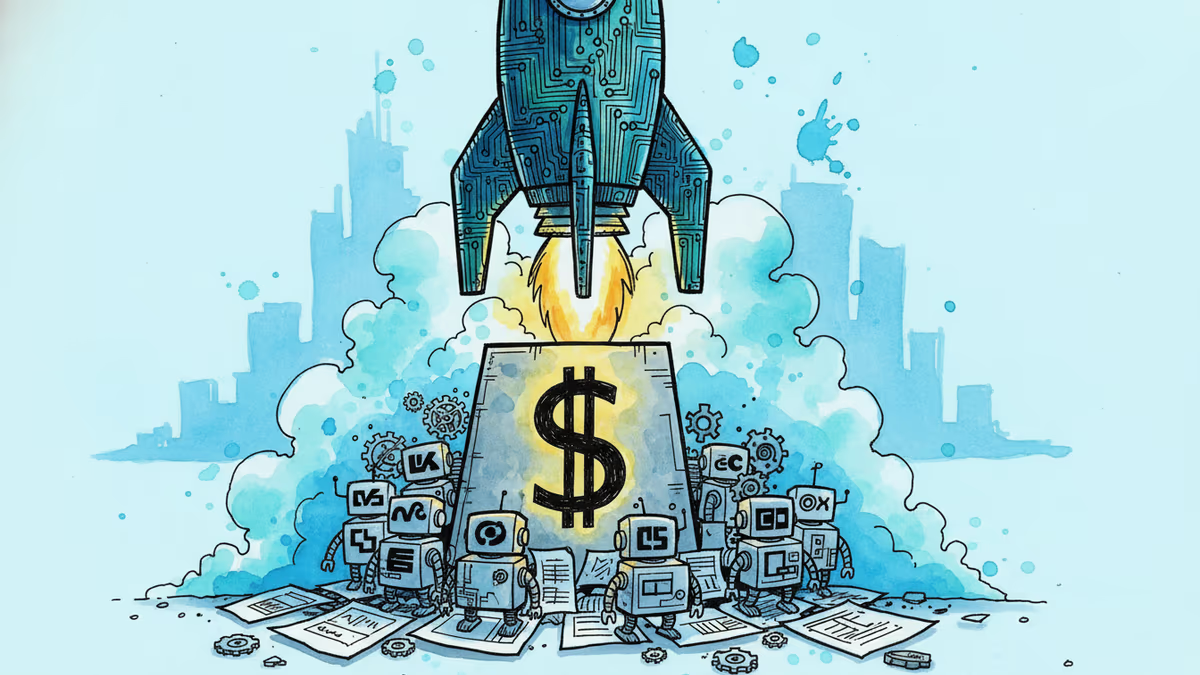
SpaceX's IPO filing puts AI at the center, claiming a $26.5 trillion market opportunity. But can Grok compete with OpenAI and Anthropic for enterprise customers?
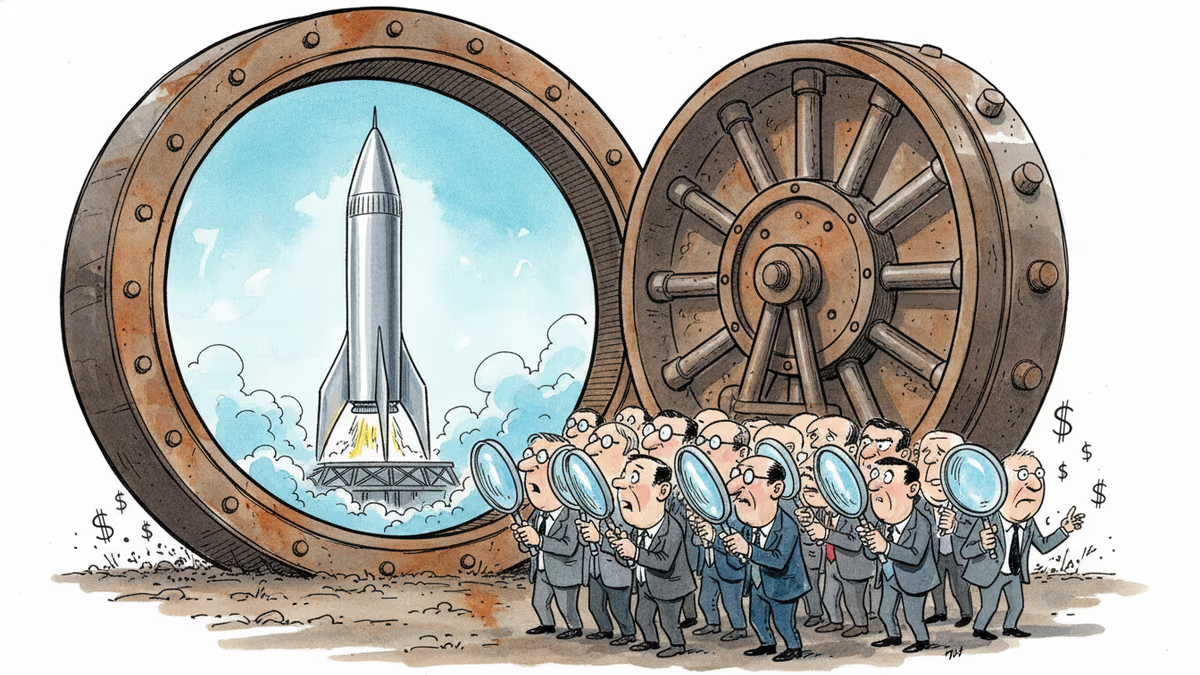
SpaceX filed a nearly 400-page S-1 with the SEC, targeting an IPO as early as June 12. Here's what the filing reveals—and what it doesn't.
American Airlines just signed Starlink for 500+ aircraft. It's not just about faster inflight internet — it's a calculated move in the run-up to what could be the largest IPO in history.
SpaceX's upgraded Starship V3 completed its first test flight, deploying 20 Starlink simulators but losing the Super Heavy booster. With an IPO weeks away, the stakes just got higher.
SpaceX's IPO filing puts AI at the center, claiming a $26.5 trillion market opportunity. But can Grok compete with OpenAI and Anthropic for enterprise customers?
SpaceX filed a nearly 400-page S-1 with the SEC, targeting an IPO as early as June 12. Here's what the filing reveals—and what it doesn't.
Thoughts
Share your thoughts on this article
Sign in to join the conversation