
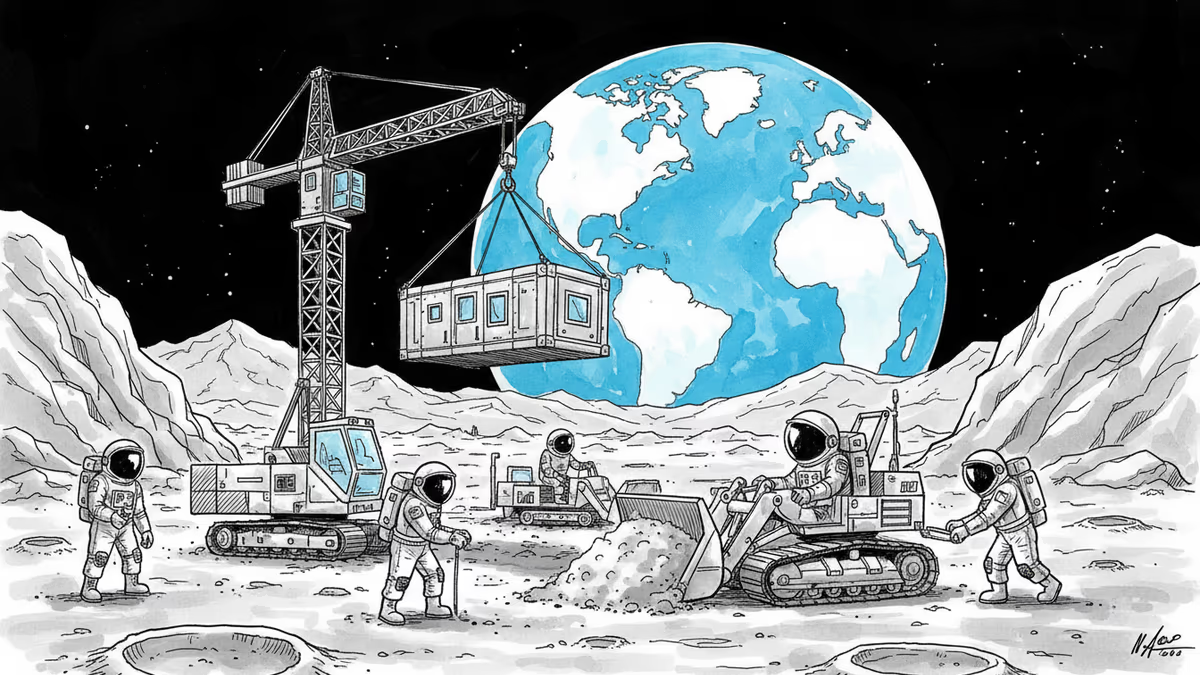
The Moon Rush: Why SpaceX and NASA Are Betting Big on Lunar Real Estate
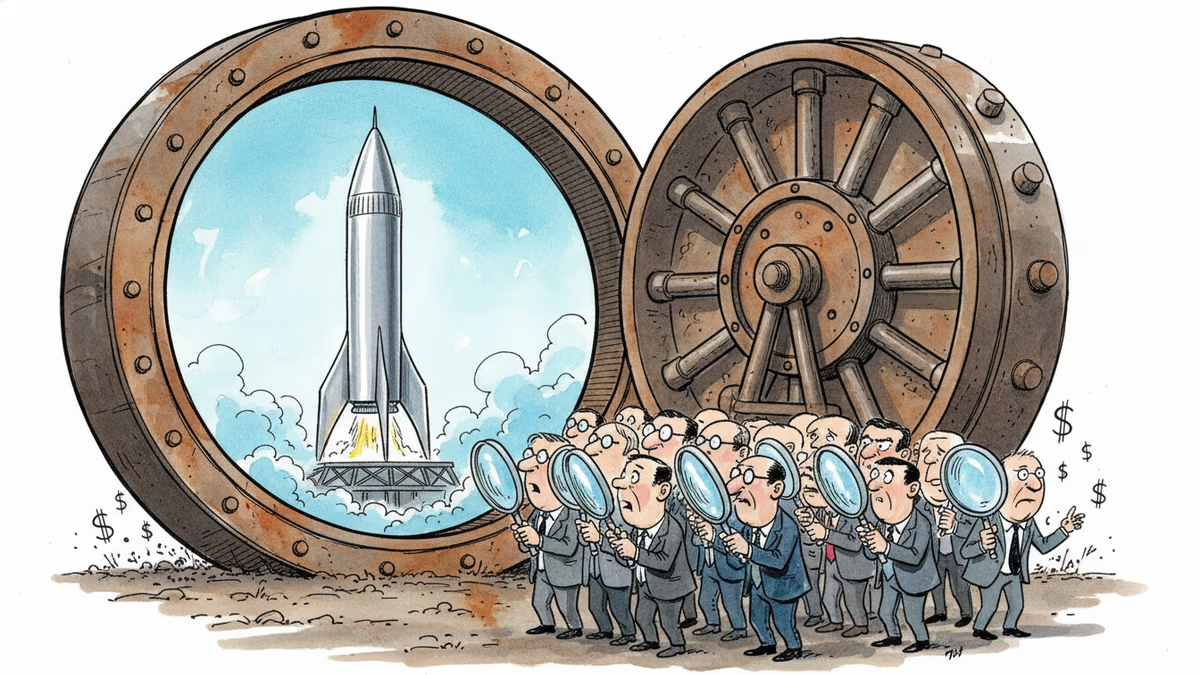
SpaceX pivots from Mars to Moon as both private and public space leaders shift focus to lunar surface operations. What's driving this sudden change in space priorities?
When Elon Musk Changes His Mind, Markets Listen
For years, Elon Musk preached the gospel of Mars colonization. Red planet or bust. But something's shifted in recent months. The SpaceX founder has quietly pivoted toward lunar surface activities, complete with plans to use Moon materials for building large satellites. It's not just a minor course correction—it's a fundamental strategic shift that's sending ripples through the entire space industry.
NASA's following suit. The agency has started emphasizing lunar base elements over its previously planned Gateway orbiting station. When the world's most successful private space company and largest government space agency both change direction simultaneously, it's worth asking: what do they know that we don't?
The Economics of Distance
The answer starts with basic math. Earth to Moon: 240,000 miles. Earth to Mars: 35 million miles at closest approach. That's not just a longer commute—it's an entirely different economic proposition.
Round-trip time to the Moon: one week. To Mars: minimum two years. Launch windows to the Moon: anytime. To Mars: every 26 months. For any serious space-based economy, the Moon isn't just closer—it's infinitely more practical.
The New Lunar Value Proposition

But proximity alone doesn't explain the sudden enthusiasm. The Moon's polar ice deposits have transformed from scientific curiosity to strategic resource. That ice breaks down into hydrogen and oxygen—rocket fuel components that currently cost $10,000 per kilogram to launch from Earth.
Helium-3, rare on Earth but abundant in lunar soil, could power next-generation fusion reactors. The Moon's low gravity (one-sixth of Earth's) makes it an ideal manufacturing hub for space-based solar arrays and communication satellites. What once seemed like science fiction now reads like a business plan.
The New Space Race Players
This isn't just an American story. China's Chang'e missions have accelerated, with plans for a crewed lunar base by 2030. India's successful Chandrayaan-3 landing proved that lunar access is democratizing. Private companies like Blue Origin and Astrobotic are betting their futures on lunar logistics.
The competition extends beyond national prestige. SpaceX's Starship promises to deliver 100 tons to the lunar surface per mission—enough to establish serious infrastructure. Traditional aerospace giants like Lockheed Martin and Boeing are scrambling to stay relevant in this new paradigm.
The 2030s Timeline Reality Check
Industry insiders expect permanent lunar habitation by the mid-2030s. Not a flag-planting mission, but actual infrastructure: power systems, manufacturing facilities, maybe even tourism. The Artemis Accords have already established international frameworks for lunar resource extraction.
The price tag? Conservative estimates start at $100 billion for basic infrastructure. But unlike the Apollo program, this investment aims for self-sustaining operations. If successful, lunar-manufactured goods could undercut Earth-launched alternatives by orders of magnitude.
Authors
Related Articles
American Airlines just signed Starlink for 500+ aircraft. It's not just about faster inflight internet — it's a calculated move in the run-up to what could be the largest IPO in history.
SpaceX's upgraded Starship V3 completed its first test flight, deploying 20 Starlink simulators but losing the Super Heavy booster. With an IPO weeks away, the stakes just got higher.
SpaceX's IPO filing puts AI at the center, claiming a $26.5 trillion market opportunity. But can Grok compete with OpenAI and Anthropic for enterprise customers?
SpaceX filed a nearly 400-page S-1 with the SEC, targeting an IPO as early as June 12. Here's what the filing reveals—and what it doesn't.
American Airlines just signed Starlink for 500+ aircraft. It's not just about faster inflight internet — it's a calculated move in the run-up to what could be the largest IPO in history.
SpaceX's upgraded Starship V3 completed its first test flight, deploying 20 Starlink simulators but losing the Super Heavy booster. With an IPO weeks away, the stakes just got higher.
SpaceX's IPO filing puts AI at the center, claiming a $26.5 trillion market opportunity. But can Grok compete with OpenAI and Anthropic for enterprise customers?
SpaceX filed a nearly 400-page S-1 with the SEC, targeting an IPO as early as June 12. Here's what the filing reveals—and what it doesn't.
Thoughts
Share your thoughts on this article
Sign in to join the conversation