
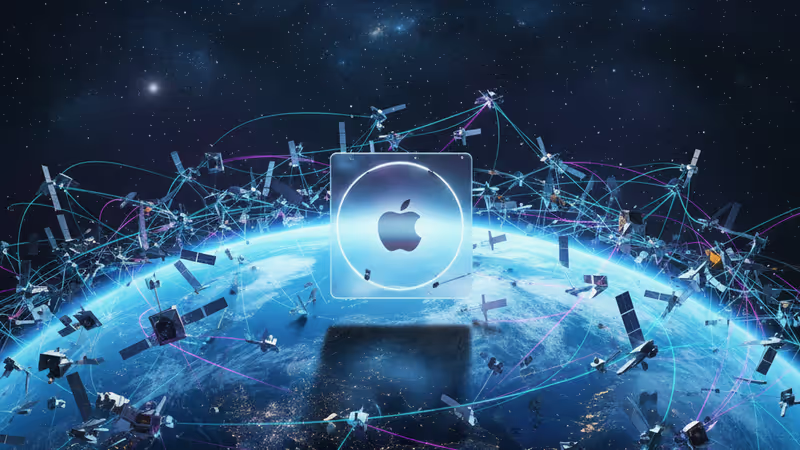
SpaceX Starlink Gen2 Satellites Hit 15,000 Milestone with New FCC Approval
On Jan 10, 2026, the FCC authorized SpaceX to launch 7,500 more Gen2 Starlink satellites, bringing the total to 15,000. This expansion boosts global high-speed internet and mobile coverage.
15,000 satellites in low Earth orbit are about to redefine global connectivity. SpaceX just cleared a major regulatory hurdle, doubling its authorized second-generation fleet and cementing its lead in the space-based internet race.
Why the SpaceX Starlink Gen2 Satellites Expansion Matters
The Federal Communications Commission (FCC) announced today that it's granting SpaceX permission to construct and operate an additional 7,500 Gen2 Starlink satellites. This brings the company's total authorization to 15,000 Gen2 satellites worldwide. According to the agency, this expansion aims to deliver high-speed, low-latency internet globally, including enhanced mobile coverage from space.

Balancing Innovation with Space Safety
The approval didn't come without scrutiny. The FCC previously deferred action on the full constellation to address concerns regarding orbital debris and space safety. While environmental groups and astronomers have raised alarms about sky congestion, the regulator's decision signals a confidence in SpaceX's ability to manage its massive fleet without compromising the orbital environment.
Authors
Related Articles
American Airlines just signed Starlink for 500+ aircraft. It's not just about faster inflight internet — it's a calculated move in the run-up to what could be the largest IPO in history.

SpaceX's upgraded Starship V3 completed its first test flight, deploying 20 Starlink simulators but losing the Super Heavy booster. With an IPO weeks away, the stakes just got higher.

SpaceX's IPO filing puts AI at the center, claiming a $26.5 trillion market opportunity. But can Grok compete with OpenAI and Anthropic for enterprise customers?

SpaceX filed a nearly 400-page S-1 with the SEC, targeting an IPO as early as June 12. Here's what the filing reveals—and what it doesn't.
American Airlines just signed Starlink for 500+ aircraft. It's not just about faster inflight internet — it's a calculated move in the run-up to what could be the largest IPO in history.
SpaceX's upgraded Starship V3 completed its first test flight, deploying 20 Starlink simulators but losing the Super Heavy booster. With an IPO weeks away, the stakes just got higher.
SpaceX's IPO filing puts AI at the center, claiming a $26.5 trillion market opportunity. But can Grok compete with OpenAI and Anthropic for enterprise customers?
SpaceX filed a nearly 400-page S-1 with the SEC, targeting an IPO as early as June 12. Here's what the filing reveals—and what it doesn't.
Thoughts
Share your thoughts on this article
Sign in to join the conversation