
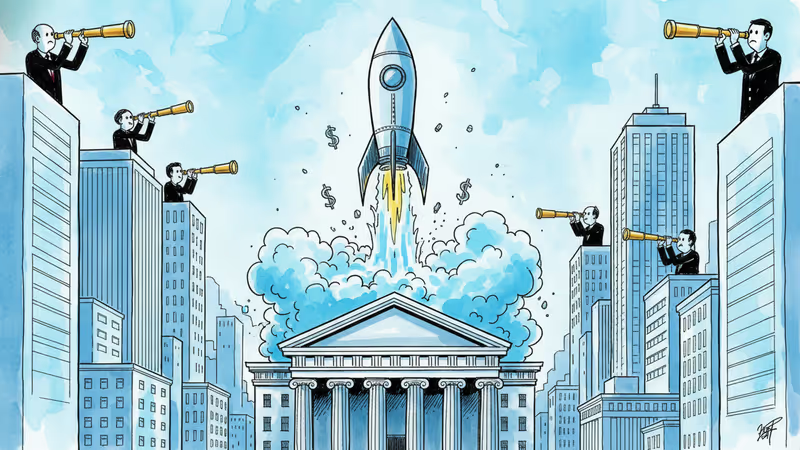
SpaceX's IPO Plans Signal More Than Just Going Public
SpaceX reportedly lines up Wall Street banks for 2026 IPO as secondary markets boom. What this means for the future of private company liquidity and market dynamics.
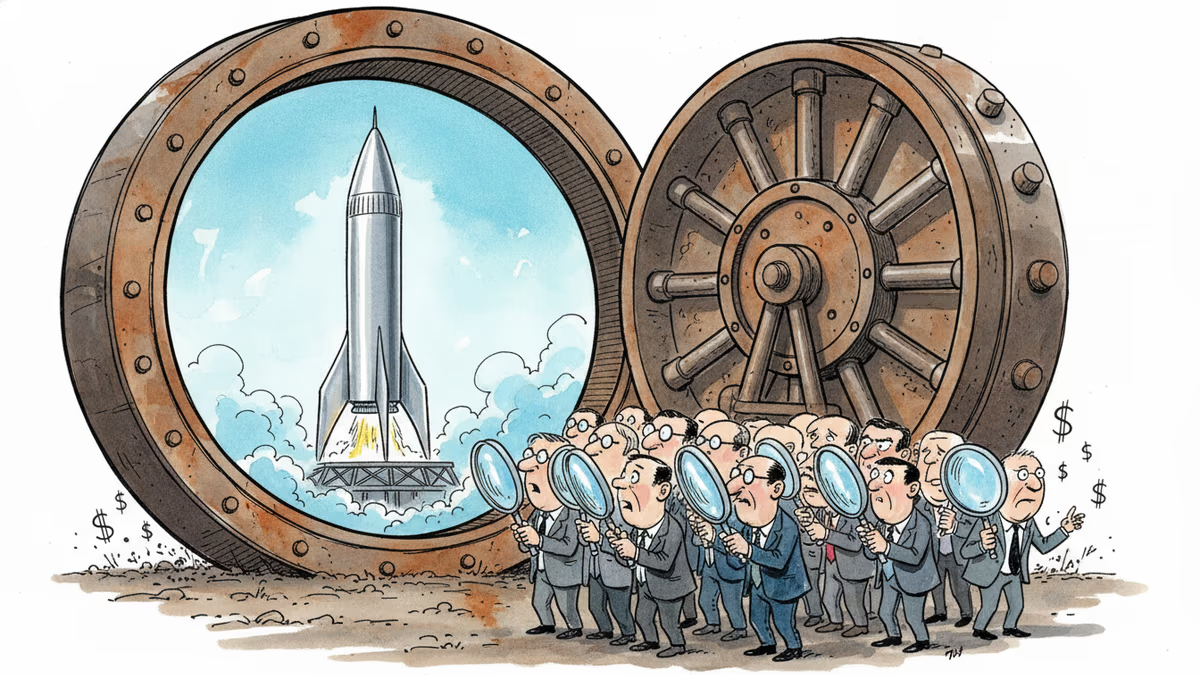
SpaceX is reportedly lining up four major Wall Street banks for a potential 2026 IPO—but the real story isn't just about one company going public. It's about how the entire ecosystem of private company ownership is fundamentally changing.
The space company's move comes as private firms are staying private longer than ever before. Companies that would historically have gone public years ago—including SpaceX itself at an $800 billion valuation—are now finding alternative ways to create liquidity for employees and early shareholders through a rapidly expanding secondary market.
The New Private-Public Divide
Greg Martin, managing director at Rainmaker Securities, a firm specializing in secondary share transactions, puts it bluntly: "Many of these businesses would be top 30 in the S&P 500 and would historically have gone public years ago."
This shift has created what Martin calls "two forces"—investors desperate for access to high-growth private companies, and shareholders who've been locked into these companies for years, watching their paper wealth grow but unable to access it. The result? A thriving secondary market that's only getting bigger.
SpaceX exemplifies this trend. Even during the market downturns of 2022 and 2023, it was the one company that "continued to defy gravity," with shares pricing up every time IPO rumors surfaced. On secondary platforms, SpaceX shares are already trading above their last tender round price, approaching the $1.5 trillion valuation the company has discussed for a potential public offering.
Why Now for Musk?
Elon Musk famously said he wouldn't take SpaceX public until rockets were flying to Mars regularly. So why the apparent change of heart?
The answer lies in market timing and business reality. SpaceX dominates rocket launching, is building a massive Starlink business, and has Starship opening up possibilities from bulk space payloads to global logistics. The company is even exploring space-based data centers—a concept that seemed like science fiction just years ago.

"Why not go and unlock all the rest of the capital markets to help them fund their businesses?" Martin asks. Unlike cash-burning competitors, SpaceX operates from a position of strength with largely profitable operations and market dominance.
The Trillion-Dollar Race
But there's another dynamic at play: the emerging rivalry between tech titans chasing similar trillion-dollar valuations. Sam Altman'sOpenAI is also eyeing public markets, while Jeff Bezos talks about orbital data centers and plans to launch a communications network to compete with Starlink.
The difference? OpenAI needs capital urgently due to its massive burn rate, making an IPO almost inevitable. SpaceX, by contrast, can afford to be selective about timing. "If there's any downdraft in the market, I think they'll stay private," Martin notes.
National Security Meets Public Markets
Going public would fundamentally change SpaceX's shareholder dynamics. The company has traditionally maintained tight control over its cap table due to national security considerations—no links to U.S. adversaries allowed.
A public offering would likely be a "sliver deal," with only about 5% of shares actually available to the public. But even that opens new channels. The key question becomes whether foreign investors would have actual control or just economic interest. With Musk and his inner circle maintaining control, the latter seems more likely.
The Musk Premium
Then there's the "Elon halo effect." Despite SpaceX's technical challenges—including several Starship explosions over the past year—Musk's track record commands premium valuations. Tesla trades not just as a car company but as a vertically integrated technology platform with robotics, AI, and autonomous vehicle ambitions.
This interconnected empire of Musk companies—Tesla, xAI, Twitter, and SpaceX—creates what Martin calls "virtuous" synergies that investors are willing to pay extra for.
Authors
Related Articles
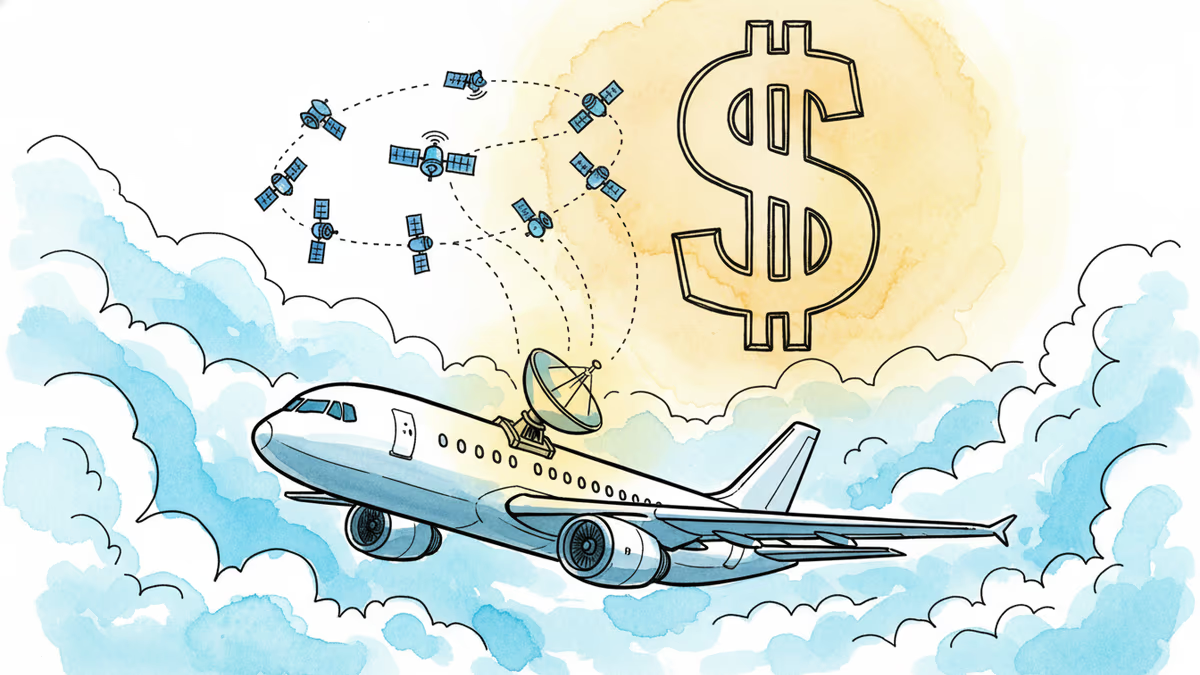
American Airlines just signed Starlink for 500+ aircraft. It's not just about faster inflight internet — it's a calculated move in the run-up to what could be the largest IPO in history.
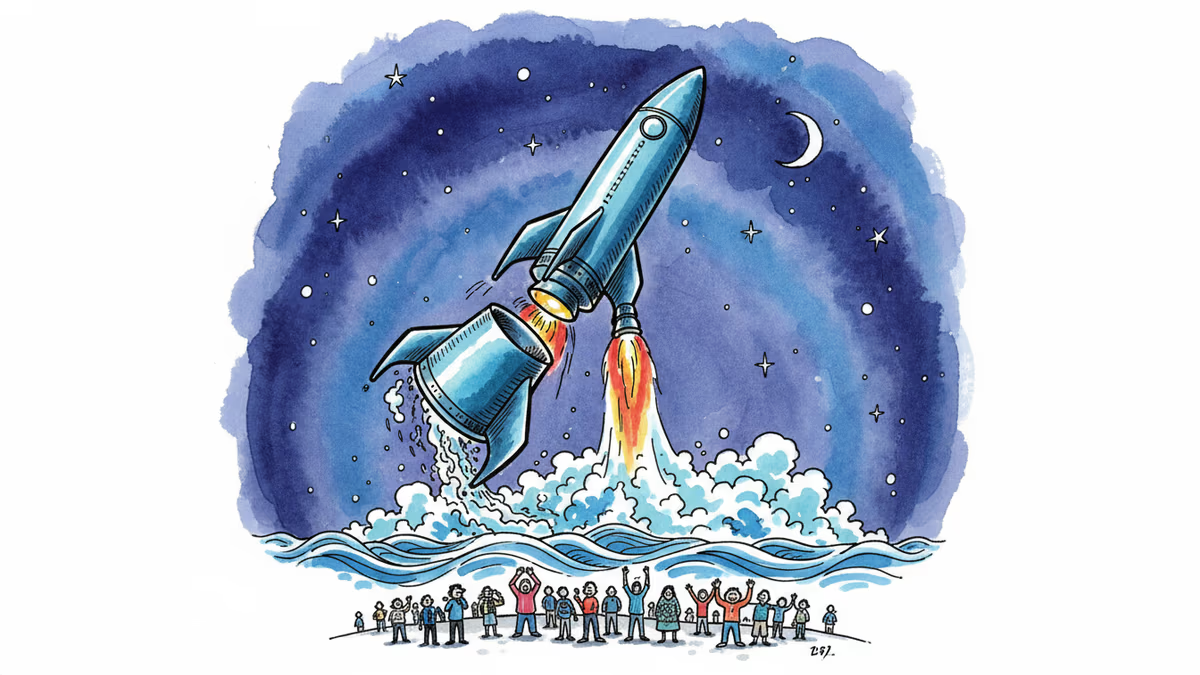
SpaceX's upgraded Starship V3 completed its first test flight, deploying 20 Starlink simulators but losing the Super Heavy booster. With an IPO weeks away, the stakes just got higher.
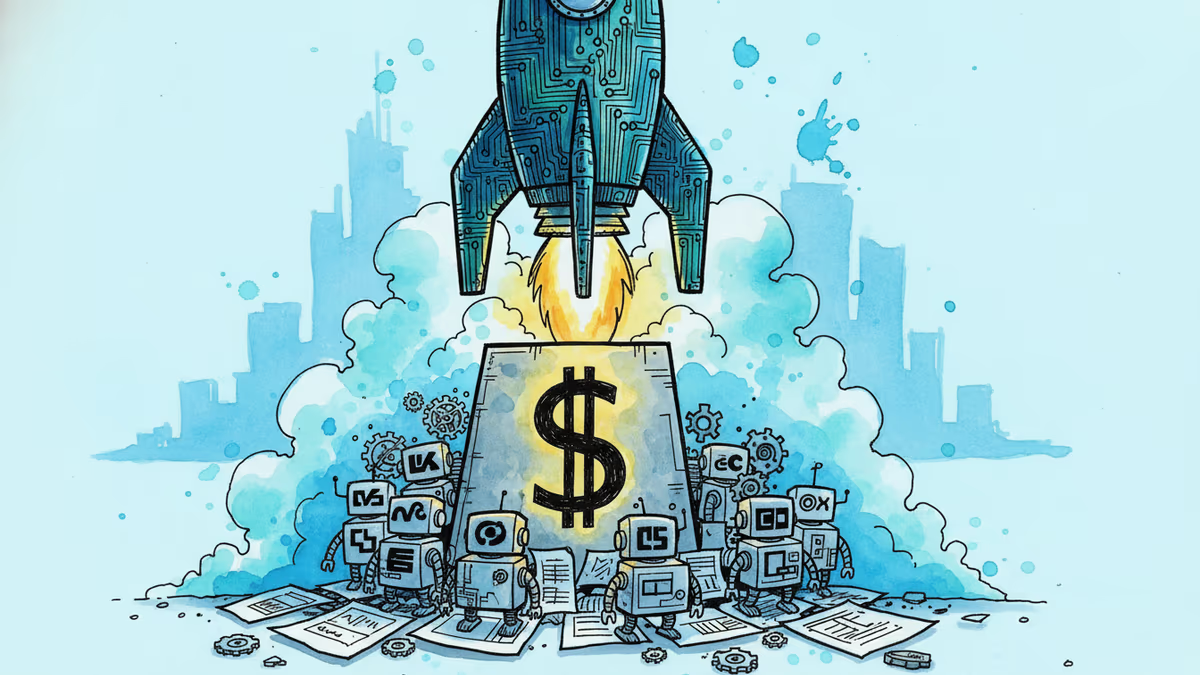
SpaceX's IPO filing puts AI at the center, claiming a $26.5 trillion market opportunity. But can Grok compete with OpenAI and Anthropic for enterprise customers?
SpaceX filed a nearly 400-page S-1 with the SEC, targeting an IPO as early as June 12. Here's what the filing reveals—and what it doesn't.
American Airlines just signed Starlink for 500+ aircraft. It's not just about faster inflight internet — it's a calculated move in the run-up to what could be the largest IPO in history.
SpaceX's upgraded Starship V3 completed its first test flight, deploying 20 Starlink simulators but losing the Super Heavy booster. With an IPO weeks away, the stakes just got higher.
SpaceX's IPO filing puts AI at the center, claiming a $26.5 trillion market opportunity. But can Grok compete with OpenAI and Anthropic for enterprise customers?
SpaceX filed a nearly 400-page S-1 with the SEC, targeting an IPO as early as June 12. Here's what the filing reveals—and what it doesn't.
Thoughts
Share your thoughts on this article
Sign in to join the conversation