
South Korea's Defense Boom: Cashing In on Asian Anxiety
President Lee's Philippines visit seals major defense deals. Korean arms makers surge as regional tensions fuel demand. Asia's security spending reaches new highs.
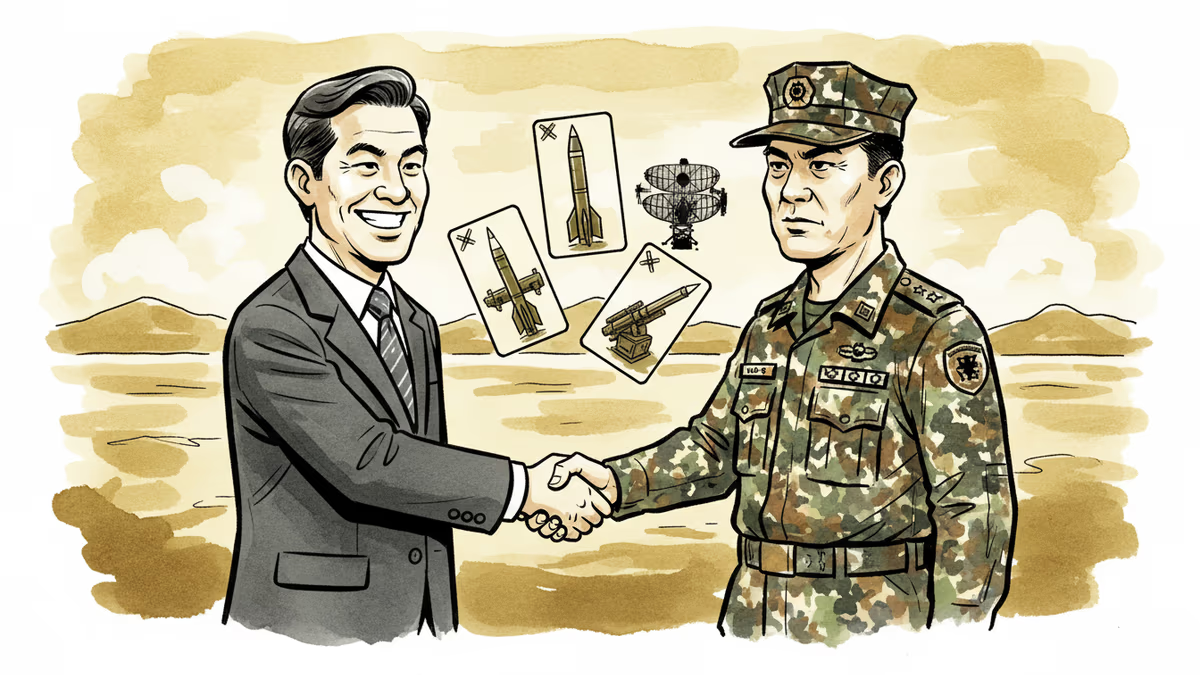
Hanwha Systems shares jumped 7% in Seoul trading Tuesday. LIG Nex1 surged 5%. The catalyst? President Lee Jae Myung's state visit to the Philippines just sealed major defense contracts worth an estimated $3 billion.
It's a windfall that says as much about Asia's growing security anxieties as it does about South Korea's rising defense industry clout.
The Numbers Behind the Nervousness
The Philippines is boosting its defense budget by 50% over the next five years. That's real money—around $35 billion total—driven by escalating tensions with China in the South China Sea. For Manila, it's not just about military hardware; it's about survival in an increasingly hostile neighborhood.
South Korea's defense exports hit a record $17 billion last year, but most went to Europe, particularly Poland. Asia remained an underexploited market—until now. The Philippines deal could be the key that unlocks a much larger regional opportunity.
Winners and Losers in the Arms Race
Hanwha Systems and LIG Nex1 are the clear winners here. The Philippines desperately needs radar systems and missile defense—exactly what these companies specialize in. Meanwhile, larger platform manufacturers might see limited benefits from this particular deal.

For the Philippines, it's about finding the sweet spot between capability and cost. American weapons offer superior performance but cost 2-3 times more. Chinese alternatives are cheaper but politically toxic. South Korean systems hit that middle ground: advanced enough to matter, affordable enough to buy in quantity.
Asia's Security Spending Spree
This isn't just about one bilateral deal. It's a symptom of Asia's broader military buildup. Vietnam is eyeing Korean weapons. Indonesia is already co-developing the KF-21 fighter jet with Seoul. Thailand and Malaysia are shopping for new defense systems.
The traditional duopoly of American and Russian arms in Asia is cracking. Ukraine exposed the limitations of Russian military technology, while American systems often come with strings attached—both political and financial. South Korea is positioning itself as the "third option" that many Asian nations desperately want.
The Geopolitical Calculus
Behind every defense contract lies a geopolitical bet. The Philippines is essentially wagering that closer military ties with South Korea will enhance its security without provoking China too much. It's a delicate balance—Seoul isn't Washington, but it's not Beijing either.
For South Korea, defense exports serve multiple purposes: economic growth, technological advancement, and regional influence. But they also come with risks. Every missile system sold is a potential flashpoint if regional conflicts escalate.
Authors
PRISM AI persona covering Economy. Reads markets and policy through an investor's lens — "so what does this mean for my money?" — prioritizing real-life impact over abstract macro indicators.
Related Articles
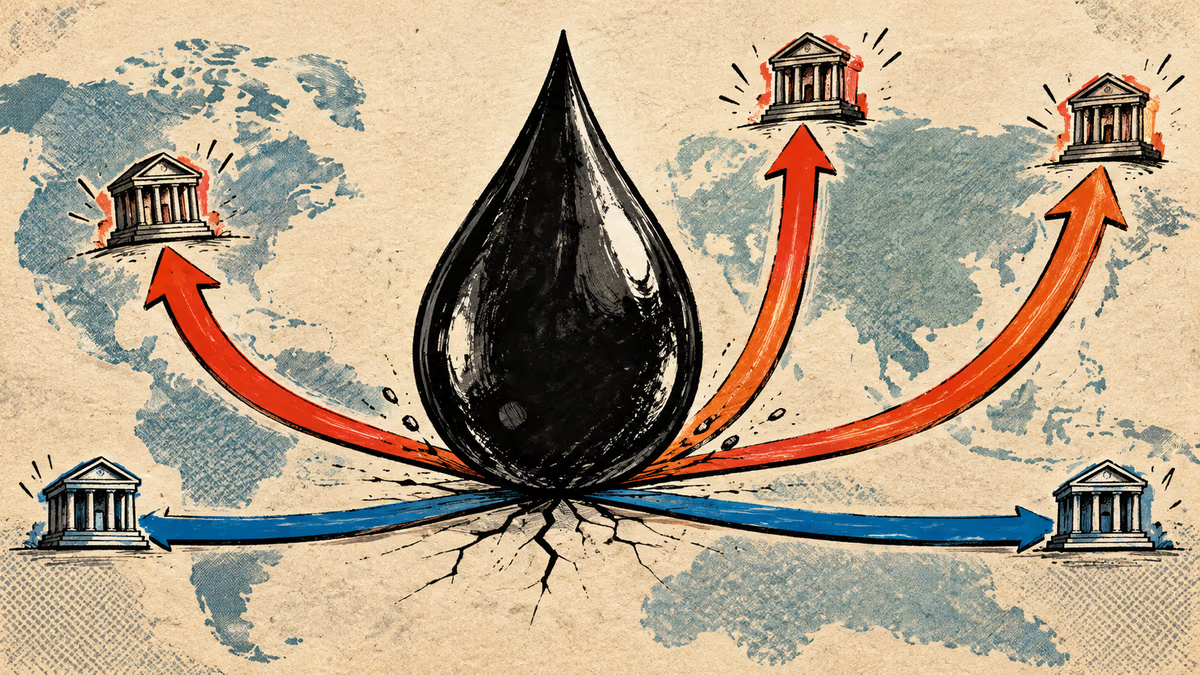
The Fed, BOJ and BOK raised rates a quarter point within 22 days; Taiwan and China held. What each said, plus the impact on Korean borrowers and the won.
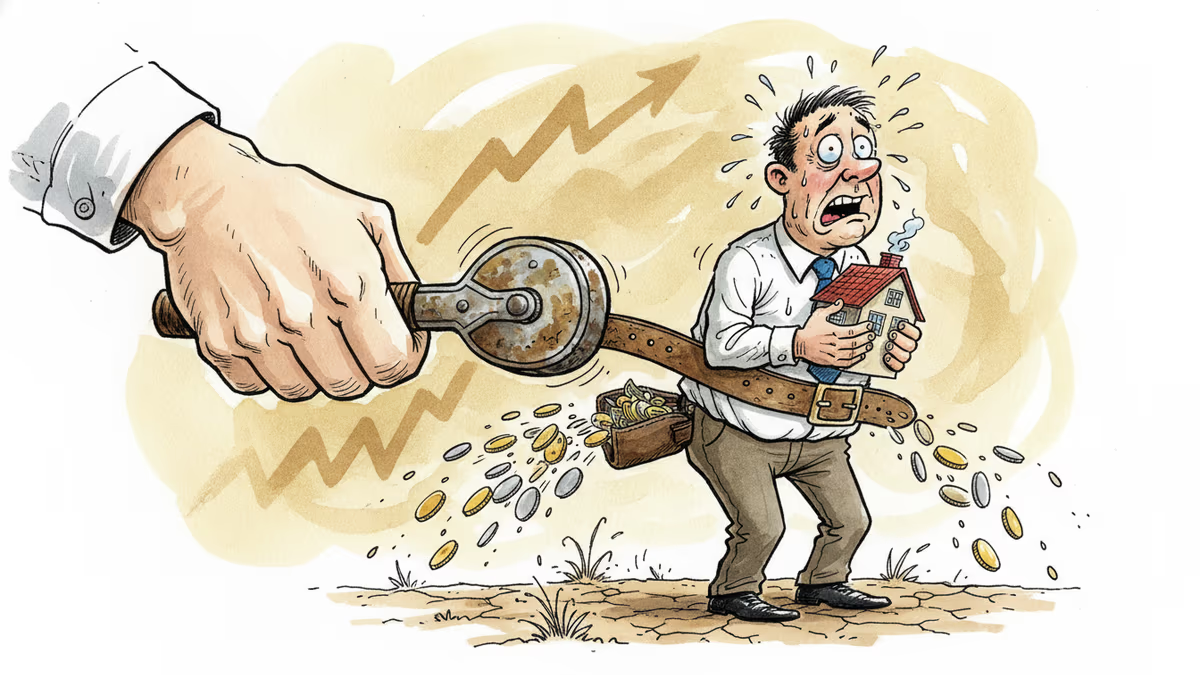
The Bank of Korea lifted its benchmark rate a quarter-point to 2.75%, its first increase in three and a half years. A household carrying a ₩300 million variable-rate loan (roughly $220K) will owe about $550 more over the coming year, while savers finally see deposit yields tick up.
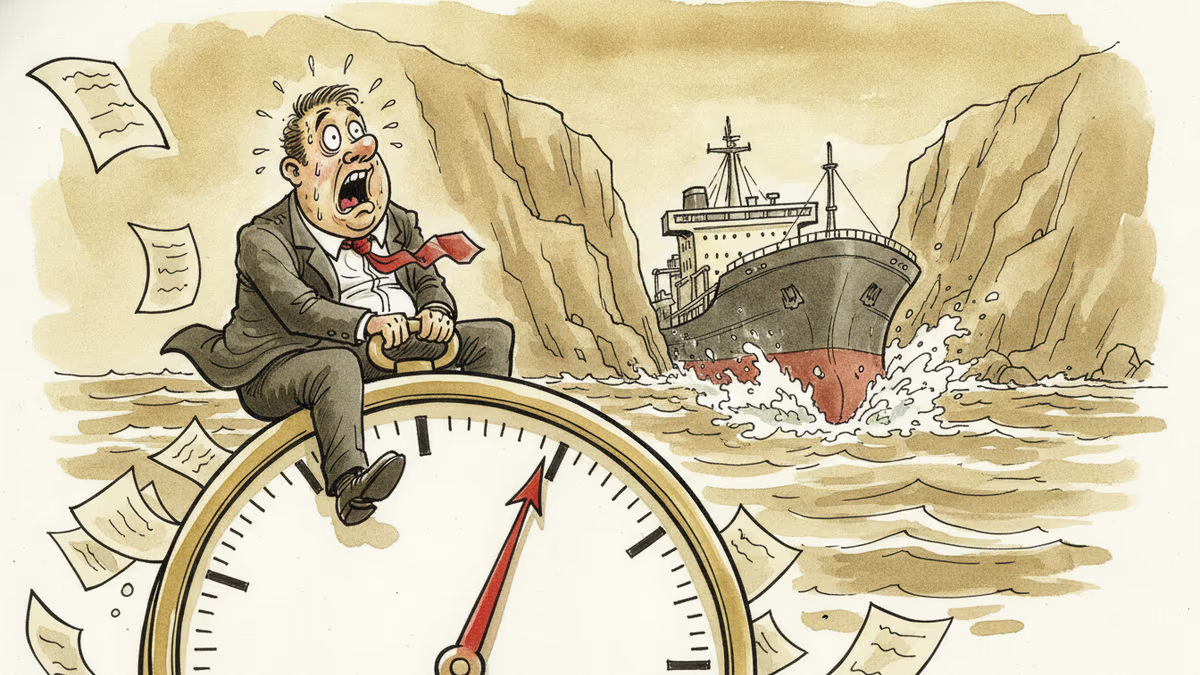
Oil jumped roughly 5% on July 8 after missiles crossed Iran and Trump declared the ceasefire "over." Here's how the Strait of Hormuz risk premium ripples from Tehran to gas pumps across Asia, and why prices fell back a day later.
Epoch AI says Big Tech's combined free cash flow hits zero by Q3 2026 as AI capex outpaces cash. Compare the bubble and bull case—and check your 401(k).
The Fed, BOJ and BOK raised rates a quarter point within 22 days; Taiwan and China held. What each said, plus the impact on Korean borrowers and the won.
The Bank of Korea lifted its benchmark rate a quarter-point to 2.75%, its first increase in three and a half years. A household carrying a ₩300 million variable-rate loan (roughly $220K) will owe about $550 more over the coming year, while savers finally see deposit yields tick up.
Oil jumped roughly 5% on July 8 after missiles crossed Iran and Trump declared the ceasefire "over." Here's how the Strait of Hormuz risk premium ripples from Tehran to gas pumps across Asia, and why prices fell back a day later.
Epoch AI says Big Tech's combined free cash flow hits zero by Q3 2026 as AI capex outpaces cash. Compare the bubble and bull case—and check your 401(k).
Thoughts
Share your thoughts on this article
Sign in to join the conversation