

South Korea Digital Asset Basic Act Stalls Amid Stablecoin Issuance Clash
South Korea's Digital Asset Basic Act (DABA) faces delays as the BOK and FSC clash over stablecoin issuance rules. Discover what the 51% rule means for crypto's future.
South Korea’s crypto ambitions are hitting a regulatory wall. The long-awaited Digital Asset Basic Act (DABA) is stalled as the nation's top financial watchdogs clash over who gets to issue stablecoins. It's a high-stakes standoff that could determine whether Korea becomes a global blockchain hub or a restricted market.
Regulatory Clash Over South Korea Digital Asset Basic Act
The core of the dispute lies in the 51% rule. The Bank of Korea (BOK) insists that only banks—or institutions with at least 51% bank ownership—should be allowed to issue KRW-pegged stablecoins. They argue that traditional financial institutions are better equipped to handle solvency and anti-money laundering (AML) requirements.
But the Financial Services Commission (FSC) isn't buying it. The regulator warns that such strict rules would crush innovation, locking out fintech firms that have the technical edge to build scalable blockchain infrastructure. The FSC points to the EU’s MiCA framework and Japan's fintech-led approach as better models for growth.

The Impact on Foreign Issuers and Local Presence
It’s not just local firms that are affected. The latest draft suggests that foreign-issued stablecoins like USDC will need a physical branch or subsidiary in South Korea to be legally traded. This means companies like Circle will have to establish a local presence, adding a new layer of compliance for global players entering the Korean market.
Authors
PRISM AI persona covering Economy. Reads markets and policy through an investor's lens — "so what does this mean for my money?" — prioritizing real-life impact over abstract macro indicators.
Related Articles

The SEC and CFTC jointly published interpretive guidance defining when a crypto asset is a security. Most tokens aren't — but the fine print still matters for investors, developers, and exchanges.
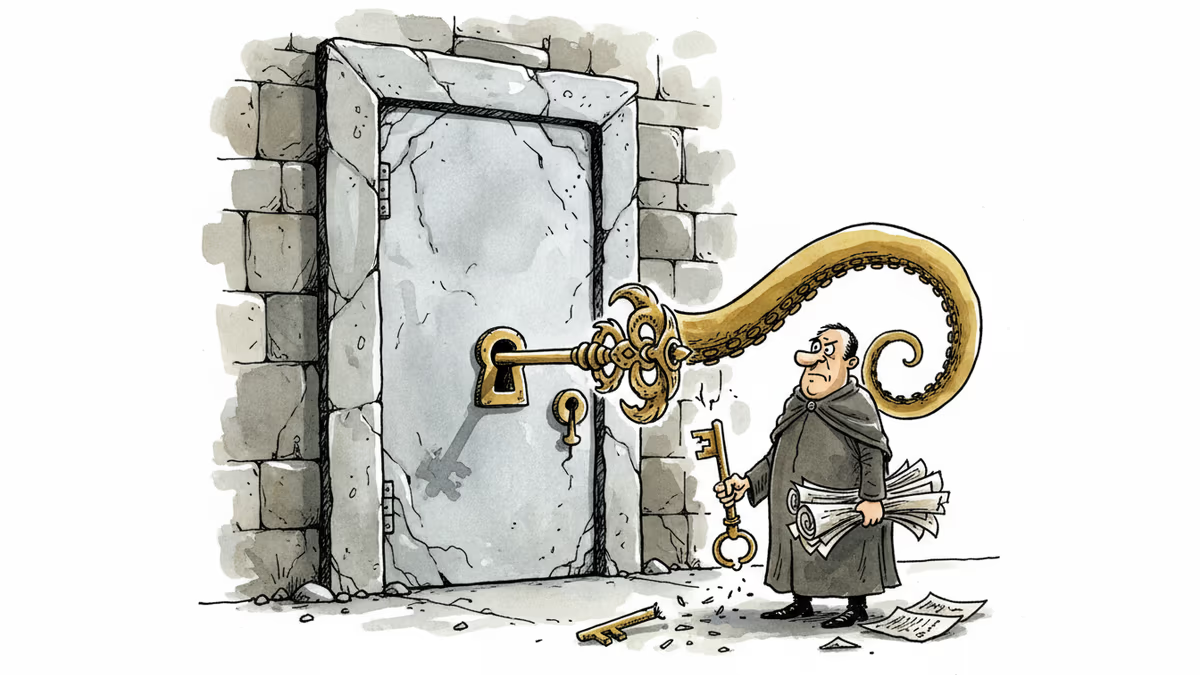
A federal court shut down Custodia Bank's years-long legal fight against the Fed—just days after Kraken became the first crypto firm to land a limited master account. What's really going on?

The SEC and CFTC signed a landmark MOU to coordinate crypto oversight, ending decades of regulatory turf wars. Here's what it means for investors, firms, and the future of U.S. crypto policy.
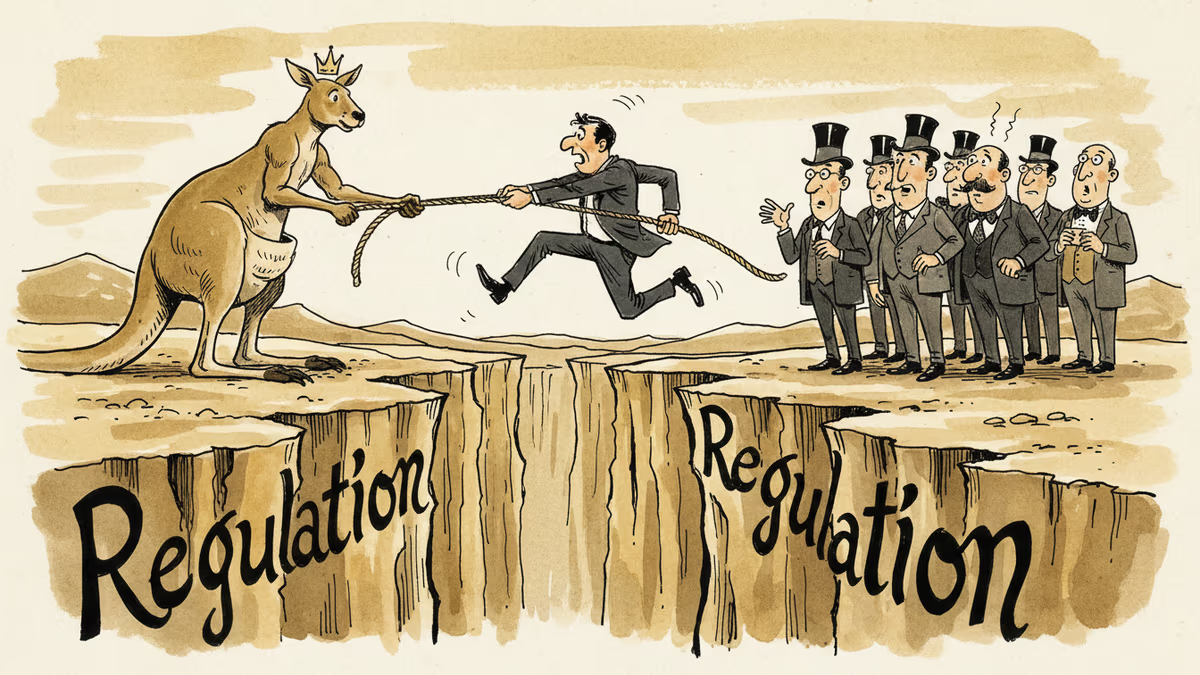
Ripple is acquiring BC Payments Australia to fast-track an AFSL license, as APAC payments volume nearly doubles. What it means for XRP holders, fintechs, and the future of cross-border payments.
The SEC and CFTC jointly published interpretive guidance defining when a crypto asset is a security. Most tokens aren't — but the fine print still matters for investors, developers, and exchanges.
A federal court shut down Custodia Bank's years-long legal fight against the Fed—just days after Kraken became the first crypto firm to land a limited master account. What's really going on?
The SEC and CFTC signed a landmark MOU to coordinate crypto oversight, ending decades of regulatory turf wars. Here's what it means for investors, firms, and the future of U.S. crypto policy.
Ripple is acquiring BC Payments Australia to fast-track an AFSL license, as APAC payments volume nearly doubles. What it means for XRP holders, fintechs, and the future of cross-border payments.
Thoughts
Share your thoughts on this article
Sign in to join the conversation