

RadixArk Commands $400M Valuation as SGLang Team Pivots to Commercial AI Infrastructure
RadixArk, the commercial arm of SGLang, hits a $400M valuation. Alongside vLLM's $1B push, the AI inference infrastructure layer is seeing a massive surge in VC funding.
The open-source tools powering xAI and Cursor are officially going commercial. RadixArk, a startup born from the SGLang project, has reportedly secured a $400 million valuation, marking a major shift in the AI inference landscape.
RadixArk vLLM inference funding 2026: Scaling the Backbone
According to TechCrunch, Accel led the investment in RadixArk. The company was co-founded by CEO Ying Sheng, a former xAI engineer and Databricks research scientist. The startup originated in Ion Stoica's lab at UC Berkeley—the same prestigious incubator that produced Databricks.
While SGLang remains open-source, RadixArk is diversifying its revenue by offering hosting services and building 'Miles,' a specialized framework for reinforcement learning. The startup previously attracted angel capital from industry heavyweights, including Intel CEO Lip-Bu Tan.

A Billion-Dollar Race for Inference Efficiency
RadixArk isn't alone in this transition. vLLM, another UC Berkeley offspring, is reportedly in talks to raise over $160 million at a $1 billion valuation, with a16z expected to lead. Despite vLLM co-founder Simon Mo calling certain details inaccurate, the momentum in the inference infrastructure layer is undeniable.
The surge in funding for RadixArk and vLLM follows a broader market trend. Recently, Baseten secured $300 million at a $5 billion valuation, while Fireworks AI hit a $4 billion valuation last October.
Authors
Related Articles

Snowflake's new $6 billion AWS contract is about more than cloud spending. It signals a shift in AI infrastructure—away from Nvidia GPUs and toward cheaper, homegrown chips for the agent era.

Lucra Sports CEO Dylan Robbins landed Cathie Wood's ARK Invest as a Series B lead without building AI. The story behind his unconventional fundraising playbook.
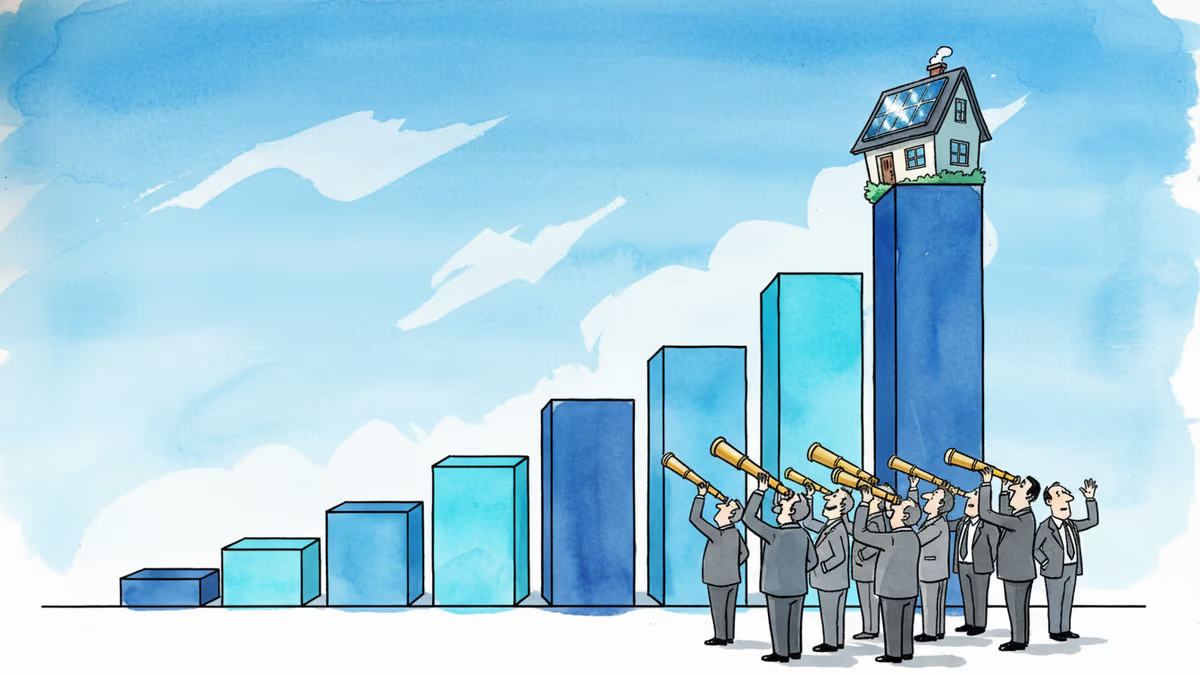
SolarSquare is raising $55-60M at a $450-500M valuation, more than doubling its worth in 18 months. Here's what's driving investor conviction in India's residential solar market.
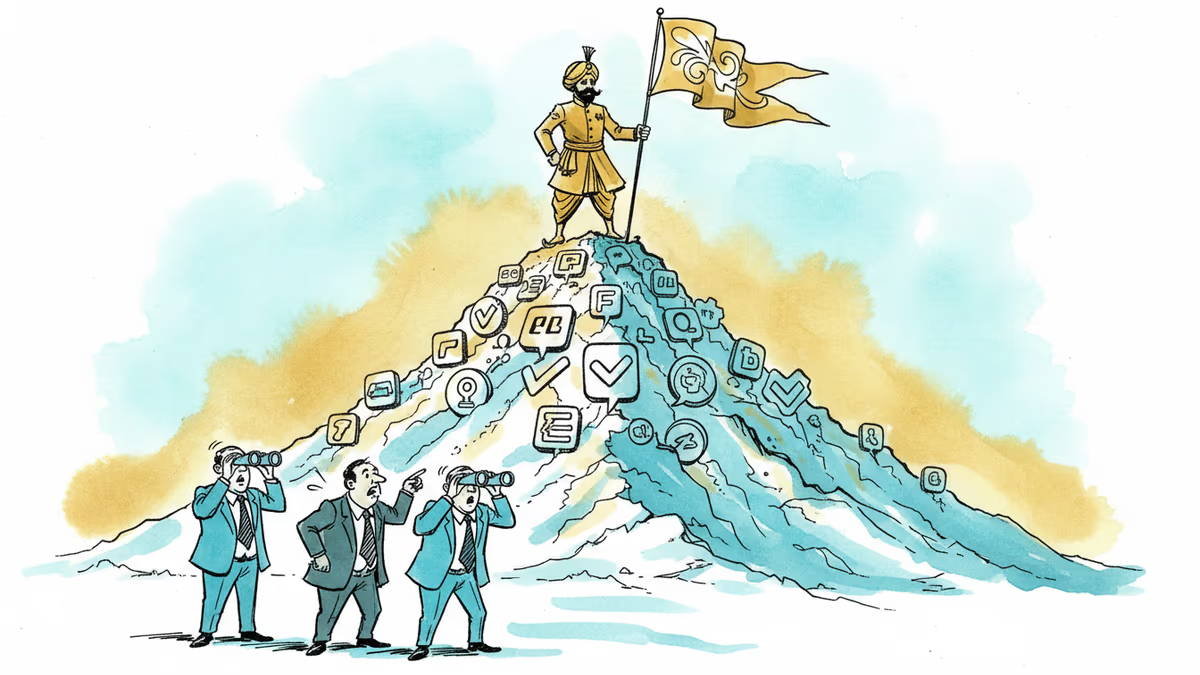
Indian venture capital has quietly displaced Silicon Valley in its own backyard. Only one American VC made India's top 10 investor list last year. Here's why that matters beyond India.
Snowflake's new $6 billion AWS contract is about more than cloud spending. It signals a shift in AI infrastructure—away from Nvidia GPUs and toward cheaper, homegrown chips for the agent era.
Lucra Sports CEO Dylan Robbins landed Cathie Wood's ARK Invest as a Series B lead without building AI. The story behind his unconventional fundraising playbook.
SolarSquare is raising $55-60M at a $450-500M valuation, more than doubling its worth in 18 months. Here's what's driving investor conviction in India's residential solar market.
Indian venture capital has quietly displaced Silicon Valley in its own backyard. Only one American VC made India's top 10 investor list last year. Here's why that matters beyond India.
Thoughts
Share your thoughts on this article
Sign in to join the conversation