

Google Fast Pair Security Vulnerability Exposes Sony and Anker Users to Eavesdropping
A critical Google Fast Pair security vulnerability, WhisperPair, allows hackers to eavesdrop on Sony and Anker headphones and track device locations.
Your wireless headphones could be listening to you. A major security flaw in Google's Fast Pair protocol has put millions of users at risk, affecting industry giants like Sony and Anker.
The WhisperPair Vulnerability Explained
Researchers from KU Leuven University in Belgium discovered several critical vulnerabilities collectively dubbed WhisperPair. According to Wired, these flaws allow attackers within Bluetooth range to secretly pair with headphones, earbuds, and speakers without the user's knowledge.

Affected devices include popular models like the Sony WH-1000XM6, as well as products from Nothing and Anker. Once connected, a hacker can eavesdrop on private conversations or track the device's movement using the Google Find Hub network.
Cross-Platform Risks for iPhone Users
It's not just an Android problem. The researchers confirmed that iPhone users who use these affected Bluetooth devices are equally vulnerable. Since the flaw exists within the Fast Pair protocol implemented in the hardware itself, the host's operating system offers no protection against the WhisperPair attack.
Authors
Related Articles

Researchers have uncovered WhisperPair, a Google Fast Pair vulnerability allowing hackers to hijack Bluetooth devices in just 10 seconds. Affects major brands like Sony and JBL.

Samsung Electronics' union branch revealed that 84% of survey respondents oppose the government's roughly $290 billion (₩400 trillion) semiconductor megaproject in Gwangju. Government, management, the union and shareholders are all reading the same national project in sharply different ways.
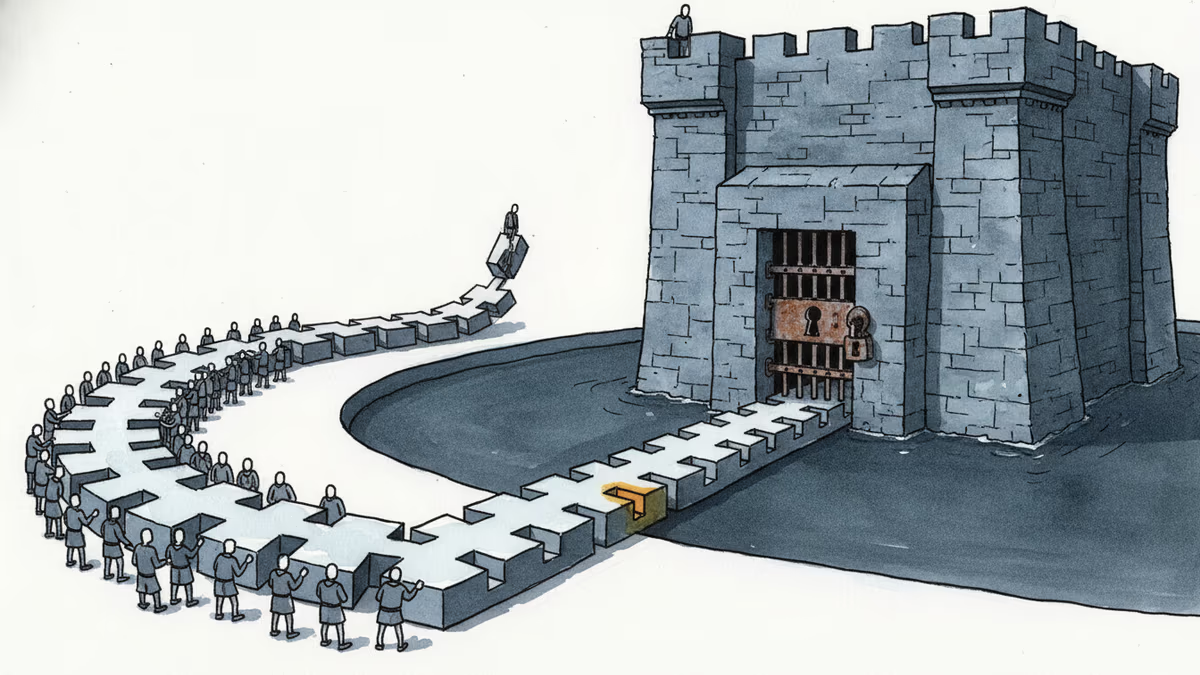
Nvidia shipped roughly a billion RISC-V cores in 2024, then announced it would run CUDA on the open standard. We break down how royalty-free instruction sets and open software stacks are trying to route around CUDA's lock-in. Part 2 of the Semiconductor Sovereignty series.
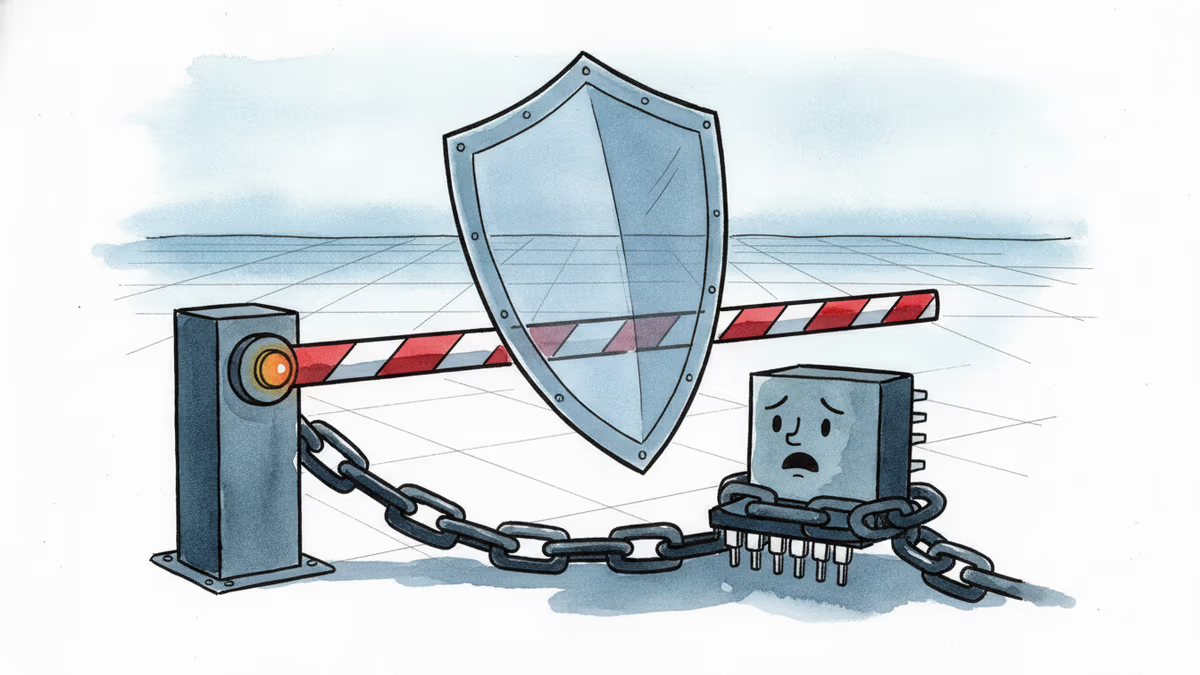
US AI-chip export controls split into three layers in the first half of 2026 — January easing, a May crackdown on circumvention, and a pending bill. Nvidia erased China from its guidance and still posted a record $81.6 billion quarter. A look at the export policy that both shields and cages it.
Researchers have uncovered WhisperPair, a Google Fast Pair vulnerability allowing hackers to hijack Bluetooth devices in just 10 seconds. Affects major brands like Sony and JBL.
Samsung Electronics' union branch revealed that 84% of survey respondents oppose the government's roughly $290 billion (₩400 trillion) semiconductor megaproject in Gwangju. Government, management, the union and shareholders are all reading the same national project in sharply different ways.
Nvidia shipped roughly a billion RISC-V cores in 2024, then announced it would run CUDA on the open standard. We break down how royalty-free instruction sets and open software stacks are trying to route around CUDA's lock-in. Part 2 of the Semiconductor Sovereignty series.
US AI-chip export controls split into three layers in the first half of 2026 — January easing, a May crackdown on circumvention, and a pending bill. Nvidia erased China from its guidance and still posted a record $81.6 billion quarter. A look at the export policy that both shields and cages it.
Thoughts
Share your thoughts on this article
Sign in to join the conversation