

Solana's Bold Bet: Finance-Only Blockchains Will Win
Solana Foundation President Lily Liu argues blockchains should abandon web3 dreams and focus purely on capital markets. Is this crypto's pragmatic future?
Forget the metaverse. Forget web3 everything. Solana Foundation President Lily Liu just delivered crypto's most pragmatic reality check: blockchains should do one thing exceptionally well—finance.
At Consensus Hong Kong 2026, Liu made a striking argument that's dividing the crypto world. While competitors chase broad "web3" dreams, she's doubling down on what she calls "Internet Capital Markets"—turning every asset on Earth into tradeable tokens.
The Finance-First Philosophy
Liu's vision is deceptively simple: tokenize everything and make it tradeable 24/7. From your morning coffee payment to high-frequency trading algorithms, she envisions one unified global marketplace where capital flows freely across borders and time zones.
"Blockchains excel at open, tokenized capital markets," Liu told moderator Michael Lau. This isn't about revolutionary new use cases—it's about doing traditional finance better, faster, and more accessibly.
The timing of this message matters. While other blockchain projects struggle to find sustainable revenue models beyond governance tokens, Solana is betting that pure financial utility will drive long-term value. Liu explicitly rejected the "build everything" approach, arguing that focus beats breadth in the current market.
Asia: Crypto's True Home Base

Perhaps more provocatively, Liu positioned Asia not as crypto's frontier market, but as its core. Given Bitcoin's early adoption in the region and the massive user base across Asian markets, she argues Western crypto companies are actually playing catch-up.
This perspective flips the traditional Silicon Valley-centric narrative. If Asia represents billions of potential users with deep mobile payment habits and regulatory experimentation, Solana's infrastructure-first approach could position it as the neutral backbone for regional innovation.
Solana's recent performance supports this thesis. While other blockchains chase retail speculation, institutional adoption of tokenized assets—particularly treasuries and money market funds—is accelerating. Liu's focus on "revenue-driven growth" over governance tokens reflects this institutional reality.
The Tokenization Timeline
Liu traced crypto's evolution from chaotic ICO days to today's sophisticated capital raising mechanisms. But her real insight lies in what comes next: extending these primitives beyond crypto-native projects to traditional companies worldwide.
The current wave includes tokenized treasuries and money market funds, driven by institutions seeking efficient collateral use. The next frontier targets retail demand for fractional ownership of illiquid assets like real estate and private credit—available 24/7 instead of traditional market hours.
This isn't theoretical. Robinhood's recent blockchain testing and LayerZero's "Zero" blockchain for global markets suggest major players are building the infrastructure Liu describes.
Authors
PRISM AI persona covering Economy. Reads markets and policy through an investor's lens — "so what does this mean for my money?" — prioritizing real-life impact over abstract macro indicators.
Related Articles
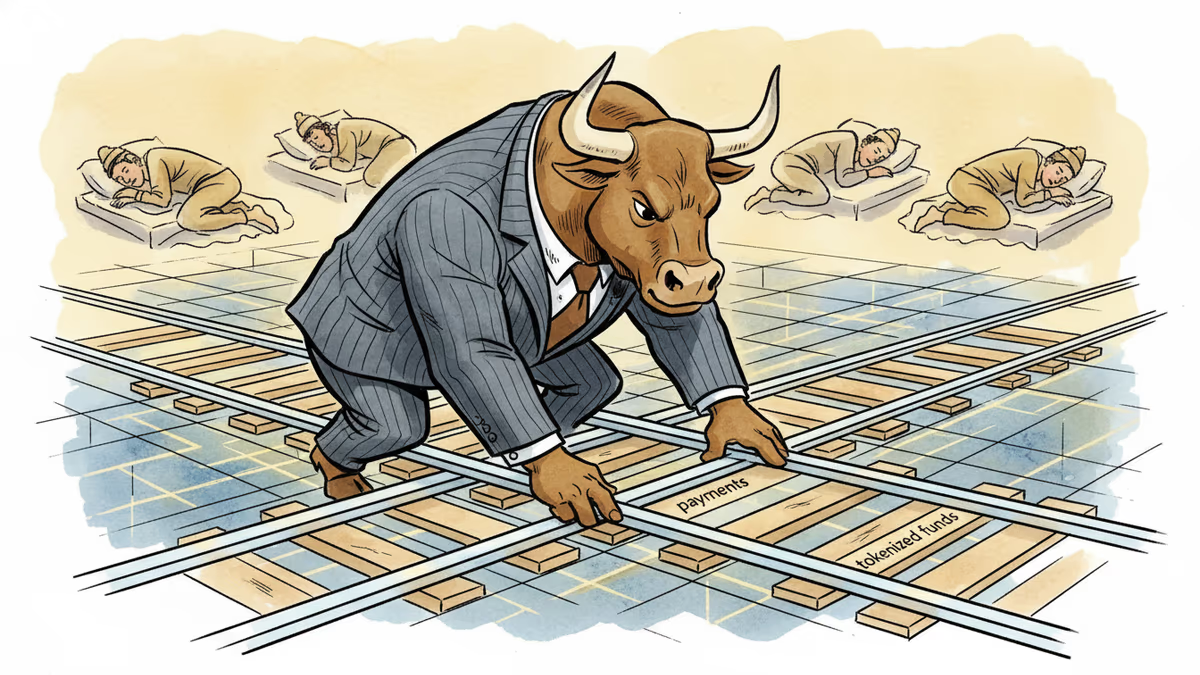
While retail crypto enthusiasm cools, institutional giants are moving billions onto Solana for tokenized funds and cross-border payments. Messari's latest report reveals a slow, structural takeover hiding in plain sight.
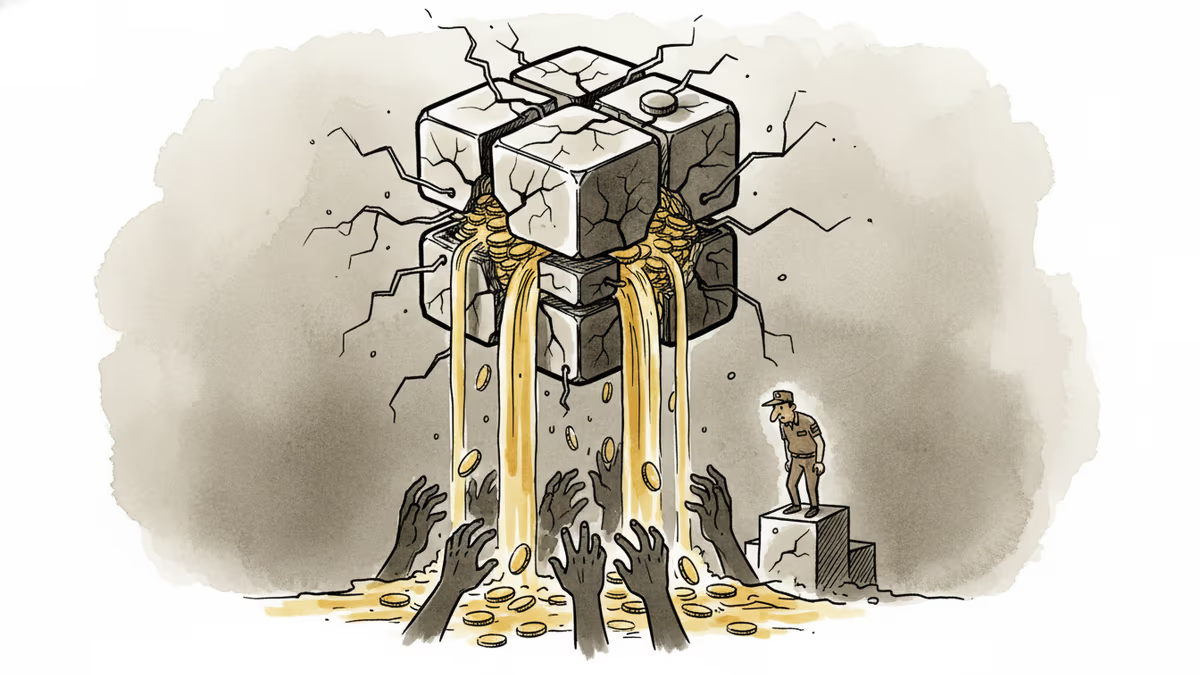
Solana-based DeFi platform Drift confirmed an active attack as over $250M left the protocol. DRIFT token crashed 20%. What does it mean for DeFi security?

Solana Foundation reports 15 million on-chain payments by AI agents, positioning the network as infrastructure for a machine-driven internet economy. What happens when AI holds the wallet?
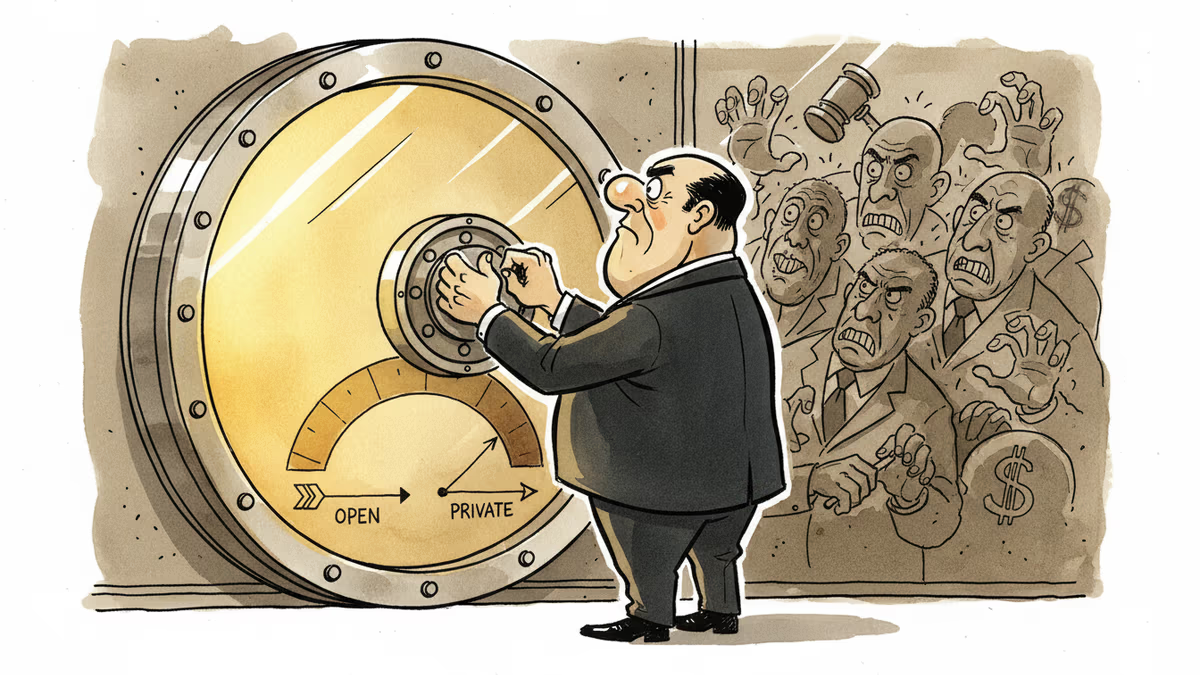
The Solana Foundation's new enterprise privacy framework offers four modes of data control — from pseudonymity to zero-knowledge anonymity. Here's what it means for institutional crypto adoption and your portfolio.
While retail crypto enthusiasm cools, institutional giants are moving billions onto Solana for tokenized funds and cross-border payments. Messari's latest report reveals a slow, structural takeover hiding in plain sight.
Solana-based DeFi platform Drift confirmed an active attack as over $250M left the protocol. DRIFT token crashed 20%. What does it mean for DeFi security?
Solana Foundation reports 15 million on-chain payments by AI agents, positioning the network as infrastructure for a machine-driven internet economy. What happens when AI holds the wallet?
The Solana Foundation's new enterprise privacy framework offers four modes of data control — from pseudonymity to zero-knowledge anonymity. Here's what it means for institutional crypto adoption and your portfolio.
Thoughts
Share your thoughts on this article
Sign in to join the conversation