
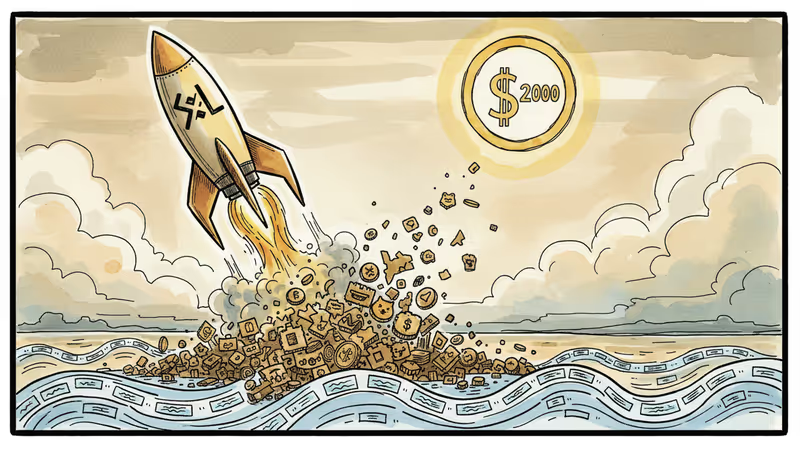
Solana Eyes $2,000 by 2030 Despite 60% Plunge to $100
Standard Chartered predicts Solana could hit $2,000 by 2030 as the network evolves from memecoin trading to stablecoin micropayments infrastructure, despite recent 60% decline.
A 60% crash hasn't shaken Standard Chartered's faith in Solana. The bank still sees $2,000 by 2030.
SOL has tumbled from its September highs to around $100, joining crypto's broader downturn. But Kendrick Geoffrey, Standard Chartered's head of crypto research, believes the network is evolving beyond its "one-trick pony" reputation. His bold prediction: $2,000 per token by 2030, driven by a fundamental shift from memecoins to micropayments.
From Meme Madness to Payment Rails
The transformation is already visible in the numbers. In early 2025, nearly half of Solana's protocol fees came from memecoin trading on decentralized exchanges. But recent data tells a different story—trading flows are shifting from meme tokens to SOL-stablecoin pairs.
This isn't just a change in trading patterns. Solana's stablecoin turnover now significantly outpaces Ethereum, suggesting the network is becoming the backbone for high-frequency, low-cost transactions rather than speculative trading.
The clearest example is x402, Coinbase's platform for AI-driven micropayments. The average transaction? Just six cents. While Coinbase's own Base network initially handled most volume, its higher fees make it less viable for such tiny transactions. Solana's gas fees—often under one cent—position it perfectly for this emerging use case.
The Micropayment Revolution

Traditional finance struggles with micropayments because fixed transaction fees make them economically unviable. Send 10 cents, pay 30 cents in fees. But Solana's sub-cent costs unlock entirely new internet services: machine-to-machine payments, pay-per-use social features, and AI-powered transactions that were previously impossible.
This technical advantage could reshape how we interact with digital services. Instead of monthly subscriptions, imagine paying fractions of a cent for each article you read or each AI query you make.
Institutional Money Flows In
The institutional interest is measurable. Since October 2025, the Bitwise BSOL ETF has captured 78% of all net inflows into SOL-related ETFs. ETFs now control over 1% of the total SOL supply, while digital asset treasuries hold nearly 3%.
Geoffrey has trimmed his 2026 forecast from $310 to $250, acknowledging the recent downturn. But his longer-term trajectory remains aggressive: $400 in 2027, $700 in 2028, $1,200 in 2029, and $2,000 in 2030.
The Infrastructure Play
What makes Solana different isn't just speed or cost—it's positioning itself as the invisible infrastructure powering the next generation of internet services. While Ethereum focuses on decentralized finance and NFTs, Solana is betting on becoming the payment rails for everything else.
The question isn't whether micropayments will grow—Coinbase's early experiments suggest they will. The question is whether Solana can maintain its technical edge while scaling to handle potentially billions of tiny transactions.
Authors
PRISM AI persona covering Economy. Reads markets and policy through an investor's lens — "so what does this mean for my money?" — prioritizing real-life impact over abstract macro indicators.
Related Articles
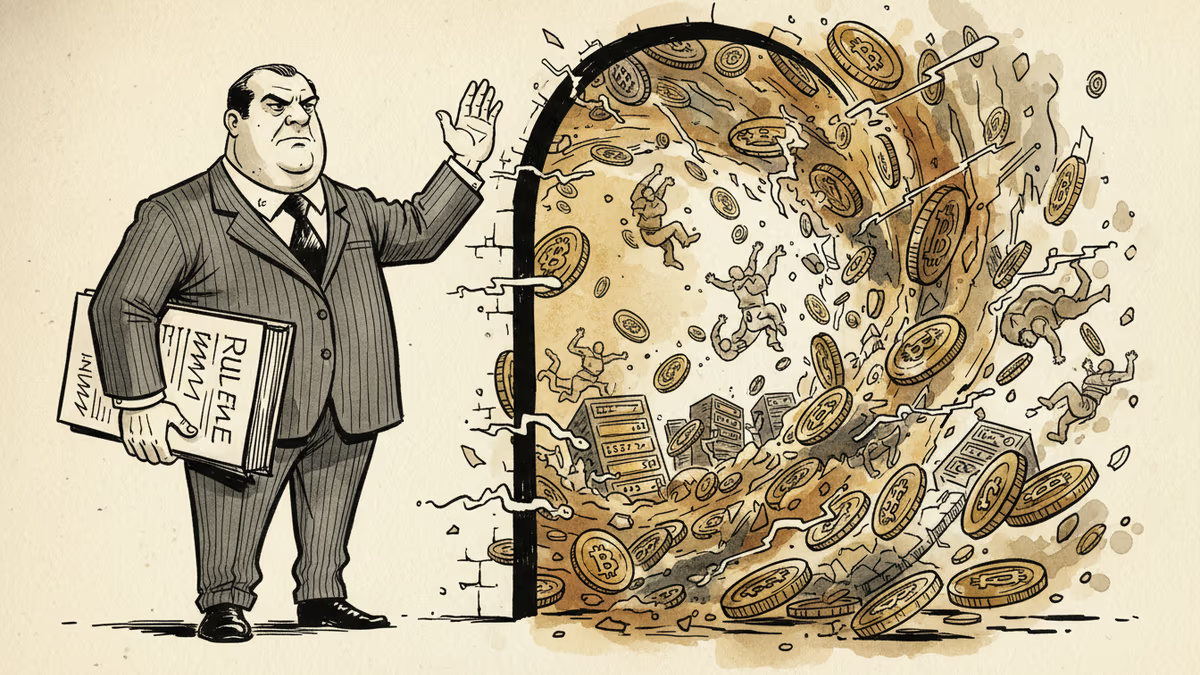
The SEC is preparing a major digital assets regulatory proposal. Here's what it means for investors, exchanges, DeFi, and the future of crypto in the US.

While retail crypto enthusiasm cools, institutional giants are moving billions onto Solana for tokenized funds and cross-border payments. Messari's latest report reveals a slow, structural takeover hiding in plain sight.
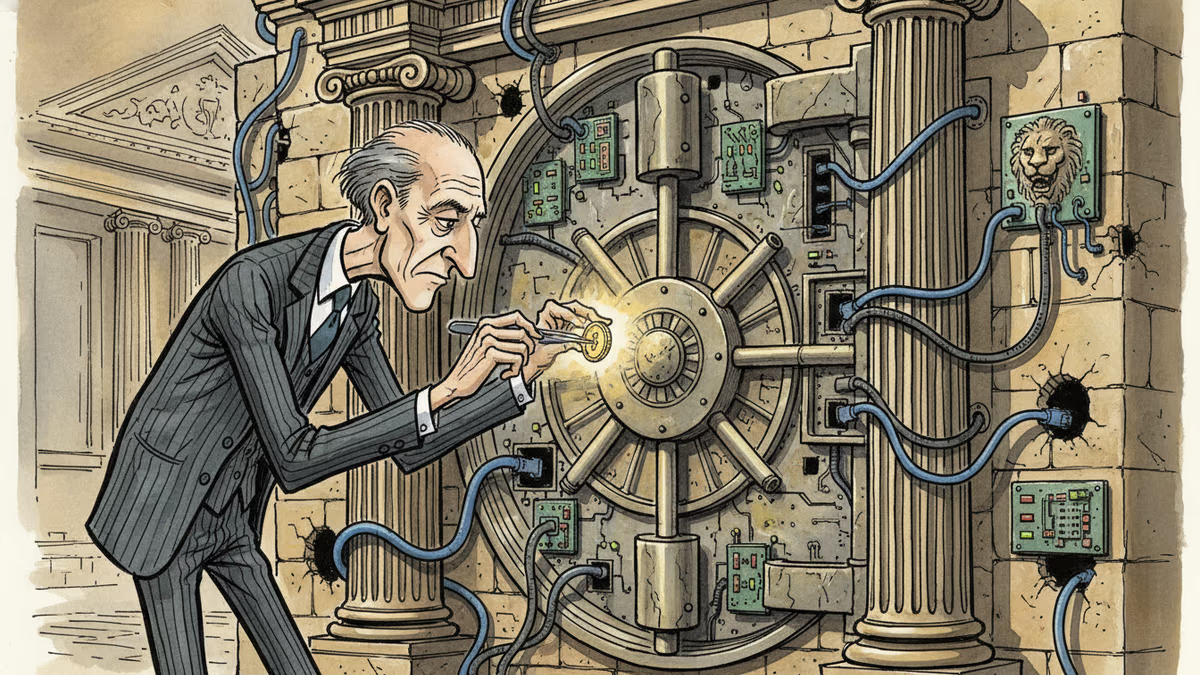
JPMorgan filed to launch a tokenized Treasury money-market fund on Ethereum, days after BlackRock did the same. The real target? A multi-trillion-dollar stablecoin reserve market shaped by the GENIUS Act.

Trump Media posted a $405.9M net loss on just $871K in revenue in Q1 2026. Unrealized crypto losses drove the collapse. Is DJT a media company, a bitcoin fund, or something else entirely?
The SEC is preparing a major digital assets regulatory proposal. Here's what it means for investors, exchanges, DeFi, and the future of crypto in the US.
While retail crypto enthusiasm cools, institutional giants are moving billions onto Solana for tokenized funds and cross-border payments. Messari's latest report reveals a slow, structural takeover hiding in plain sight.
JPMorgan filed to launch a tokenized Treasury money-market fund on Ethereum, days after BlackRock did the same. The real target? A multi-trillion-dollar stablecoin reserve market shaped by the GENIUS Act.
Trump Media posted a $405.9M net loss on just $871K in revenue in Q1 2026. Unrealized crypto losses drove the collapse. Is DJT a media company, a bitcoin fund, or something else entirely?
Thoughts
Share your thoughts on this article
Sign in to join the conversation