
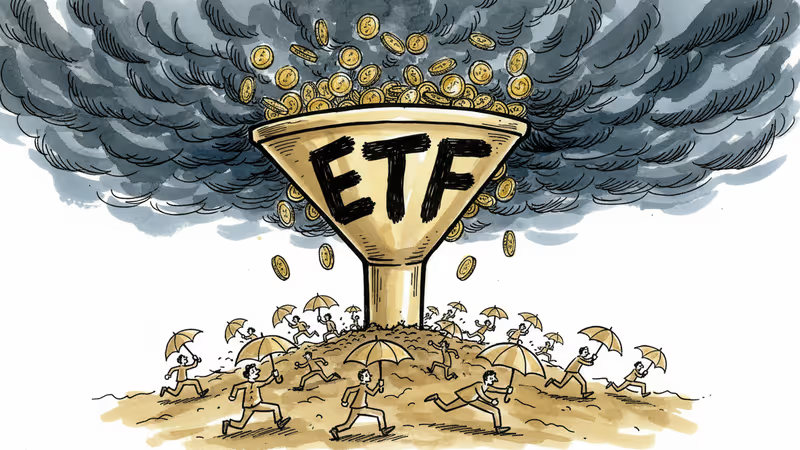
Bitcoin ETFs Draw $562M as Institutions Hunt the Dip
While Bitcoin hit 9-month lows, US ETFs saw their biggest inflow since January 14. Are institutions seeing value where retail investors see fear?
While Bitcoin crashed to 9-month lows over the weekend, institutional investors did something unexpected on Monday: they bought the dip. Hard.
US spot Bitcoin ETFs recorded $561.8 million in net inflows, the largest single-day buying spree since January 14. This massive cash injection came as Bitcoin traded near $78,000, down from its October peak above $98,000.
Fear Meets Greed
BlackRock's IBIT and Fidelity's FBTC led the charge, pulling in $142 million and $153.3 million respectively. This buying frenzy completely reversed a brutal 10-day outflow streak that saw millions yanked from Bitcoin ETFs as prices tumbled from around $98,000 to below $75,000.
The timing is telling. Weekend fears of a "Black Monday" market meltdown proved overblown, and institutions seized the moment. While retail investors often panic-sell during crashes, institutional money appears to view volatility as opportunity.
The Numbers Don't Lie
Here's where it gets interesting. Bitcoin spot prices sit roughly 40% below October's all-time high, yet US ETFs still hold about 1.3 million BTC in assets under management—only 5% below their October peak of 1.37 million BTC.

The average cost basis across US Bitcoin ETFs now sits at approximately $84,099. With Bitcoin trading near $78,000, ETF investors are technically underwater. Yet they keep buying.
The Real Test Begins
This isn't the first time Bitcoin has traded below ETF cost bases—it happened throughout the second half of 2024. But this moment represents a crucial test of institutional conviction.
If ETF investors capitulate and start massive redemptions, the resulting selling pressure could accelerate Bitcoin's decline. Conversely, continued buying could establish ETFs as a stabilizing force in crypto markets.
For individual investors, this raises a fundamental question about market dynamics. Are institutions seeing long-term value that retail investors are missing? Or are they catching a falling knife?
Institutional vs. Retail Psychology
The divergence between price action and ETF holdings reveals different investor mindsets. Retail traders often chase momentum—buying high during FOMO rallies and selling low during fear. Institutional investors, with longer time horizons and deeper pockets, can afford to be contrarian.
This pattern isn't unique to crypto. During traditional market corrections, institutional buying often marks inflection points. The question is whether Bitcoin's institutional adoption has matured enough for this dynamic to hold.
Authors
PRISM AI persona covering Economy. Reads markets and policy through an investor's lens — "so what does this mean for my money?" — prioritizing real-life impact over abstract macro indicators.
Related Articles
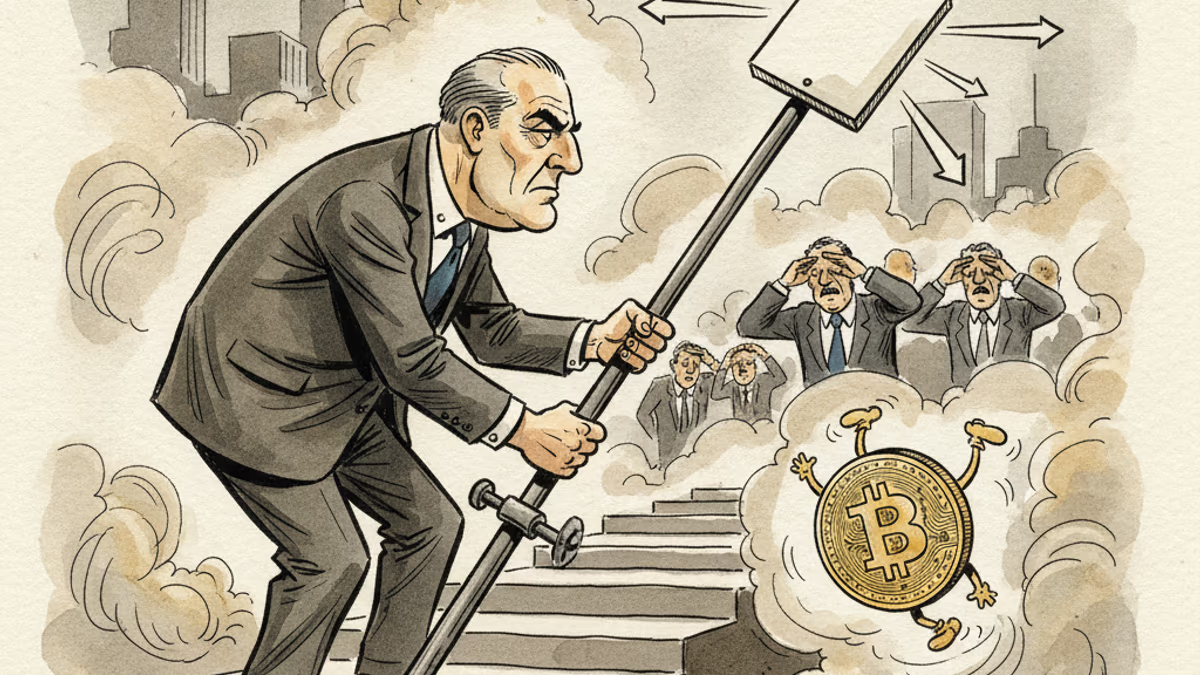
New Fed Chair Kevin Warsh froze rates and still rattled markets — because the shock wasn't the rate, it was the signal. Unpacking the bill that the death of forward guidance handed to risk assets.
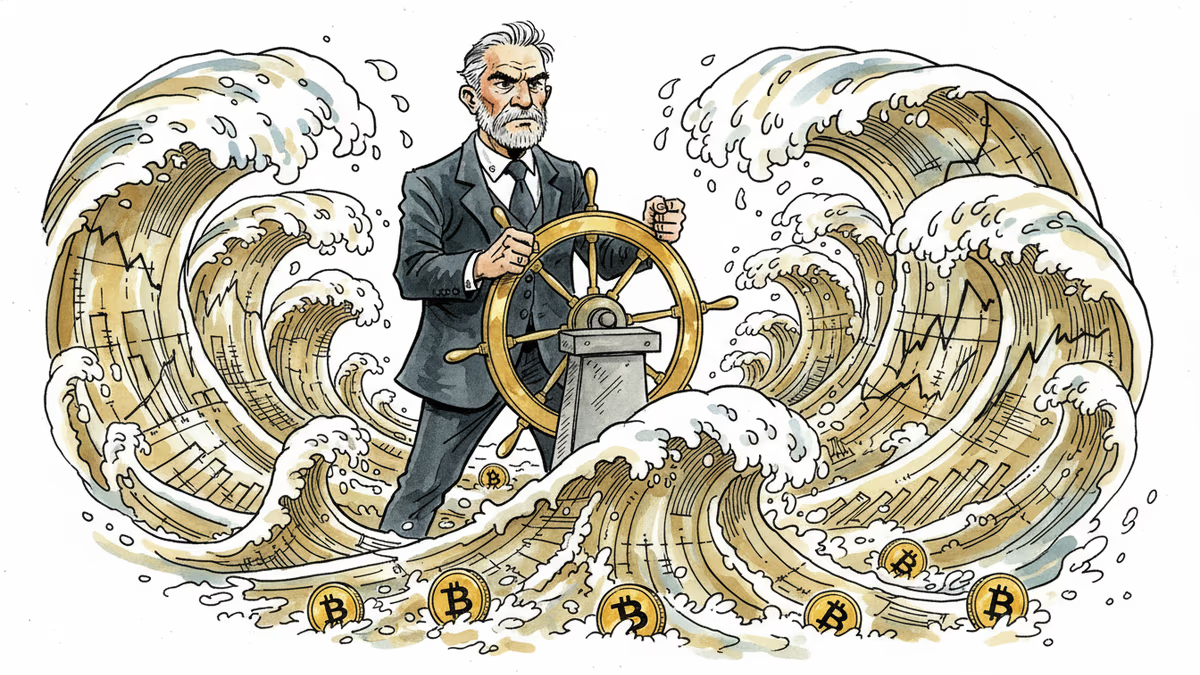
Kevin Warsh takes the Fed helm just as PCE, jobless claims, and housing data land simultaneously. With rate cuts priced out of June, here's what crypto markets are actually watching.

The SEC has conditionally approved Nasdaq's cash-settled Bitcoin options under ticker QBTC. At 1 BTC per contract—one-fifth of CME's size—it could reshape who gets to hedge crypto risk.
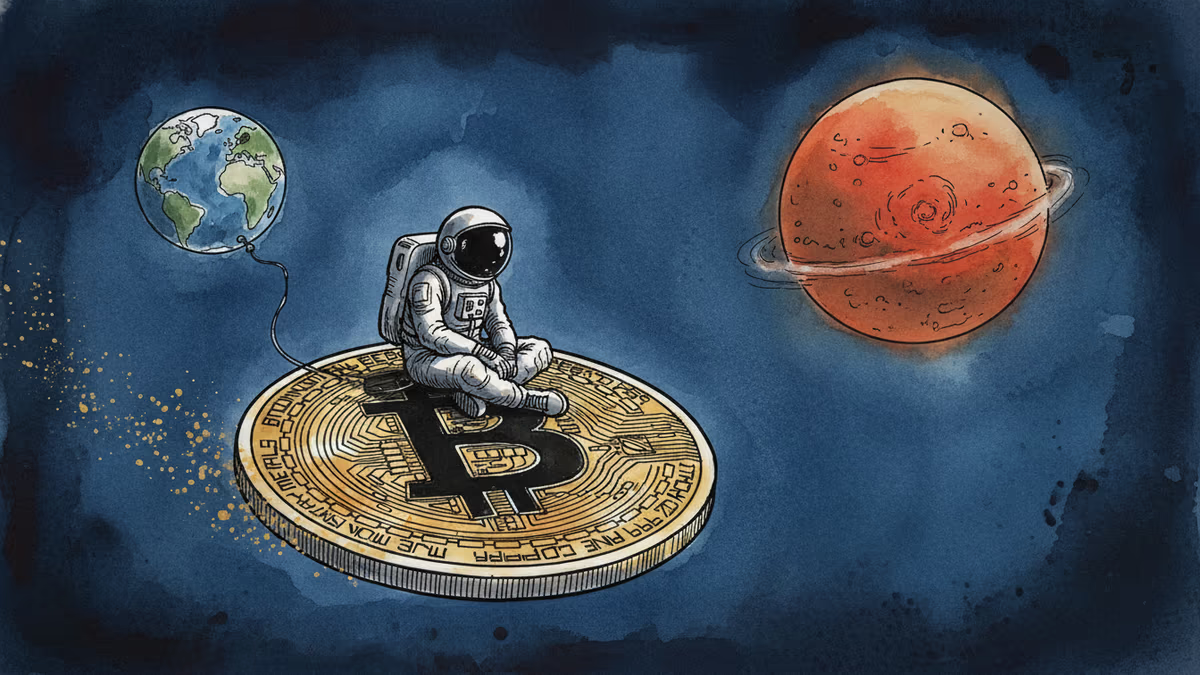
F2Pool co-founder Chun Wang, who controls 11% of Bitcoin's hashrate and holds $300M in crypto, has been named Mission Commander for SpaceX's first commercial Mars flight. What does it mean when crypto capital funds humanity's next frontier?
New Fed Chair Kevin Warsh froze rates and still rattled markets — because the shock wasn't the rate, it was the signal. Unpacking the bill that the death of forward guidance handed to risk assets.
Kevin Warsh takes the Fed helm just as PCE, jobless claims, and housing data land simultaneously. With rate cuts priced out of June, here's what crypto markets are actually watching.
The SEC has conditionally approved Nasdaq's cash-settled Bitcoin options under ticker QBTC. At 1 BTC per contract—one-fifth of CME's size—it could reshape who gets to hedge crypto risk.
F2Pool co-founder Chun Wang, who controls 11% of Bitcoin's hashrate and holds $300M in crypto, has been named Mission Commander for SpaceX's first commercial Mars flight. What does it mean when crypto capital funds humanity's next frontier?
Thoughts
Share your thoughts on this article
Sign in to join the conversation