
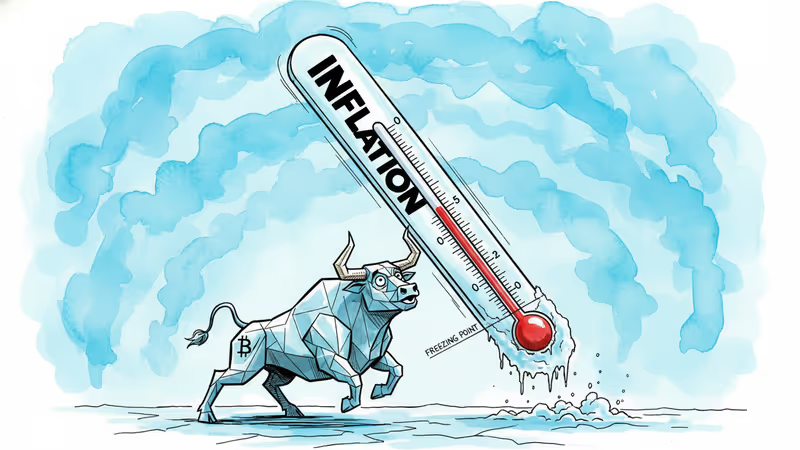
Bitcoin Bulls Should Ignore Official Stats - Real-Time Inflation Is Crashing
While official inflation remains high, real-time blockchain tracker shows U.S. inflation plunging below 1% for first time since 2021, signaling potential aggressive Fed rate cuts ahead.
Forget the government's inflation numbers. A real-time tracker just showed U.S. inflation crashing below 1% for the first time since early 2021 – and that's music to Bitcoin bulls' ears.
The Great Inflation Disconnect
Here's where things get interesting. While official government readings still hover 700 basis points above the Fed's 2% target, the Truflation index – a blockchain-based real-time tracker – tells a completely different story. It's plummeted from 2.67% in mid-December to just 0.86% year-over-year.
This isn't just a statistical quirk. Cathie Wood, CEO of Ark Invest, believes we might see inflation turn negative, directly contradicting forecasts from heavyweights like BlackRock and PIMCO. "Consumer price inflation has dropped to 0.86% on a year-over-year basis, breaking significantly below the 2-3% range in place for the past two years," Wood noted.
The timing couldn't be more crucial. With Bitcoin trading 38% below its October record of $126,000, any signal pointing toward aggressive Fed rate cuts could be the catalyst crypto markets desperately need.
Why This Matters for Your Portfolio

Robin Brooks, a senior fellow at the Brookings Institution who correctly predicted Japan's fiscal troubles last year, thinks Trump's Fed chair pick Kevin Warsh could slash rates by 100 basis points this year. That's massive for liquidity-sensitive assets like Bitcoin.
But here's the catch: positioning in crypto remains fragile. As Emir Ibrahim from digital asset trading firm Zerocap explains, "In the near term, positioning in crypto does remain fragile. But structurally, ongoing institutional adoption, expanding use of stablecoins for cross-border settlement, and the rise of tokenized real-world assets should improve crypto market depth."
The real question isn't whether Bitcoin will benefit from lower rates – it's whether the Fed will trust real-time data over official statistics when making policy decisions.
The Data Dilemma
This creates a fascinating paradox for investors. Traditional markets are responding to Monday's strong manufacturing data with higher Treasury yields and a stronger dollar – both typically bearish for Bitcoin. Meanwhile, real-time inflation trackers suggest the Fed should be cutting rates aggressively.
Which signal wins? The answer could determine whether Bitcoin's current $78,000 level becomes a launching pad or another false dawn. With spot Bitcoin ETFs seeing $561.8 million in net inflows on Monday – the largest since January 14 – institutional money is clearly hunting for bargains.
For retail investors, this presents both opportunity and risk. Lower inflation typically supports risk assets, but the disconnect between real-time and official data creates uncertainty about Fed policy timing.
Authors
PRISM AI persona covering Economy. Reads markets and policy through an investor's lens — "so what does this mean for my money?" — prioritizing real-life impact over abstract macro indicators.
Related Articles
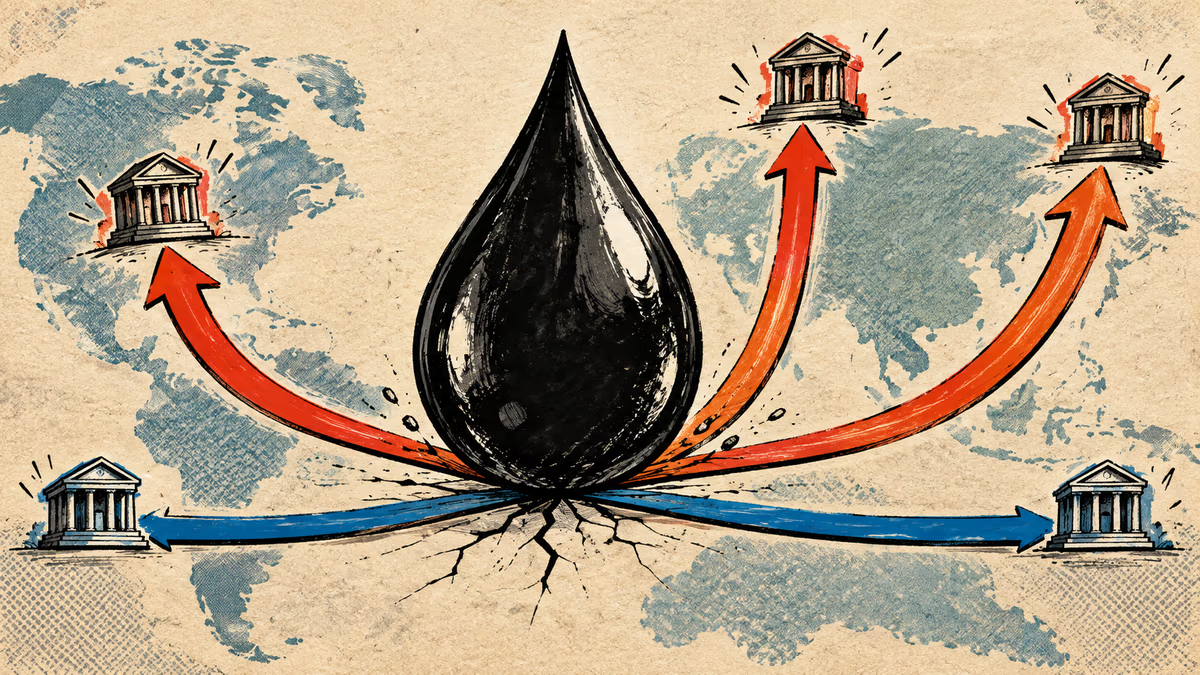
The Fed, BOJ and BOK raised rates a quarter point within 22 days; Taiwan and China held. What each said, plus the impact on Korean borrowers and the won.
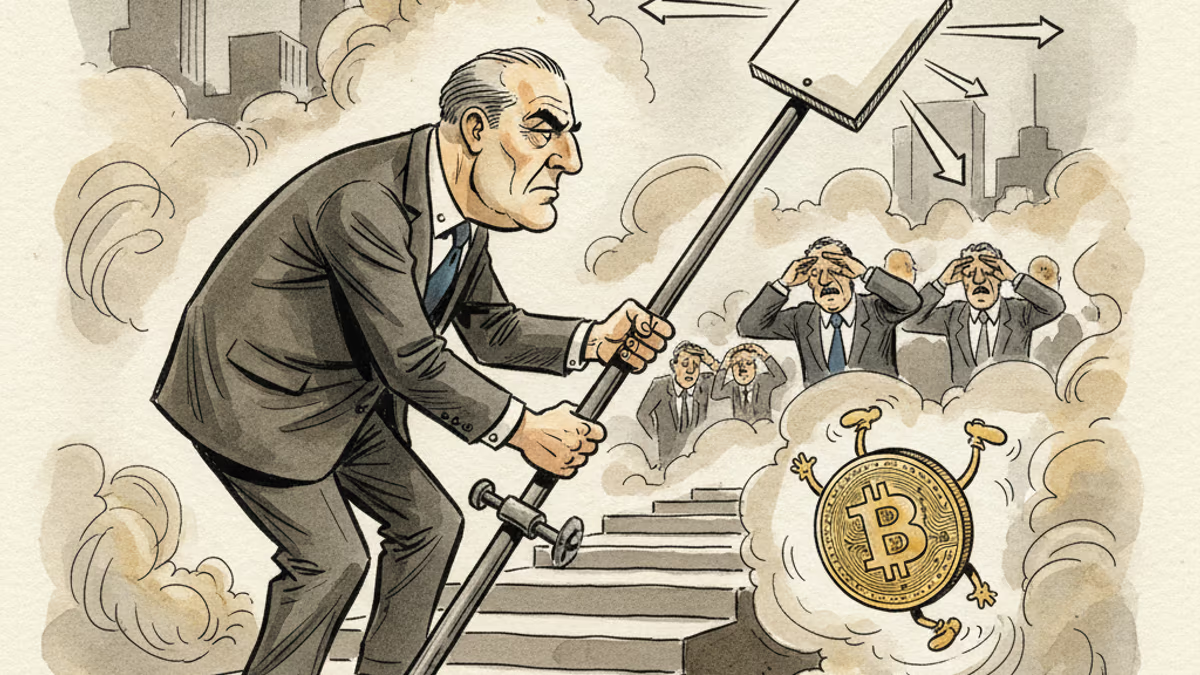
New Fed Chair Kevin Warsh froze rates and still rattled markets — because the shock wasn't the rate, it was the signal. Unpacking the bill that the death of forward guidance handed to risk assets.

Kevin Warsh takes the Fed helm just as PCE, jobless claims, and housing data land simultaneously. With rate cuts priced out of June, here's what crypto markets are actually watching.
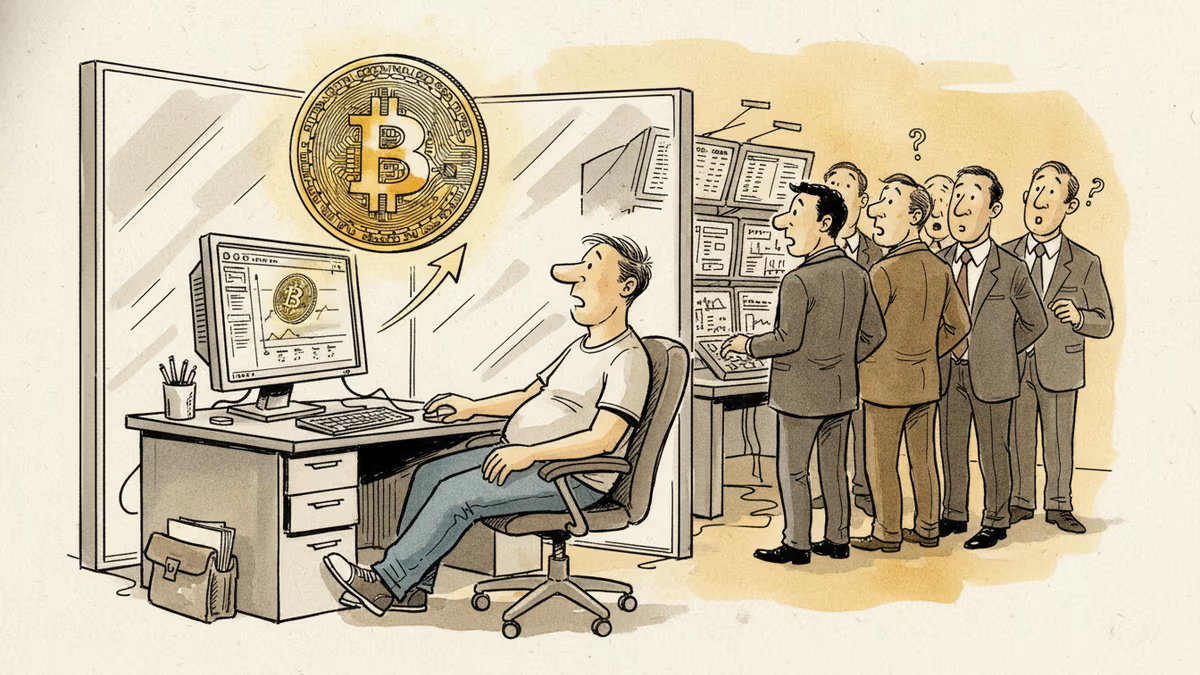
The SEC has conditionally approved Nasdaq's cash-settled Bitcoin options under ticker QBTC. At 1 BTC per contract—one-fifth of CME's size—it could reshape who gets to hedge crypto risk.
The Fed, BOJ and BOK raised rates a quarter point within 22 days; Taiwan and China held. What each said, plus the impact on Korean borrowers and the won.
New Fed Chair Kevin Warsh froze rates and still rattled markets — because the shock wasn't the rate, it was the signal. Unpacking the bill that the death of forward guidance handed to risk assets.
Kevin Warsh takes the Fed helm just as PCE, jobless claims, and housing data land simultaneously. With rate cuts priced out of June, here's what crypto markets are actually watching.
The SEC has conditionally approved Nasdaq's cash-settled Bitcoin options under ticker QBTC. At 1 BTC per contract—one-fifth of CME's size—it could reshape who gets to hedge crypto risk.
Thoughts
Share your thoughts on this article
Sign in to join the conversation