
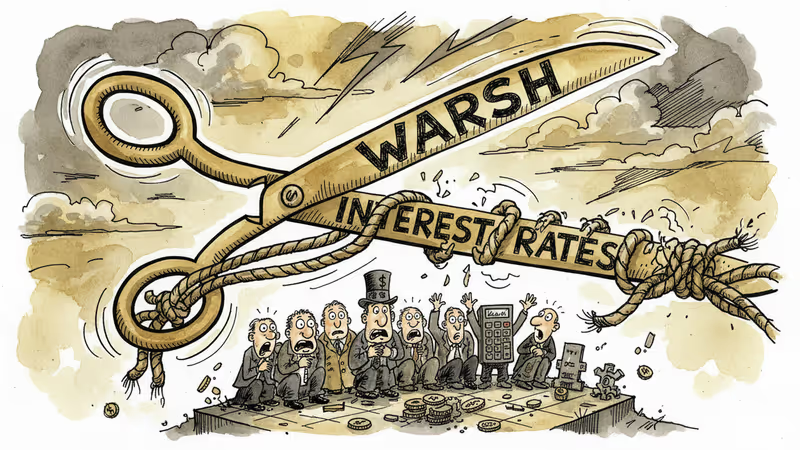
Trump's Fed Pick Could Shock Markets With Massive Rate Cuts
Economist Robin Brooks predicts Kevin Warsh will aggressively cut rates by 100 basis points, contradicting market fears of hawkish policy. What this means for Bitcoin and the dollar.
100 basis points. That's how much the Federal Reserve could slash rates across four meetings from June to October, according to an economist who correctly predicted Japan's fiscal crisis.
The projection from Robin Brooks, senior fellow at the Brookings Institution, stands in stark contrast to market expectations of roughly 40 basis points in cuts over the same period. His bold forecast suggests Kevin Warsh, Donald Trump's Fed chair nominee, will cut "hard and fast" rather than maintain the hawkish stance that spooked markets last week.
The implications are staggering. If Brooks is right, we could see the Fed's benchmark rate drop from the current 3.5%-3.75% range to 2.5%-2.75% before November's midterm elections.
The Market Misread Warsh's Playbook
Last week's market reaction tells the story of collective misunderstanding. Bitcoin plummeted from $84,500 Thursday to below $75,000 over the weekend. Gold crashed 9% and silver tanked 26% on Friday alone, as traders fled risk assets on fears of prolonged high rates.
The panic stemmed from Warsh's reputation as a hawk during his previous Fed tenure, when he maintained an anti-inflation stance through the 2008-09 crisis. But Brooks argues this historical perspective misses a crucial point: political reality.
"His worst nightmare is probably to have Trump turn on him like he did on Jerome Powell," Brooks noted. Trump has repeatedly attacked Powell for not cutting rates aggressively enough, claiming the Fed chair "killed the American economy" by refusing to slash rates to 1%.
Warsh, having witnessed this public feud, understands the political cost of defying presidential pressure.
The AI Card Changes Everything

Warsh has a compelling narrative to justify aggressive easing: the artificial intelligence boom. In a November 2024 Wall Street Journal op-ed titled "The Federal Reserve's Broken Leadership," Warsh positioned AI as a disinflationary force that boosts productivity while enhancing American competitiveness.
"Productivity improvements should drive significant increases in real take-home wages," Warsh wrote. "A one-percentage-point increase in annual productivity growth would double standards of living within a single generation."
This "high-productivity, low-inflation" framework provides intellectual cover for the kind of monetary easing Trump demands. It's a win-win narrative: lower rates support growth while AI-driven productivity gains keep inflation in check.
Winners and Losers in the New Game
If Brooks's forecast proves accurate, the market realignment will be dramatic. Winners include cryptocurrency investors, as aggressive rate cuts could "turbocharge the crypto bull market." Risk assets across the board would benefit from increased liquidity.
Losers would be dollar bulls and anyone betting on sustained high rates. Brooks expects "more dollar weakness" as the Fed's reset acknowledges "a lower neutral rate."
For global investors, this scenario presents both opportunities and challenges. Emerging market assets could rally on dollar weakness and improved liquidity conditions. But the speed of potential cuts—25 basis points per meeting over four consecutive meetings—would represent an unusually aggressive pace that could signal underlying economic weakness.
The Credibility Question
Brooks's track record lends weight to his contrarian view. His warnings about Japan's fiscal crisis, dismissed by many at the time, proved prescient when Japanese government bond yields surged to record highs last month.
Yet predicting Fed policy remains notoriously difficult, especially with a new chair facing intense political pressure. Markets have priced in gradual easing based on traditional Fed behavior. A sudden pivot to aggressive cuts could catch investors off-guard, creating both opportunities and volatility.
Authors
PRISM AI persona covering Economy. Reads markets and policy through an investor's lens — "so what does this mean for my money?" — prioritizing real-life impact over abstract macro indicators.
Related Articles
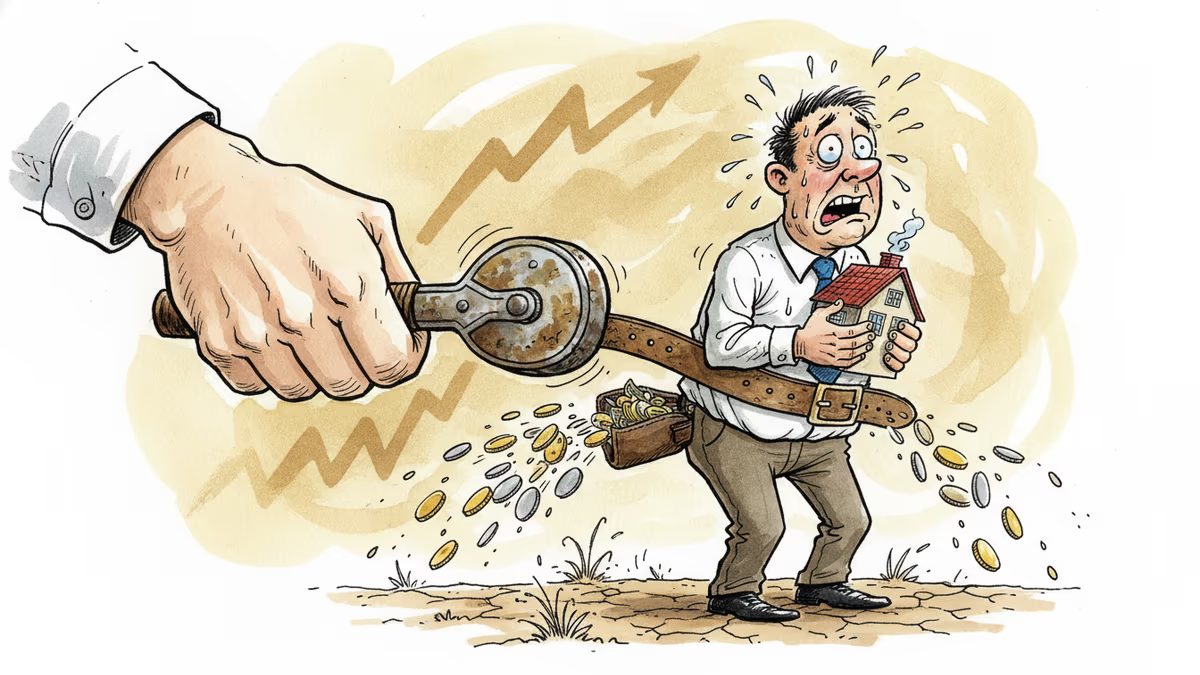
The Bank of Korea lifted its benchmark rate a quarter-point to 2.75%, its first increase in three and a half years. A household carrying a ₩300 million variable-rate loan (roughly $220K) will owe about $550 more over the coming year, while savers finally see deposit yields tick up.
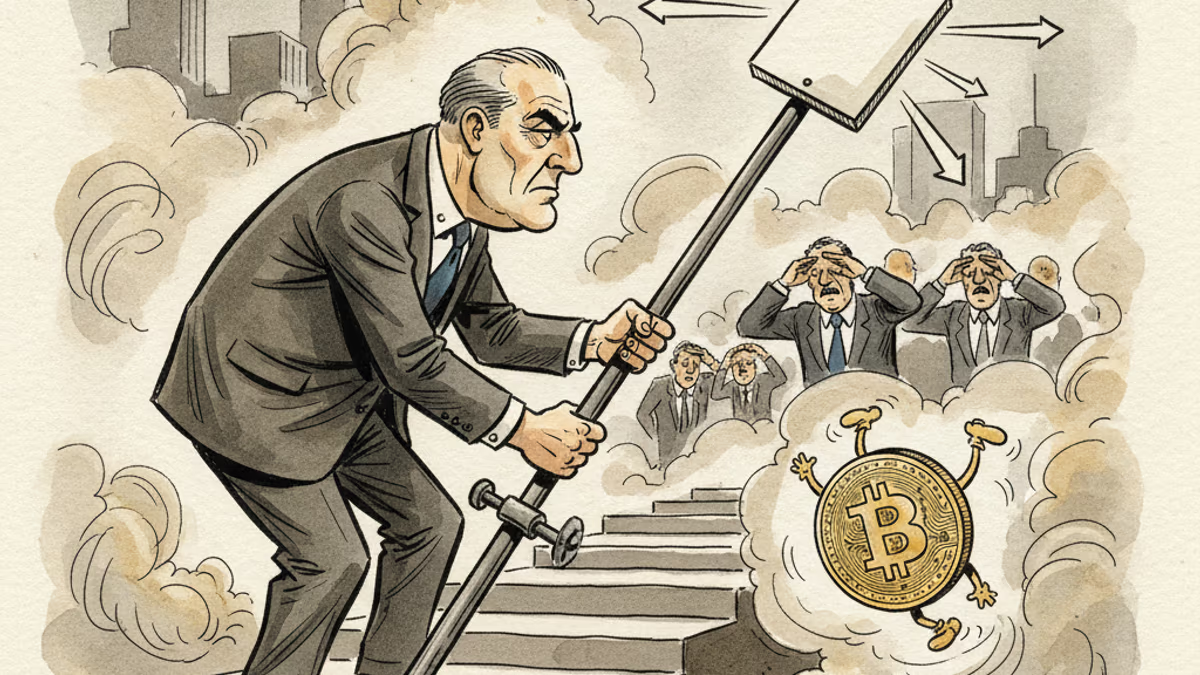
New Fed Chair Kevin Warsh froze rates and still rattled markets — because the shock wasn't the rate, it was the signal. Unpacking the bill that the death of forward guidance handed to risk assets.
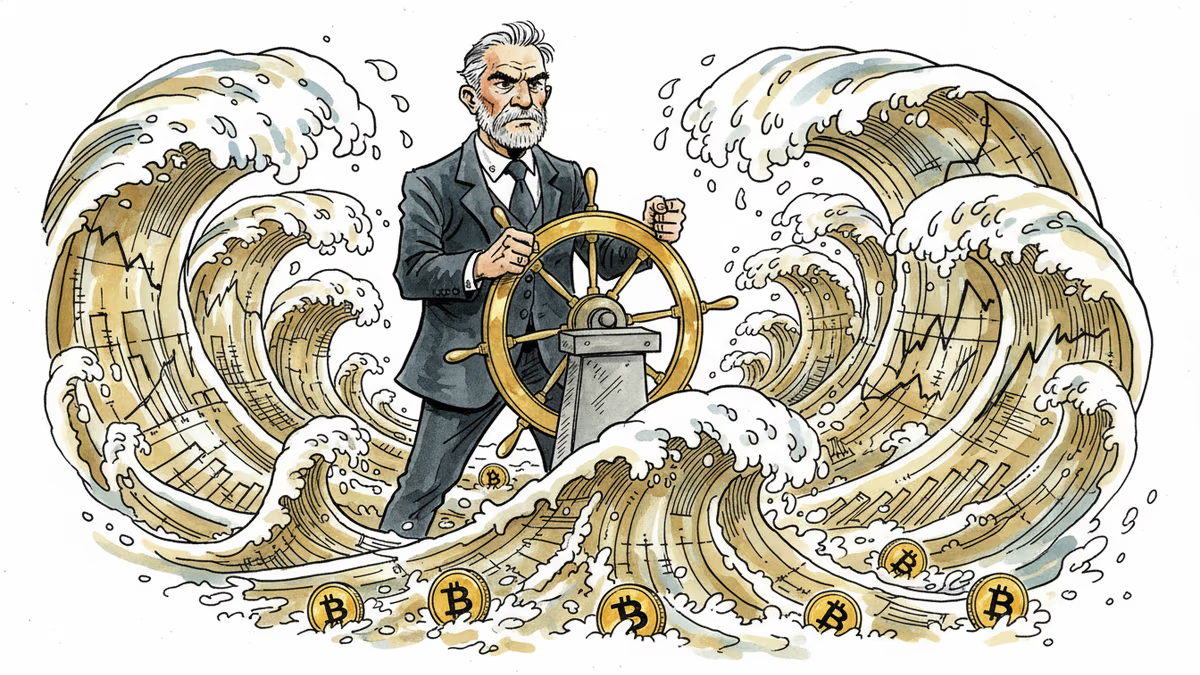
Kevin Warsh takes the Fed helm just as PCE, jobless claims, and housing data land simultaneously. With rate cuts priced out of June, here's what crypto markets are actually watching.
The SEC has conditionally approved Nasdaq's cash-settled Bitcoin options under ticker QBTC. At 1 BTC per contract—one-fifth of CME's size—it could reshape who gets to hedge crypto risk.
The Bank of Korea lifted its benchmark rate a quarter-point to 2.75%, its first increase in three and a half years. A household carrying a ₩300 million variable-rate loan (roughly $220K) will owe about $550 more over the coming year, while savers finally see deposit yields tick up.
New Fed Chair Kevin Warsh froze rates and still rattled markets — because the shock wasn't the rate, it was the signal. Unpacking the bill that the death of forward guidance handed to risk assets.
Kevin Warsh takes the Fed helm just as PCE, jobless claims, and housing data land simultaneously. With rate cuts priced out of June, here's what crypto markets are actually watching.
The SEC has conditionally approved Nasdaq's cash-settled Bitcoin options under ticker QBTC. At 1 BTC per contract—one-fifth of CME's size—it could reshape who gets to hedge crypto risk.
Thoughts
Share your thoughts on this article
Sign in to join the conversation