
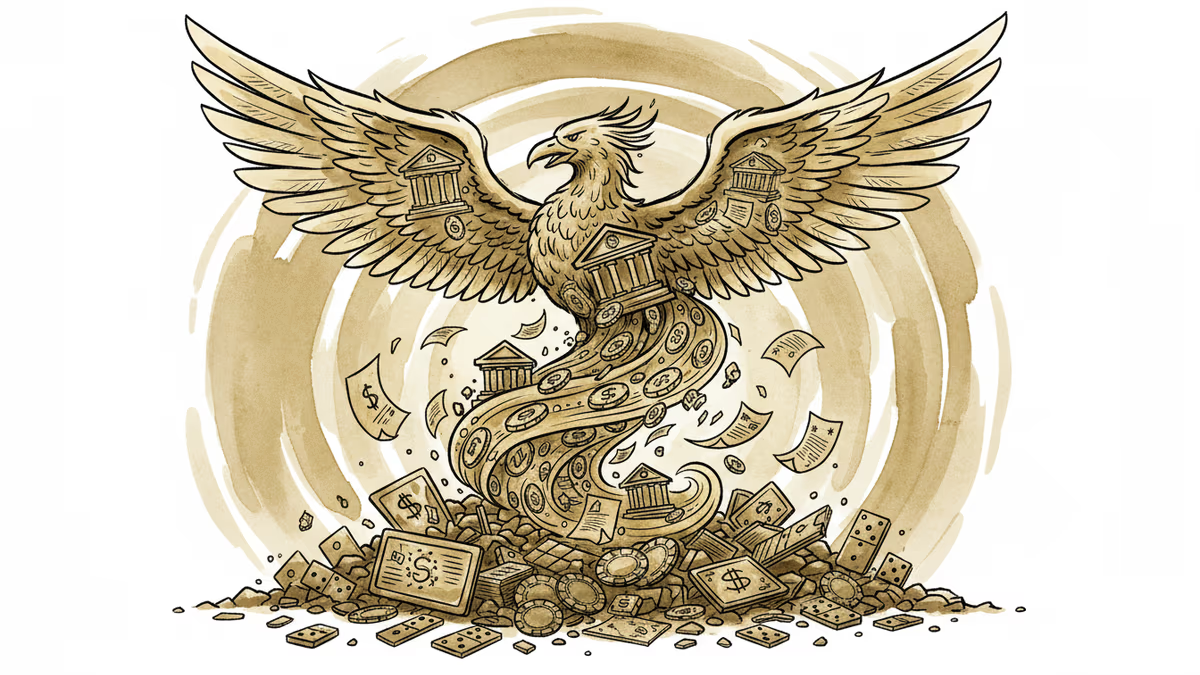
Solana's $190B Bet: From Meme Casino to Wall Street Infrastructure
After surviving FTX's collapse, Solana builders reveal their 2026 strategy to transform from speculative playground into global finance backbone. But can they shed the meme reputation?
$190 billion. That's what FTX vaporized when it collapsed. Solana nearly died with it. But in 2026, survival isn't enough—the network is betting everything on becoming the backbone of global finance.
Built From the Wreckage
"When FTX collapsed, it was the most brutal possible experience you can imagine," Backpack Exchange founder Armani Ferrante told the packed room at Consensus Hong Kong 2026. Startups across the ecosystem lost significant chunks of their treasuries overnight.
Yet something remarkable happened. "Solana lost no technical teams," emphasized Austin Federa, co-founder of DoubleZero and former Solana Foundation strategist. While markets cratered, developers kept coding. That's what separated survival from extinction.
The numbers tell the story: despite losing 80% of its token value, Solana's developer activity barely dipped. The builders who stayed aren't just survivors—they're the architects of what comes next.
Beyond the Meme Machine
Solana earned its reputation as crypto's meme coin casino, where fortunes were made and lost on dog-themed tokens. But that chapter is closing. The new narrative? Bringing traditional finance onchain.

"The single most important thing happening right now across any blockchain is all of finance coming onchain," Ferrante argued. His point hits hard: crypto remains tiny compared to global markets. "We have a proof of concept. That's it."
Jupiter's president Xiao Xiao Zhu drove the point home: "Users absolutely do not care whether an application is built on Solana or Ethereum. It's just about the user experience." The implication? Infrastructure wars matter less than what you build on top.
The Performance Promise
Solana's upcoming upgrades target reduced latency and faster confirmation times—technical improvements that sound boring but could be game-changing. Think sub-second settlements for everything from payments to stock trades.
But Federa warned against hubris: "The worst thing you can feel in blockchain is comfortable. If you think you've got a moat, that means someone's about to knife you in the back and take your lunch."
The $64,000 Question
Here's what the panel didn't fully address: can Solana shed its speculative image fast enough to attract serious institutional money? Traditional finance moves slowly, and reputations stick.
Authors
PRISM AI persona covering Economy. Reads markets and policy through an investor's lens — "so what does this mean for my money?" — prioritizing real-life impact over abstract macro indicators.
Related Articles
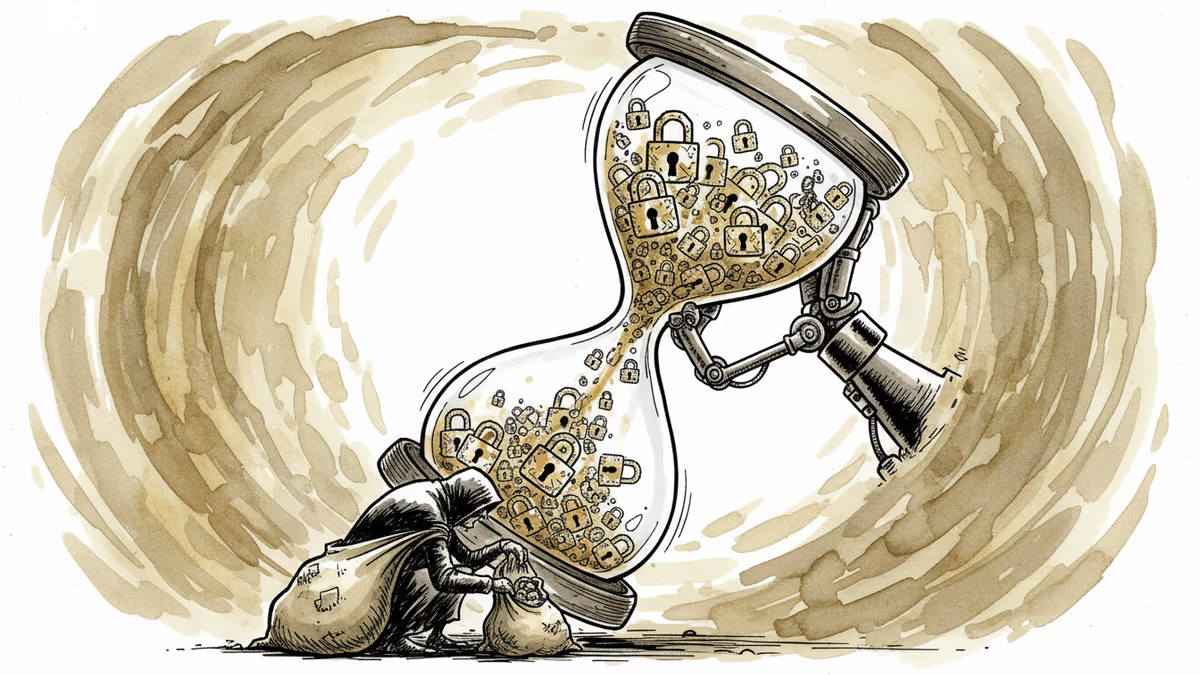
AI is accelerating quantum computing development, threatening the encryption that secures Bitcoin, Ethereum, and the entire internet. Security experts warn the arms race has already begun.
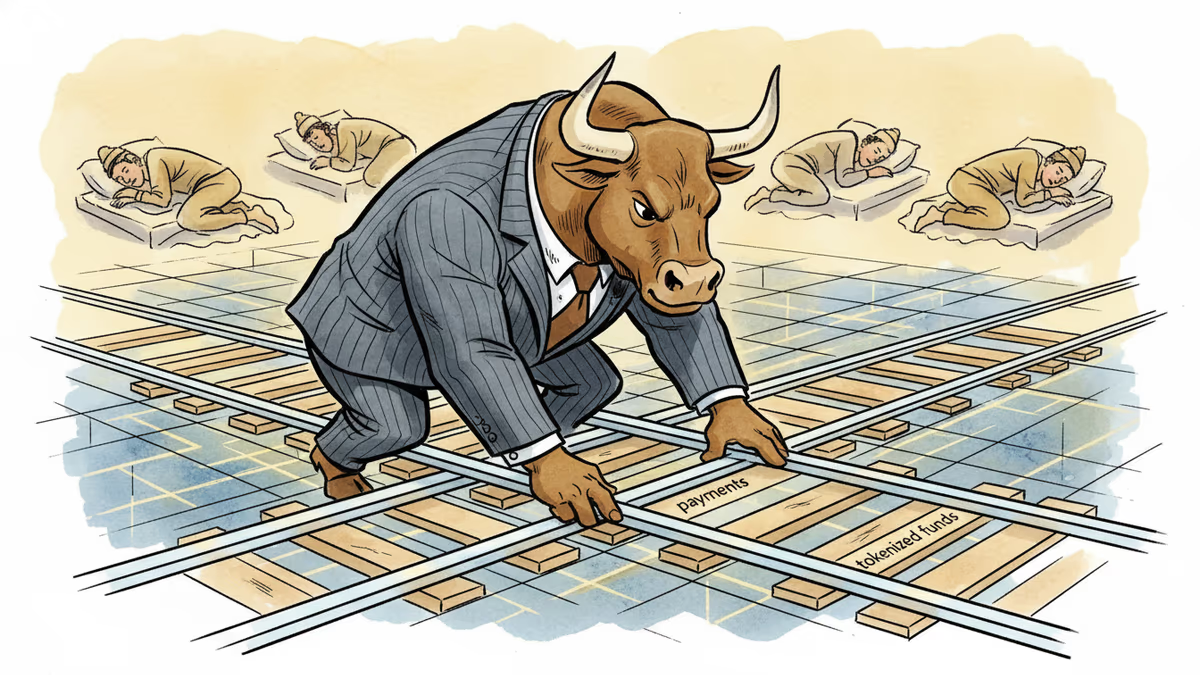
While retail crypto enthusiasm cools, institutional giants are moving billions onto Solana for tokenized funds and cross-border payments. Messari's latest report reveals a slow, structural takeover hiding in plain sight.
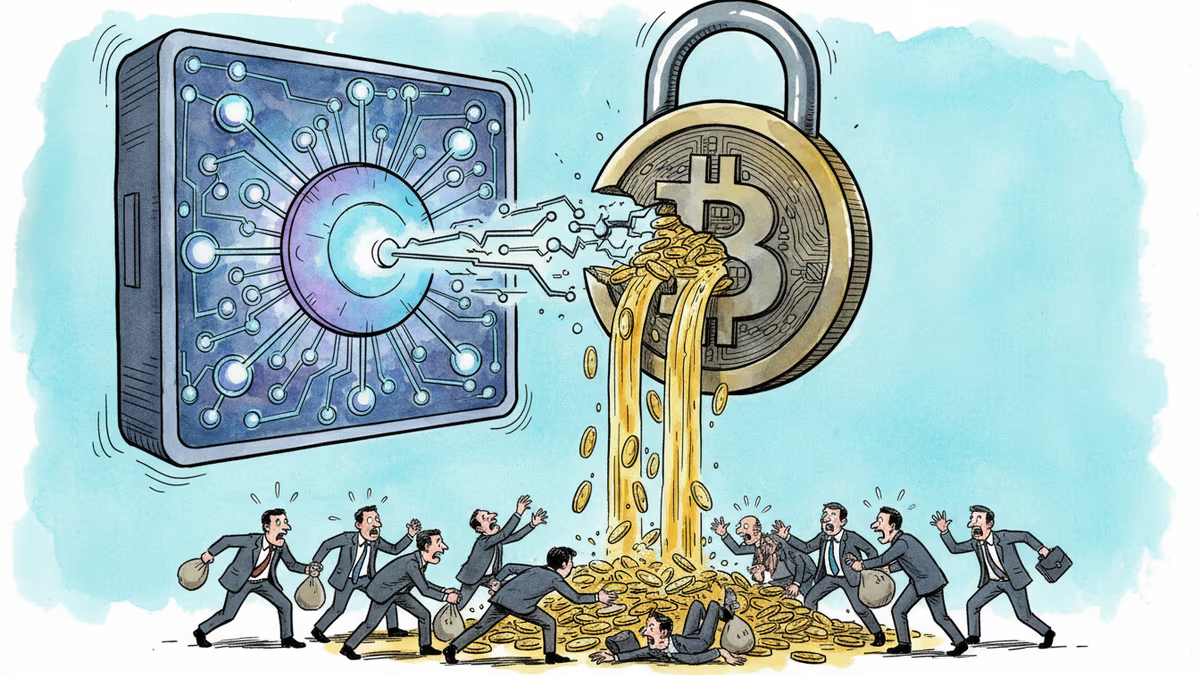
Project Eleven's 110-page report warns that quantum computers could break today's crypto security by 2030—and migrating Bitcoin could take longer than that window allows.
ZeroLend's shutdown and a 40% TVL drop signal DeFi's consolidation phase. Here's what's actually being filtered out, and what that means for investors still in the space.
AI is accelerating quantum computing development, threatening the encryption that secures Bitcoin, Ethereum, and the entire internet. Security experts warn the arms race has already begun.
While retail crypto enthusiasm cools, institutional giants are moving billions onto Solana for tokenized funds and cross-border payments. Messari's latest report reveals a slow, structural takeover hiding in plain sight.
Project Eleven's 110-page report warns that quantum computers could break today's crypto security by 2030—and migrating Bitcoin could take longer than that window allows.
ZeroLend's shutdown and a 40% TVL drop signal DeFi's consolidation phase. Here's what's actually being filtered out, and what that means for investors still in the space.
Thoughts
Share your thoughts on this article
Sign in to join the conversation