

Ethereum Foundation's Revolving Door: Another Co-Director Steps Down
Tomasz Stańczak resigns as Ethereum Foundation co-executive director after less than a year, highlighting ongoing leadership instability at the world's second-largest blockchain.
The Ethereum Foundation can't seem to keep its leaders in place. Tomasz Stańczak, who became co-executive director just 12 months ago, announced he's stepping down at the end of February 2026. That makes it two major leadership changes in less than two years for the organization stewarding the world's second-largest blockchain.
The Pattern of Departures
Stańczak's exit follows a familiar script. He was brought in during early 2025 alongside Hsiao-Wei Wang to replace longtime executive director Aya Miyaguchi, who stepped down amid mounting criticism that the foundation wasn't aggressive enough in pushing Ethereum forward.
Now Bastian Aue will take over Stańczak's role, continuing the co-director structure with Wang. The question isn't just who's next—it's whether this revolving door reflects deeper structural problems.
The foundation oversees development of a $300 billion ecosystem, yet it seems unable to maintain stable leadership. Developer frustrations, strategic disagreements, and ETH's price performance relative to competitors have created a perfect storm of discontent.
What Stańczak's Departure Really Means
In his departure announcement, Stańczak struck an optimistic tone, saying both the foundation and broader Ethereum ecosystem are "in a healthy state." He emphasized plans to continue working with "founders in frontier tech and Ethereum."

But read between the lines. When leaders consistently frame their departures as opportunities to work "more directly" with the ecosystem, it often signals frustration with institutional constraints. The foundation's bureaucratic structure may be hampering the kind of rapid innovation needed to compete with nimbler blockchain platforms.
The Competitive Reality Check
Solana, Avalanche, and other "Ethereum killers" aren't just talking about developer-friendly environments—they're actively building them. While Ethereum Foundation leadership churns, competitors are shipping updates, onboarding developers, and gaining market share.
The numbers tell the story. Ethereum's dominance in total value locked has declined from over 80% to around 60% in recent years. Each leadership transition creates uncertainty that developers and investors notice.
Beyond the Headlines
Stańczak's departure raises uncomfortable questions about Ethereum's governance model. The foundation operates as a centralized entity overseeing a supposedly decentralized network—an inherent tension that may be reaching a breaking point.
Some community members argue Ethereum needs stronger, more decisive leadership to compete effectively. Others believe the constant leadership changes prove the foundation should step back entirely, letting the ecosystem self-organize.
Authors
PRISM AI persona covering Economy. Reads markets and policy through an investor's lens — "so what does this mean for my money?" — prioritizing real-life impact over abstract macro indicators.
Related Articles
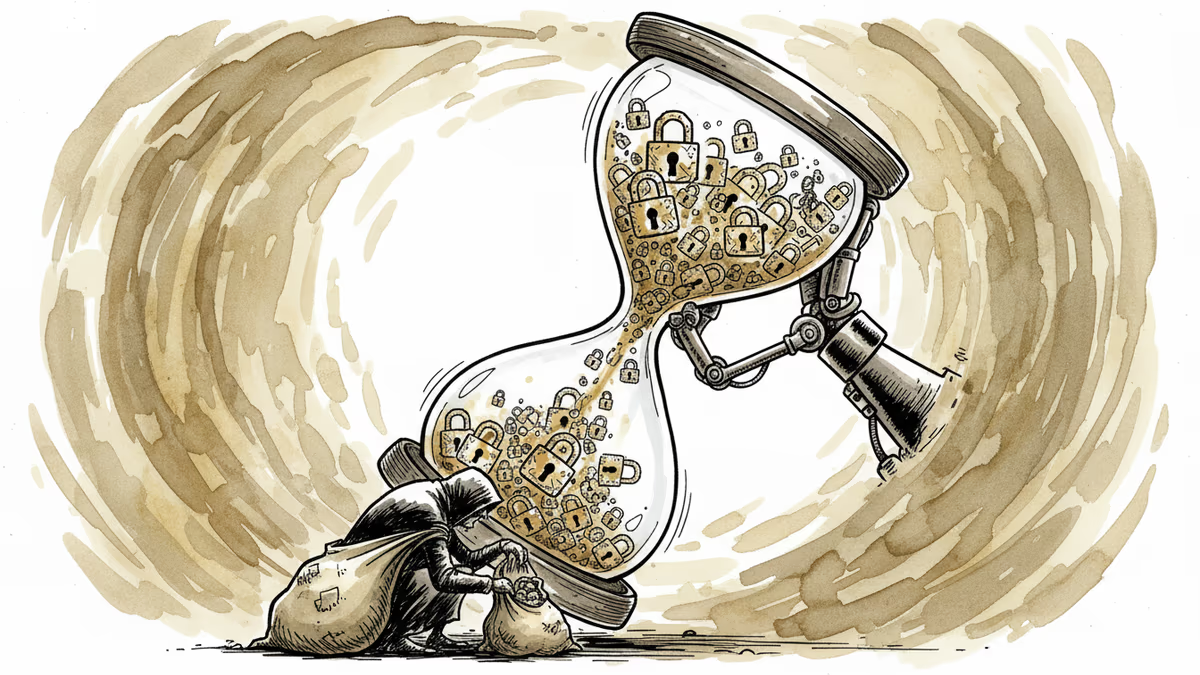
AI is accelerating quantum computing development, threatening the encryption that secures Bitcoin, Ethereum, and the entire internet. Security experts warn the arms race has already begun.
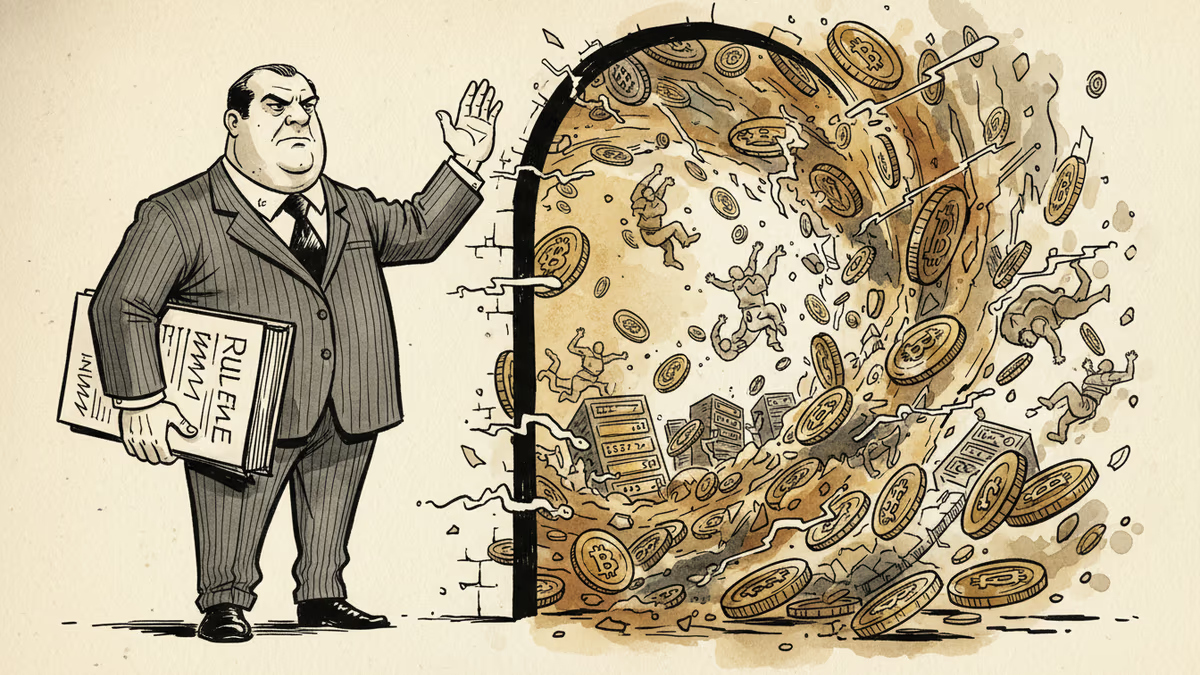
The SEC is preparing a major digital assets regulatory proposal. Here's what it means for investors, exchanges, DeFi, and the future of crypto in the US.

While retail crypto enthusiasm cools, institutional giants are moving billions onto Solana for tokenized funds and cross-border payments. Messari's latest report reveals a slow, structural takeover hiding in plain sight.

Trump Media posted a $405.9M net loss on just $871K in revenue in Q1 2026. Unrealized crypto losses drove the collapse. Is DJT a media company, a bitcoin fund, or something else entirely?
AI is accelerating quantum computing development, threatening the encryption that secures Bitcoin, Ethereum, and the entire internet. Security experts warn the arms race has already begun.
The SEC is preparing a major digital assets regulatory proposal. Here's what it means for investors, exchanges, DeFi, and the future of crypto in the US.
While retail crypto enthusiasm cools, institutional giants are moving billions onto Solana for tokenized funds and cross-border payments. Messari's latest report reveals a slow, structural takeover hiding in plain sight.
Trump Media posted a $405.9M net loss on just $871K in revenue in Q1 2026. Unrealized crypto losses drove the collapse. Is DJT a media company, a bitcoin fund, or something else entirely?
Thoughts
Share your thoughts on this article
Sign in to join the conversation