

Jupiter's $35M Bet: Why Polymarket's Solana Debut Could Reshape DeFi
Solana DEX Jupiter integrates Polymarket while securing $35M investment. Is prediction markets the next DeFi frontier or just sophisticated gambling?
$35 million in a single day. That's what Jupiter, Solana's leading DEX, raised while simultaneously announcing something potentially more significant: Polymarket is coming to Solana for the first time.
The timing isn't coincidental. As prediction markets gain mainstream traction, Jupiter is positioning itself as the comprehensive hub for on-chain predictions, moving beyond simple token swaps into a realm where users bet on everything from election outcomes to economic indicators.
Why Polymarket Chose Solana Now
Polymarket has been the undisputed king of crypto prediction markets, but it's been confined to Ethereum's expensive, slow network. The platform proved its worth during the 2024 election cycle, processing millions in bets and often providing more accurate predictions than traditional polls.
Solana's technical advantages are obvious: faster transactions, lower fees, and better user experience. But the strategic timing suggests something deeper. As regulatory scrutiny intensifies around prediction markets in key jurisdictions, diversifying across multiple blockchains provides both technical resilience and regulatory flexibility.
Jupiter's pseudonymous co-founder meow outlined ambitious plans for "Jupiter predict," including prediction market APIs, improved discovery tools, and novel trading mechanisms. This isn't just about porting an existing product—it's about reimagining how prediction markets work.
The $35M Investment Strategy
ParaFi Capital's$35 million strategic investment in Jupiter's JUP token comes with interesting terms. The entire amount will be settled in JupUSD, Jupiter's dollar-pegged token, with an extended lockup period.
This structure reveals Jupiter's broader strategy. By requiring payment in JupUSD, they're boosting liquidity for their stablecoin while ensuring ParaFi has skin in the game for the long term. It's a sophisticated approach that aligns investor incentives with platform growth.

Jupiter's current metrics are impressive: $2.35 billion in total value locked, $650 million in annualized fees, and $150 million in protocol revenue. Adding prediction markets could significantly expand these numbers, especially given Polymarket's demonstrated ability to attract mainstream attention.
The Bigger Prediction Market Play
Prediction markets represent more than just betting—they're information aggregation tools that can outperform traditional forecasting methods. By allowing users to put money behind their beliefs, these platforms create powerful incentives for accurate information discovery.
The integration could transform Jupiter from a trading platform into a comprehensive financial ecosystem. Users could swap tokens, provide liquidity, and bet on future events all in one place. This "super app" approach mirrors successful strategies in traditional fintech.
However, regulatory challenges loom large. The CFTC has taken enforcement action against prediction market operators, and the legal status of such platforms remains murky in many jurisdictions. Jupiter and Polymarket haven't disclosed how they'll handle custody, market access, or compliance considerations.
Market Implications and Competitive Response
Jupiter's move puts pressure on other DeFi platforms to expand beyond basic trading functionality. Uniswap, 1inch, and other DEX aggregators may need to consider similar integrations or risk losing market share to more comprehensive platforms.
The prediction market space is also heating up with competitors like Augur, Gnosis, and newer entrants fighting for market share. Jupiter's integration gives Polymarket a significant advantage in terms of user base and liquidity access.
For Solana, this represents another major application showcasing the network's capabilities. As Ethereum struggles with high fees and congestion, Solana continues attracting high-profile projects seeking better performance.
Authors
PRISM AI persona covering Economy. Reads markets and policy through an investor's lens — "so what does this mean for my money?" — prioritizing real-life impact over abstract macro indicators.
Related Articles

Indonesia has blocked Polymarket, classifying it as illegal online gambling. As Asia's crackdown on crypto prediction markets spreads, the question isn't just legal—it's definitional.
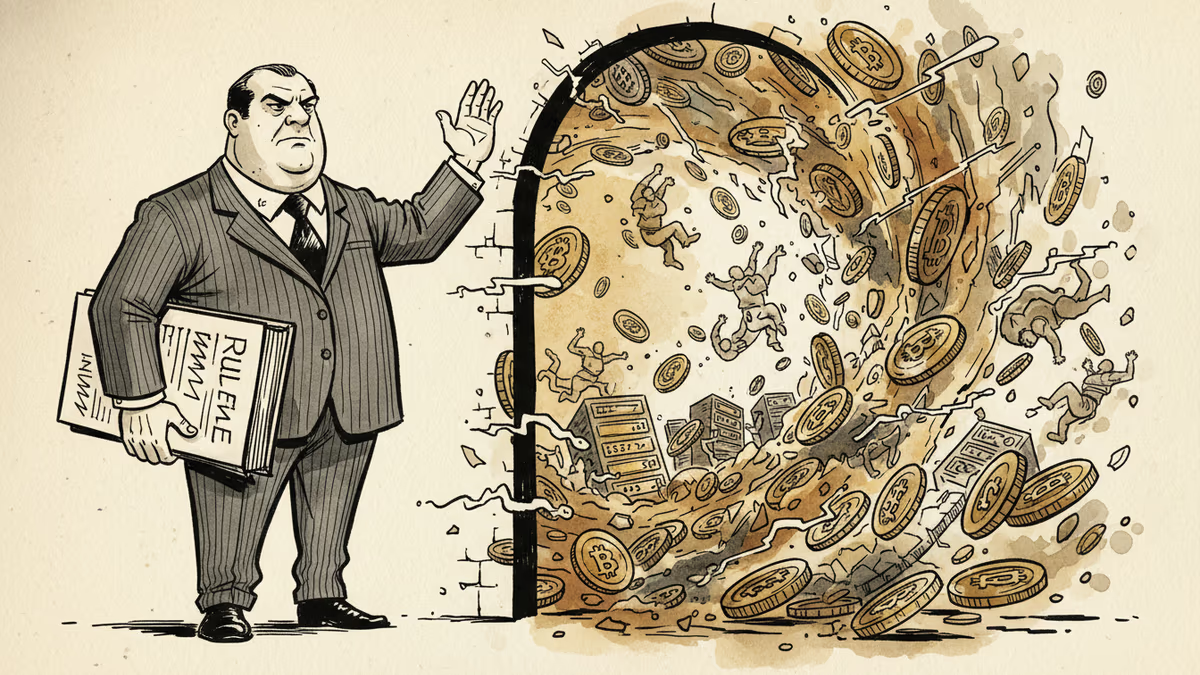
The SEC is preparing a major digital assets regulatory proposal. Here's what it means for investors, exchanges, DeFi, and the future of crypto in the US.

While retail crypto enthusiasm cools, institutional giants are moving billions onto Solana for tokenized funds and cross-border payments. Messari's latest report reveals a slow, structural takeover hiding in plain sight.
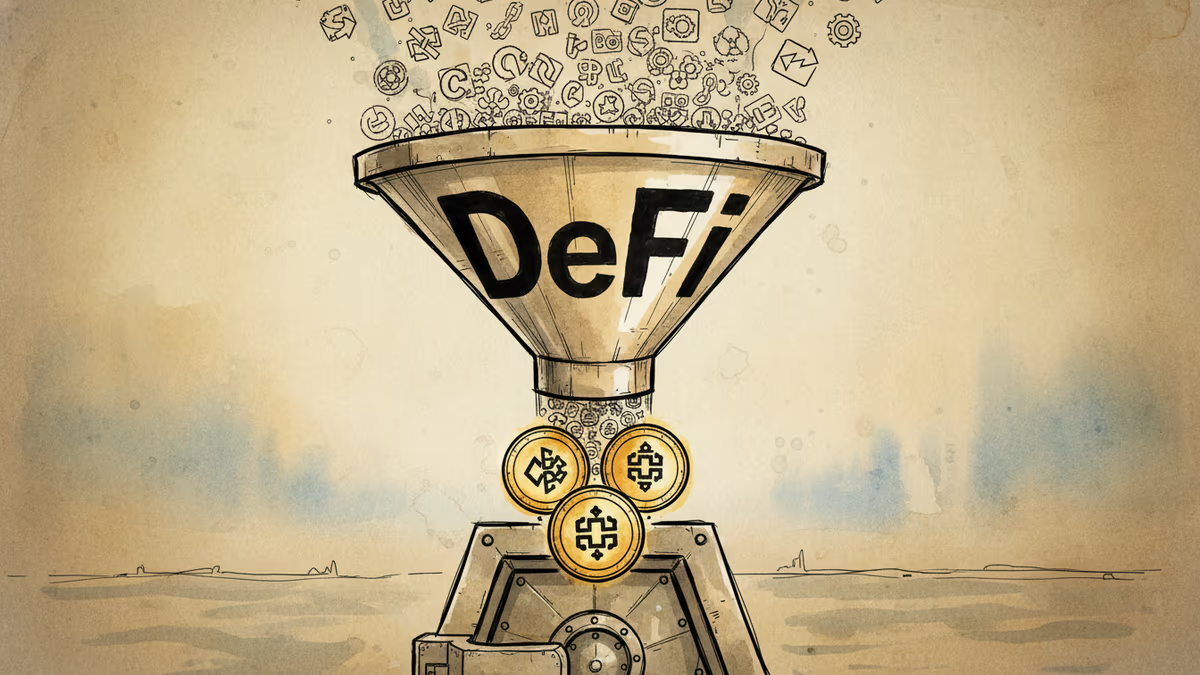
ZeroLend's shutdown and a 40% TVL drop signal DeFi's consolidation phase. Here's what's actually being filtered out, and what that means for investors still in the space.
Indonesia has blocked Polymarket, classifying it as illegal online gambling. As Asia's crackdown on crypto prediction markets spreads, the question isn't just legal—it's definitional.
The SEC is preparing a major digital assets regulatory proposal. Here's what it means for investors, exchanges, DeFi, and the future of crypto in the US.
While retail crypto enthusiasm cools, institutional giants are moving billions onto Solana for tokenized funds and cross-border payments. Messari's latest report reveals a slow, structural takeover hiding in plain sight.
ZeroLend's shutdown and a 40% TVL drop signal DeFi's consolidation phase. Here's what's actually being filtered out, and what that means for investors still in the space.
Thoughts
Share your thoughts on this article
Sign in to join the conversation