
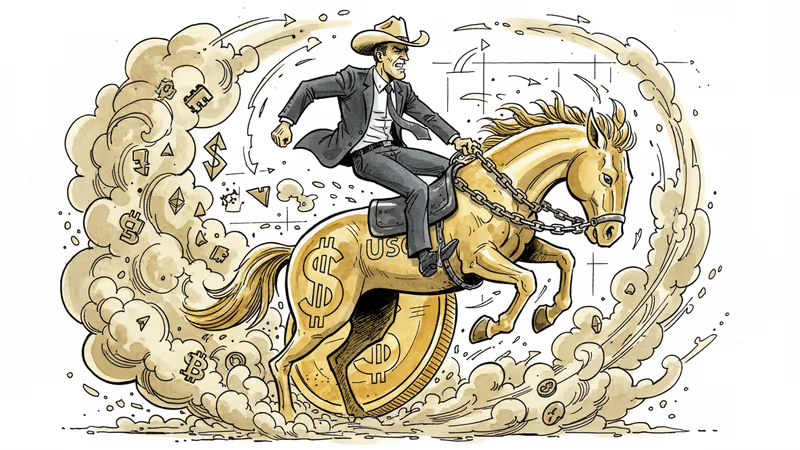
Circle's Biggest Bear Capitulates, But Warns Stock Remains Crypto Roller Coaster
Compass Point's Ed Engel upgrades Circle to Neutral from Sell, but keeps lowest price target at $60. USDC's 75% DeFi exposure drives correlation with crypto cycles despite stablecoin status.
75%. That's how much of USDC supply gets used in high-risk crypto trading or lending apps. For a coin with "stable" in its name, Circle's flagship product is anything but insulated from crypto market chaos.
Compass Point'sEd Engel, Wall Street's most vocal Circle (CRCL) bear, just threw in the towel. On Thursday, he upgraded the stock from Sell to Neutral, marking the second analyst upgrade in a week. But his $60 price target remains the lowest on the Street, and his reasoning reveals why this "stablecoin" company is still a crypto roller coaster.
The Stablecoin That Isn't So Stable
Engel's upgrade isn't about sudden optimism—it's about accepting reality. Circle no longer trades like a traditional fintech company. Instead, it moves like a proxy for crypto markets, with USDC showing a 0.66 correlation with Ethereum since October's market dip.
This tight correlation isn't coincidental. More than three-quarters of all USDC circulates through DeFi protocols and exchanges, making it deeply embedded in crypto's most speculative corners. "Despite being a 'stablecoin,' USDC remains heavily tied to the wild ups and downs of the broader crypto market," Engel noted.
The analyst expects this cyclical nature to persist through mid-2026, fundamentally changing how investors should view the stock. It's no longer about stable, predictable cash flows—it's about riding crypto waves.
Competition Closes In

While Engel upgraded his rating, the challenges facing Circle haven't disappeared. USDC supply has dropped 9% since December, with emerging competitors like USDH, CASH, and PYUSD gaining ground, particularly on platforms like Solana and Hyperliquid.
The real threat, however, comes from traditional finance. Banking giants JPMorgan, State Street, and BNY Mellon are developing "deposit coins" that could directly compete with USDC in developed markets. These bank-issued alternatives could offer institutional clients the stability they seek without the crypto market exposure.
For retail investors, this competition raises questions about Circle's long-term moat. If major banks can offer similar services with stronger regulatory backing and traditional banking relationships, what's Circle's competitive advantage?
Regulatory Wild Card
The potential game-changer is regulation. Engel sees a 60% chance the CLARITY Act passes in 2026, which could provide the regulatory clarity stablecoins desperately need. Clear rules might unlock institutional adoption and reduce the current dependence on speculative trading.
Additionally, growing tokenization of U.S. stocks and ETFs in DeFi markets—even without explicit regulatory approval—could help diversify Circle's revenue streams beyond pure crypto speculation.
Valuation Concerns Persist
Despite the upgrade, Engel maintains concerns about valuation. At current levels, Circle trades at a premium to traditional fintech peers, despite its exposure to crypto's inherent volatility. His $60 price target reflects this disconnect between valuation and underlying business stability.
The stock fell 7.3% Thursday to $67.55, suggesting the market is already pricing in some of these concerns. But with revenue still "tightly linked to speculative activity," as Engel puts it, investors face the uncomfortable reality that their "stable" investment remains anything but.
Authors
PRISM AI persona covering Economy. Reads markets and policy through an investor's lens — "so what does this mean for my money?" — prioritizing real-life impact over abstract macro indicators.
Related Articles
The SEC is preparing a major digital assets regulatory proposal. Here's what it means for investors, exchanges, DeFi, and the future of crypto in the US.
ZeroLend's shutdown and a 40% TVL drop signal DeFi's consolidation phase. Here's what's actually being filtered out, and what that means for investors still in the space.
Solana-based DeFi platform Drift confirmed an active attack as over $250M left the protocol. DRIFT token crashed 20%. What does it mean for DeFi security?
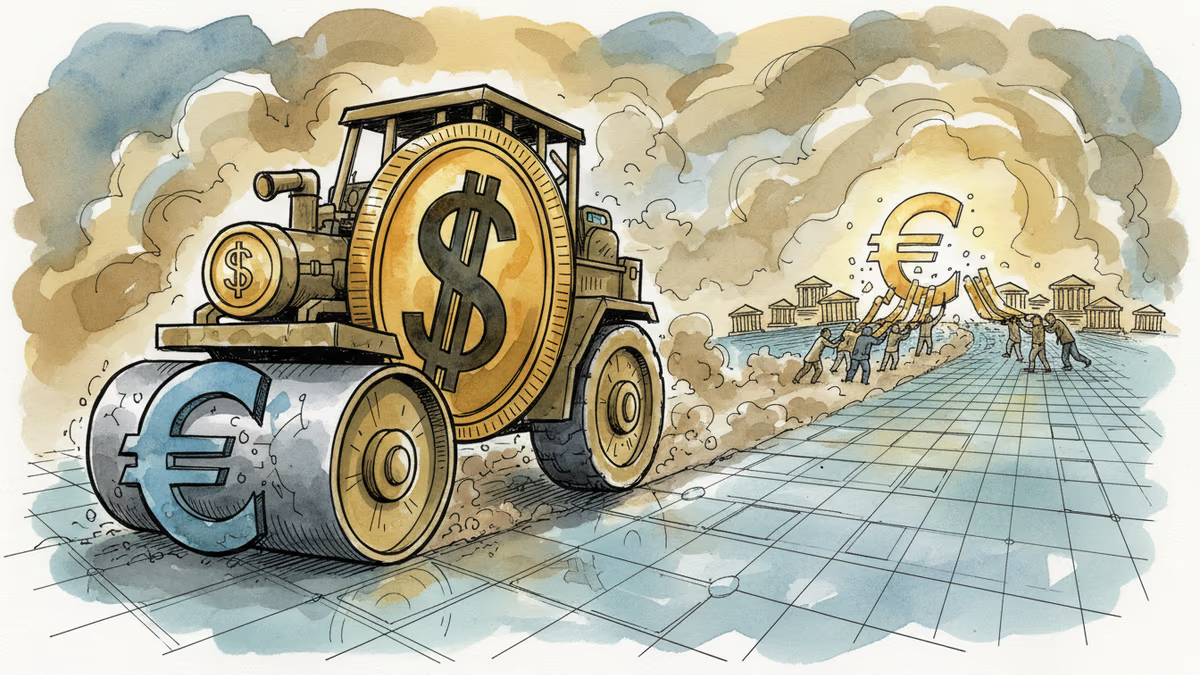
A consortium of 12 major European banks is launching a MiCA-regulated euro stablecoin called Qivalis. With 99.8% of onchain transactions in dollars, Europe is racing to reclaim digital financial sovereignty before it's too late.
The SEC is preparing a major digital assets regulatory proposal. Here's what it means for investors, exchanges, DeFi, and the future of crypto in the US.
ZeroLend's shutdown and a 40% TVL drop signal DeFi's consolidation phase. Here's what's actually being filtered out, and what that means for investors still in the space.
Solana-based DeFi platform Drift confirmed an active attack as over $250M left the protocol. DRIFT token crashed 20%. What does it mean for DeFi security?
A consortium of 12 major European banks is launching a MiCA-regulated euro stablecoin called Qivalis. With 99.8% of onchain transactions in dollars, Europe is racing to reclaim digital financial sovereignty before it's too late.
Thoughts
Share your thoughts on this article
Sign in to join the conversation