
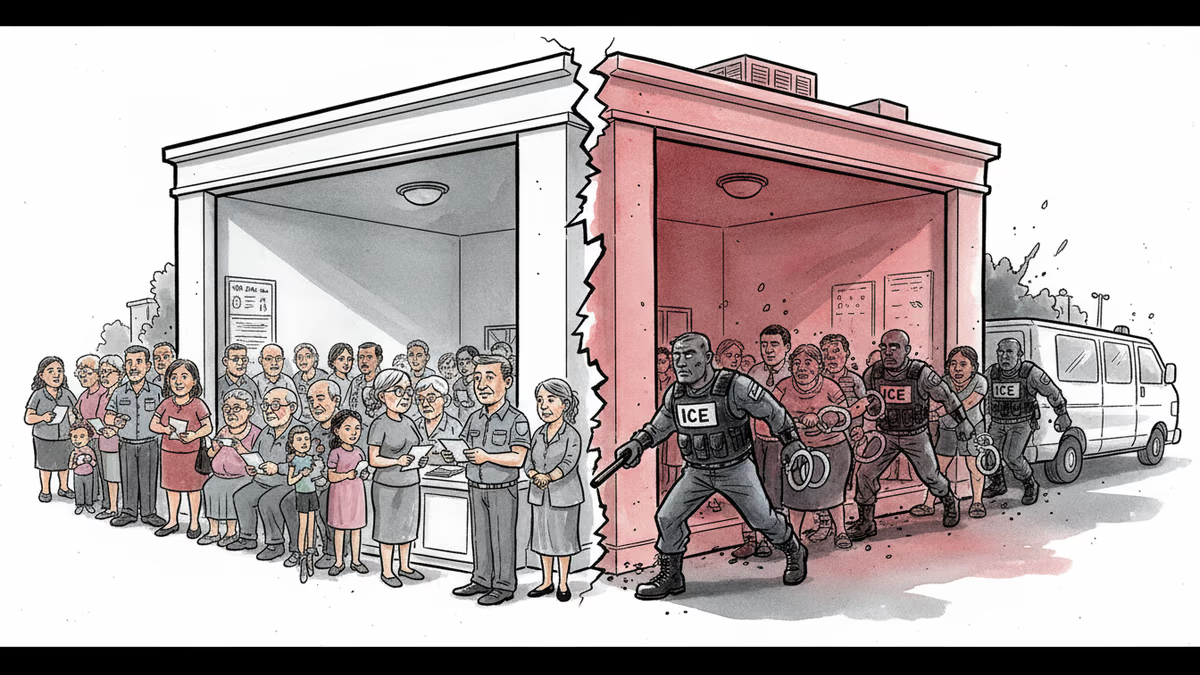
When Social Security Becomes Immigration Enforcement
SSA workers told to share appointment details with ICE agents. A fundamental shift in how government agencies operate—and what it means for public trust.
The Safe Space That Isn't
A quiet directive has been issued to Social Security Administration workers: If ICE agents ask about someone's upcoming appointment, share the date and time.
"If ICE comes in and asks if someone has an upcoming appointment, we will let them know the date and time," an SSA employee with direct knowledge tells WIRED, speaking anonymously for fear of retaliation.
This isn't about fraud investigations or criminal activity. It's about routine appointments—deaf individuals needing sign language interpreters, people updating direct deposit information, or noncitizens reviewing benefit eligibility. The very interactions that require the most trust are now potential enforcement opportunities.
From Service to Surveillance
The SSA issues Social Security numbers not just to US citizens, but to foreign students and people legally authorized to work. Sometimes a noncitizen parent must accompany their citizen child to an office visit. These families now face a cruel calculation: access essential services or risk deportation.
This represents a fundamental shift in how government agencies operate. Under Trump's second term, the SSA has evolved from a benefits administrator into an immigration enforcement partner. By November, the agency had officially updated its public notices to confirm it was sharing "citizenship and immigration information" with DHS.

"You're seeing SSA becoming an extension of Homeland Security," says Leland Dudek, former acting SSA commissioner.
The Trust Equation
Dudek calls the appointment-sharing directive "highly unusual," particularly because the SSA was designed as a "safe space" regardless of immigration status. "If a person is due a benefit, SSA is there for them and no harm will come to them," he explains.
Historically, arrests at SSA offices occurred only when someone threatened agency staff. "There's a process, paperwork, multiple people signing off," Dudek notes. "This appears to tell us to ignore that policy without actually updating it."
The implications extend beyond immigration. When government agencies become enforcement arms, who can trust public services? The chilling effect reaches far beyond undocumented immigrants to legal residents, mixed-status families, and even citizens who might avoid seeking help.
The Expanding Dragnet
This directive coincides with ICE's dramatic expansion across the United States. The agency is secretly leasing offices nationwide, creating an enforcement infrastructure that reaches into communities previously considered safe.
Last week, a Massachusetts district judge ruled that the IRS and SSA could not share taxpayer data with ICE—but that ruling doesn't cover appointment scheduling information. The legal landscape remains murky, with agencies pushing boundaries faster than courts can respond.
Authors
Related Articles
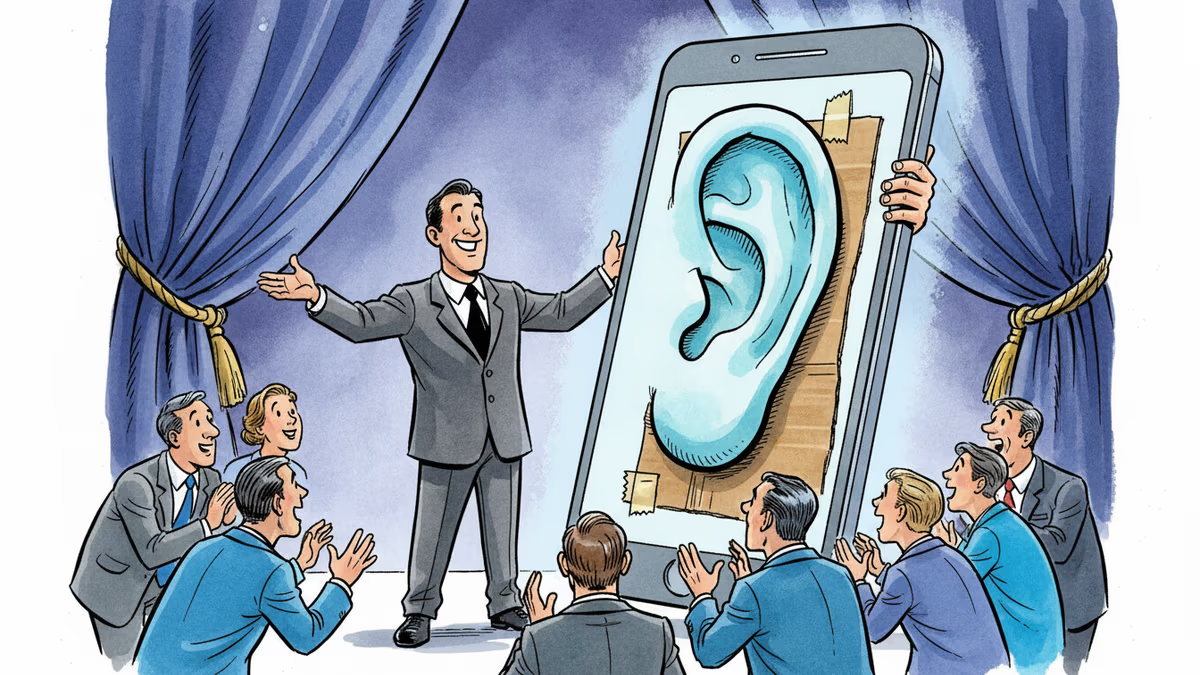
The FTC fined Cox Media and two ad firms $930,000 — not for actually eavesdropping on users, but for falsely claiming they could. The case raises uncomfortable questions about surveillance capitalism.
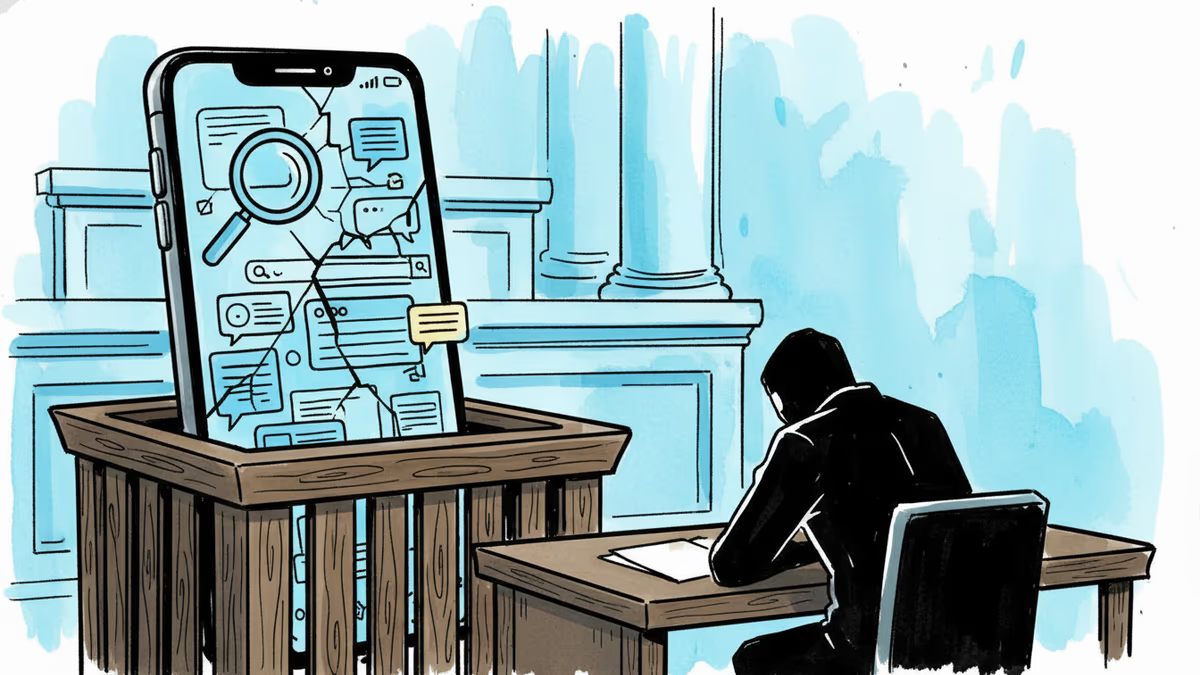
A Utah woman was sentenced to life in prison partly because of her Google searches and deleted texts. The Kouri Richins case reveals how digital footprints have become the courtroom's most reliable witness.
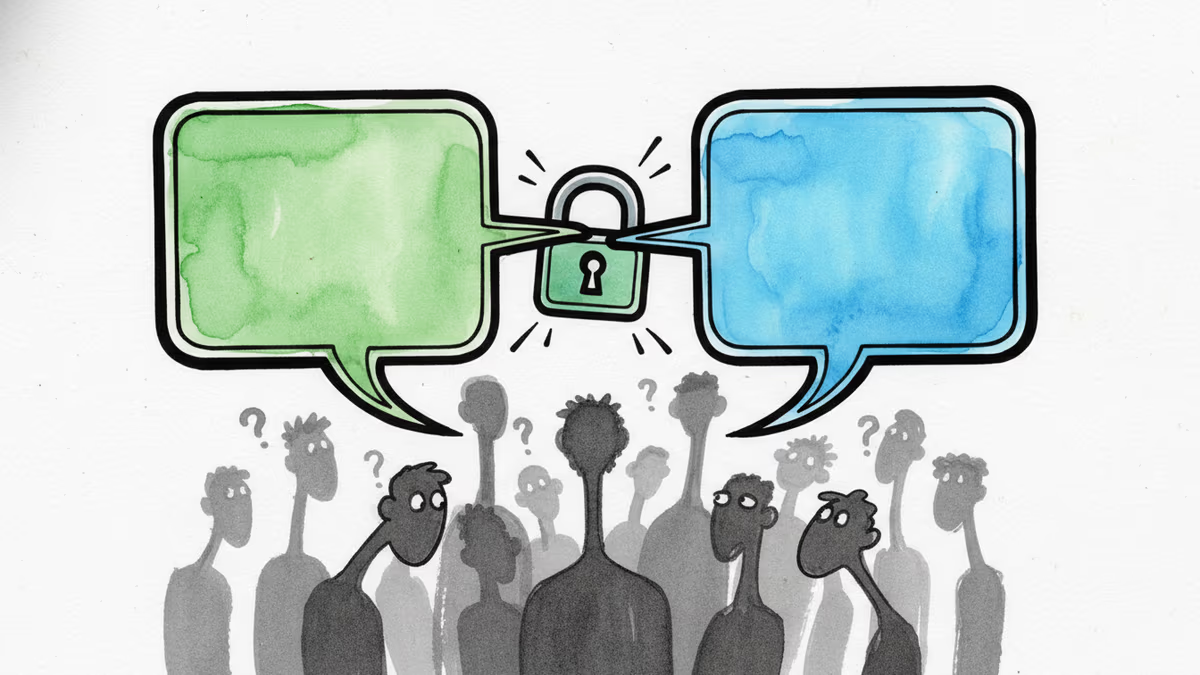
After 15 years of fragmented mobile messaging, Apple and Google are rolling out end-to-end encrypted RCS messaging between iPhones and Android devices. Here's what changed, why it took so long, and what it means for your privacy.
New Mexico already won $375 million from Meta. Now it wants something harder to give: a court order forcing Facebook, Instagram, and WhatsApp to redesign themselves. A three-week trial starts Monday.
The FTC fined Cox Media and two ad firms $930,000 — not for actually eavesdropping on users, but for falsely claiming they could. The case raises uncomfortable questions about surveillance capitalism.
A Utah woman was sentenced to life in prison partly because of her Google searches and deleted texts. The Kouri Richins case reveals how digital footprints have become the courtroom's most reliable witness.
After 15 years of fragmented mobile messaging, Apple and Google are rolling out end-to-end encrypted RCS messaging between iPhones and Android devices. Here's what changed, why it took so long, and what it means for your privacy.
New Mexico already won $375 million from Meta. Now it wants something harder to give: a court order forcing Facebook, Instagram, and WhatsApp to redesign themselves. A three-week trial starts Monday.
Thoughts
Share your thoughts on this article
Sign in to join the conversation