
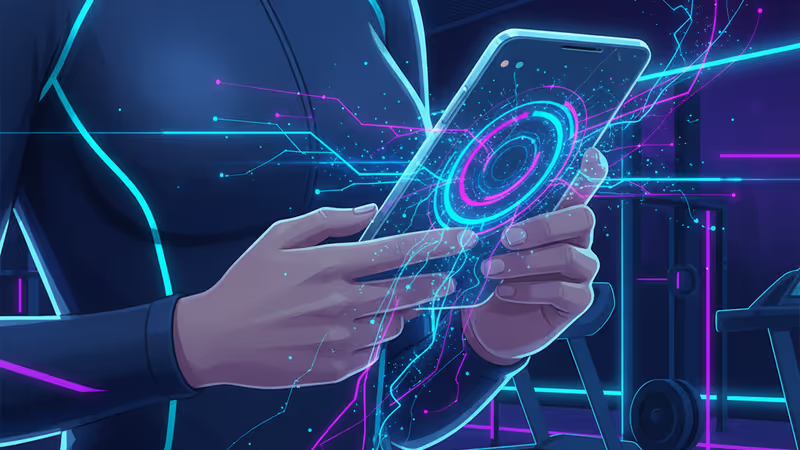
Smartphone Health Tracking Without Wearables: Your Essential 2026 Guide
Learn how to master smartphone health tracking without wearables. Guide to using iPhone Health, Android Health Connect, and specialized apps for sleep and heart rate.
You don't need a $400 smartwatch to take control of your fitness. The most powerful health tracker you own is likely already in your pocket.
While wearables are convenient, your smartphone can monitor a vast array of metrics on its own. According to David Nield, your phone can automatically track steps, walking distance, and even sleep quality without any extra hardware. It's a cost-effective alternative for those who find wristbands uncomfortable or unnecessary.
Mastering Smartphone Health Tracking with Built-in Ecosystems
iPhone users have a significant advantage with the Apple Health app. It uses built-in motion sensors to track activity by default. Beyond steps, it can even measure walking asymmetry and step length. As long as you carry your phone, the data keeps flowing.

On the Android side, Health Connect acts as a central hub. Apps like Fitbit and Samsung Health can be configured to use phone sensors for step counting. If you're a Samsung user, the pre-installed health suite offers deep manual logging for water intake, weight, and blood glucose.
Third-Party Apps for Advanced Biometrics
Advanced metrics like sleep stages and heart rate no longer require a dedicated sensor strapped to your body. Sleep as Android and Sleep Cycle use the phone's microphone and accelerometer to detect movements and breathing patterns throughout the night.
| Metric | App/Feature | Requirement |
|---|---|---|
| Steps | Apple/Samsung Health | Internal Sensors |
| Sleep | Sleep Cycle | Microphone/Accelerometer |
| Heart Rate | Cardiio / HR Monitor | Camera & Flash |
| Activity | Strava | GPS |
Authors
Related Articles
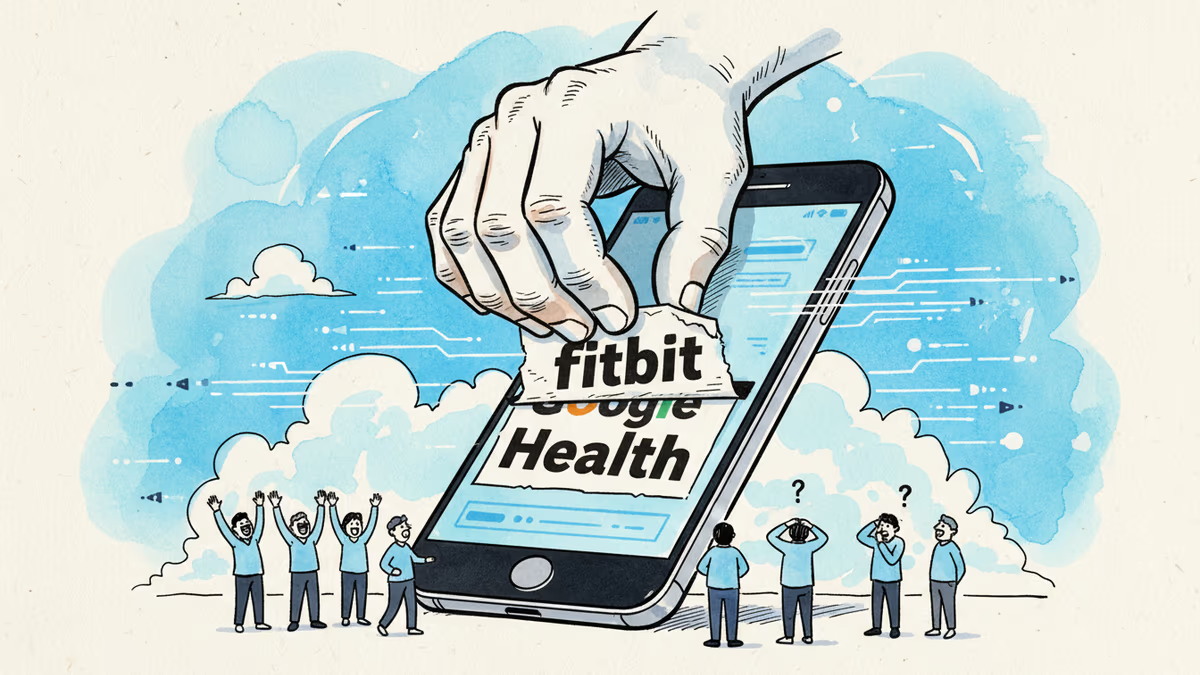
Google is rebranding the Fitbit app as Google Health on May 19, launching an AI Health Coach powered by Gemini. What does this mean for your data, your doctor, and Apple?
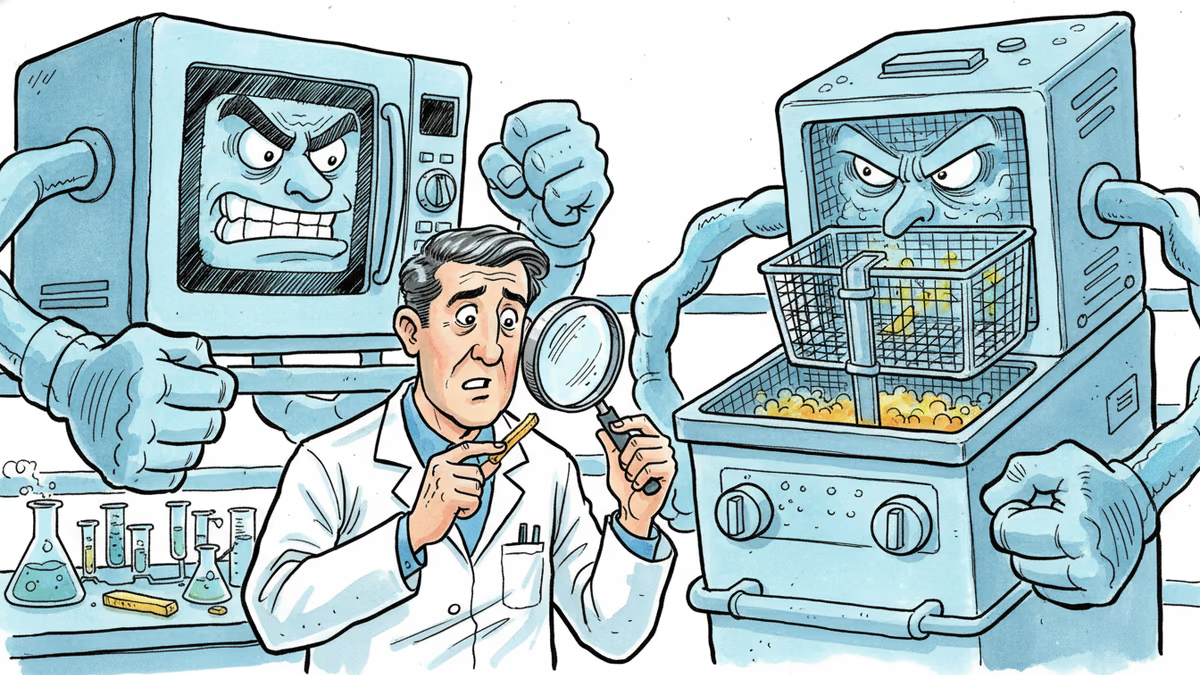
University of Illinois researchers combined frying and microwave heating to reduce oil absorption in french fries — without sacrificing crunch. Here's the science, and what it could mean for the food industry.
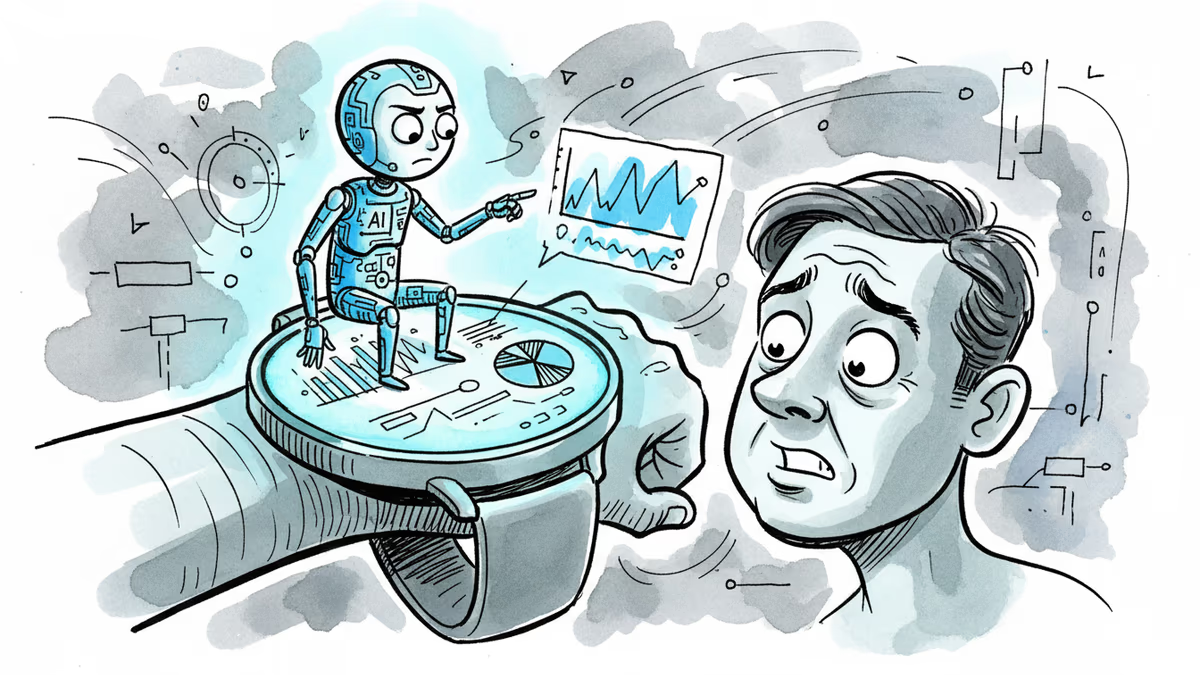
Google expands Fitbit's AI personal health coach to 6 countries beyond the US. As personalized health coaching becomes mainstream, how will this reshape our relationship with wellness?

Google extends Fitbit account migration deadline to May 2026, giving users more time to decide on data transfer. What this means for wearable market competition.
Google is rebranding the Fitbit app as Google Health on May 19, launching an AI Health Coach powered by Gemini. What does this mean for your data, your doctor, and Apple?
University of Illinois researchers combined frying and microwave heating to reduce oil absorption in french fries — without sacrificing crunch. Here's the science, and what it could mean for the food industry.
Google expands Fitbit's AI personal health coach to 6 countries beyond the US. As personalized health coaching becomes mainstream, how will this reshape our relationship with wellness?
Google extends Fitbit account migration deadline to May 2026, giving users more time to decide on data transfer. What this means for wearable market competition.
Thoughts
Share your thoughts on this article
Sign in to join the conversation