
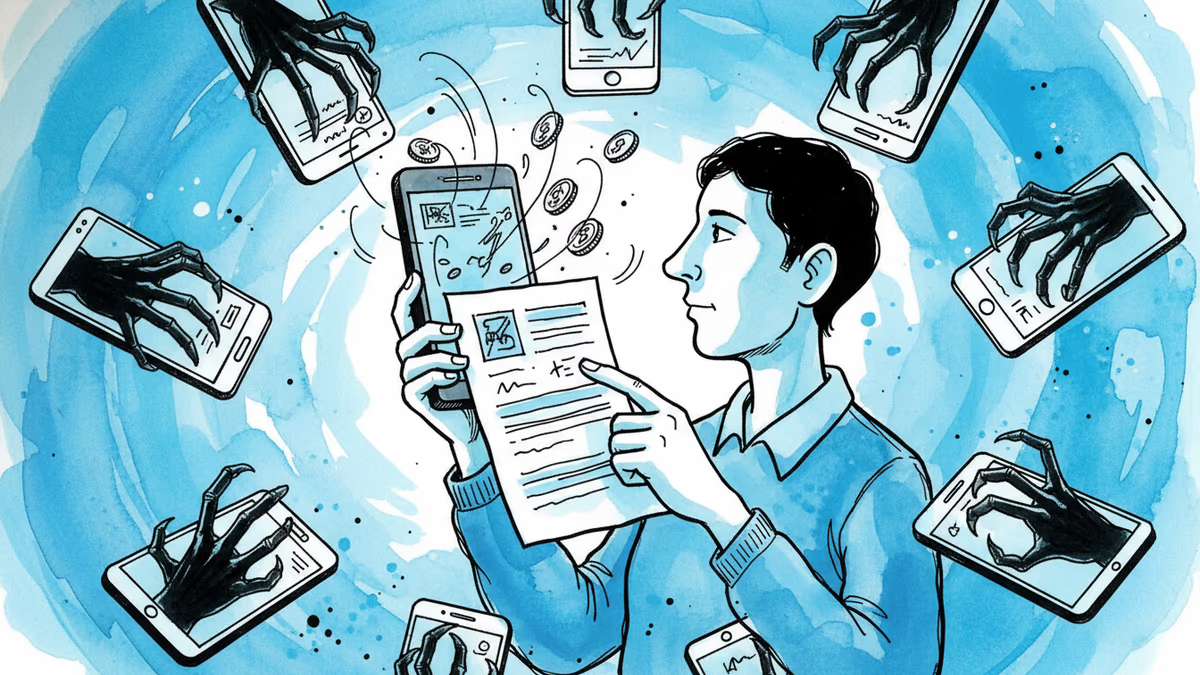
When a Simple Scanning App Becomes Revolutionary
FairScan does one thing: scan documents. No ads, no subscriptions, no data harvesting. In today's app ecosystem, that's apparently revolutionary.
The $4.99 Monthly Trap of Document Scanning
You need to scan a document. Simple enough, right? Download an app, point your camera, done. Except it's never that simple. First come the ads. Then the premium upgrade prompts. Then you discover your scanned documents are being stored in some company's cloud—and oh, by the way, they're using them to train AI models. That tiny disclaimer you didn't read? It gave them permission.
This is why FairScan feels almost subversive. It does exactly one thing: scan documents. That's it.
What "Just Scanning" Actually Means
Pierre-Yves Nicolas, the app's creator, built FairScan after trying existing Android scanning apps and finding "behaviors that I certainly don't want." Those behaviors included the usual suspects: ads, privacy violations, and the increasingly common practice of cloud storage with AI training as a hidden revenue stream.
FairScan is both free and open source. You can download it from the Google Play Store or F-Droid, the repository for open source Android apps. It's Android-only for now, but the open source nature means anyone can verify what it actually does with your data—which is nothing.
The interface is refreshingly straightforward. Place your document on a flat surface, aim your camera, and a green box will outline the page boundaries. Multiple pages? Hit the plus button. When you're done, export to PDF or JPEG. No account creation, no cloud sync, no premium features locked behind a paywall.
The Tool vs. Platform Problem

What makes FairScan notable isn't its technical sophistication—it lacks features like OCR or advanced editing. What makes it remarkable is that it behaves like a tool rather than a platform.
Most app developers today aren't in the tool business. They're in the data business, the advertising business, or the subscription business. The scanning functionality is just the hook to get you into their ecosystem. Once you're there, they extract value through ads, subscriptions, or by monetizing your personal data.
This shift reflects a broader change in how we think about software. Traditional tools—hammers, calculators, word processors—were products you bought once and owned. Today's apps are services that extract ongoing value from users. Even calculator apps now come with subscription models.
Privacy in the Age of "Free" Apps
The privacy implications go beyond mere inconvenience. When you scan sensitive documents—contracts, medical records, tax forms—where does that data go? Many popular scanning apps upload documents to cloud servers "for your convenience." Some explicitly state they may use this data for machine learning purposes.
Adobe Scan, CamScanner, and similar apps have faced scrutiny over data practices. While they've improved transparency, the fundamental business model remains: offer a useful service, then monetize the user relationship through various means.
FairScan's open source nature provides a different approach. Users can examine the code, verify data handling practices, and even modify the app if needed. It's digital transparency in an age of black-box algorithms.
The Broader Implications
The enthusiasm for FairScan reflects growing frustration with "enshittification"—the gradual degradation of digital services as platforms prioritize extraction over utility. Users are rediscovering the value of tools that simply work without agenda.
This trend extends beyond scanning apps. We're seeing similar movements toward privacy-focused alternatives in messaging (Signal), web browsing (Firefox), and even social media (Mastodon). The common thread: prioritizing user needs over business model optimization.
Authors
Related Articles
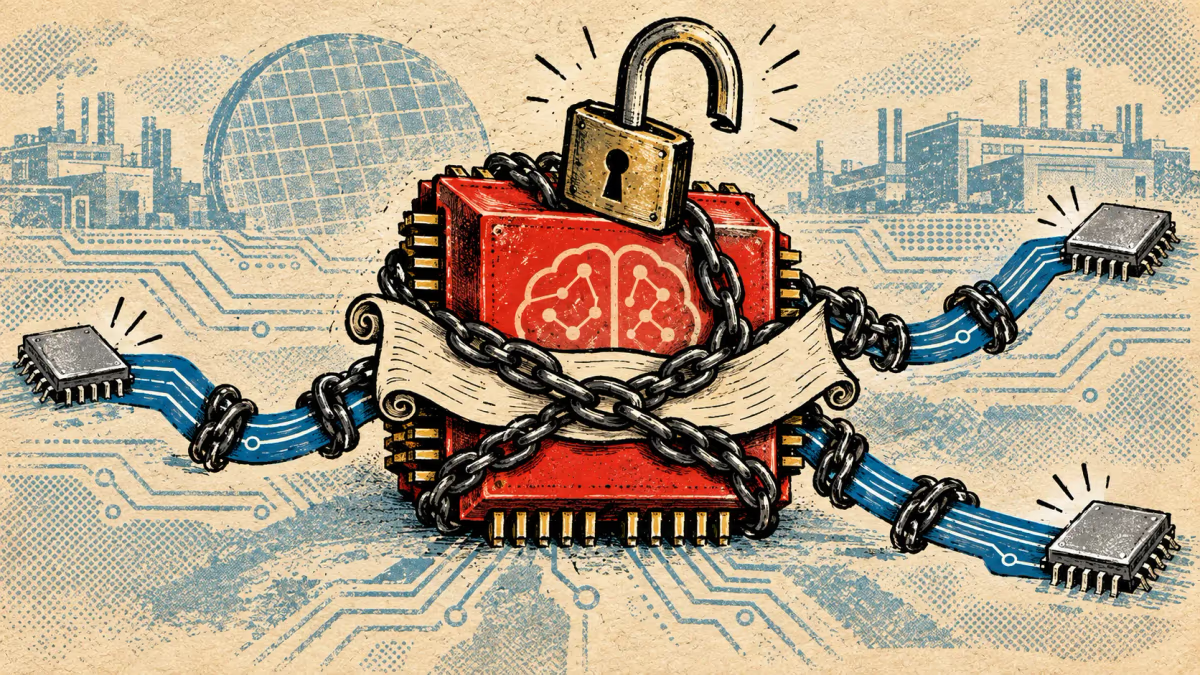
Huawei's CANN is open source under a license barring software for non-Ascend chips. Inside China's second CUDA, and the two links still outside it: pre-training compute and 5nm capacity.
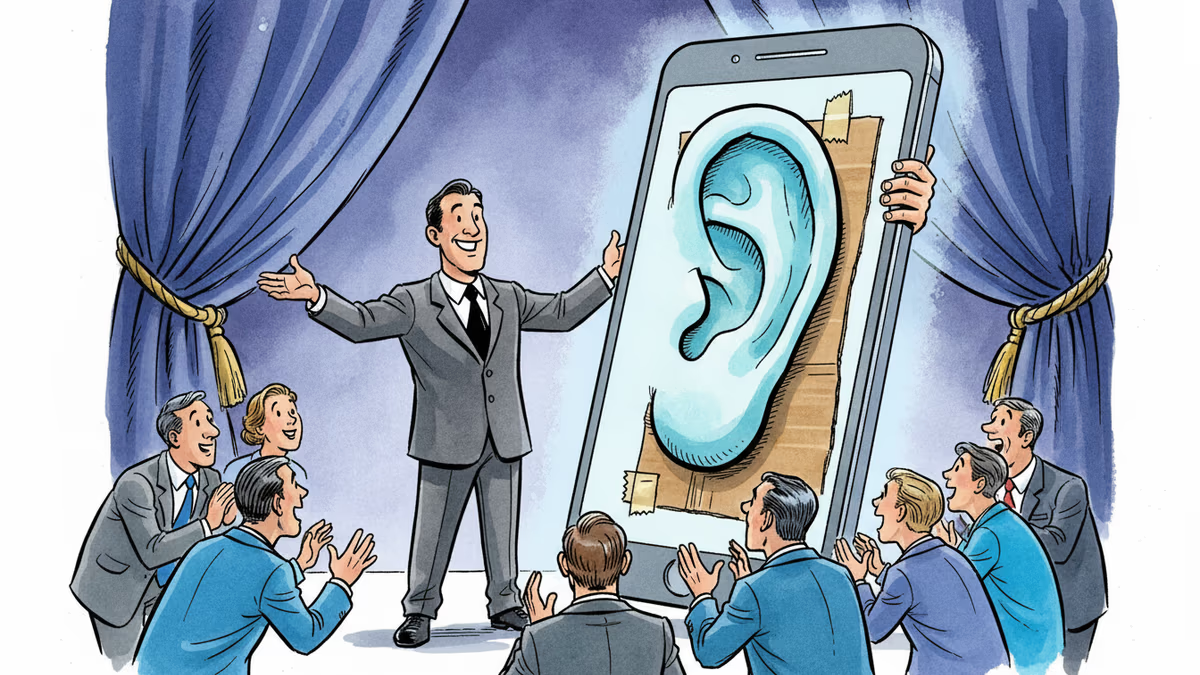
The FTC fined Cox Media and two ad firms $930,000 — not for actually eavesdropping on users, but for falsely claiming they could. The case raises uncomfortable questions about surveillance capitalism.
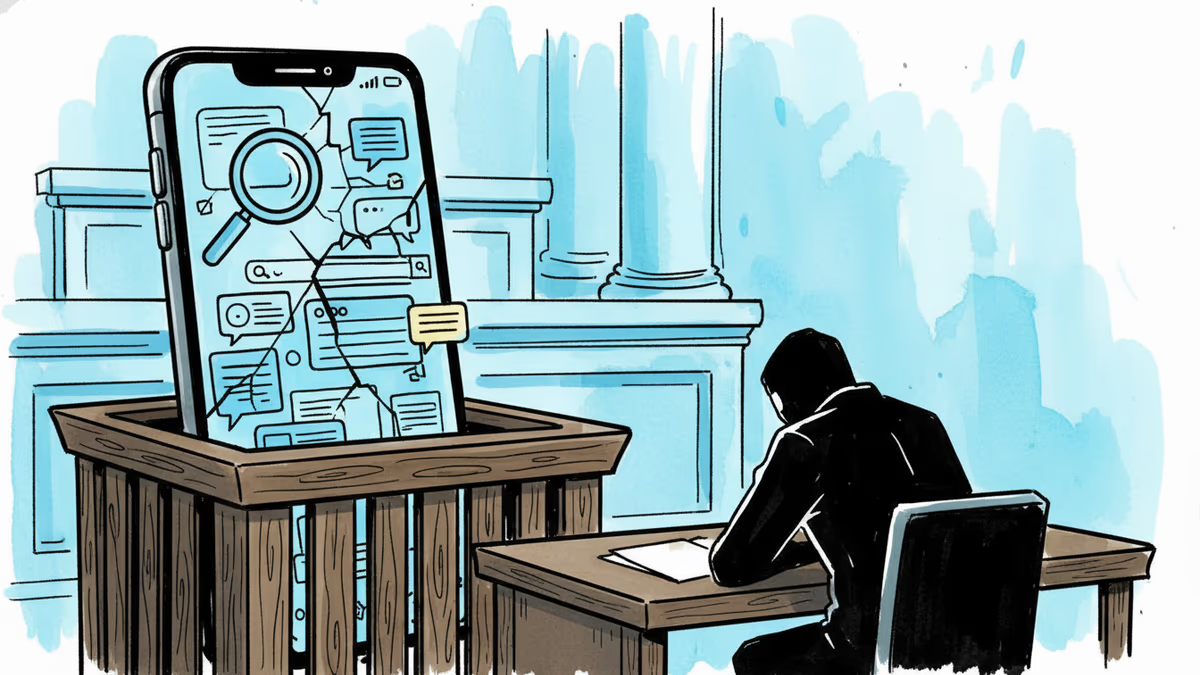
A Utah woman was sentenced to life in prison partly because of her Google searches and deleted texts. The Kouri Richins case reveals how digital footprints have become the courtroom's most reliable witness.
After 15 years of fragmented mobile messaging, Apple and Google are rolling out end-to-end encrypted RCS messaging between iPhones and Android devices. Here's what changed, why it took so long, and what it means for your privacy.
Huawei's CANN is open source under a license barring software for non-Ascend chips. Inside China's second CUDA, and the two links still outside it: pre-training compute and 5nm capacity.
The FTC fined Cox Media and two ad firms $930,000 — not for actually eavesdropping on users, but for falsely claiming they could. The case raises uncomfortable questions about surveillance capitalism.
A Utah woman was sentenced to life in prison partly because of her Google searches and deleted texts. The Kouri Richins case reveals how digital footprints have become the courtroom's most reliable witness.
After 15 years of fragmented mobile messaging, Apple and Google are rolling out end-to-end encrypted RCS messaging between iPhones and Android devices. Here's what changed, why it took so long, and what it means for your privacy.
Thoughts
Share your thoughts on this article
Sign in to join the conversation