

Why Every Olympic Curling Stone Comes From One Scottish Island
From 293-gram carbon fiber brooms to precision-engineered shoes, the 2026 Winter Olympics showcase how technology is revolutionizing the ancient sport of curling.
99% of curling stones used worldwide come from the same place: a tiny Scottish island most people have never heard of.
As the 2026 Milano-Cortina Winter Olympics kick off, curling is once again set to captivate audiences worldwide. Host nation Italy's hopes rest on Stefania Constantini and Amos Mosaner, the reigning Olympic and world mixed doubles champions who'll have home ice advantage.
But beyond the drama of competition, this year's Olympics might showcase the most technologically advanced curling equipment ever seen on ice.
The Scottish Stone Monopoly
Ailsa Craig, a 99-hectare island in Scotland's Firth of Clyde, holds an unlikely monopoly. Its granite—specifically two varieties called common green and blue hone—possesses unique properties that make it perfect for curling stones. These granites resist heat, humidity, and the cracking that can occur during the 28-meter journey down Olympic ice.
Every stone weighs between 17.24 and 19.96 kilograms and undergoes meticulous grinding and polishing by companies like Kays of Scotland and Canada Curling Stone. It's a manufacturing process that hasn't changed much in decades, yet produces equipment precise enough for Olympic competition.
The 293-Gram Revolution
While stones remain traditional, broom technology has exploded with innovation. "Broom technology continues to be a major focus because the physical demands of the sport continue to evolve," explains Dale Matchett, general manager at BalancePlus. "The biggest challenge is finding the right balance between weight, strength, and effective energy transfer."

The company's LightSpeed line pushes these boundaries. Their lightest model weighs just 293 grams yet can "withstand the forces generated by the strongest and most athletic players." The LiteSpeed RS XL 9" offers 85,000 possible configurations through various handle, bolt, foam, and sleeve options.
High-end carbon fiber brooms ensure no effort is wasted. Anti-slip coatings reduce hand slippage, meaning curlers don't need excessive force for downward pressure, reducing fatigue during long matches.
The Two-Shoe Strategy
Curling's most distinctive equipment feature might be the shoes—specifically, that athletes wear different ones on each foot. The "slider" has a smooth Teflon or steel sole for gliding, while the "gripper" features rubber with a reinforced toe box for traction and stability.
Goldline's new Momentum series flagship, the Stealth, features integrated lace covers to reduce drag and keeps feet slightly elevated during slides and pushes. The redesigned toe box and heel sit higher to protect areas that wear quickly from kicks and sweeps.
Yet tradition persists alongside innovation. BalancePlus'sDelux line, used by professionals since 1998, remains popular for its leather uppers, welt construction, and smooth toe design that facilitates throws.
The Sensor Revolution
Beyond visible equipment, sensors and microchips now help players manage throw power and technique. This data-driven approach represents a fundamental shift in how athletes train and compete, bringing precision measurement to a sport that has relied on feel and experience.
Authors
Related Articles
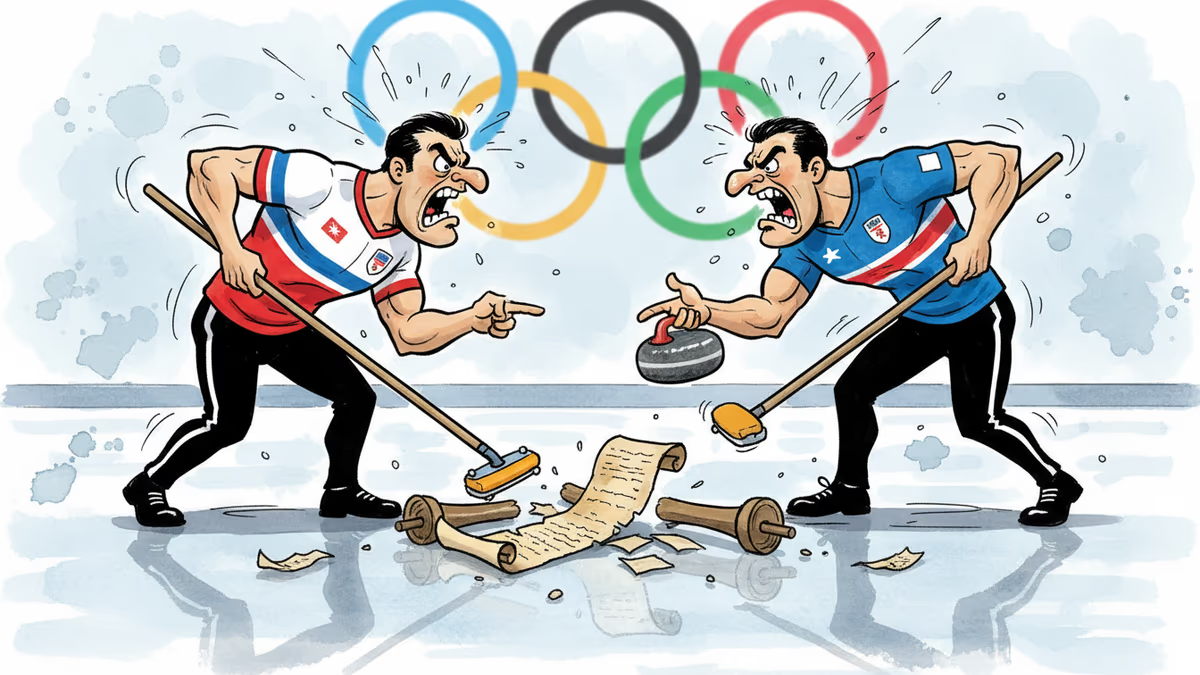
A profanity-laced outburst at the Olympics exposed something deeper than rule violations—the erosion of curling's gentlemanly traditions in modern competitive sport.

At the 2026 Milano Cortina Olympics, bobsledding teams are using 3D-printed spikes, energy-return insoles, and AI analysis to shave hundredths of seconds off race times.

Milano Cortina Winter Olympics introduces FPV drones, Olympic GPT, and cloud broadcasting to create unprecedented viewing experiences. Explore the tech reshaping sports entertainment.

From Miracle to Cool Runnings, the greatest Winter Olympics films reveal that true victory isn't always about gold medals. Sometimes it's about something much more valuable.
A profanity-laced outburst at the Olympics exposed something deeper than rule violations—the erosion of curling's gentlemanly traditions in modern competitive sport.
At the 2026 Milano Cortina Olympics, bobsledding teams are using 3D-printed spikes, energy-return insoles, and AI analysis to shave hundredths of seconds off race times.
Milano Cortina Winter Olympics introduces FPV drones, Olympic GPT, and cloud broadcasting to create unprecedented viewing experiences. Explore the tech reshaping sports entertainment.
From Miracle to Cool Runnings, the greatest Winter Olympics films reveal that true victory isn't always about gold medals. Sometimes it's about something much more valuable.
Thoughts
Share your thoughts on this article
Sign in to join the conversation