
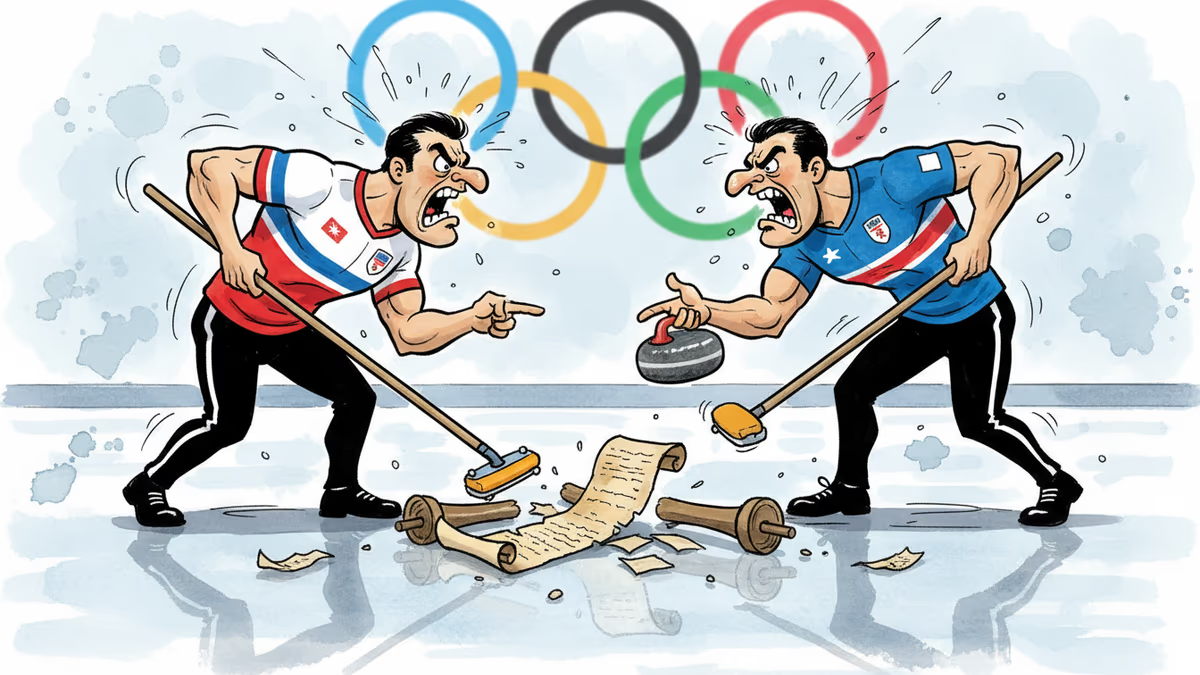
When Curling's 500-Year Code of Honor Cracked on Olympic Ice
A profanity-laced outburst at the Olympics exposed something deeper than rule violations—the erosion of curling's gentlemanly traditions in modern competitive sport.
The F-Bomb That Shattered 500 Years of Tradition
In 48 hours, a single expletive turned the Olympics' quietest sport into global headlines. Canada beat Sweden 8-6 in curling, but the real story wasn't the score—it was Marc Kennedy telling his opponent to "fuck off" twice on live television.
Every major news outlet covered it. Social media exploded. Suddenly, millions of people had strong opinions about a 16th-century Scottish sport they'd never heard of before Friday.
But here's what the armchair experts missed: The real violation wasn't about touching a stone.
The Rule Everyone's Talking About vs. The Rule That Actually Matters
Yes, Kennedy technically broke a rule. Video analysis shows he double-tapped the back of his curling stone after release—a minor infraction that affects the trajectory by fractions of an inch over 93 feet. Other teams, including Sweden, have done the same thing in previous matches.
But curling has thousands of rules, and only one that's never up for debate: the Spirit of Curling. A true curler never attempts to distract opponents and would prefer to lose rather than win unfairly. This gentleman's code, carried down from Tudor Scotland, is curling's first and most sacred law.
Oskar Eriksson broke it when he started chirping about the alleged double-tap mid-game, passive-aggressively accusing Kennedy of cheating. Kennedy shattered it when he declared he "didn't give a shit" about the rules.

How Curling Disputes Usually Work
Earlier in these Olympics, during a US-Italy doubles match, one team accidentally kicked their stone. The opposing team simply trusted the kicker to put it back where it belonged. No judges called. No accusations. No profanity.
That's curling culture in action—a sport where players call their own fouls and personal honor trumps victory.
The Detail That Makes Everything Worse
Both players involved were vice-skips—the officials of their respective teams. In curling, vice-skips handle game administration: agreeing on scores, resolving rule debates, deciding when to concede. They're supposed to be the diplomats, the peacekeepers.
Instead, the two players charged with maintaining fair play engaged in a profanity-laced shouting match watched by millions.
The Quadrennial Problem
Curling attracts rabid fans for exactly two weeks every four years. Between Olympics, it's just beer-league diehards who care about the sport's finer points. The pace and congeniality are what make it appealing to casual Olympic viewers—a refuge from the trash-talking and tantrums of other competitive sports.
Kennedy told reporters over the weekend he "probably could've handled it better" but wouldn't apologize "for defending my teammates." Fair enough. But here's the problem: This gold medalist and all-time great will now be remembered for one thing—and unfortunately, so will his sport until 2030.
Authors
Related Articles
Czech figure skaters used AI-generated music at Olympics, sparking debate about creativity, authenticity, and the future of artistic expression in competitive sports.
From 293-gram carbon fiber brooms to precision-engineered shoes, the 2026 Winter Olympics showcase how technology is revolutionizing the ancient sport of curling.

Milano Cortina Winter Olympics introduces FPV drones, Olympic GPT, and cloud broadcasting to create unprecedented viewing experiences. Explore the tech reshaping sports entertainment.
With over 10,000 torchbearers selected for Milano Cortina 2026, the Olympic flame relay reveals deeper truths about community, symbolism, and who gets to carry our shared stories.
Czech figure skaters used AI-generated music at Olympics, sparking debate about creativity, authenticity, and the future of artistic expression in competitive sports.
From 293-gram carbon fiber brooms to precision-engineered shoes, the 2026 Winter Olympics showcase how technology is revolutionizing the ancient sport of curling.
Milano Cortina Winter Olympics introduces FPV drones, Olympic GPT, and cloud broadcasting to create unprecedented viewing experiences. Explore the tech reshaping sports entertainment.
With over 10,000 torchbearers selected for Milano Cortina 2026, the Olympic flame relay reveals deeper truths about community, symbolism, and who gets to carry our shared stories.
Thoughts
Share your thoughts on this article
Sign in to join the conversation