
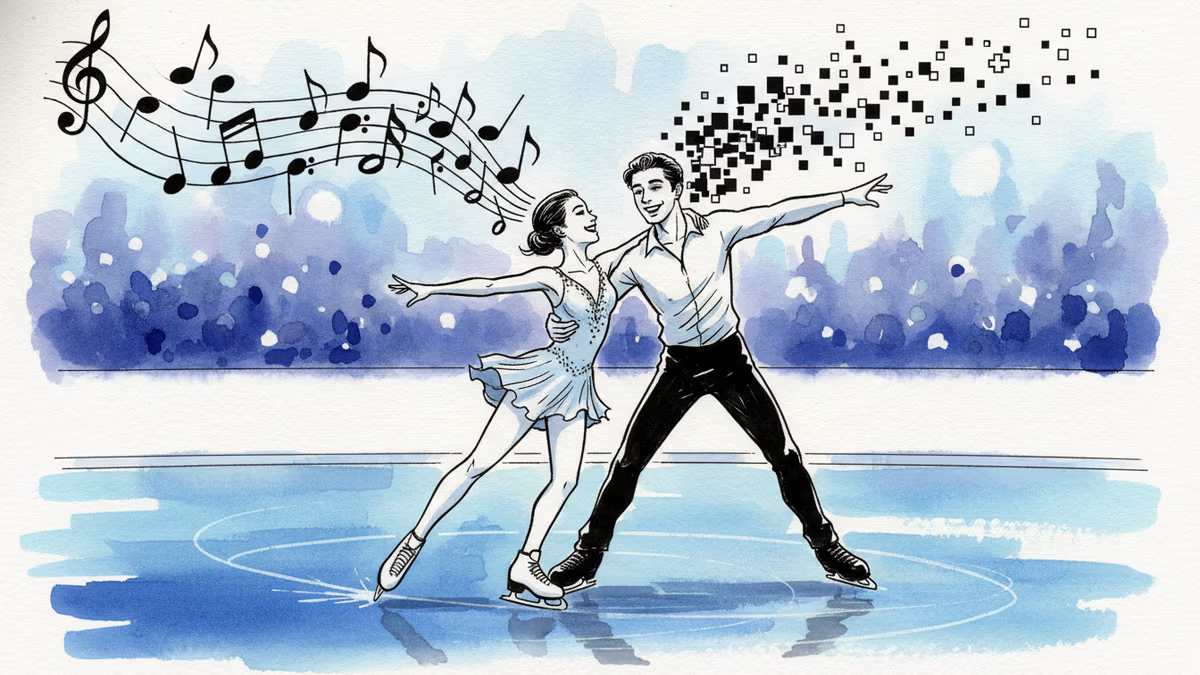
When AI Music Hit Olympic Ice: The Art World's Identity Crisis
Czech figure skaters used AI-generated music at Olympics, sparking debate about creativity, authenticity, and the future of artistic expression in competitive sports.
$3 Million Record Deal vs. Olympic Controversy
Two stories emerged this week that perfectly capture our AI music dilemma. In Mississippi, 31-year-old Telisha Jones used Suno AI to transform her poetry into music, landing a $3 million record deal as "Xania Monet." Meanwhile, Czech siblings Kateřina Mrázková and Daniel Mrázek faced backlash for using AI-generated music during their Olympic ice dance debut.
The contrast is striking: one celebrates AI as a democratizing force, the other questions whether artificial creativity belongs on sport's most prestigious stage.
The Czech Controversy: When AI Meets AC/DC
During Monday's rhythm dance, NBC commentators casually mentioned, "This is AI generated, this first part," referring to the music accompanying the Czechs' gravity-defying routine. The song? "One Two by AI (of 90s style Bon Jovi)" mixed with AC/DC's "Thunderstruck."
The AI portion wasn't just inspired by existing music—it directly copied lyrics. "Every night we smash a Mercedes-Benz!" appears in New Radicals' "You Get What You Give." "Raise your hands, set the night on fire" comes straight from Bon Jovi's "Raise Your Hands." The AI even mimicked Bon Jovi's vocal style.
This isn't creative inspiration; it's statistical plagiarism. Large language models trained on music libraries produce the "most probable" response to prompts, often resulting in near-copies of existing works.
Industry Split: Innovation vs. Integrity
The Optimists see democratization. AI tools like Suno let anyone become a "musician" without traditional training or expensive equipment. Jones's success story represents this promise—a poet becoming a recording artist overnight.
The Skeptics worry about authenticity and artist rights. Figure skating demands both technical excellence and artistic expression. When athletes spend decades perfecting their craft, should they perform to music generated in seconds? The sport celebrates human achievement; AI music feels antithetical to that spirit.

The Pragmatists note that International Skating Union rules don't prohibit AI music. From a regulatory standpoint, the Czechs broke no rules. But rules often lag behind technology's ethical implications.
The Bigger Creative Crisis
This Olympic controversy reflects broader tensions across creative industries:
Music: Streaming platforms already host thousands of AI-generated tracks. Some rack up millions of plays before anyone notices they're artificial.
Visual Arts: AI image generators trained on existing artwork raise similar copyright questions. When does "inspired by" become "stolen from"?
Sports Broadcasting: Will AI soon generate personalized commentary or crowd noise? Where do we draw authenticity lines?
The Czech skaters' choice highlights a fundamental question: If AI can produce emotionally effective art, does its origin matter?
What Comes Next?
Legal frameworks struggle to keep pace. Copyright law wasn't designed for machines that "learn" from existing works. The European Union's AI Act addresses some concerns, but creative applications remain largely unregulated.
Meanwhile, the technology improves rapidly. Today's obviously artificial music may soon be indistinguishable from human compositions. Will we need "authenticity labels" like organic food certifications?
The sports world faces unique challenges. Olympic ideals celebrate human potential and fair competition. AI assistance in training is common, but AI-generated artistic elements feel different—they replace rather than enhance human creativity.
The Czech skaters achieved their Olympic dream, but their musical choice sparked a conversation that extends far beyond ice rinks. In a world where machines can mimic human creativity with increasing sophistication, we must decide what authenticity means—and whether we're willing to pay its price.
Authors
Related Articles

Samsung and SK unveiled a chip and AI investment package worth thousands of trillions of won on June 29. The headline number swings wildly by outlet, but the real contest isn't capital — it's water and power.
Viral videos show 2026 graduates jeering executives who praise AI at commencement ceremonies. It's not just rudeness — it's a signal about who pays for technological optimism.

Filipino virtual assistants using AI to ghost-manage LinkedIn profiles for executives is now a structured industry. 30 comments a day, fake engagement rings, and a platform struggling to tell real from fabricated.
Two commencement speakers learned the hard way that AI enthusiasm doesn't land well with today's graduates. The backlash reveals a widening gap between tech optimism and Gen Z's economic reality.
Samsung and SK unveiled a chip and AI investment package worth thousands of trillions of won on June 29. The headline number swings wildly by outlet, but the real contest isn't capital — it's water and power.
Viral videos show 2026 graduates jeering executives who praise AI at commencement ceremonies. It's not just rudeness — it's a signal about who pays for technological optimism.
Filipino virtual assistants using AI to ghost-manage LinkedIn profiles for executives is now a structured industry. 30 comments a day, fake engagement rings, and a platform struggling to tell real from fabricated.
Two commencement speakers learned the hard way that AI enthusiasm doesn't land well with today's graduates. The backlash reveals a widening gap between tech optimism and Gen Z's economic reality.
Thoughts
Share your thoughts on this article
Sign in to join the conversation