
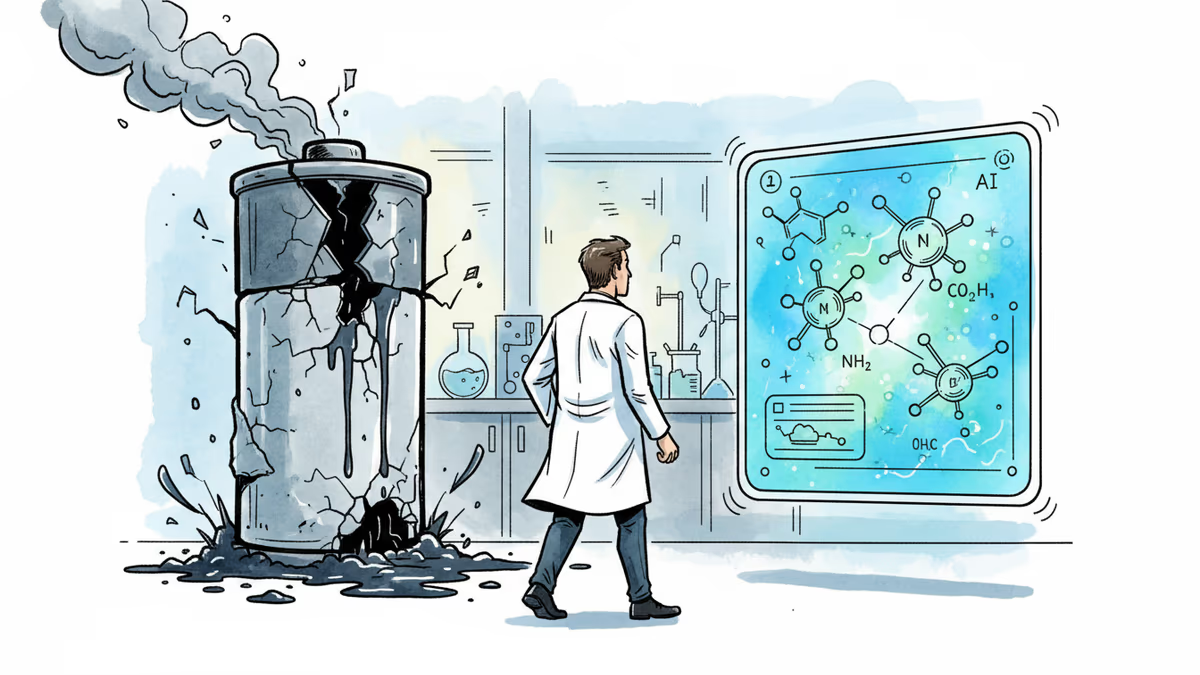
When a Battery Company Bets on AI Instead
SES AI is abandoning lithium battery development for AI-driven materials discovery. One CEO's blunt diagnosis of Western battery industry collapse — and what it means for the future of energy tech.
"Almost every Western battery company has either died or is going to die."
That's not a critic talking. That's Qichao Hu, the CEO of a battery company — describing his own industry, without flinching. And then pivoting out of it.
What Actually Happened
SES AI, based in Massachusetts, spent years building advanced lithium-metal batteries for electric vehicles and aerospace applications. It attracted investment from Hyundai, GM, and Honda, and at its peak carried a valuation north of $3.6 billion. The company was supposed to be one of the Western world's answers to Chinese battery dominance.
It isn't doing that anymore.
Instead, SES AI is repositioning itself as an AI-powered materials discovery platform. The idea: use machine learning to simulate thousands of material combinations, identify promising candidates, and compress what used to take years of lab work into weeks. The target isn't just battery materials — it's semiconductors, pharmaceuticals, industrial chemicals. Anywhere that finding the right molecule is the bottleneck.
The China Problem Nobody Solved
The reason for the pivot isn't complicated. Chinese battery manufacturers — CATL, BYD, and others — have spent a decade using state subsidies and sheer scale to drive down costs to levels Western startups simply can't match. Chinese firms now hold over 60% of the global battery market. Northvolt in Sweden filed for bankruptcy. Britishvolt in the UK collapsed. The graveyard of Western battery ambition is filling up.

Hu's logic is straightforward: don't fight a cost war you can't win. Instead, move up the value chain. If you can't out-manufacture China, maybe you can out-discover it.
It's a bet on the idea that the next competitive moat in energy technology won't be the factory floor — it'll be the algorithm that designs what goes into the factory.
Is This Actually New?
AI-assisted materials discovery has been building momentum for a few years now. Google DeepMind's GNoME project predicted structures for over 2.2 million new materials. Microsoft has invested in similar research. What's different about SES AI's move is that it's a hardware company — one that built physical things, raised money from automakers, and had real manufacturing ambitions — choosing to abandon that path entirely.
That's a signal worth paying attention to.
At the same time, the pivot raises legitimate questions. AI materials discovery is a crowded field, and the distance between a predicted material and a manufacturable, commercially viable one remains significant. Simulating a promising molecule is not the same as getting it into a product at scale. The graveyard of "AI will solve X" announcements is also filling up.
Three Ways to Read This
For investors, it's a story about the limits of capital in commodity hardware. Pouring money into battery manufacturing in markets where a state-backed competitor can absorb losses indefinitely is a structural trap. The smarter bet may be IP and platform plays — which is exactly what SES AI is attempting.
For the clean energy transition, the implications are mixed. If AI genuinely accelerates the discovery of better battery chemistries — cheaper, more energy-dense, less reliant on scarce minerals like cobalt — that's a net positive. But if the real effect is that Western companies exit manufacturing entirely, the supply chain dependencies that policymakers are trying to reduce may actually deepen.
For the broader tech industry, SES AI's move is part of a pattern: physical-world companies increasingly rebranding as AI companies when their core hardware business faces structural headwinds. Sometimes this reflects genuine transformation. Sometimes it's a last resort dressed up in optimism.
Authors
Related Articles

Samsung and SK unveiled a chip and AI investment package worth thousands of trillions of won on June 29. The headline number swings wildly by outlet, but the real contest isn't capital — it's water and power.
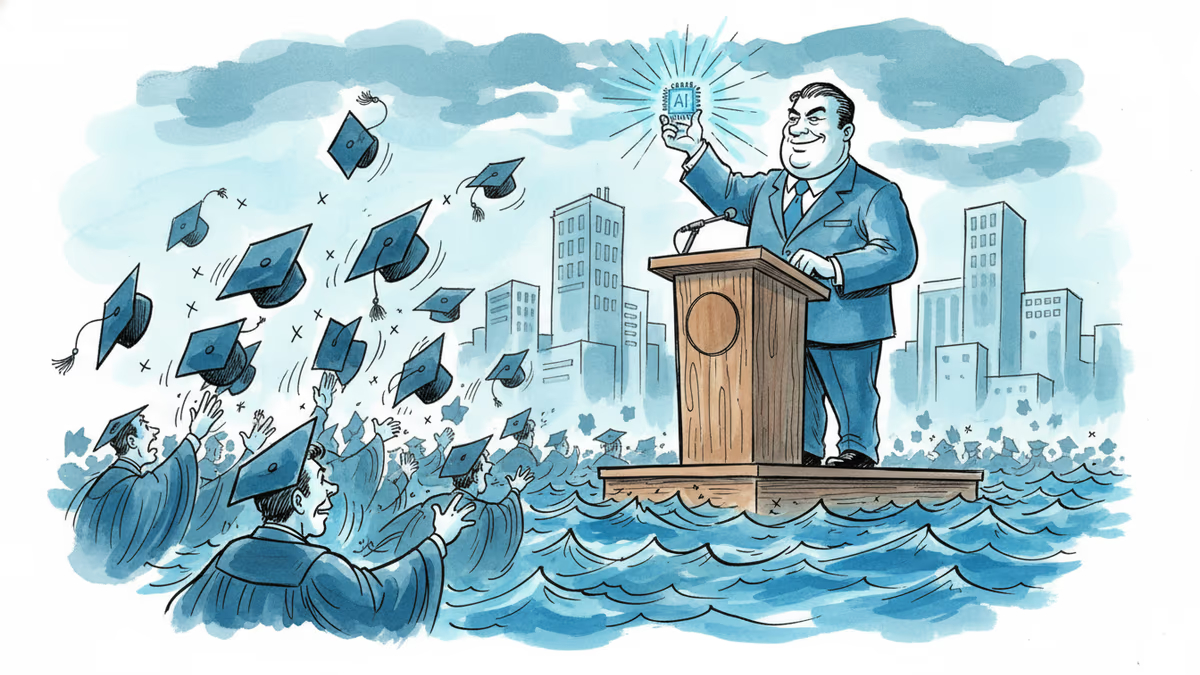
Viral videos show 2026 graduates jeering executives who praise AI at commencement ceremonies. It's not just rudeness — it's a signal about who pays for technological optimism.
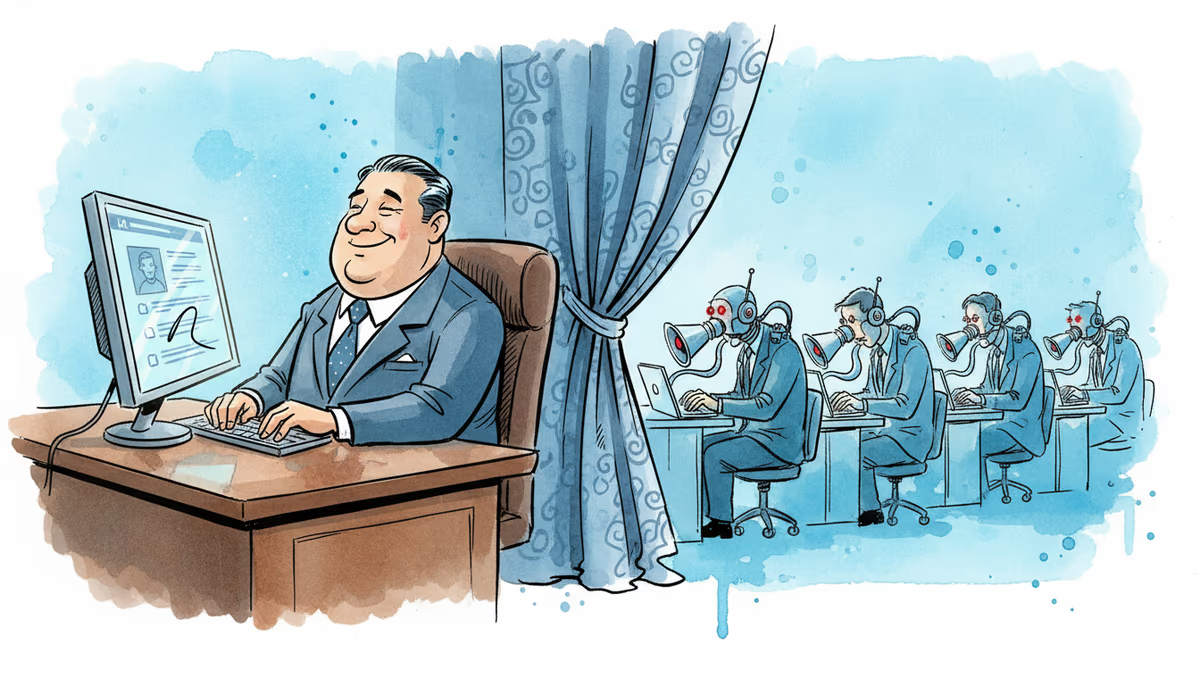
Filipino virtual assistants using AI to ghost-manage LinkedIn profiles for executives is now a structured industry. 30 comments a day, fake engagement rings, and a platform struggling to tell real from fabricated.
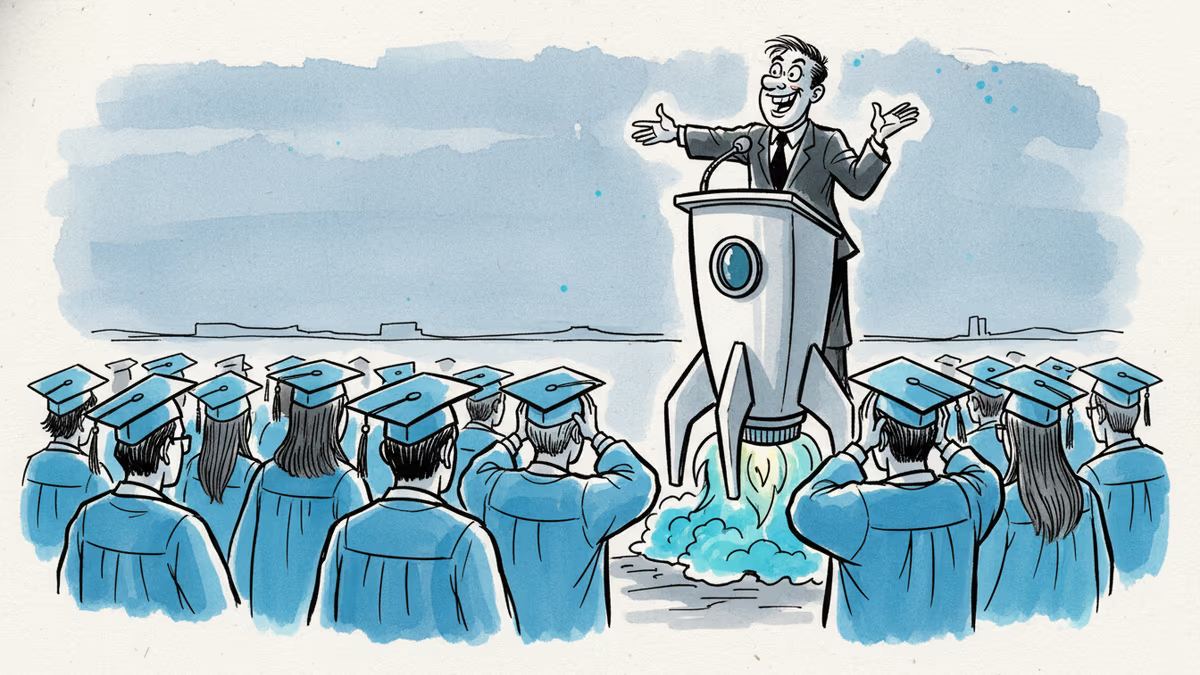
Two commencement speakers learned the hard way that AI enthusiasm doesn't land well with today's graduates. The backlash reveals a widening gap between tech optimism and Gen Z's economic reality.
Samsung and SK unveiled a chip and AI investment package worth thousands of trillions of won on June 29. The headline number swings wildly by outlet, but the real contest isn't capital — it's water and power.
Viral videos show 2026 graduates jeering executives who praise AI at commencement ceremonies. It's not just rudeness — it's a signal about who pays for technological optimism.
Filipino virtual assistants using AI to ghost-manage LinkedIn profiles for executives is now a structured industry. 30 comments a day, fake engagement rings, and a platform struggling to tell real from fabricated.
Two commencement speakers learned the hard way that AI enthusiasm doesn't land well with today's graduates. The backlash reveals a widening gap between tech optimism and Gen Z's economic reality.
Thoughts
Share your thoughts on this article
Sign in to join the conversation