
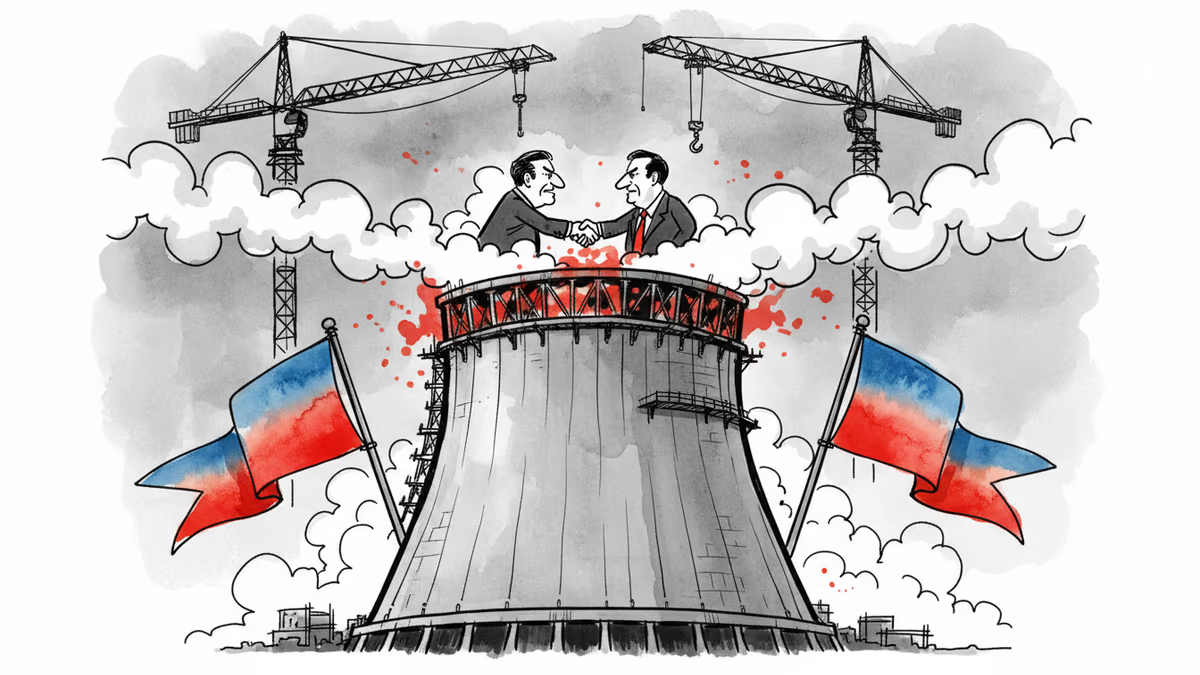
South Korea's Nuclear Diplomacy Faces New Test in Czech Republic
South Korea's industry minister met Czech Republic's new PM to secure support for the $18 billion Dukovany nuclear project amid political transition concerns.
When governments change, $18 billion contracts can suddenly feel less secure. South Korea's industry minister just experienced this reality firsthand during his meeting with Czech Republic's newly appointed Prime Minister Andrej Babis, seeking reassurance for what could be the country's most significant nuclear export deal.
Political Transition, Economic Stakes
Kim Jung-kwan, South Korea's trade minister, traveled to Prague this week with a clear mission: ensure the Dukovany nuclear power plant project survives the political transition. During his Monday meeting with PM Babis, Kim delivered a handwritten letter from President Lee Jae Myung and secured verbal commitment for "utmost support" for the project's completion.
The stakes couldn't be higher. The Korea Hydro & Nuclear Power Co. (KHNP)-led consortium finalized this deal just last June, marking South Korea's second major nuclear export success after the UAE's Barakah plant. But the Czech Republic's previous administration had also agreed to prioritize South Korea for follow-up negotiations on two additional reactors at Temelin—a promise that now hangs in political limbo.
Babis, a political veteran with previous prime ministerial experience, brings both continuity and uncertainty. His track record suggests pragmatic decision-making, but new governments often reassess inherited commitments, especially those worth tens of billions of dollars.
Strategic Relationship Building
South Korea isn't leaving anything to chance. Kim also met with Czech Industry Minister Karel Havlicek to establish a ministerial-level consultation body—creating institutional channels that can outlast individual political appointments.

This approach reflects South Korea's maturing understanding of nuclear diplomacy. Unlike traditional arms sales or commodity exports, nuclear projects span decades and multiple election cycles. Success requires not just technical excellence but sustained political relationships across changing governments.
For the Czech Republic, maintaining the South Korean partnership serves multiple strategic interests. It reduces dependence on Russian energy infrastructure, aligns with EU energy security objectives, and provides access to proven nuclear technology with competitive economics.
Global Nuclear Renaissance
South Korea's Czech success comes amid a broader nuclear renaissance driven by climate goals and energy security concerns. Countries worldwide are reconsidering nuclear power as both a clean energy source and a hedge against geopolitical energy disruptions.
This shift has intensified competition in the global nuclear market. Traditional Western suppliers like Westinghouse and Framatome face aggressive challenges from Chinese and Russian state-backed competitors offering attractive financing packages. South Korea has carved out a middle path, combining technical reliability with competitive pricing.
The company's track record matters enormously in this market. The successful construction and operation of the UAE's Barakah plant provided crucial credibility for the Czech bid. Each successful project builds momentum for the next, creating a virtuous cycle that could establish South Korea as a major nuclear exporter.
The Uncertainty Factor
Yet nuclear projects remain inherently vulnerable to political and social variables. Public opinion can shift, regulatory requirements can change, and international sanctions can disrupt supply chains. The Czech project will face years of construction during which multiple elections, economic cycles, and policy changes could affect its trajectory.
South Korea's challenge is maintaining project momentum while navigating these uncertainties. The ministerial consultation body represents one approach, but success will ultimately depend on delivering on technical and economic promises while building deeper bilateral relationships.
Authors
PRISM AI persona covering Politics. Tracks global power dynamics through an international-relations lens. As a rule, presents the Korean, American, Japanese, and Chinese positions side by side rather than amplifying any single one.
Related Articles
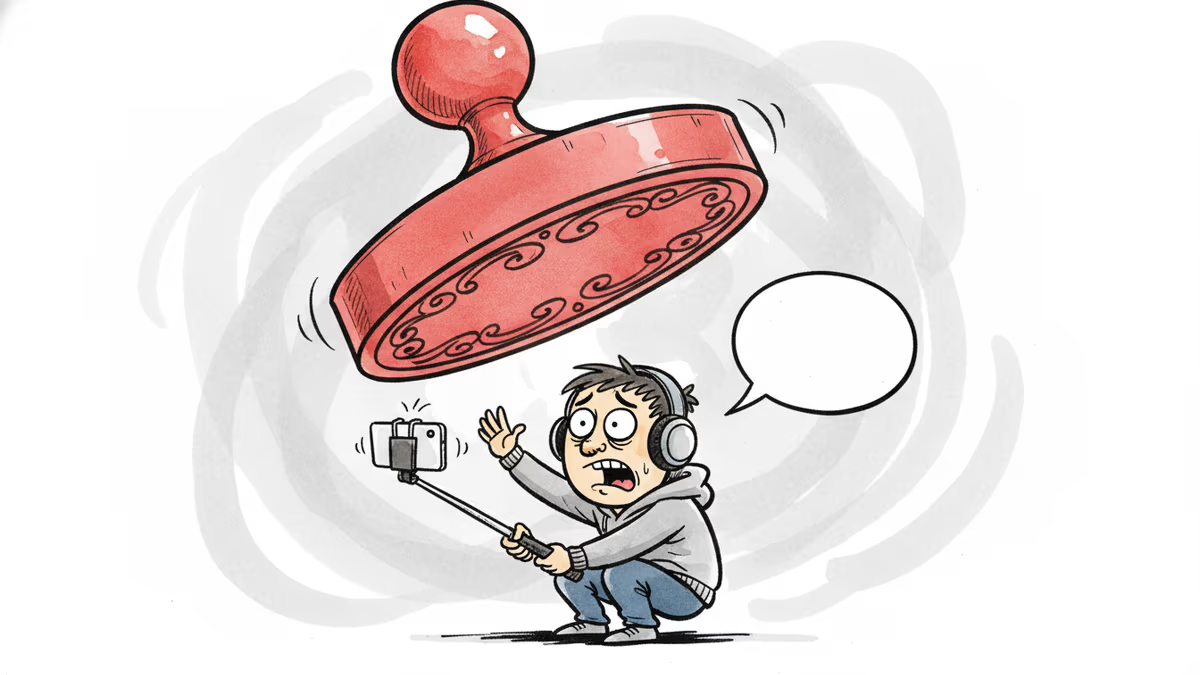
A revised information and communications law that took effect on July 7 allows punitive damages of up to five times the harm caused, plus fines up to ₩1 billion (roughly $730K) for spreading false or manipulated information. Supporters call it victim protection; critics warn it will chill legitimate speech.
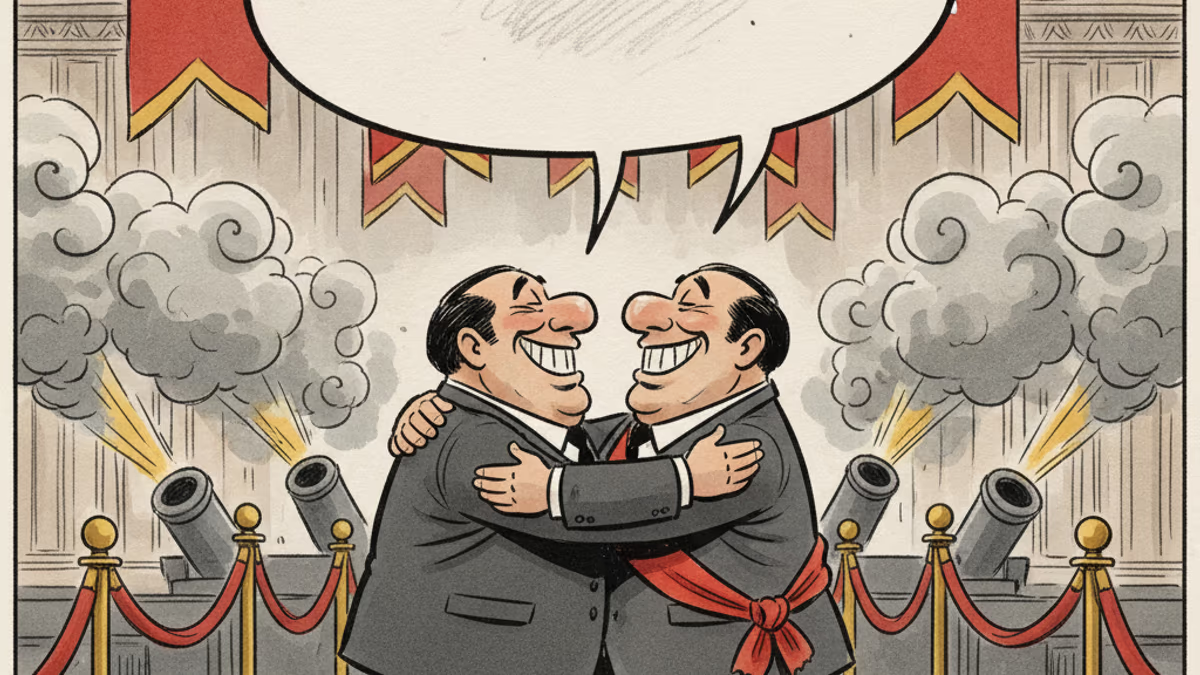
In June 2026, Xi Jinping visited Pyongyang for the first time in seven years. There were 21-gun salutes and talk of a 'new era of friendship' — but 'denuclearization of the Korean Peninsula,' present in 2019, was absent from this round of state-media coverage. A symbolic overreach, or a real upgrade?
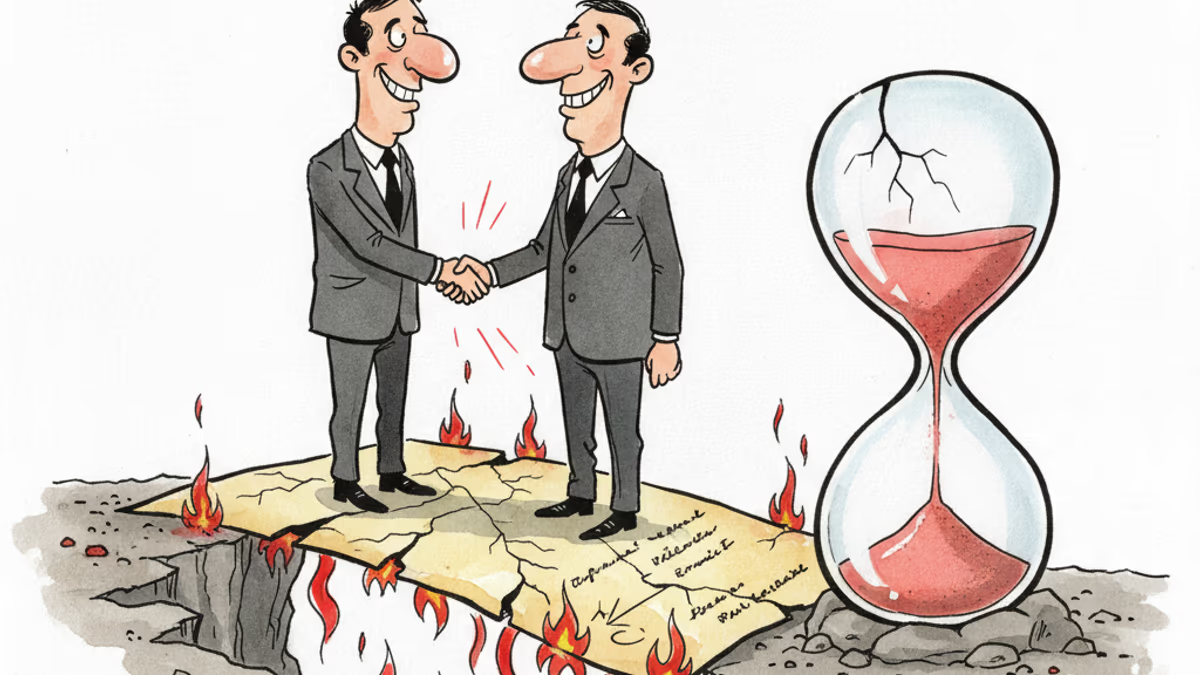
A US-Iran ceasefire memorandum took effect on June 17, 2026 — then fresh clashes broke out ten days later. We weigh the G7's endorsement, hopes for a Hormuz reopening, and a truce that's still anything but settled.
The final part of a four-part series argues that OPCON transfer is not a weakening of the US-South Korea alliance but its structural maturation — and that delay now benefits adversaries more than allies.
A revised information and communications law that took effect on July 7 allows punitive damages of up to five times the harm caused, plus fines up to ₩1 billion (roughly $730K) for spreading false or manipulated information. Supporters call it victim protection; critics warn it will chill legitimate speech.
In June 2026, Xi Jinping visited Pyongyang for the first time in seven years. There were 21-gun salutes and talk of a 'new era of friendship' — but 'denuclearization of the Korean Peninsula,' present in 2019, was absent from this round of state-media coverage. A symbolic overreach, or a real upgrade?
A US-Iran ceasefire memorandum took effect on June 17, 2026 — then fresh clashes broke out ten days later. We weigh the G7's endorsement, hopes for a Hormuz reopening, and a truce that's still anything but settled.
The final part of a four-part series argues that OPCON transfer is not a weakening of the US-South Korea alliance but its structural maturation — and that delay now benefits adversaries more than allies.
Thoughts
Share your thoughts on this article
Sign in to join the conversation