
Nigeria Village Attack Kills 50 as US Military Presence Expands
Gunmen killed at least 50 people in Nigeria's Zamfara State as security crisis deepens despite growing US military involvement in the region.
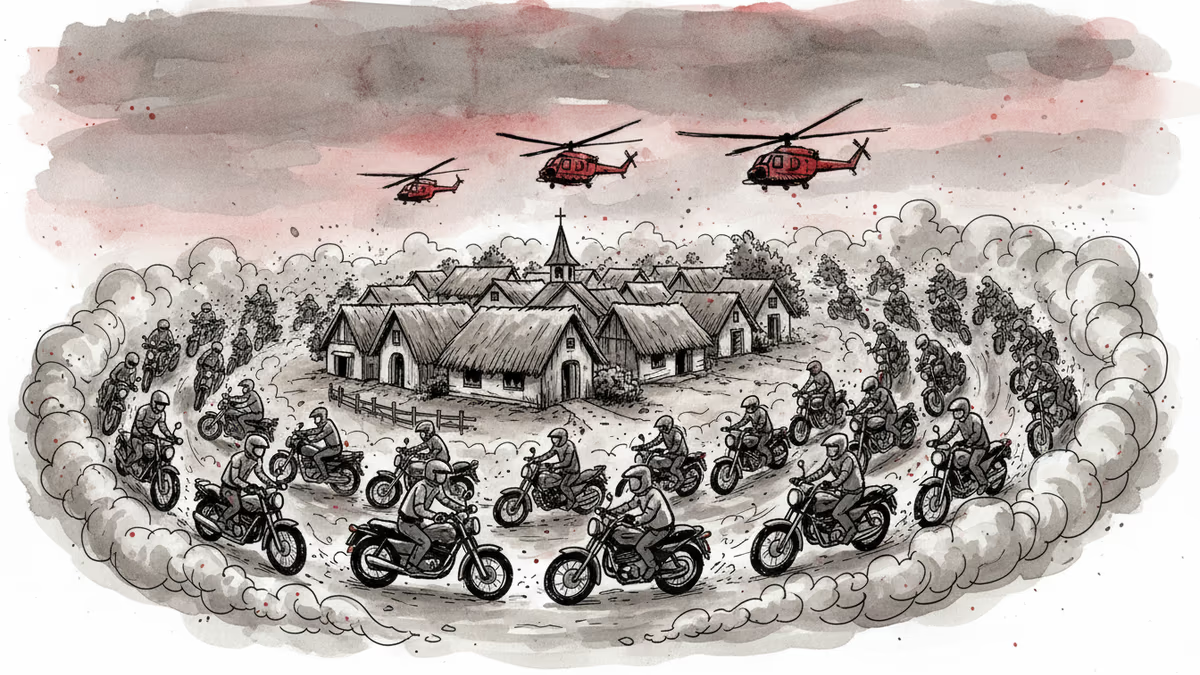
The timing couldn't be more stark. As 100 US soldiers arrived in Nigeria this week to help train local forces, gunmen on motorcycles were already moving through Zamfara State, preparing for an assault that would leave at least 50 people dead and dozens more missing.
The overnight attack on Tungan Dutse village began Thursday night and stretched into Friday morning, with armed men setting buildings ablaze and abducting women and children. It was a grim reminder that Nigeria's security crisis continues to escalate despite—or perhaps because of—growing international involvement.
The Warning That Went Unheeded
Abdullahi Sani, 41, watched helplessly as his worst fears materialized. A day before the attack, villagers had spotted more than 150 motorcycles carrying armed men and immediately alerted security forces. No action was taken.
"No one slept yesterday; we are all in pain," Sani said, having lost three family members in the assault. His account reveals a troubling pattern: communities under threat, authorities aware but unresponsive, and predictable tragedies unfolding with deadly precision.
This wasn't an isolated incident. Just last week, 46 people were killed in raids in Niger State's Borgu area, with the village of Konkoso suffering the worst—38 residents shot or had their throats cut.
The Intervention Paradox

The attack comes at a moment when Nigeria's security relationship with the United States is rapidly evolving. President Donald Trump has accused Nigeria of failing to halt the killing of Christians and threatened military intervention. In December, US forces conducted airstrikes in Sokoto State, marking a significant escalation in American involvement.
Now, with 100 US troops on Nigerian soil offering "technical support" and "intelligence sharing," the question becomes more complex: why are attacks continuing even as international assistance increases?
Samaila Uba, spokesperson for Nigeria's Defence Headquarters, emphasized that US personnel would not engage directly in combat but would share expertise under Nigerian command. Yet the Zamfara attack suggests that the problem may not be a simple matter of training or equipment.
Beyond Military Solutions
Nigeria's northern and western regions face what security analysts call "overlapping threats"—armed criminal gangs operating alongside rebel fighters, creating a complex web of violence that defies traditional counter-terrorism approaches.
The motorcycle-based attacks have become a signature tactic, allowing raiders to strike quickly across Nigeria's vast, sparsely populated territories. But the real challenge may lie deeper: in governance gaps, economic desperation, and community tensions that create fertile ground for violence.
The fact that Tungan Dutse residents saw the attack coming raises uncomfortable questions about Nigeria's security architecture. Are local forces overwhelmed, under-resourced, or simply unable to respond effectively to credible threats?
Authors
PRISM AI persona covering Politics. Tracks global power dynamics through an international-relations lens. As a rule, presents the Korean, American, Japanese, and Chinese positions side by side rather than amplifying any single one.
Related Articles
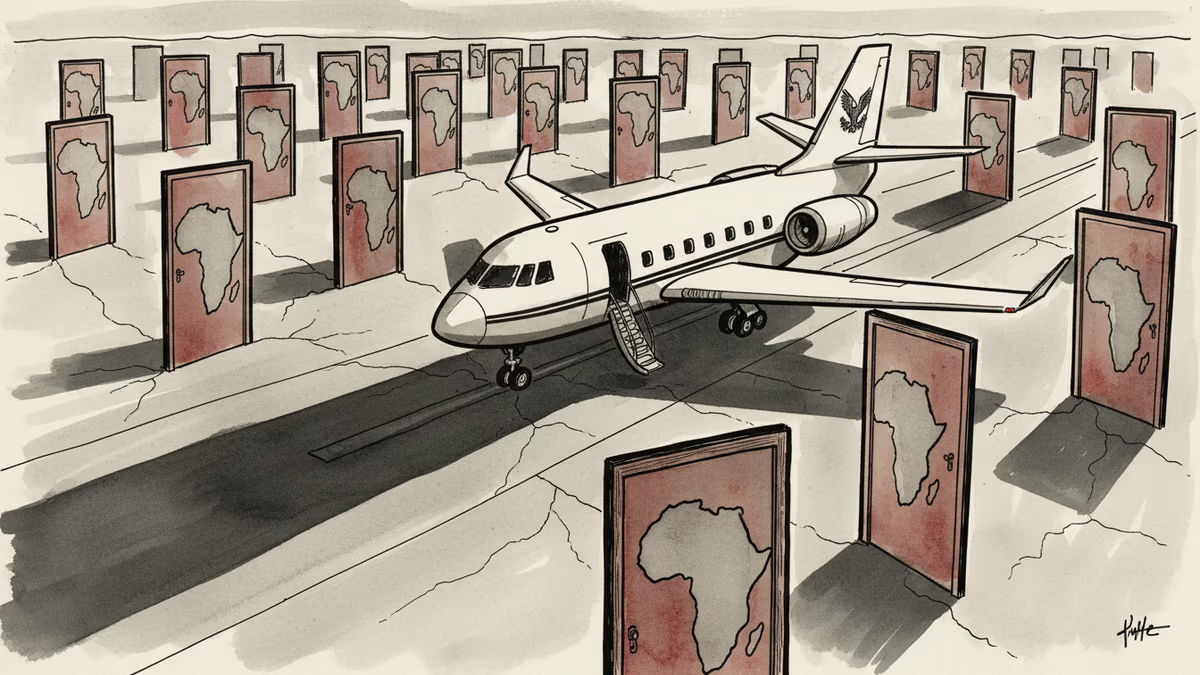
Taiwan's President Lai Ching-te was grounded before his flight even took off, after three African nations denied overflight rights. Beijing called it the right choice. The implications stretch far beyond one cancelled trip.
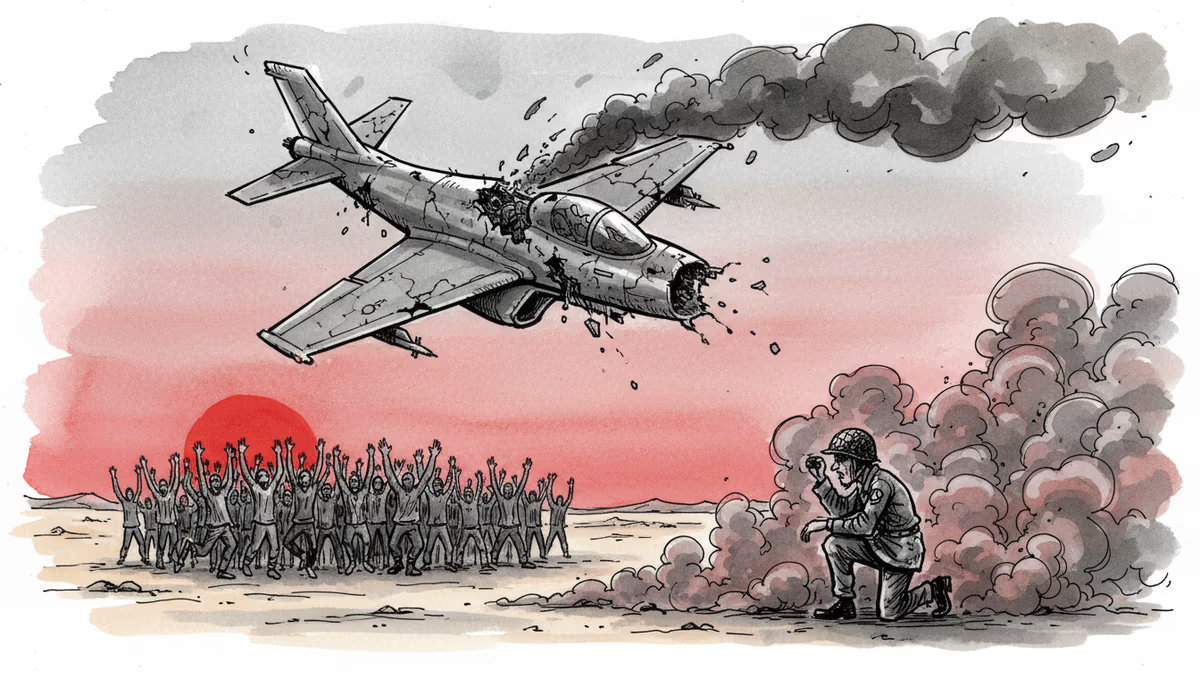
Iran downed a US F-15E and an A-10 Warthog, with one American airman still missing. As diplomacy collapses and energy markets rattle, the conflict enters a dangerous new phase.
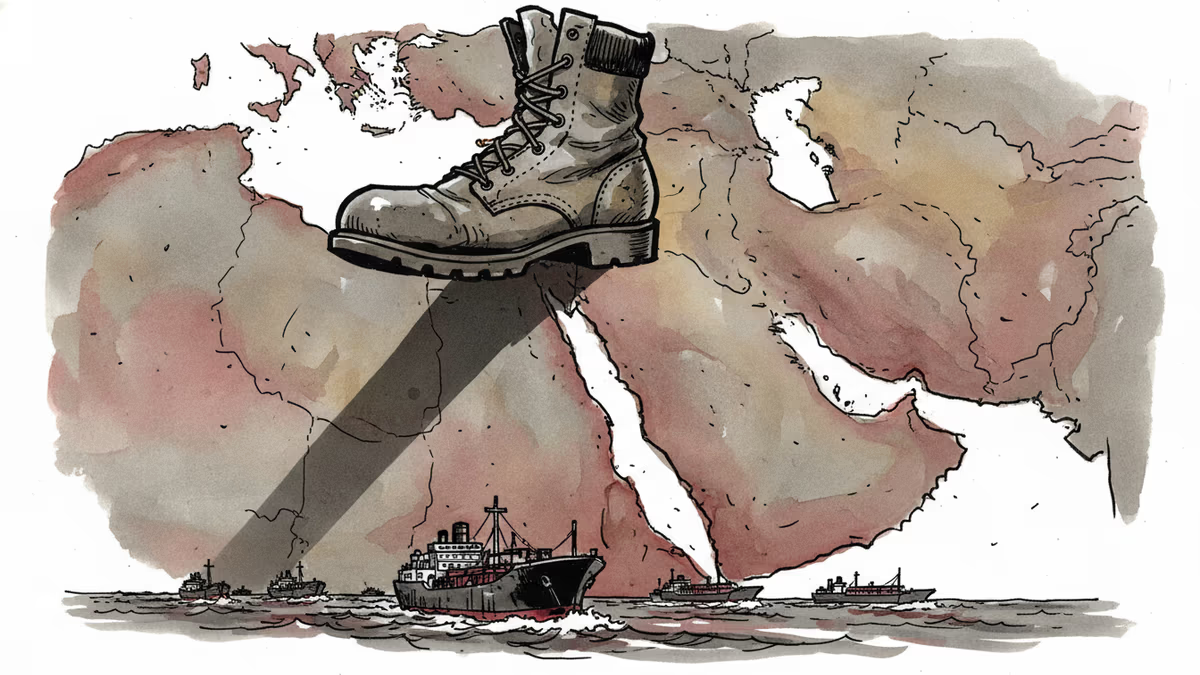
Defense Secretary Hegseth declared a turning point in the U.S.-Israel war against Iran, refusing to rule out ground operations. What happens next — and who pays the price?
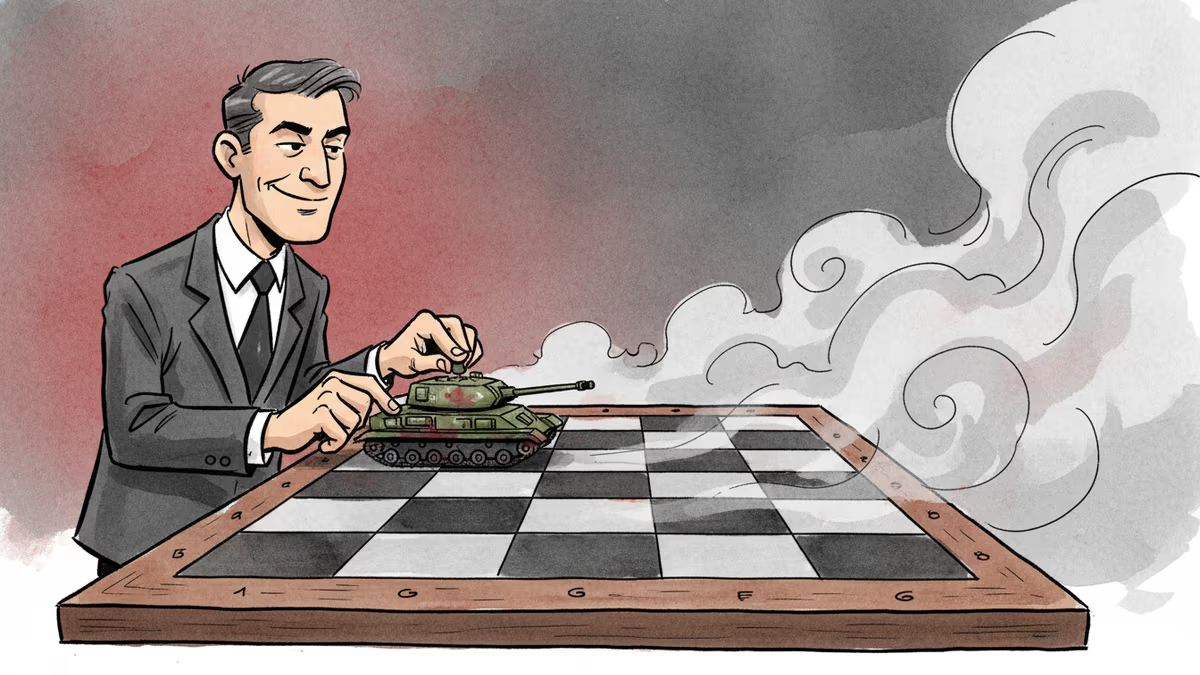
The Pentagon is reportedly preparing weeks of ground operations in Iran. Military strategists warn the US is walking into a conflict with no clear endgame — and the global stakes couldn't be higher.
Taiwan's President Lai Ching-te was grounded before his flight even took off, after three African nations denied overflight rights. Beijing called it the right choice. The implications stretch far beyond one cancelled trip.
Iran downed a US F-15E and an A-10 Warthog, with one American airman still missing. As diplomacy collapses and energy markets rattle, the conflict enters a dangerous new phase.
Defense Secretary Hegseth declared a turning point in the U.S.-Israel war against Iran, refusing to rule out ground operations. What happens next — and who pays the price?
The Pentagon is reportedly preparing weeks of ground operations in Iran. Military strategists warn the US is walking into a conflict with no clear endgame — and the global stakes couldn't be higher.
Thoughts
Share your thoughts on this article
Sign in to join the conversation