
Their Brains Couldn't Process It — And That's the Point
Artemis II astronauts witnessed a 54-minute solar eclipse from behind the Moon. What the science of awe tells us about why these moments matter beyond the spectacle.
"It felt like we just went sci-fi." That's how an astronaut described looking out the window during a live broadcast from lunar orbit.
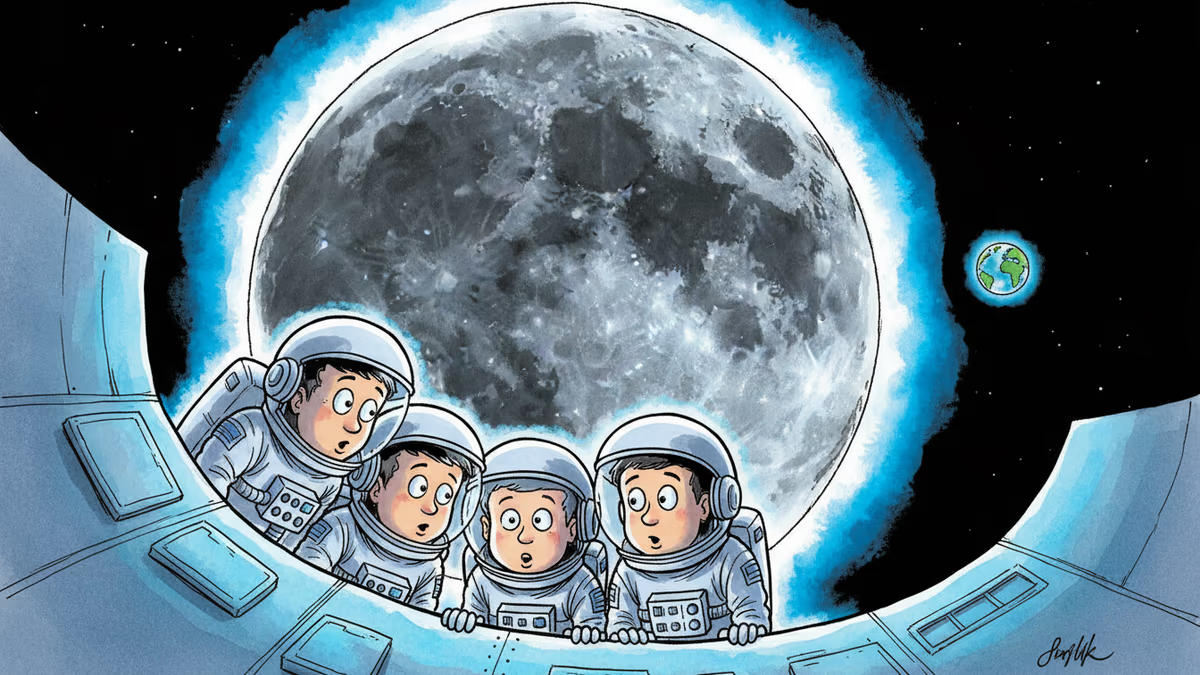
On April 6, 2026, the crew of NASA's Artemis II mission became the first humans in history to witness a total solar eclipse from near the Moon. But calling it a "solar eclipse" barely captures what they saw. Because they were so close to the Moon, it appeared far larger than the Sun—swallowing the solar disk completely, with the corona bleeding out around the edges in slow, rippling waves. Earth hung in the frame too, reflecting sunlight back onto the Moon's surface in what NASA calls "earthshine," casting a faint glow across mountains and craters in the lunar dark. The whole scene lasted 54 minutes.
Mission Commander Reid Wiseman said the experience demanded "20 new superlatives." Astronaut Victor Glover couldn't find any existing words at all.
What Awe Actually Does to the Brain
This isn't just a story about a beautiful view from space. It's a story about what happens to human cognition when the universe presents something the brain genuinely cannot categorize.
Researchers have spent years studying awe—the emotion triggered by encounters with something vast and hard to comprehend. The findings are consistent: awe reduces self-focused thinking, increases openness to new ideas, and heightens empathy. It's one of the few emotional experiences that demonstrably shifts how people think, not just how they feel in the moment.
Deana L. Weibel, a cultural anthropologist who has studied astronauts' experiences of awe for years, has documented this pattern repeatedly. One astronaut she interviewed said witnessing Earth's fragility from orbit reshaped every decision she's made since. Another said he returned from lunar orbit with a fundamentally altered understanding of time and infinity. A third became, by her own account, more curious—not less—after returning to a planet she'd seen shrink to a marble.
Weibel herself has seen two total solar eclipses from Earth, and describes the moment of totality as looking "very wrong—almost alien." During the 2024 eclipse in Indiana, totality lasted close to 4 minutes. She watched "waves of diffuse light snaking around an ink-black hole in the sky."

The Artemis II crew had 54 minutes of that.
Why This Moment Lands Differently
Humans haven't been this close to the Moon since Apollo 17 in 1972. That's more than 50 years of looking at the Moon from a distance—and then, suddenly, four people were close enough to watch it swallow the Sun.
The timing matters culturally, too. Eclipse-chasing has quietly become a mass phenomenon on Earth. Hundreds of thousands of people drove across state lines in 2017 and again in 2024 to stand in the path of totality for a few minutes. On August 12, 2026, the next total solar eclipse will be visible from Greenland, Iceland, Spain, and the Balearic Islands. Viewers in Spain may catch it just before sunset, low on the horizon—where the Moon illusion could make it appear unusually large.
But no eclipse-chaser on Earth will see what the Artemis II crew saw. That gap—between what's accessible from the ground and what becomes possible in orbit—raises a question that's more than philosophical.
The Case For and Against Counting This
Not everyone agrees that astronaut wonder belongs in the ledger of space exploration's value. Artemis has faced sustained criticism over cost overruns and schedule delays. From a purely utilitarian standpoint, the fact that a crew member was moved to speechlessness by a solar eclipse might seem like a footnote to the mission's scientific objectives.
But Weibel's research pushes back on that framing. If awe reliably produces more open, empathetic, and curious people—and the evidence suggests it does—then the psychological transformation of astronauts is itself a data point worth taking seriously. These aren't people who came back from space unchanged and went back to their desks. They came back different.
The harder question is whether that transformation is scalable. Commercial spaceflight is no longer science fiction. Companies like SpaceX and Blue Origin are actively building the infrastructure for private orbital travel. If the awe of seeing Earth from orbit—or watching the Moon eclipse the Sun for nearly an hour—produces measurable cognitive and emotional change, what does it mean that access to those experiences is still determined almost entirely by wealth or government selection?
That's not a question the Artemis mission was designed to answer. But it's one the mission has made harder to ignore.
This content is AI-generated based on source articles. While we strive for accuracy, errors may occur. We recommend verifying with the original source.
Related Articles
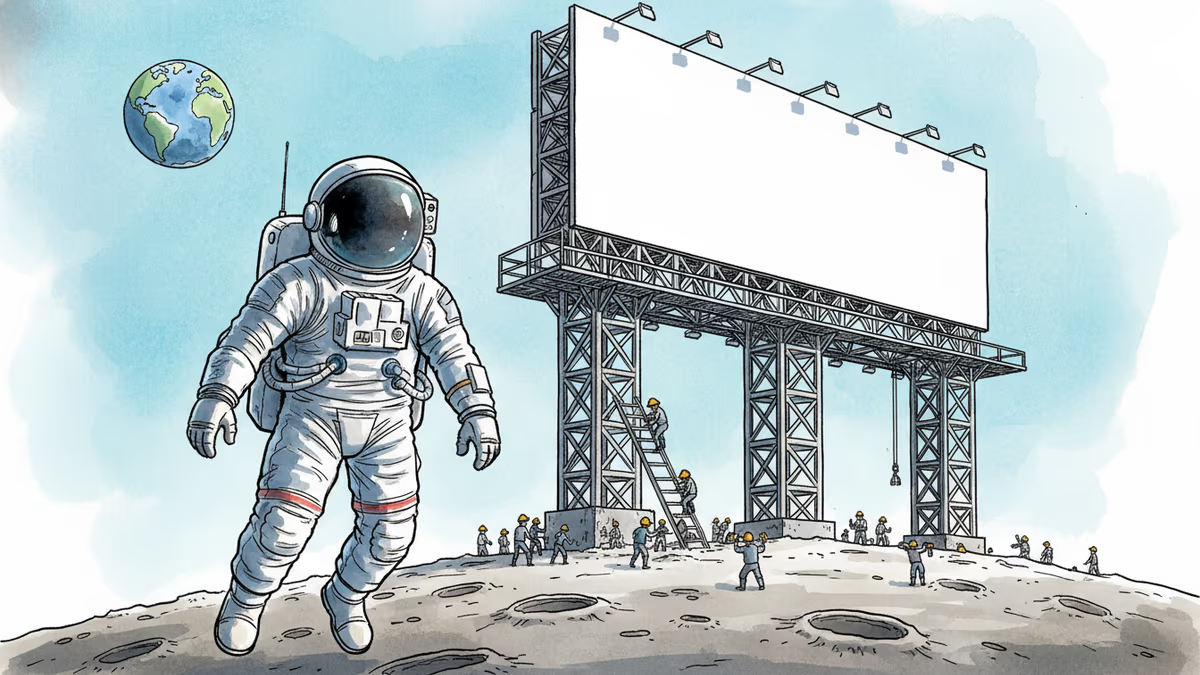
Artemis II has returned from the farthest human journey in 54 years. As the moon becomes a destination again, we're forced to ask: are we going back for wonder, profit, or something we haven't admitted yet?
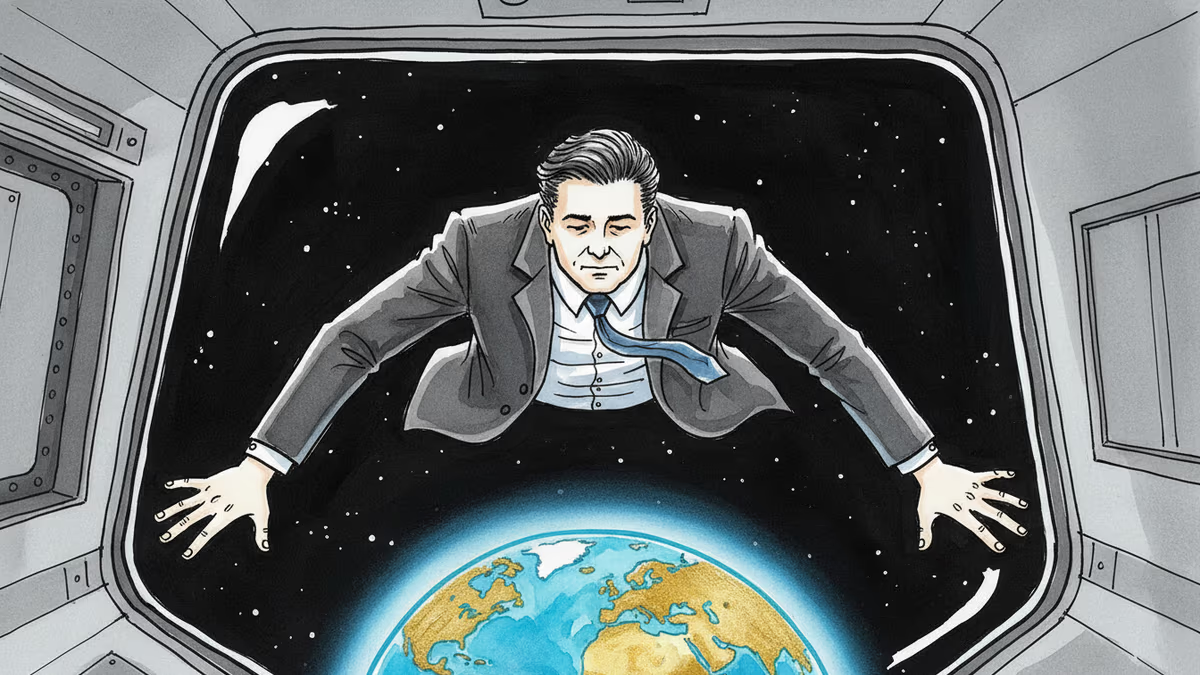
As Artemis II astronauts gazed at Earth from lunar orbit and wept, Trump threatened to erase a civilization. The collision of these two moments asks something profound about power, ego, and what we choose to see.
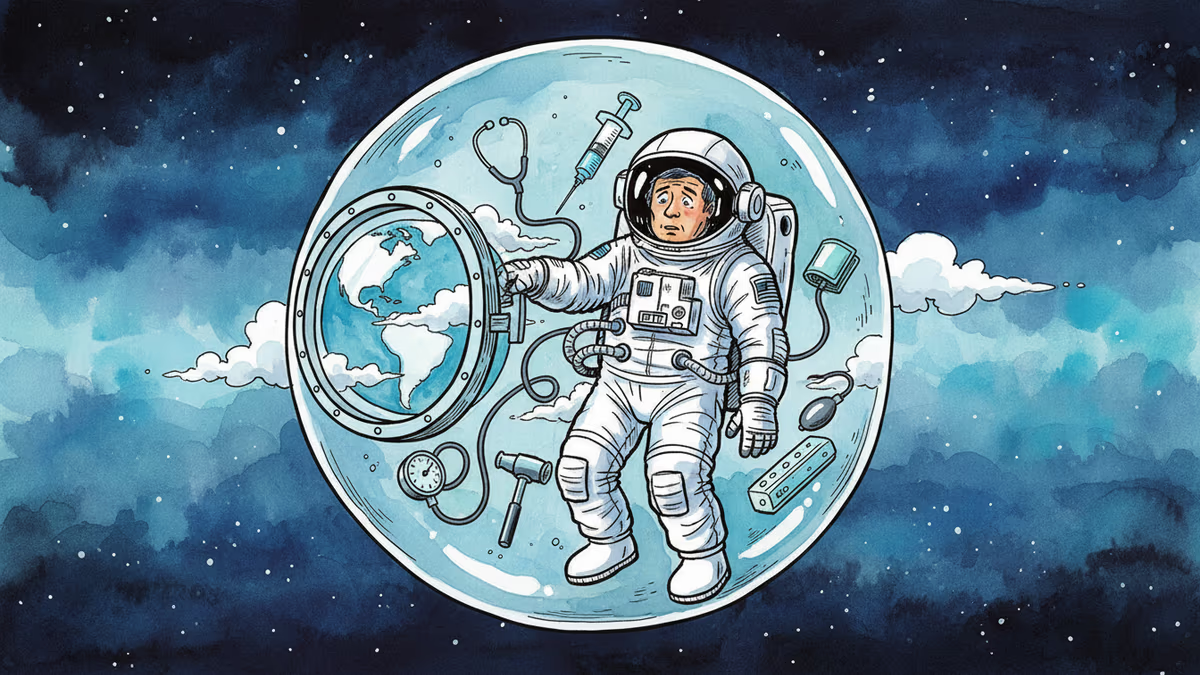
The International Space Station's first-ever medical evacuation reveals both the challenges and opportunities of space medicine as humanity prepares for deeper space exploration.

Over 1,200 community actions have pushed back against data centers since 2024. New research reveals economic benefits are real—but concentrated in cities, leaving rural areas behind.
Artemis II has returned from the farthest human journey in 54 years. As the moon becomes a destination again, we're forced to ask: are we going back for wonder, profit, or something we haven't admitted yet?
As Artemis II astronauts gazed at Earth from lunar orbit and wept, Trump threatened to erase a civilization. The collision of these two moments asks something profound about power, ego, and what we choose to see.
The International Space Station's first-ever medical evacuation reveals both the challenges and opportunities of space medicine as humanity prepares for deeper space exploration.
Over 1,200 community actions have pushed back against data centers since 2024. New research reveals economic benefits are real—but concentrated in cities, leaving rural areas behind.
Thoughts
Share your thoughts on this article
Sign in to join the conversation