

Bybit $1.5 Billion Hack 2025: North Korean Linked Heist Shakes Crypto World
Analysis of the Bybit $1.5 billion hack in 2025. Explore how North Korean-linked attackers executed the largest crypto heist in history and its impact on Ethereum and Bitcoin.
$1.5 billion in Ethereum vanished in a heartbeat. In February 2025, cyberattackers allegedly linked to North Korea executed a massive supply chain attack on the Bybit exchange. It's officially the largest digital asset theft in history, proving that even the most robust security layers can have fatal cracks.
Inside the Bybit $1.5 Billion Hack 2025: A Masterclass in Cybercrime
The attackers didn't just target users; they went for the core infrastructure. By exploiting multi-signature processes, they bypassed high-level security measures. According to industry reports, the market's reaction was swift—Bitcoin dropped 20% following the news. Despite the total crypto market value topping $4 trillion in October 2025, the incident highlighted the terrifying efficiency of state-sponsored hacking groups.

Infrastructure vs. Users: The New Battleground
Charles Guillemet, CTO of Ledger, notes that attackers are increasingly well-organized and well-funded. They aren't just looking for unwary users anymore; they're hunting for vulnerabilities in the underlying smart contracts and exchange backends. While self-custody remains a key advantage of crypto, it puts a massive responsibility on both providers and users to eliminate single points of failure.
Authors
Related Articles
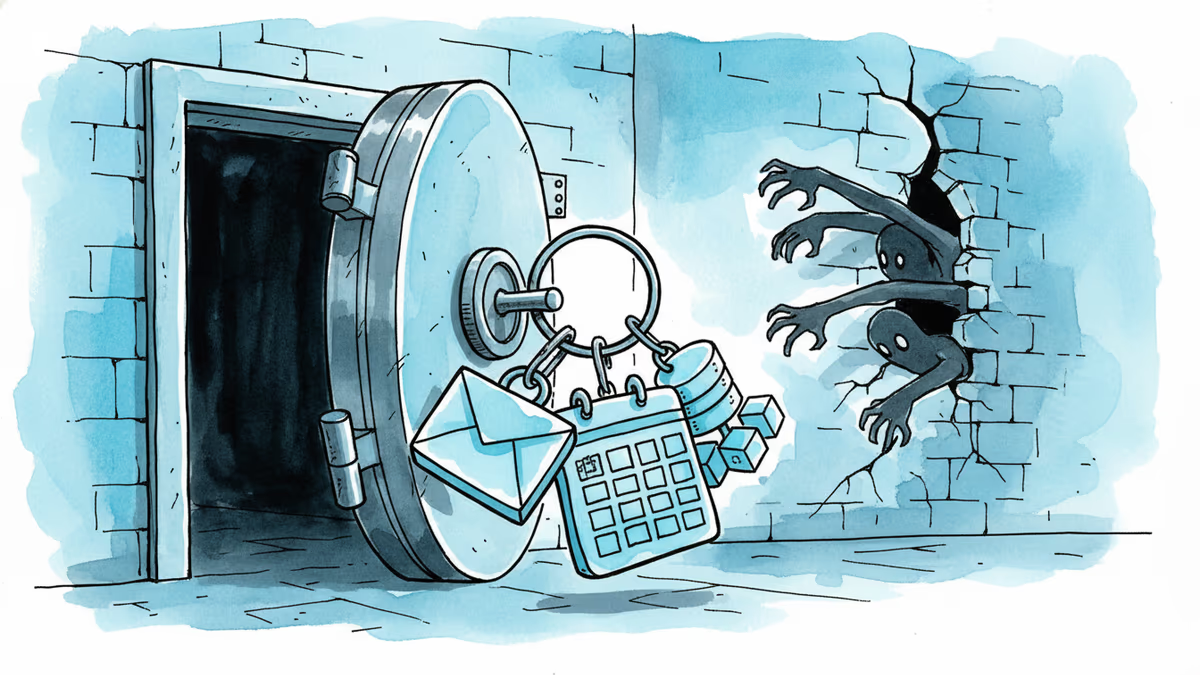
A critical vulnerability in Starlette—downloaded 325 million times per week—puts millions of AI agent servers at risk, exposing stored credentials for email, databases, and third-party services.

GitHub confirmed hackers stole data from 3,800 internal repositories via a poisoned VS Code extension. Here's why developer tools are now the most dangerous attack surface in tech.

A Utah woman was sentenced to life in prison partly because of her Google searches and deleted texts. The Kouri Richins case reveals how digital footprints have become the courtroom's most reliable witness.
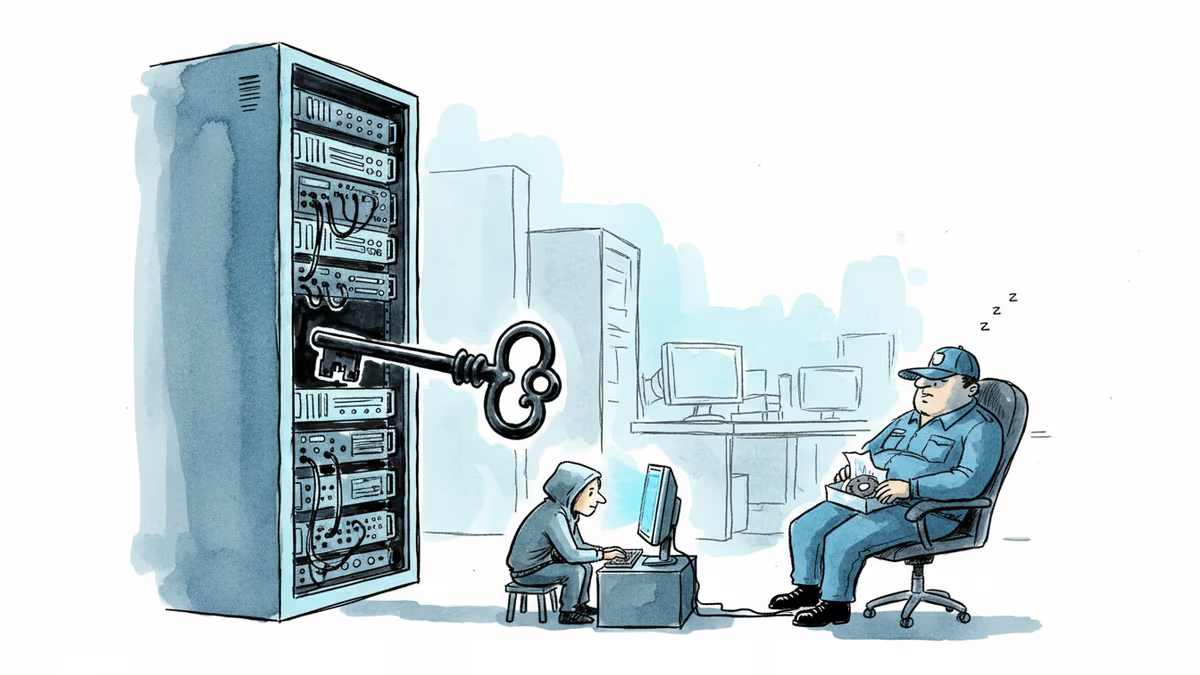
Dirty Frag gives low-privilege users root access on virtually every Linux distro. The exploit code leaked three days ago. Microsoft says attackers are already experimenting with it.
A critical vulnerability in Starlette—downloaded 325 million times per week—puts millions of AI agent servers at risk, exposing stored credentials for email, databases, and third-party services.
GitHub confirmed hackers stole data from 3,800 internal repositories via a poisoned VS Code extension. Here's why developer tools are now the most dangerous attack surface in tech.
A Utah woman was sentenced to life in prison partly because of her Google searches and deleted texts. The Kouri Richins case reveals how digital footprints have become the courtroom's most reliable witness.
Dirty Frag gives low-privilege users root access on virtually every Linux distro. The exploit code leaked three days ago. Microsoft says attackers are already experimenting with it.
Thoughts
Share your thoughts on this article
Sign in to join the conversation