
The Personal AI Assistant That Has Security Experts Terrified
OpenClaw offers powerful AI assistance but introduces unprecedented security risks through prompt injection attacks. Can the benefits outweigh the dangers?
Hundreds of thousands of AI agents are now roaming the internet with unprecedented access to their users' most sensitive data. They read emails, manage calendars, make purchases, and even write code. Security experts are calling it a digital disaster waiting to happen.
The catalyst? OpenClaw, a breakthrough personal AI assistant created by independent developer Peter Steinberger that went viral in January 2025. Unlike the cautious offerings from major AI companies, OpenClaw hands users the keys to create their own bespoke AI assistants with 24/7 access to everything from email inboxes to hard drives.
The Mecha Suit for AI
OpenClaw functions like a "mecha suit for LLMs," as one user described it. Users can choose any language model to act as the pilot, then grant it superpowers: enhanced memory, task scheduling, and the ability to communicate through WhatsApp and other messaging apps. The result is an AI that can wake you with personalized to-do lists, plan vacations while you work, and spin up new applications in its spare time.
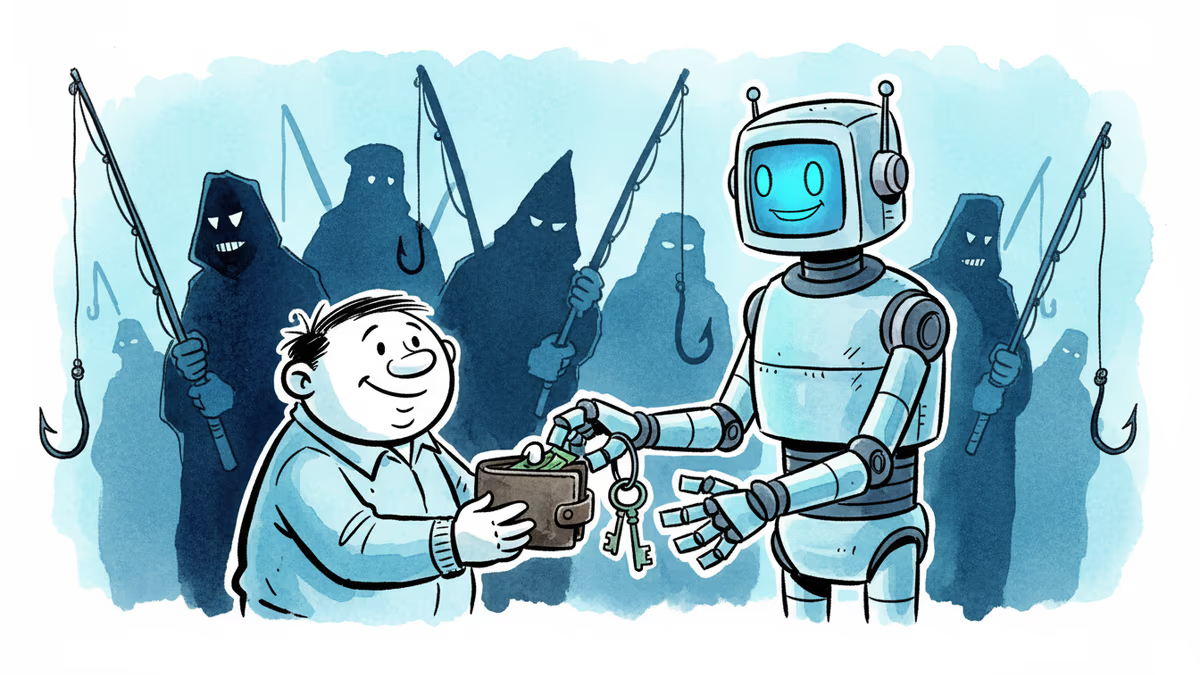
But this power comes with a price. To manage your inbox, the AI needs your email credentials. To make purchases, it requires credit card access. To write code or manage files, it needs local system permissions. You're essentially handing over the digital keys to your entire life.
George Pickett, a volunteer maintainer of the OpenClaw repository, acknowledges the risks but remains undeterred. "Maybe my perspective is a stupid way to look at it, but it's unlikely that I'll be the first one to be hacked," he says. His casual attitude reflects a broader pattern among OpenClaw's enthusiastic user base—awareness of danger coupled with a willingness to roll the dice.
The Invisible Threat
While some risks are obvious—like the Google Antigravity coding agent that reportedly wiped a user's entire hard drive—security experts are most concerned about a more insidious vulnerability called prompt injection.
Think of prompt injection as AI hijacking through text. An attacker can embed malicious instructions in a website, email, or any text the AI might encounter. Since AI models can't distinguish between user instructions and data they're processing, these hidden commands can force the AI to do anything the attacker wants.
"Using something like OpenClaw is like giving your wallet to a stranger in the street," warns Nicolas Papernot, a professor at the University of Toronto. The Chinese government has issued public warnings about OpenClaw's vulnerabilities, and security blog posts about the platform have proliferated so rapidly that reading them all would take "the better part of a week."
The Security Arms Race

The AI security community isn't standing idle. Researchers have developed three main strategies to combat prompt injection, each with significant limitations.
Training-based defenses involve teaching AI models to ignore hijacking attempts through the same reward-punishment system used to create helpful assistants. But there's a delicate balance—train too aggressively, and the AI might start rejecting legitimate user requests. Even well-trained models slip up occasionally due to the inherent randomness in AI behavior.
Detection systems use specialized AI models to scan for malicious inputs before they reach the main assistant. However, recent studies show even the best detectors completely fail against certain attack categories.
Policy-based approaches focus on controlling AI outputs rather than inputs. Simple policies work—limiting email to pre-approved addresses prevents data theft—but they also cripple functionality. The challenge, as Neil Gong from Duke University explains, is "how to accurately define those policies. It's a trade-off between utility and security."
The Startup vs. Big Tech Divide
The OpenClaw phenomenon highlights a fascinating dynamic in AI development. While major companies like Google, OpenAI, and Microsoft proceed cautiously with personal assistants—worried about reputation and liability—independent developers are pushing boundaries with fewer constraints.
Dawn Song, a UC Berkeley professor whose startup Virtue AI makes agent security platforms, believes safe AI personal assistants are possible today. But Neil Gong disagrees: "We're not there yet."
This disagreement reflects deeper questions about acceptable risk levels. Steinberger himself posted that "nontechnical people should not use the software," effectively acknowledging that OpenClaw isn't ready for mainstream adoption. Yet at the inaugural ClawCon event in San Francisco, he announced bringing security expertise on board, suggesting the project is maturing.
The Consumer Appetite Dilemma
Despite the warnings, OpenClaw's viral success reveals massive consumer demand for truly capable AI assistants. Users want more than the limited, sandboxed experiences offered by major tech companies. They're willing to accept significant risks for genuine utility—a calculation that puts pressure on established players to accelerate their own offerings.
The irony is palpable: The same security concerns that make companies hesitant to release powerful AI assistants create market opportunities for less cautious developers. It's a classic innovation dilemma playing out in real-time.
Meanwhile, users like Pickett are taking partial precautions—running OpenClaw in the cloud to protect local files, implementing access controls—while ignoring the prompt injection threat entirely. This selective risk management suggests many users don't fully grasp the vulnerabilities they're accepting.
Will the first major prompt injection catastrophe kill consumer appetite for AI assistants, or will it simply become another accepted risk of digital life—like malware, phishing, and data breaches before it?
Authors
Related Articles
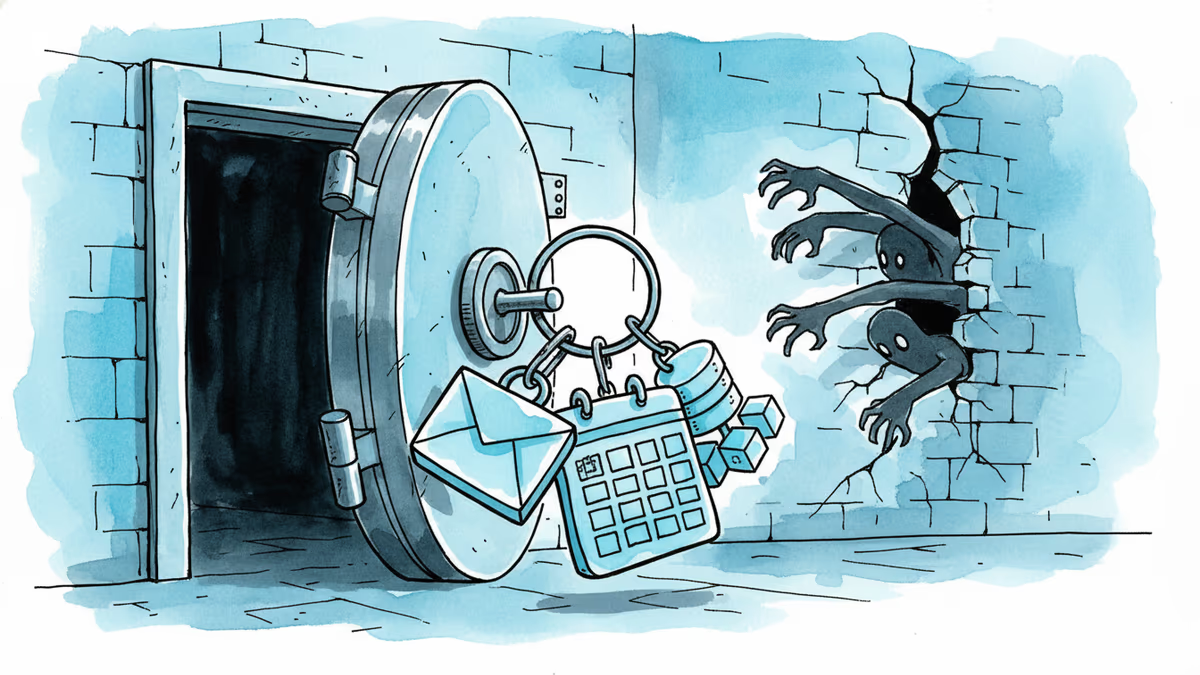
A critical vulnerability in Starlette—downloaded 325 million times per week—puts millions of AI agent servers at risk, exposing stored credentials for email, databases, and third-party services.

GitHub confirmed hackers stole data from 3,800 internal repositories via a poisoned VS Code extension. Here's why developer tools are now the most dangerous attack surface in tech.

A Utah woman was sentenced to life in prison partly because of her Google searches and deleted texts. The Kouri Richins case reveals how digital footprints have become the courtroom's most reliable witness.
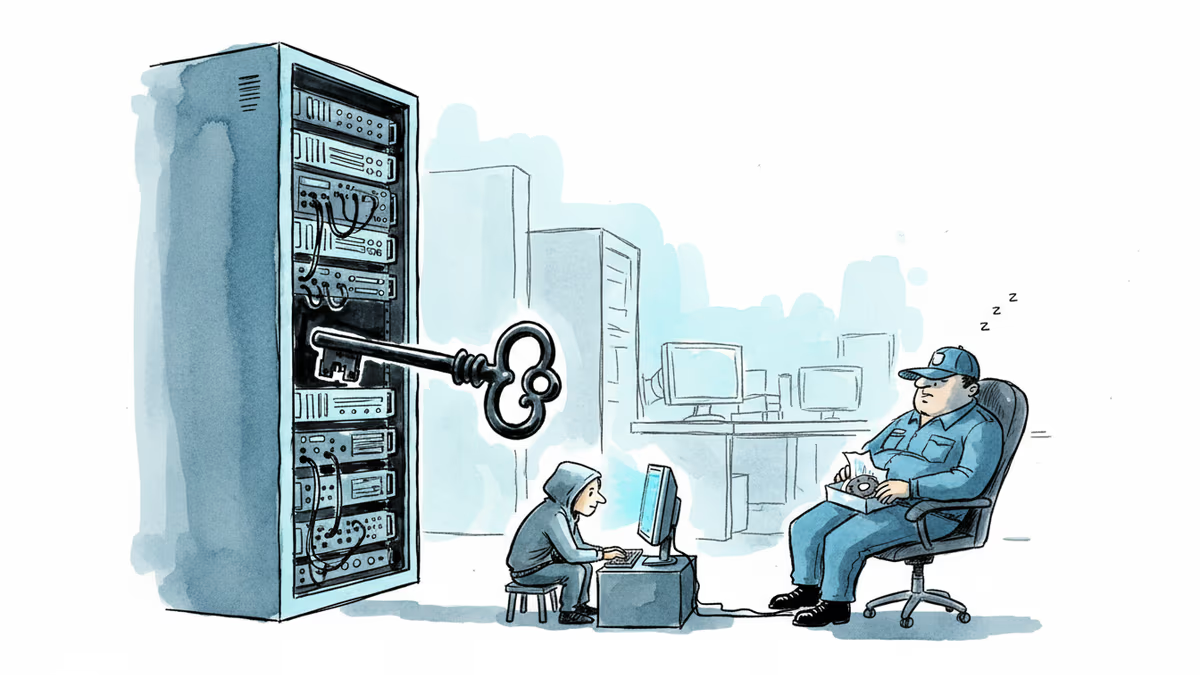
Dirty Frag gives low-privilege users root access on virtually every Linux distro. The exploit code leaked three days ago. Microsoft says attackers are already experimenting with it.
A critical vulnerability in Starlette—downloaded 325 million times per week—puts millions of AI agent servers at risk, exposing stored credentials for email, databases, and third-party services.
GitHub confirmed hackers stole data from 3,800 internal repositories via a poisoned VS Code extension. Here's why developer tools are now the most dangerous attack surface in tech.
A Utah woman was sentenced to life in prison partly because of her Google searches and deleted texts. The Kouri Richins case reveals how digital footprints have become the courtroom's most reliable witness.
Dirty Frag gives low-privilege users root access on virtually every Linux distro. The exploit code leaked three days ago. Microsoft says attackers are already experimenting with it.
Thoughts
Share your thoughts on this article
Sign in to join the conversation