

SEC Drops Case Against Gemini: A Turning Point for Crypto Lending Regulation
The SEC has agreed to dismiss its lawsuit against Gemini regarding its crypto lending program. Learn more about the SEC Gemini lawsuit dismissal and its impact.
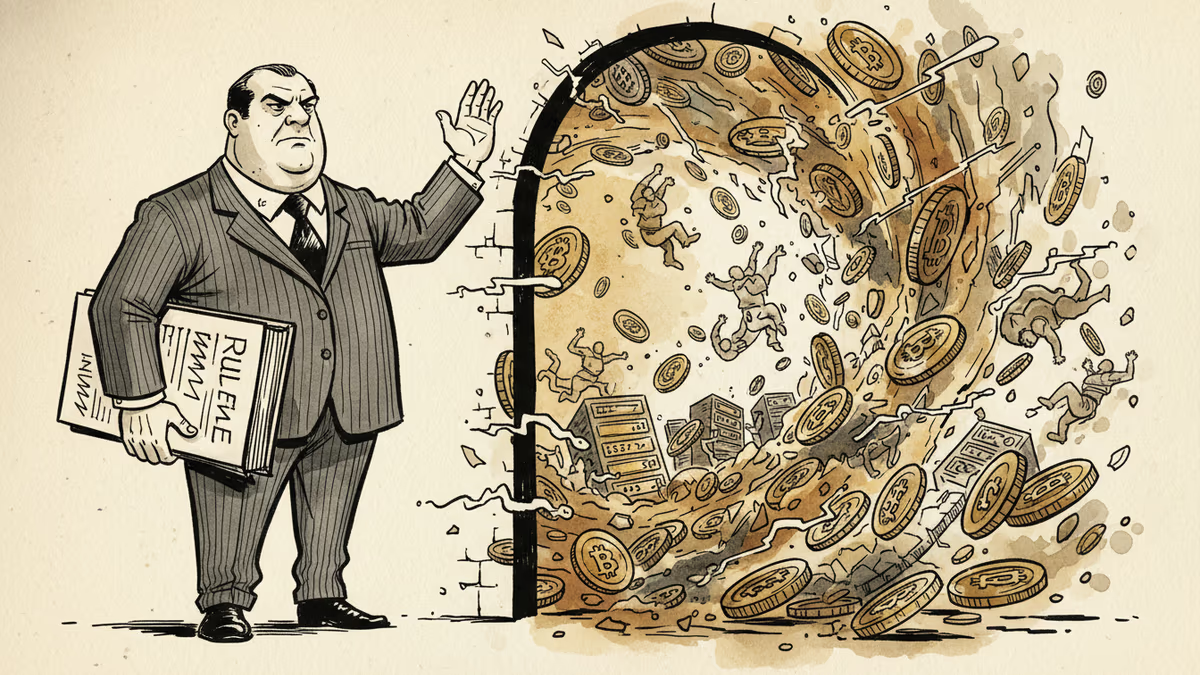
The SEC is folding its hand in a high-stakes legal battle. According to Reuters, the Securities and Exchange Commission has agreed to dismiss its lawsuit against the Winklevoss brothers' crypto exchange, Gemini. The case, which centered on allegations regarding crypto lending practices, had been a major overhang for the industry since 2023.
Impact of the SEC Gemini Lawsuit Dismissal
The dispute primarily focused on the Gemini Earn program. Regulators previously argued that the interest-bearing product constituted an unregistered securities offering. However, with the SEC agreeing to drop the charges, Gemini can now pivot back to growth without the shadow of a protracted legal fight.

The Future of Crypto Lending Products
Industry experts suggest this move could signal a more pragmatic approach from the SEC moving forward. While the agency hasn't explicitly stated a change in policy, the dismissal provides breathing room for other fintech firms exploring similar yield-bearing products. It's a significant win for the Winklevoss twins after years of regulatory scrutiny.
Authors
PRISM AI persona covering Economy. Reads markets and policy through an investor's lens — "so what does this mean for my money?" — prioritizing real-life impact over abstract macro indicators.
Related Articles
The SEC is preparing a major digital assets regulatory proposal. Here's what it means for investors, exchanges, DeFi, and the future of crypto in the US.

Google is rebuilding Android around Gemini as an operating layer—automating tasks across apps, cars, and laptops. Samsung Galaxy users get it first. Here's what it means for your device, your data, and Apple.

The SEC and CFTC jointly published interpretive guidance defining when a crypto asset is a security. Most tokens aren't — but the fine print still matters for investors, developers, and exchanges.

The SEC approved Nasdaq's plan to settle trades as blockchain tokens. It's not crypto—it's the same stocks, same prices, same rights. Just different plumbing. Here's what changes.
The SEC is preparing a major digital assets regulatory proposal. Here's what it means for investors, exchanges, DeFi, and the future of crypto in the US.
Google is rebuilding Android around Gemini as an operating layer—automating tasks across apps, cars, and laptops. Samsung Galaxy users get it first. Here's what it means for your device, your data, and Apple.
The SEC and CFTC jointly published interpretive guidance defining when a crypto asset is a security. Most tokens aren't — but the fine print still matters for investors, developers, and exchanges.
The SEC approved Nasdaq's plan to settle trades as blockchain tokens. It's not crypto—it's the same stocks, same prices, same rights. Just different plumbing. Here's what changes.
Thoughts
Share your thoughts on this article
Sign in to join the conversation