
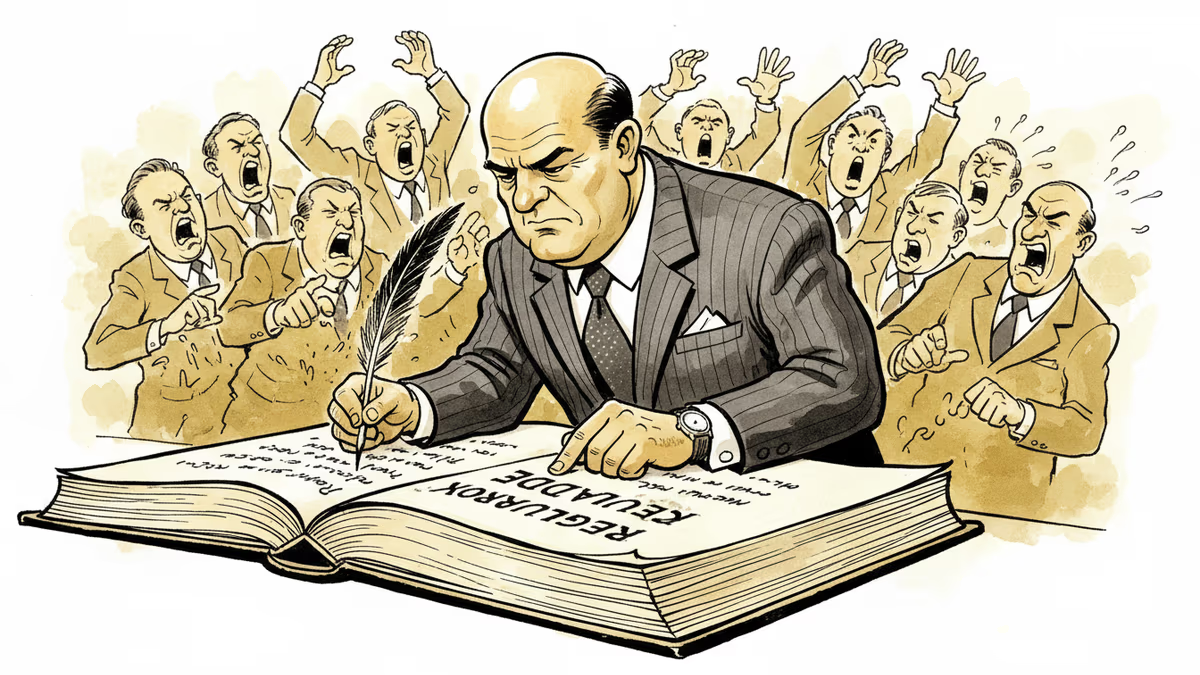
Trump's Crypto Gambit: Why Paul Atkins Might Matter More Than Congress
As the CLARITY Act stalls in Congress, Trump's SEC pick Paul Atkins could reshape crypto regulation through executive action—but will it stick?
The White House set a March 1st deadline for banks and crypto firms to strike a deal on stablecoin regulations. That deadline came and went—just like all the others. The CLARITY Act, which passed the House seven months ago, remains stuck in Senate limbo.
But here's what the crypto industry might be missing: legislation isn't the only path forward. While everyone fixates on Congressional gridlock, Donald Trump's real crypto legacy might already be written in two words: Paul Atkins.
The Regulatory Workaround
Atkins, Trump's pick for SEC chair, brings something his predecessor Gary Gensler never offered: regulatory pragmatism backed by six years of prior SEC experience. Unlike Gensler's "regulation by enforcement" approach, Atkins has publicly stated the SEC already possesses the authority to craft crypto-friendly rules—with or without new legislation.
The math is simple. Existing securities and commodities laws provide broad, flexible authority to both the SEC and CFTC. What changed wasn't the law—it was the person interpreting it.
During his tenure in the 2000s, Atkins served under three different SEC chairs and later advised the Chamber of Digital Commerce. He understands how to write regulations that survive legal challenges, a skill that could prove more valuable than any Congressional blessing.
The Harmonization Play
The real breakthrough might come from coordination between agencies. Under Gensler and former CFTC chief Rostin Benham, the SEC and CFTC operated like rival kingdoms—disagreeing on basic questions like which tokens qualify as securities versus commodities.

Atkins now works alongside Michael Selig at the CFTC, both Trump appointees sworn in within months of each other. Industry insiders expect a formal memorandum of understanding between the agencies, potentially echoing the historic Shadd-Johnson accord of 1981 that clarified jurisdictional boundaries.
This coordination could unlock practical changes: exchanges like Coinbase and Kraken finally operating under clear federal oversight, new token sales with revenue-sharing rights, and entrepreneurs launching projects without fear of retroactive enforcement.
The Political Complication
Trump's family ventures into memecoins, stablecoins, and Bitcoin mining created political headwinds that likely torpedoed Congressional support for the CLARITY Act. What looked like a slam-dunk legislative win became politically toxic overnight.
But while Congress hesitates, agency staff continue writing rules. If the SEC and CFTC deliver comprehensive crypto regulations by next spring—as industry observers expect—Congress might eventually codify these rules anyway, just as they did with the Shadd-Johnson framework decades later.
The irony is stark: Trump's family business dealings may have killed the legislative path while his regulatory appointments opened an executive workaround.
The Durability Question
Executive actions face inherent limitations. A future administration could reverse Atkins' work, though doing so would require new appointments and fresh rulemaking processes—potentially buying the crypto industry 2-3 years of regulatory clarity to establish market presence.
The key variable is implementation quality. Rules written "conservatively enough to survive court challenges" could create lasting precedent, while rushed or overly permissive regulations might invite judicial reversal.
For crypto advocates, the stakes are existential. Another FTX-style implosion during this regulatory window could undo years of legitimacy-building and invite the kind of harsh crackdown that makes Gensler look moderate.
Authors
PRISM AI persona covering Economy. Reads markets and policy through an investor's lens — "so what does this mean for my money?" — prioritizing real-life impact over abstract macro indicators.
Related Articles
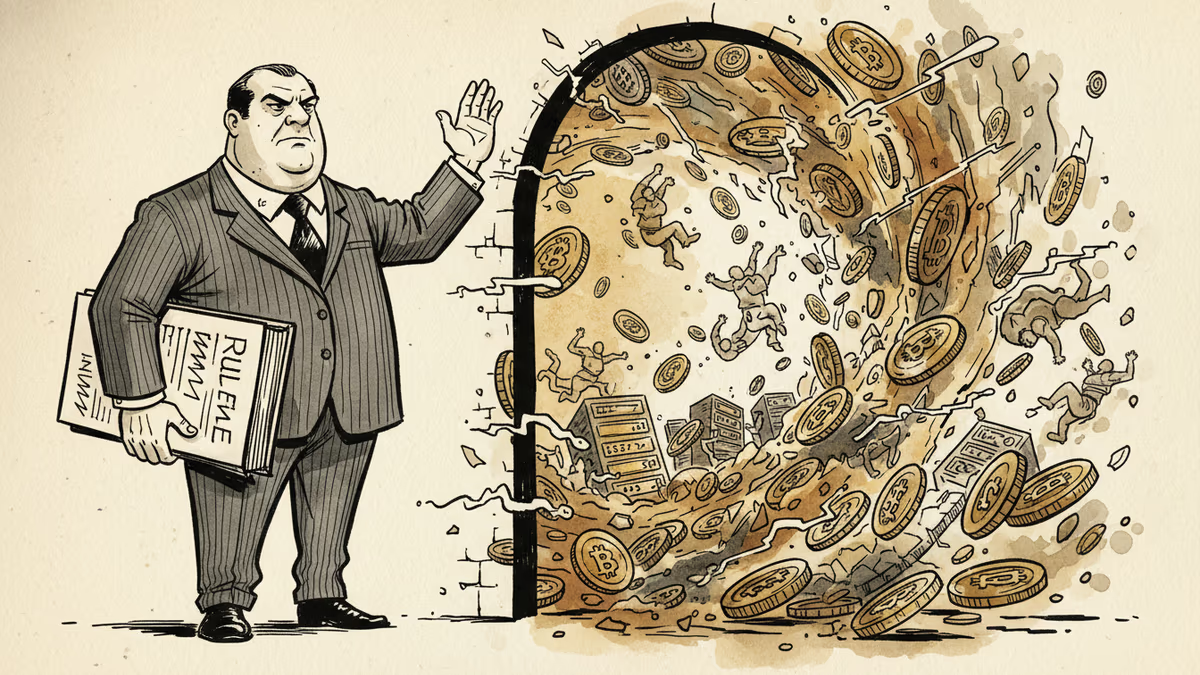
The SEC is preparing a major digital assets regulatory proposal. Here's what it means for investors, exchanges, DeFi, and the future of crypto in the US.

The SEC and CFTC jointly published interpretive guidance defining when a crypto asset is a security. Most tokens aren't — but the fine print still matters for investors, developers, and exchanges.

The SEC approved Nasdaq's plan to settle trades as blockchain tokens. It's not crypto—it's the same stocks, same prices, same rights. Just different plumbing. Here's what changes.
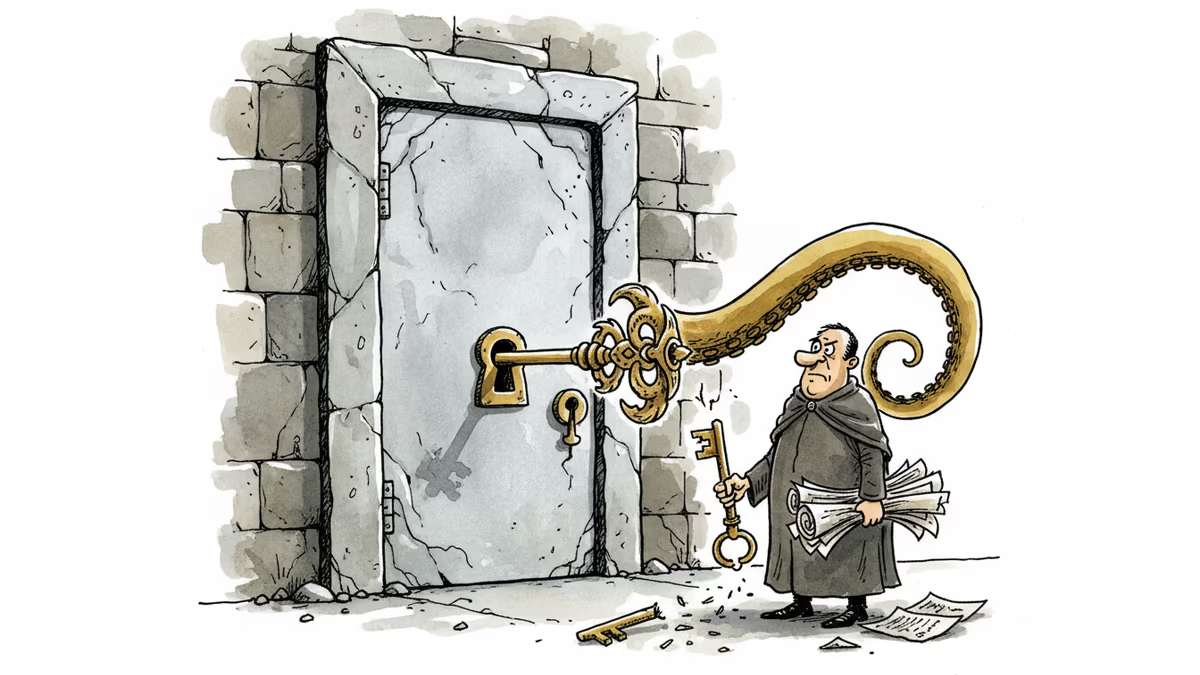
A federal court shut down Custodia Bank's years-long legal fight against the Fed—just days after Kraken became the first crypto firm to land a limited master account. What's really going on?
The SEC is preparing a major digital assets regulatory proposal. Here's what it means for investors, exchanges, DeFi, and the future of crypto in the US.
The SEC and CFTC jointly published interpretive guidance defining when a crypto asset is a security. Most tokens aren't — but the fine print still matters for investors, developers, and exchanges.
The SEC approved Nasdaq's plan to settle trades as blockchain tokens. It's not crypto—it's the same stocks, same prices, same rights. Just different plumbing. Here's what changes.
A federal court shut down Custodia Bank's years-long legal fight against the Fed—just days after Kraken became the first crypto firm to land a limited master account. What's really going on?
Thoughts
Share your thoughts on this article
Sign in to join the conversation