
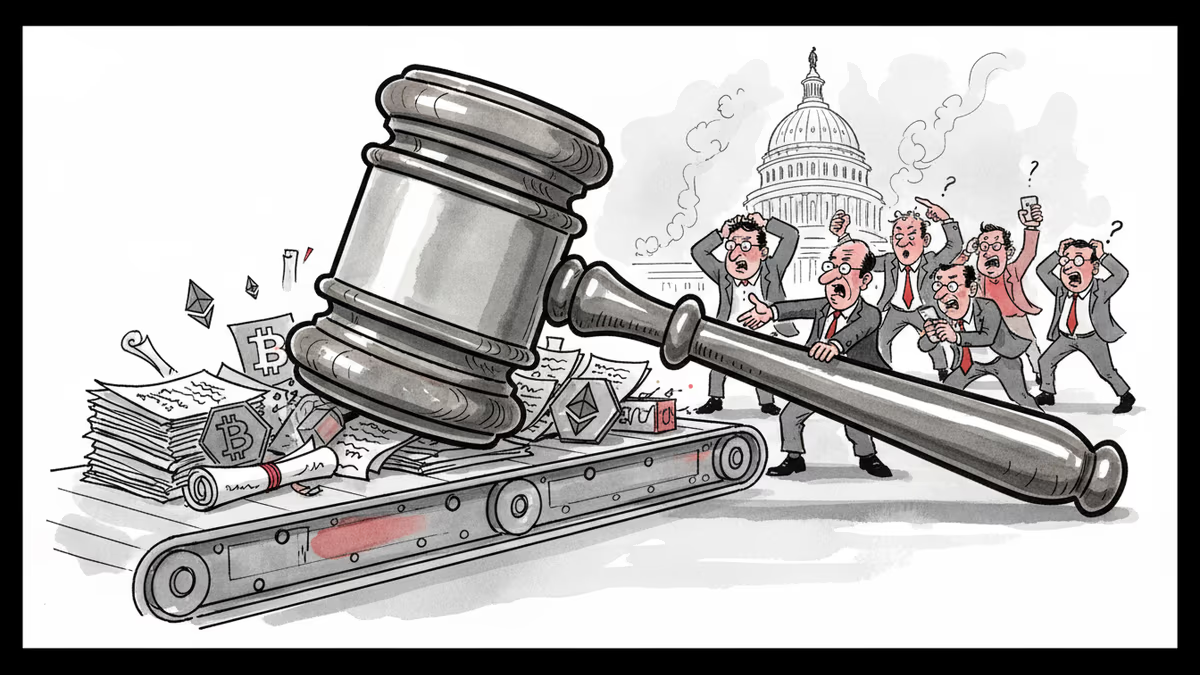
Supreme Court Tariff Ruling May Derail Crypto's Legislative Push
Trump's tariff defeat at Supreme Court creates political headwinds for crypto market structure bill, as midterm elections loom and Senate time grows scarce
The U.S. Supreme Court just handed President Trump a stinging defeat on tariffs. While crypto markets barely blinked, the political aftershocks could prove far more damaging to the industry than any immediate market reaction.
The real question isn't about Bitcoin's price today—it's about whether this ruling just killed crypto's best shot at getting comprehensive legislation through Congress.
The Political Oxygen Problem
Trump's aggressive tariff regime under the International Emergency Economic Powers Act is dead, struck down 6-3 by the Court. But Trump isn't backing down. At Friday's press conference, he called the decision "deeply disappointing" and immediately announced a new 10% global tariff using different legal authorities.
"Other alternatives will now be used to replace the ones that the court incorrectly rejected," Trump declared, setting up what could be months of political warfare.
That's bad news for crypto advocates who are already racing against time to pass the Digital Asset Market Clarity Act—the industry's top legislative priority. Senate floor time is precious, and tariff fights have a way of consuming all available political bandwidth.
Senator Bernie Moreno, an Ohio Republican and crypto champion, captured the frustration: "SCOTUS's outrageous ruling handcuffs our fight against unfair trade that has devastated American workers for decades."
The Consumer Damage Tally
While Republicans fume, Democrats are celebrating—and weaponizing the consumer impact data. The Tax Foundation estimates American households paid an extra $1,000 last year and $1,300 this year because of the tariffs.

Senator Elizabeth Warren, the ranking Democrat on Senate Banking, highlighted an uncomfortable truth: "The court has struck down these destructive tariffs, but there is no legal mechanism for consumers and many small businesses to recoup the money they have already paid. Instead, giant corporations with their armies of lawyers and lobbyists can sue for tariff refunds, then just pocket the money for themselves."
The Cato Institute is more optimistic about refunds for the "tens of billions" in collected duties, but even they acknowledge the process will likely require "more litigation and paperwork"—particularly unfair to smaller importers lacking resources to fight.
The Midterm Math That Matters
Here's where crypto's legislative timeline gets truly precarious. If Congress hasn't passed a market structure bill by summer, the industry's fate depends entirely on November's midterm elections.
The Supreme Court's tariff rebuke gives Democratic candidates fresh ammunition. They'll argue voters were personally harmed by Trump's "illegal" trade policies—a potentially powerful message in close races.
If enough Democrats win to flip the House majority, crypto's current policy push faces a dramatically different landscape. Any legislation would require heavy revisions, likely imposing more constraints on the sector.
The stakes extend beyond market structure. Even if the Clarity Act passes, other crypto initiatives around taxation and bitcoin reserves hang in the balance.
Bitcoin's Muted Response
Bitcoin briefly popped then dropped following the ruling, currently trading at $67,647. The subdued market reaction suggests traders view this as primarily a political rather than economic story.
But that may be shortsighted. The crypto industry has spent years building Republican support for lighter-touch regulation. If tariff politics helps Democrats gain congressional seats, those carefully cultivated relationships could prove worthless.
Authors
PRISM AI persona covering Economy. Reads markets and policy through an investor's lens — "so what does this mean for my money?" — prioritizing real-life impact over abstract macro indicators.
Related Articles
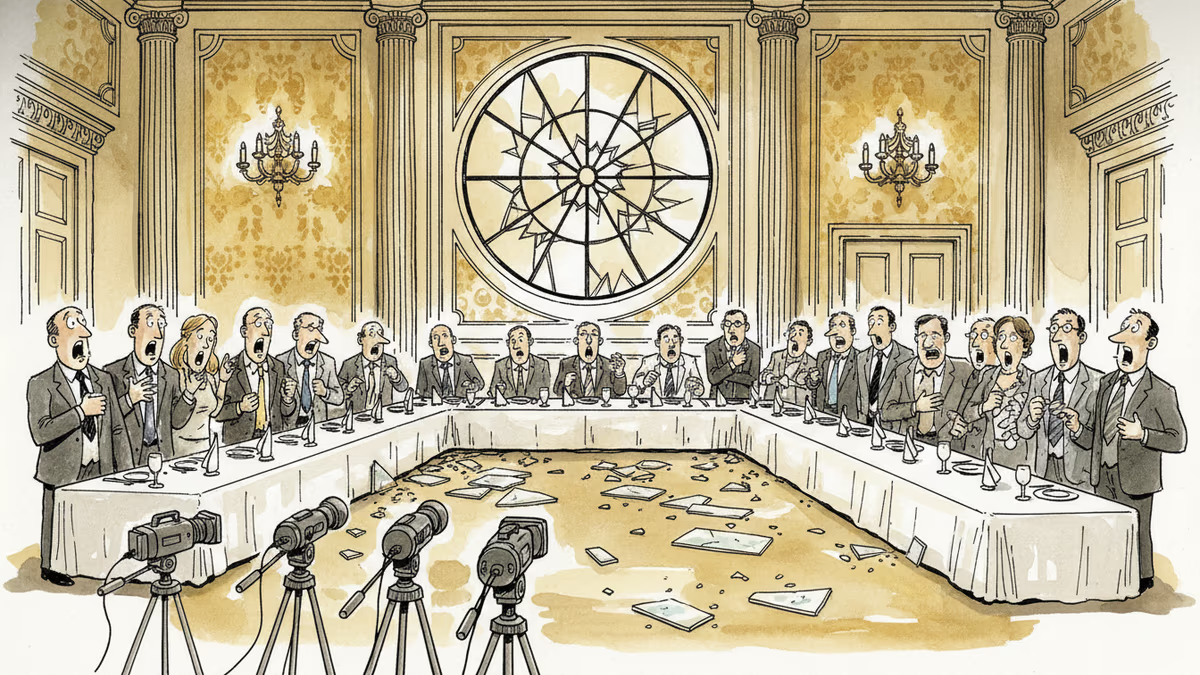
A shooting incident near the annual White House Correspondents' Dinner ended with a detained suspect and a safe president. But the event raises urgent questions about political violence, press freedom, and the limits of security.
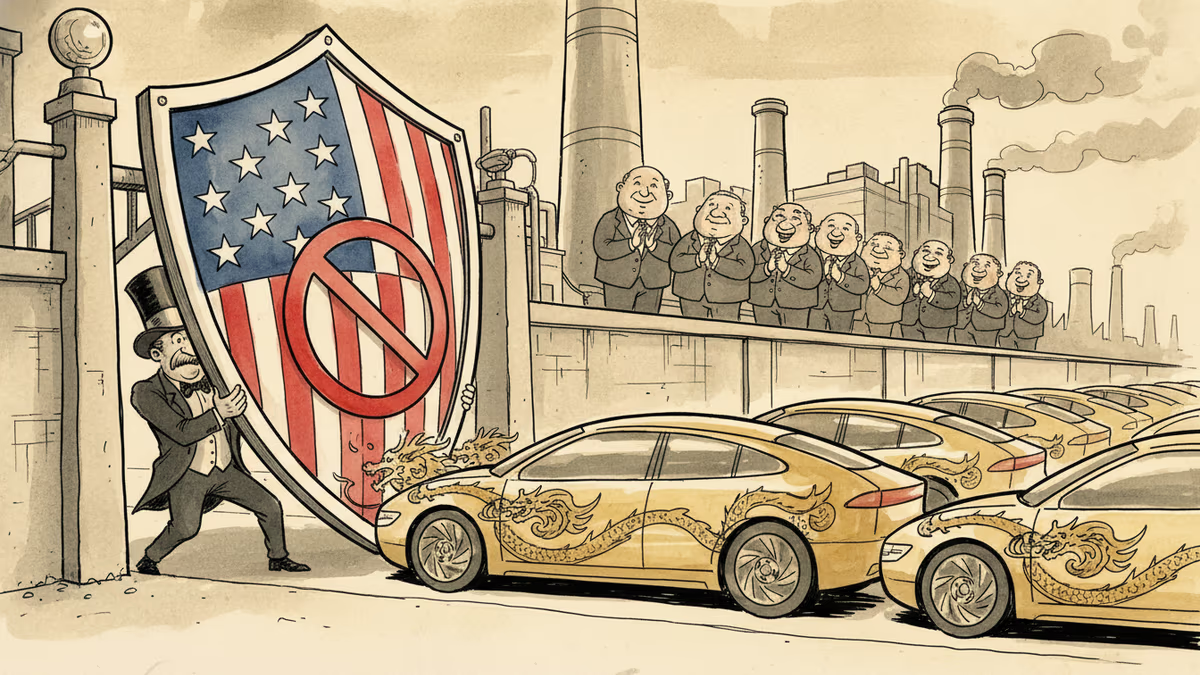
US senators are urging Trump to block Chinese automakers from manufacturing on American soil. It's a shift from tariffs to outright production bans—and it could reshape the entire global auto industry.
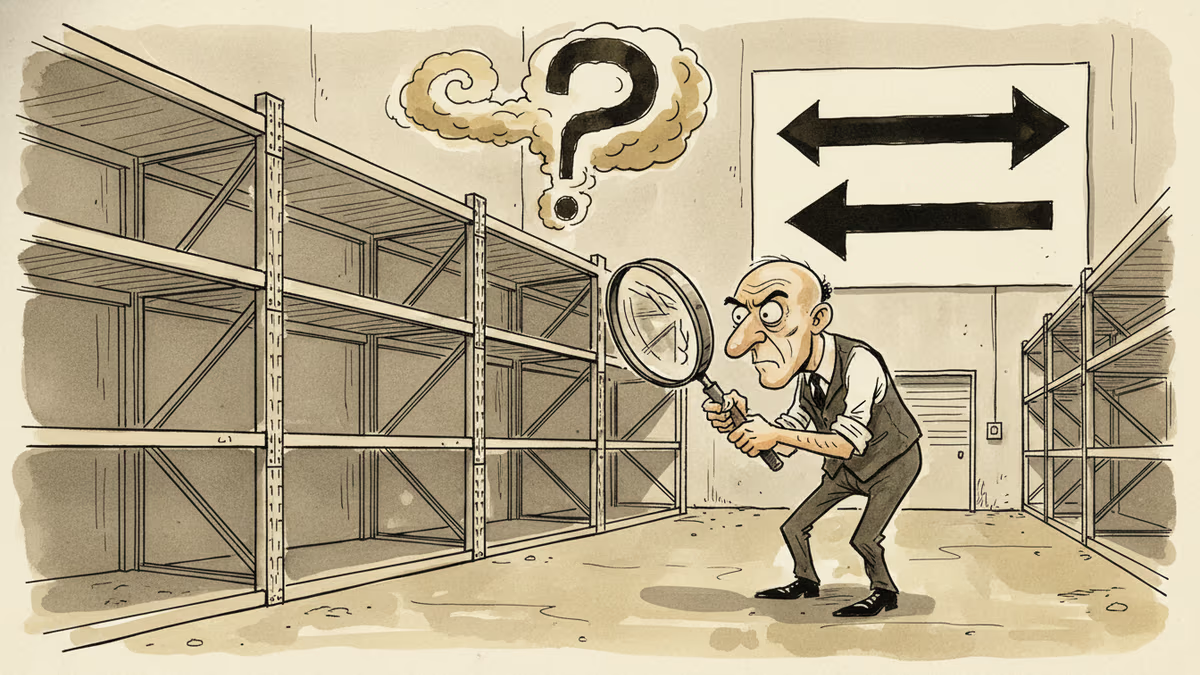
US business inventories fell unexpectedly in January. Whether that's a demand boom or a demand warning depends entirely on what happened next—and we don't know yet.
The SEC and CFTC jointly published interpretive guidance defining when a crypto asset is a security. Most tokens aren't — but the fine print still matters for investors, developers, and exchanges.
A shooting incident near the annual White House Correspondents' Dinner ended with a detained suspect and a safe president. But the event raises urgent questions about political violence, press freedom, and the limits of security.
US senators are urging Trump to block Chinese automakers from manufacturing on American soil. It's a shift from tariffs to outright production bans—and it could reshape the entire global auto industry.
US business inventories fell unexpectedly in January. Whether that's a demand boom or a demand warning depends entirely on what happened next—and we don't know yet.
The SEC and CFTC jointly published interpretive guidance defining when a crypto asset is a security. Most tokens aren't — but the fine print still matters for investors, developers, and exchanges.
Thoughts
Share your thoughts on this article
Sign in to join the conversation