
Why SBS Moved Gayo Daejeon to Summer
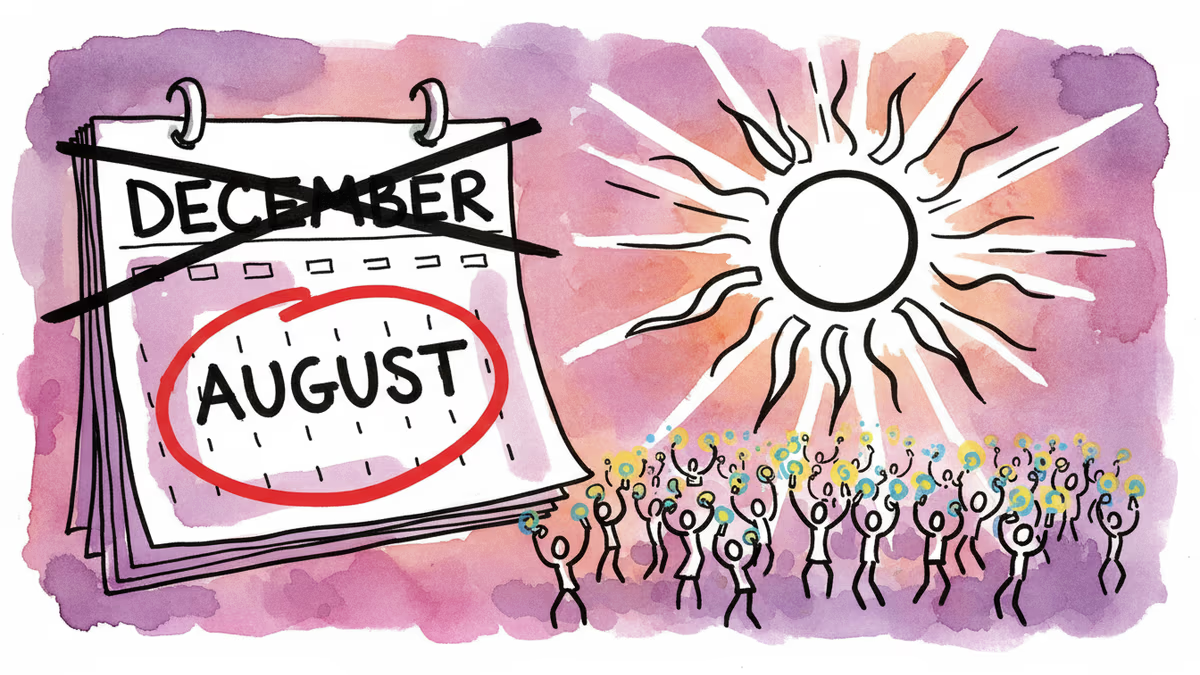
SBS officially announced the 2026 Gayo Daejeon Summer for August 9 at KINTEX, Goyang. Behind the date change lies a deliberate shift in how K-pop's biggest broadcast festivals are structured and monetized.
For nearly three decades, SBS Gayo Daejeon meant one thing: Christmas week, year-end recap, the unofficial closing ceremony of the K-pop calendar. That identity is now being deliberately dismantled.
On May 25, SBS officially confirmed that the 2026 SBS Gayo Daejeon Summer will be held on August 9 at KINTEX in Goyang, South Korea. No lineup has been announced yet. But the announcement itself carries more weight than the date — it signals that Gayo Daejeon is no longer a once-a-year ritual. It's becoming a twice-a-year platform.
From Year-End Ceremony to Biannual Festival
SBS Gayo Daejeon launched in 1996. From 2007 onward, it settled into a fixed rhythm: air around Christmas, serve as one of the "Big Three" year-end music specials alongside KBS Gayo Daechukje and MBC Gayo Daejejeon. For fans, it was less a concert and more a cultural institution — the moment the K-pop year officially closed.
That changed in 2024, when SBS introduced the first-ever summer edition. The 2026 installment is the second iteration, which means this is no longer an experiment. It's a format decision.
The structural logic is straightforward. December is a bottleneck. All three major Korean broadcasters compete simultaneously for the same pool of top-tier artists, the same advertising budgets, and the same viewer attention. A summer edition sidesteps that congestion entirely. August, by contrast, has historically been a quiet stretch in the Korean live music calendar — which makes it a genuine opportunity rather than a crowded field.
KINTEX and the Shift Toward Live Revenue

The venue choice adds another layer. KINTEX is South Korea's largest exhibition and convention center, with main hall capacity exceeding 20,000. That's not a TV studio setup. It's an arena-scale live event.
This matters because K-pop's revenue architecture has been shifting. Streaming dominates music consumption, but the margins it returns to labels and broadcasters are thin. Live events — tickets, merchandise, fan experiences — have become the primary lever for monetization since 2023. HYBE, SM, and YG have all expanded their concert infrastructure accordingly. A broadcaster-run festival like Gayo Daejeon occupies a specific niche in this ecosystem: it's a neutral stage where artists from competing agencies can share a bill, something no single agency-run event can easily replicate.
The August 9 date also aligns neatly with summer vacation schedules across East and Southeast Asia. That's unlikely to be coincidental. International fans — who now represent a substantial share of K-pop's live event audience — are far more likely to travel for an August show than a late December one.
What Gets Lost When a Ritual Becomes a Schedule
The more interesting tension is symbolic. Gayo Daejeon's authority as a year-end special came precisely from its singularity. It was the closing chapter. A biannual format trades that ritual weight for operational flexibility and revenue diversification.
This puts it in a different competitive bracket. MAMA, Melon Music Awards, and Golden Disc Awards all anchor their identity in year-end prestige and award ceremonies. Gayo Daejeon, which has always been performance-focused rather than award-focused, is now positioning itself as a recurring festival IP rather than an annual landmark. That's a coherent strategic choice — but it's a choice that changes what the event means, not just when it happens.
For global fans, the practical implications are mostly positive: more events, better timing, potentially more accessible tickets. For the K-pop industry, the question is whether a festival that happens twice a year can maintain the cultural gravity that once made showing up at Gayo Daejeon feel like a statement.
This content is AI-generated based on source articles. While we strive for accuracy, errors may occur. We recommend verifying with the original source.
Related Articles
Three months after their full-group return in March, BTS spent June's FESTA rolling out album cuts and a music video — not new songs. Come Over cracked a global top 5 with zero new music behind it. Did the play work?
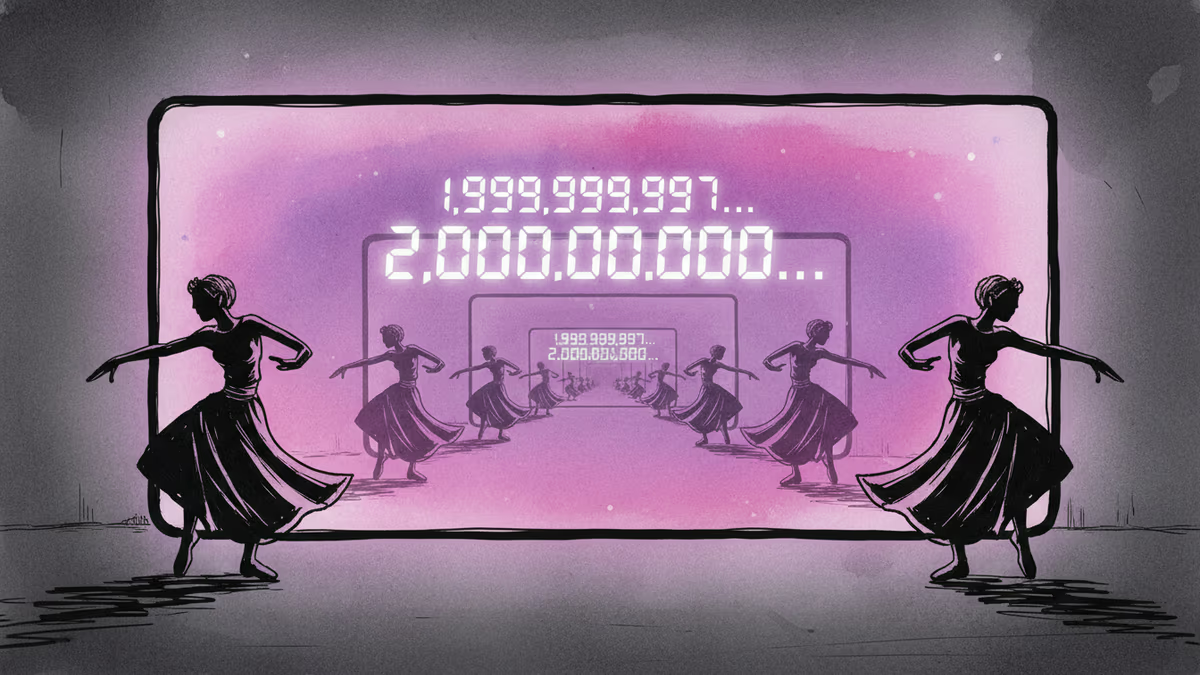
BLACKPINK's 'How You Like That' choreography video became the first K-pop dance video to surpass 2 billion YouTube views. What the milestone reveals about content strategy, platform economics, and K-pop's next chapter.
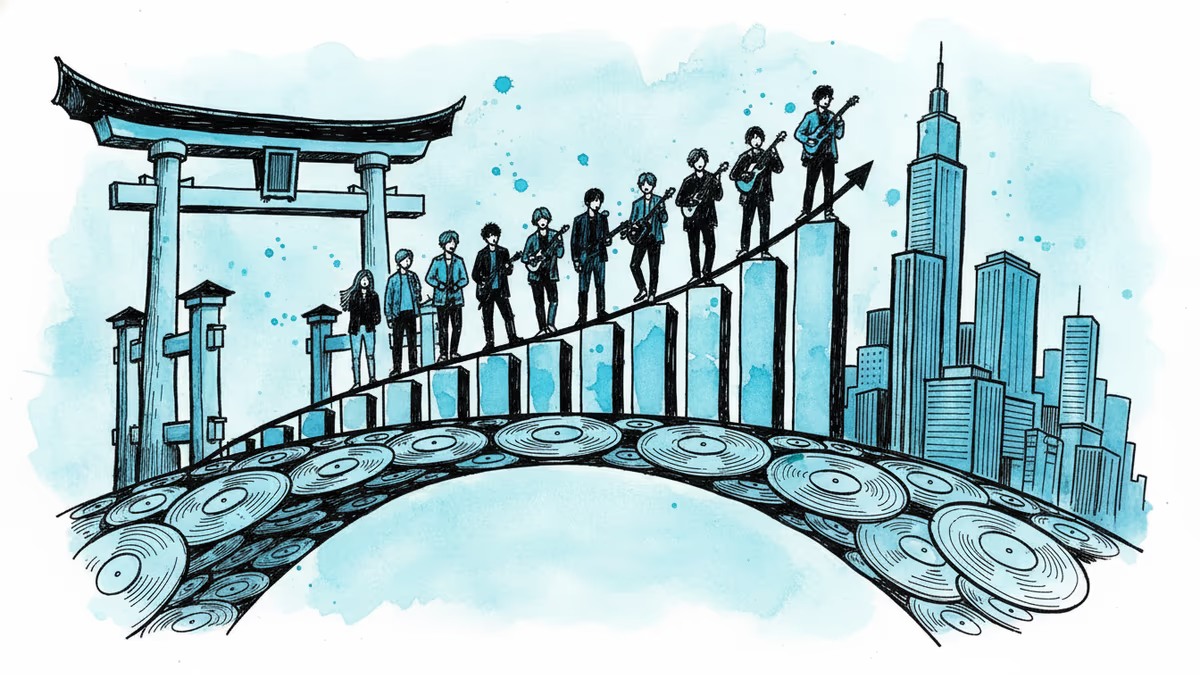
&TEAM's 'We on Fire' debuted on the Billboard 200 for the first time. Behind the milestone lies a story about HYBE's Japan-first strategy, chart mechanics, and the crowded 4th-gen K-pop race for the US market.

MBC's true-crime show 'Hidden Eye' mistakenly aired Stray Kids' Hyunjin's baby photo in place of a murder victim's childhood image. Five months later, an apology. What does that timeline reveal?
Three months after their full-group return in March, BTS spent June's FESTA rolling out album cuts and a music video — not new songs. Come Over cracked a global top 5 with zero new music behind it. Did the play work?
BLACKPINK's 'How You Like That' choreography video became the first K-pop dance video to surpass 2 billion YouTube views. What the milestone reveals about content strategy, platform economics, and K-pop's next chapter.
&TEAM's 'We on Fire' debuted on the Billboard 200 for the first time. Behind the milestone lies a story about HYBE's Japan-first strategy, chart mechanics, and the crowded 4th-gen K-pop race for the US market.
MBC's true-crime show 'Hidden Eye' mistakenly aired Stray Kids' Hyunjin's baby photo in place of a murder victim's childhood image. Five months later, an apology. What does that timeline reveal?
Thoughts
Share your thoughts on this article
Sign in to join the conversation