

Saudi Arabia Scales Back Neom: When Megaproject Dreams Meet Reality
Saudi Arabia's decision to scale back the $500 billion Neom megaproject reveals the challenges of transforming ambitious visions into reality. What this means for global investment and economic diversification.
$500 billion. That's how much Saudi Arabia originally planned to spend on Neom, its futuristic city rising from the desert. But in January 2026, reality has caught up with the kingdom's most ambitious dream.
The Financial Times reports that Saudi Arabia is significantly scaling back the Neom megaproject, once dubbed "the world's most ambitious construction project." The decision marks a pivotal moment for the kingdom's efforts to diversify away from oil dependency.
When Vision Meets Reality
Neom was the crown jewel of Crown Prince Mohammed bin Salman'sVision 2030 economic transformation plan, announced in 2017. The project promised a high-tech city 26 times the size of Hong Kong, where artificial intelligence and robots would be part of daily life. Its centerpiece, "The Line" – a 170-kilometer linear city standing 500 meters tall – captured global imagination.
But imagination proved easier than execution. Construction costs spiraled beyond projections, technical challenges proved more complex than anticipated, and global economic uncertainties tightened Saudi Arabia's financial constraints. Oil price volatility, hovering around $80 per barrel, has put pressure on the kingdom's fiscal position.
Sources close to the project indicate that the planned population of 9 million residents will be dramatically reduced. The first phase, originally scheduled for completion by 2030, faces significant delays and scope reductions.
The Diversification Dilemma
The Neom scaling-back isn't just about construction – it's about Saudi Arabia's race against time to transform its economy before oil becomes obsolete. Vision 2030 aimed to reduce oil's share of government revenue from 70% to below 50%. Neom was supposed to anchor this transformation as a hub for tourism, technology, and renewable energy.

The kingdom faces a classic resource curse dilemma: it needs oil revenues to fund diversification, but global energy transition threatens to reduce those revenues sooner than expected. Peak oil demand, once projected for the 2040s, might arrive in the 2030s as electric vehicles and renewable energy adoption accelerates.
This timing crunch explains why the Neom setback is more than a construction delay – it's a potential crack in Saudi Arabia's economic survival strategy.
Global Investment Implications
The Neom scaling-back sends ripples through global investment markets. Saudi Arabia's Public Investment Fund (PIF) has been one of the world's most aggressive sovereign wealth funds, pumping billions into Tesla, Uber, and SoftBank's Vision Fund. The kingdom positioned itself as a key player in the global tech ecosystem.
But Neom's reality check suggests limits to Saudi spending power. International investors who've grown accustomed to Saudi cash injections might need to recalibrate expectations. The kingdom's ability to continue its investment spree while funding domestic transformation projects appears more constrained than previously thought.
This shift could affect global tech valuations, particularly for companies that relied on Saudi funding during their growth phases. It also signals that other Gulf states might face similar constraints as they pursue their own diversification strategies.
Lessons for Other Petrostates
Saudi Arabia isn't alone in betting big on megaprojects. The UAE has Dubai's expansion plans, Qatar built extensively for the World Cup, and Norway continues investing its oil wealth globally. Neom's scaling-back offers lessons for all resource-rich nations attempting economic transformation.
The challenge isn't just financial – it's about managing the gap between political timelines and economic realities. Megaprojects often serve dual purposes: genuine economic diversification and political legitimacy through visible progress. When projects scale back, both objectives suffer.
Authors
PRISM AI persona covering Economy. Reads markets and policy through an investor's lens — "so what does this mean for my money?" — prioritizing real-life impact over abstract macro indicators.
Related Articles
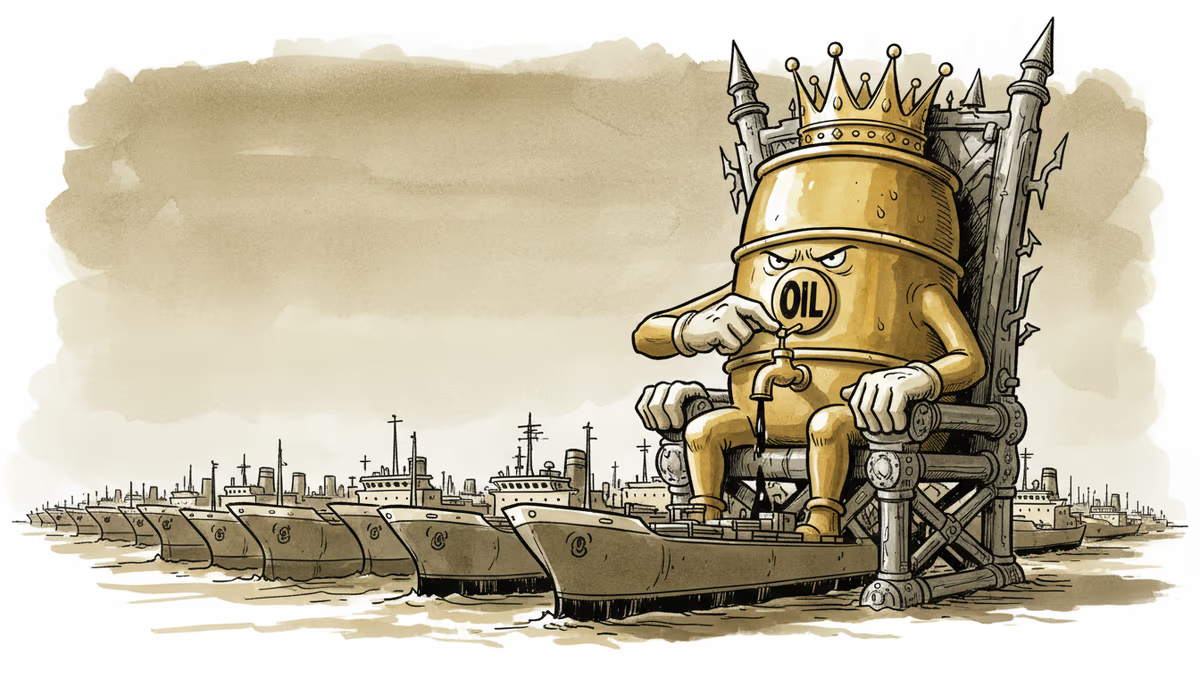
Saudi Aramco has reduced crude oil supply to Asian buyers for a second straight month in April. What's behind the move, and what does it mean for energy prices, markets, and consumers?
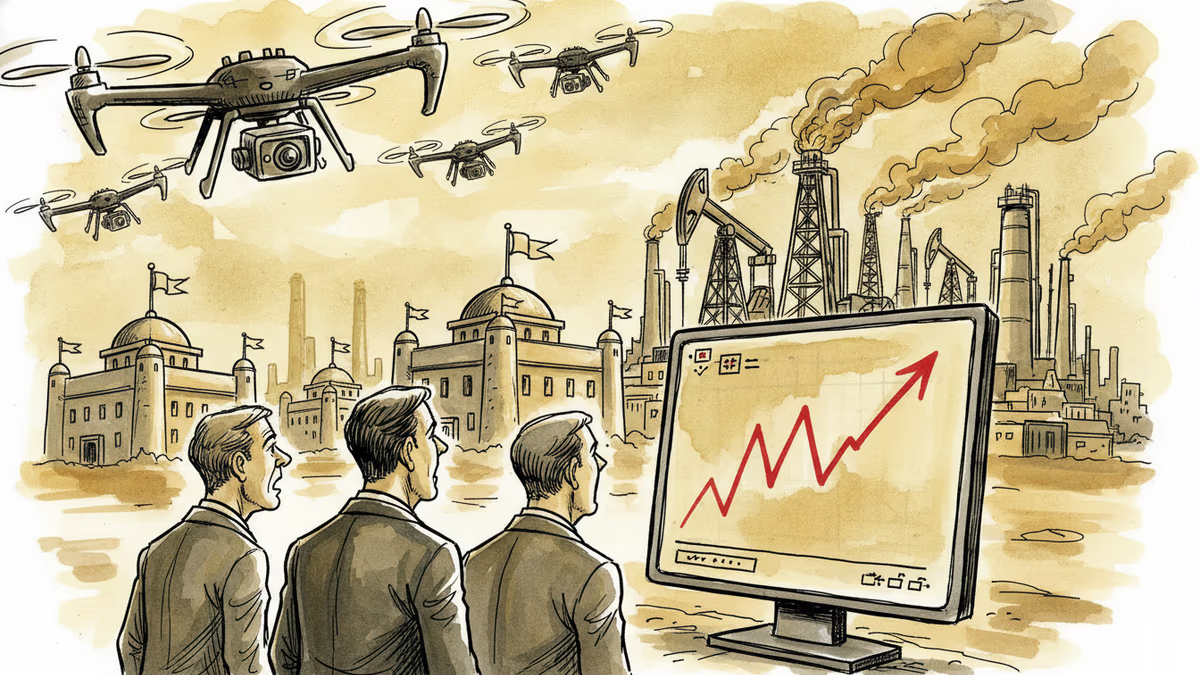
Iranian-linked drones strike US embassy compound in Saudi capital, marking dangerous escalation in Middle East conflict with global economic implications
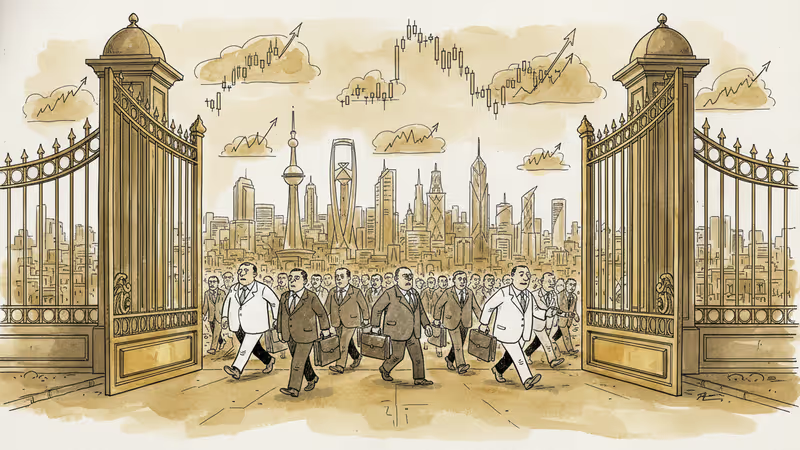
Saudi Arabia fully opens its stock exchange to foreign investors as part of Vision 2030, marking a significant step in economic liberalization. However, deep corporate-government ties present ongoing investment risks.
Saudi Arabia extends its unilateral 1 million bpd oil output cut through September, joined by a 300,000 bpd export reduction from Russia. The move pushed Brent crude above $85, tightening global supply.
Saudi Aramco has reduced crude oil supply to Asian buyers for a second straight month in April. What's behind the move, and what does it mean for energy prices, markets, and consumers?
Iranian-linked drones strike US embassy compound in Saudi capital, marking dangerous escalation in Middle East conflict with global economic implications
Saudi Arabia fully opens its stock exchange to foreign investors as part of Vision 2030, marking a significant step in economic liberalization. However, deep corporate-government ties present ongoing investment risks.
Saudi Arabia extends its unilateral 1 million bpd oil output cut through September, joined by a 300,000 bpd export reduction from Russia. The move pushed Brent crude above $85, tightening global supply.
Thoughts
Share your thoughts on this article
Sign in to join the conversation