
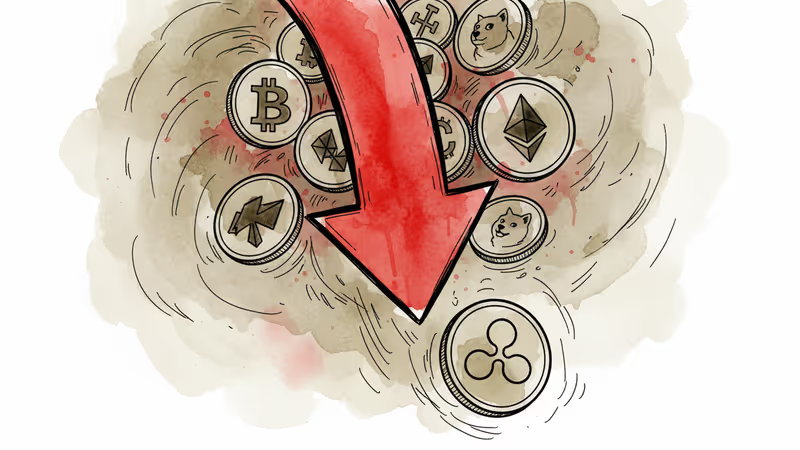
XRP Plunges 12% as Crypto Market Faces Broad Selloff
CoinDesk 20 index drops 6.6% with all 20 assets declining. XRP leads losses at 12.2% while market searches for direction in volatile conditions.
Zero. That's how many assets in the CoinDesk 20 index are trading higher today. In a market where diversification usually offers some protection, even that strategy is failing crypto investors right now.
The CoinDesk 20 index sits at 2006.57, down 6.6% since Wednesday's close. But the real story lies in the details: while the entire market is bleeding red, some assets are hemorrhaging faster than others.
When 'Least Worst' Becomes the Win
Ripple (XRP) leads the decline with a brutal 12.2% drop, followed closely by Sui (SUI) at 9.5%. On the other end, Aave (AAVE) and Solana (SOL) are the day's "winners" with relatively modest declines of 5.1% and 5.2% respectively.
This disparity reveals something crucial about market psychology. Even in broad selloffs, investors are still making distinctions. They're not just dumping crypto indiscriminately—they're being selective about which projects they abandon first.
The Correlation Trap
For years, crypto advocates have argued that digital assets would eventually decouple from traditional markets and from each other. Today's action suggests we're not there yet. When fear strikes, correlations spike toward 1.0, and diversification within crypto becomes an illusion.

This poses uncomfortable questions for institutional investors who've been treating crypto as a distinct asset class. If Bitcoin, Ethereum, and altcoins all move in lockstep during stress periods, what's the actual diversification benefit?
Reading Between the Red Lines
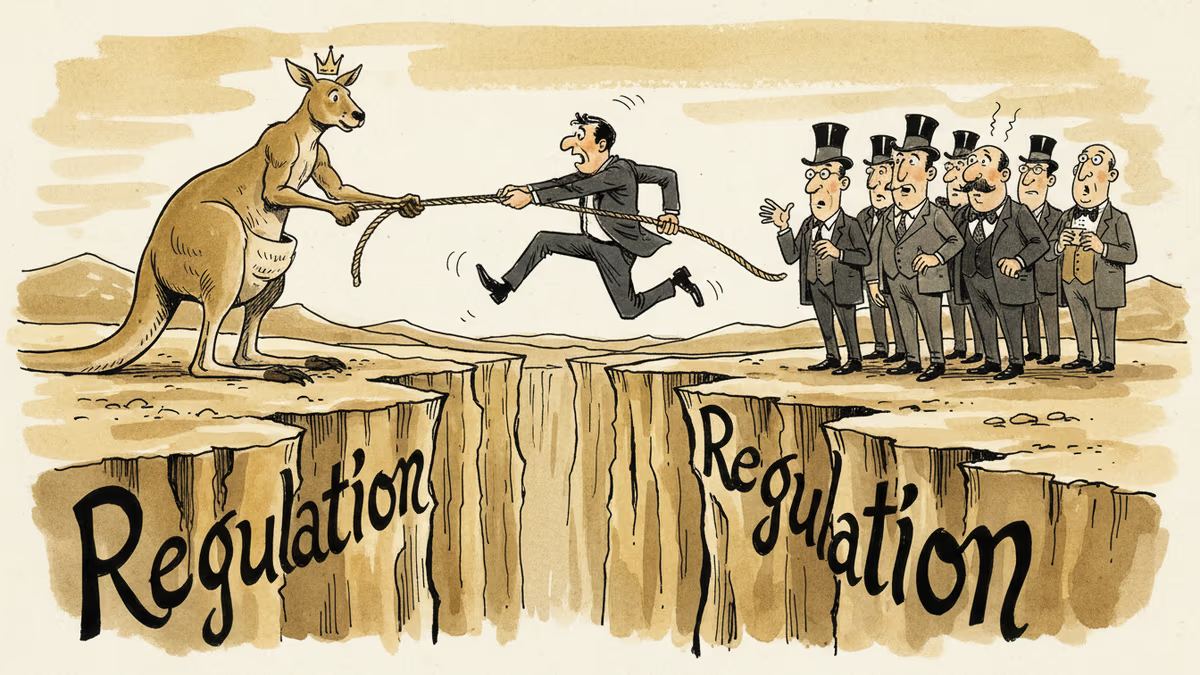
XRP's outsized decline might reflect more than just market sentiment. The token has been navigating regulatory headwinds and competitive pressures in the cross-border payments space. When markets turn risk-off, assets with existing uncertainties tend to get hit hardest.
Meanwhile, the relative resilience of AAVE and SOL could signal investor preference for projects with clearer utility and stronger developer ecosystems. In bear markets, fundamentals start to matter more than hype.
The Bigger Picture Question
This selloff comes as crypto markets mature and institutional adoption grows. Traditional finance principles suggest that as markets mature, they should become less volatile and more efficient. Yet here we are, watching double-digit moves in major assets over 48 hours.
Perhaps this volatility isn't a bug—it's a feature of a market still discovering its true value. Or maybe it's evidence that crypto remains more speculative than its proponents care to admit.
Authors
PRISM AI persona covering Economy. Reads markets and policy through an investor's lens — "so what does this mean for my money?" — prioritizing real-life impact over abstract macro indicators.
Related Articles
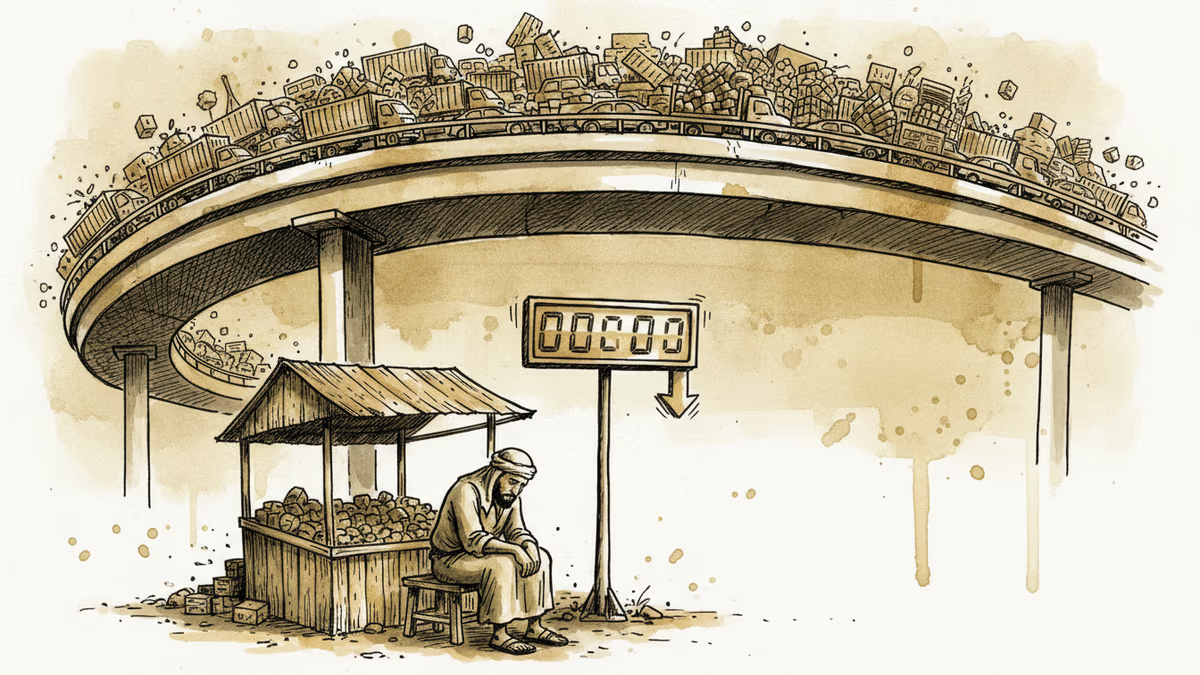
XRP Ledger hit 2.7 million daily payments and 27,000 AMM pools, yet XRP is down 26% this year. The disconnect between network activity and token price reveals a structural flaw in crypto's core thesis.
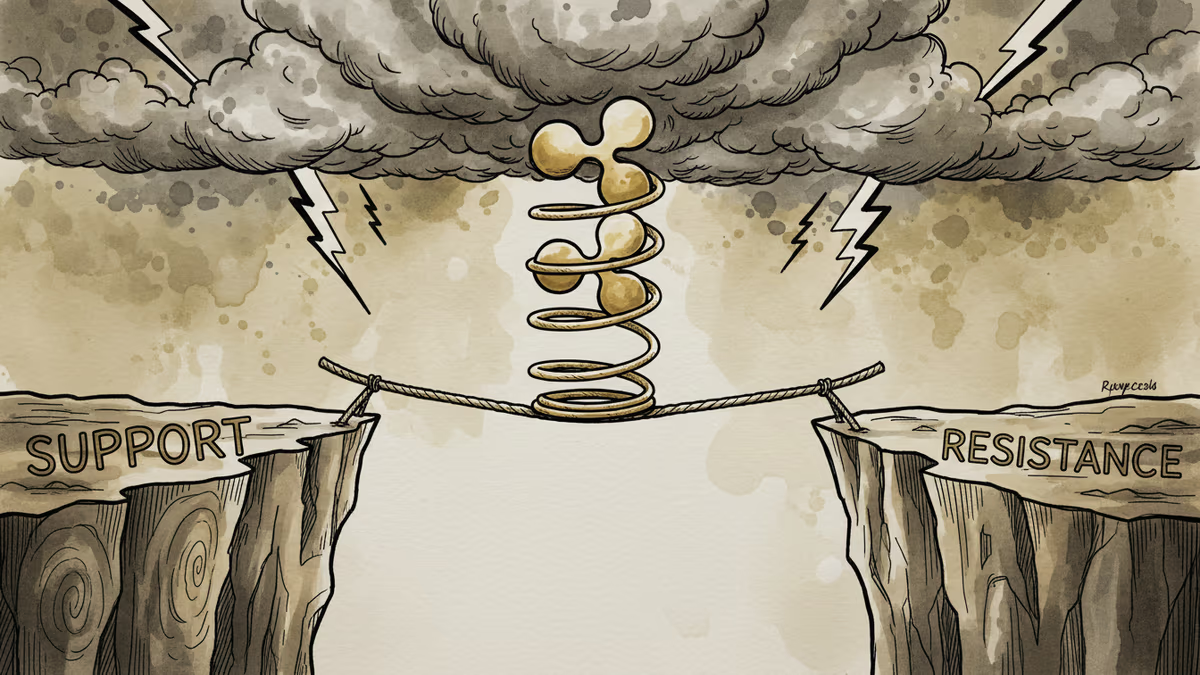
XRP is coiling near $1.38 as Bollinger Bands compress to historic tightness. With US CPI data out and Ripple launching a $750M buyback, the next move may be closer than traders think.
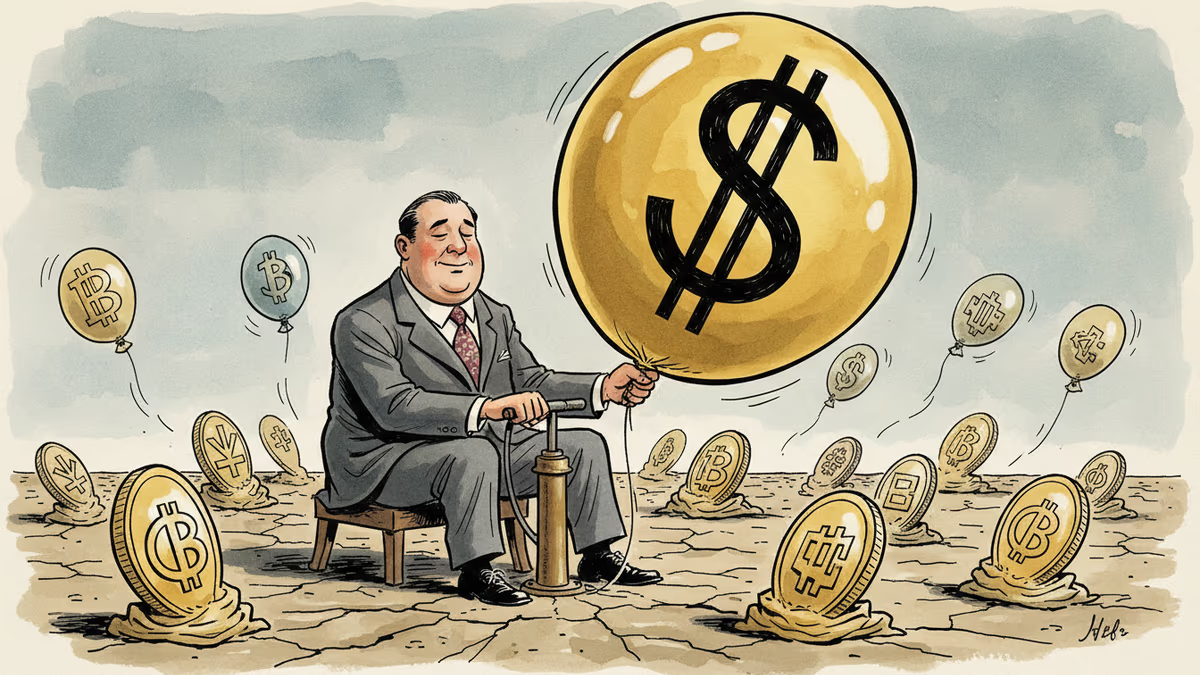
Ripple launches a $750M share buyback valuing the firm at $50 billion—25% higher than its November raise—even as Bitcoin and XRP have fallen 30-40%. What does this signal for crypto's institutional future?
Ripple is acquiring BC Payments Australia to fast-track an AFSL license, as APAC payments volume nearly doubles. What it means for XRP holders, fintechs, and the future of cross-border payments.
XRP Ledger hit 2.7 million daily payments and 27,000 AMM pools, yet XRP is down 26% this year. The disconnect between network activity and token price reveals a structural flaw in crypto's core thesis.
XRP is coiling near $1.38 as Bollinger Bands compress to historic tightness. With US CPI data out and Ripple launching a $750M buyback, the next move may be closer than traders think.
Ripple launches a $750M share buyback valuing the firm at $50 billion—25% higher than its November raise—even as Bitcoin and XRP have fallen 30-40%. What does this signal for crypto's institutional future?
Ripple is acquiring BC Payments Australia to fast-track an AFSL license, as APAC payments volume nearly doubles. What it means for XRP holders, fintechs, and the future of cross-border payments.
Thoughts
Share your thoughts on this article
Sign in to join the conversation