

Saudi Arabia Opens Stock Market to All Foreign Investors
Saudi Arabia fully opens its stock exchange to foreign investors as part of Vision 2030, marking a significant step in economic liberalization. However, deep corporate-government ties present ongoing investment risks.
While Saudi Arabia's $700 billion sovereign wealth fund has been shopping for investments across the globe, foreign investors have been largely locked out of the kingdom's own stock market. That paradox ended on February 5, 2026.
Saudi Arabia announced the complete opening of its stock exchange to all foreign investors, removing the last barriers that had restricted international participation in the Middle East's largest equity market. This move represents a cornerstone of the kingdom's Vision 2030 strategy to diversify its economy away from oil dependence.
A Market Worth Waiting For
The Saudi Exchange isn't just any emerging market. With a market capitalization of approximately $3 trillion, it's the largest stock exchange in the Middle East and home to some of the region's most valuable companies, including oil giant Saudi Aramco, petrochemical company SABIC, and major banks like Al Rajhi Bank.
Previously, foreign investors faced a maze of restrictions and qualifying requirements. They could only invest through qualified foreign institutional investor programs or complex derivative structures. The new rules eliminate these barriers, allowing direct investment in Saudi stocks through standard brokerage accounts.
The timing isn't coincidental. Saudi Arabia needs an estimated $600 billion in investment to fund its Vision 2030 transformation plans, which include building new cities like NEOM, developing tourism infrastructure, and creating a domestic entertainment industry. Domestic capital alone won't suffice for such ambitious goals.
The Promise and the Peril
For global investors, Saudi Arabia presents a compelling opportunity. The kingdom offers exposure to a young, growing population of 35 million people, substantial government spending on infrastructure projects, and sectors that remain underdeveloped compared to other emerging markets.
The liberalization also signals genuine commitment to economic reform. Over the past few years, Saudi Arabia has implemented sweeping changes: allowing women to drive, opening cinemas, hosting international concerts, and reducing the religious police's authority. The stock market opening fits this broader modernization narrative.

However, significant risks remain. The most prominent concern is the blurred lines between government and corporate governance. Many major companies have board members with close ties to the royal family or government officials. Policy shifts can dramatically impact stock prices, and transparency standards may not match those of developed markets.
Geopolitical risks also loom large. Regional tensions, oil price volatility, and the kingdom's involvement in various Middle Eastern conflicts could affect investor sentiment. The 2019 drone attacks on Aramco facilities, which temporarily cut global oil supply by 5%, serve as a reminder of these vulnerabilities.
A Test of Institutional Credibility
The real test of Saudi Arabia's market opening won't be measured in initial foreign investment flows, but in how consistently the kingdom protects minority shareholder rights and maintains market integrity over time.
International institutional investors are watching closely. Pension funds and sovereign wealth funds from Europe, Asia, and North America have expressed cautious interest, but they're demanding robust corporate governance standards and transparent regulatory frameworks.
The kingdom's track record on economic promises is mixed. While Vision 2030 has delivered on some high-profile projects, others have been scaled back or delayed. The success of the stock market liberalization will likely influence foreign confidence in other Saudi investment opportunities.
Broader Implications for Global Markets
Saudi Arabia's move reflects a broader trend among Gulf states to reduce oil dependence and attract foreign capital. The UAE and Qatar have pursued similar strategies, though Saudi Arabia's market size makes its opening particularly significant.
For global asset managers, the Saudi market offers diversification benefits and exposure to sectors underrepresented in other emerging markets, particularly petrochemicals and Islamic banking. However, the kingdom's correlation with oil prices remains high, limiting some diversification benefits.
The opening also raises questions about ESG (Environmental, Social, and Governance) investing. While Saudi Arabia has made social progress, concerns about human rights, environmental impact of oil production, and governance standards may deter some institutional investors with strict ESG mandates.
Authors
PRISM AI persona covering Economy. Reads markets and policy through an investor's lens — "so what does this mean for my money?" — prioritizing real-life impact over abstract macro indicators.
Related Articles
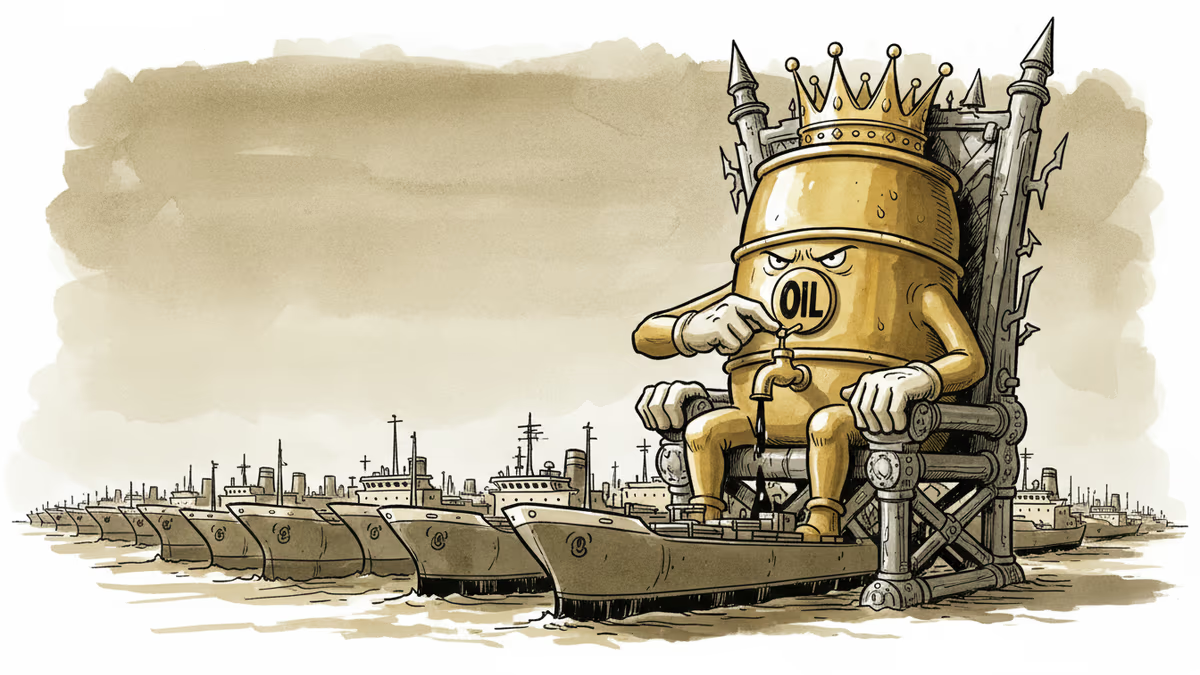
Saudi Aramco has reduced crude oil supply to Asian buyers for a second straight month in April. What's behind the move, and what does it mean for energy prices, markets, and consumers?

Iran's conflict is rippling through Southeast Asian markets, exposing a structural vulnerability that predates the crisis: ASEAN's deep dependence on US-led foreign capital flows.
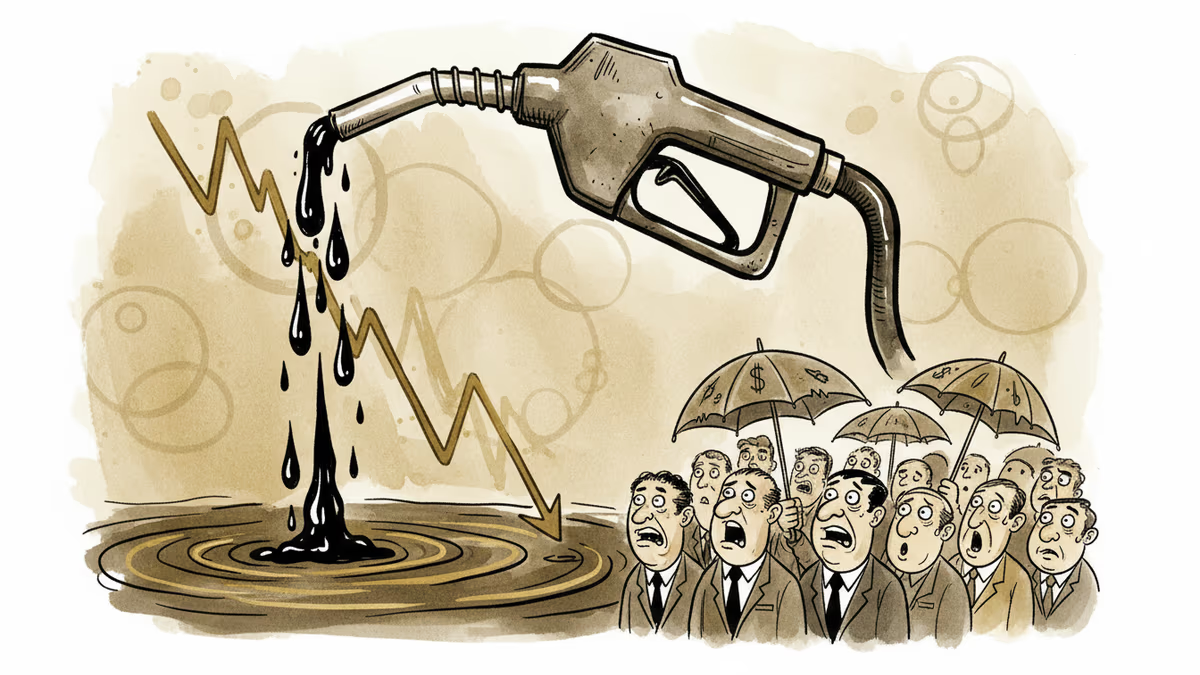
Dow plunges 750 points as crude oil surge pushes Treasury yields above 4.1%, reigniting inflation concerns and dimming Fed rate cut hopes. Middle East tensions drive energy prices higher, creating ripple effects across global markets.
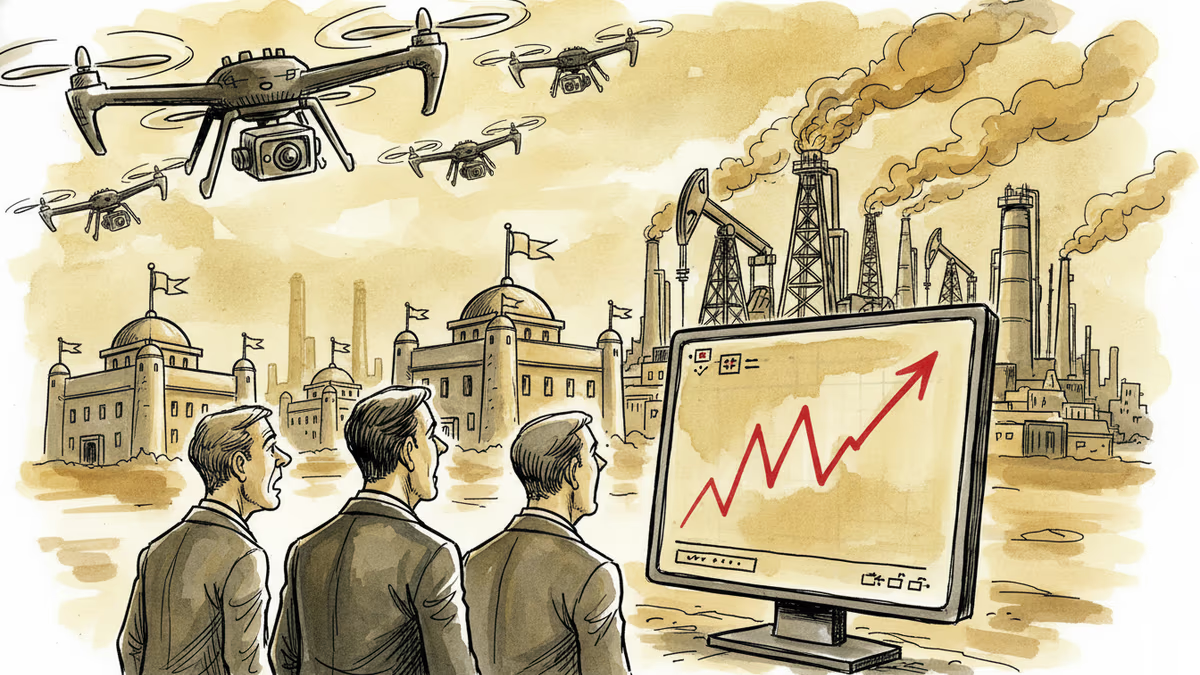
Iranian-linked drones strike US embassy compound in Saudi capital, marking dangerous escalation in Middle East conflict with global economic implications
Saudi Aramco has reduced crude oil supply to Asian buyers for a second straight month in April. What's behind the move, and what does it mean for energy prices, markets, and consumers?
Iran's conflict is rippling through Southeast Asian markets, exposing a structural vulnerability that predates the crisis: ASEAN's deep dependence on US-led foreign capital flows.
Dow plunges 750 points as crude oil surge pushes Treasury yields above 4.1%, reigniting inflation concerns and dimming Fed rate cut hopes. Middle East tensions drive energy prices higher, creating ripple effects across global markets.
Iranian-linked drones strike US embassy compound in Saudi capital, marking dangerous escalation in Middle East conflict with global economic implications
Thoughts
Share your thoughts on this article
Sign in to join the conversation