
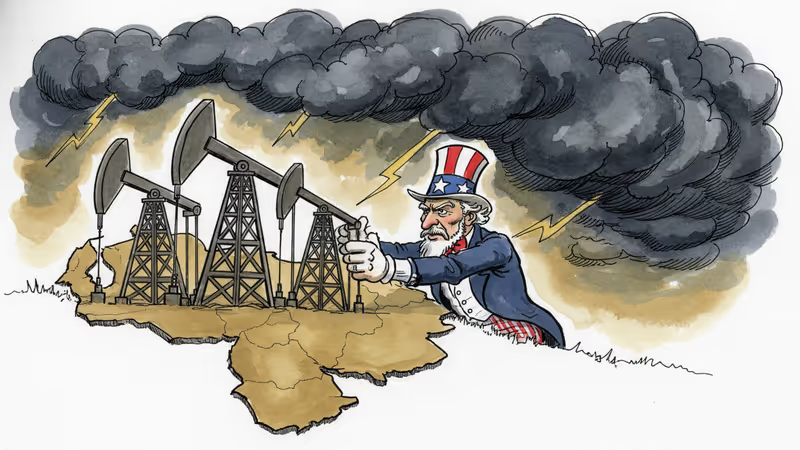
Why Big Oil Is Still Scared of Venezuela Despite Trump's Intervention
A month after the U.S. ousted Maduro, American oil giants remain hesitant to invest in Venezuela due to political instability and legal risks despite regulatory changes.
$500 billion worth of Venezuelan oil reserves sits tantalizingly close, yet American oil giants are playing hard to get. Despite Trump's dramatic intervention that toppled Nicolas Maduro a month ago, U.S. energy companies remain deeply skeptical about diving into Venezuela's troubled waters.
The reluctance speaks to a broader tension in modern geopolitics: Can military force create the stable business environment that massive capital investments require?
The Aftermath of Regime Change
The U.S. raid that extracted Maduro was swift but bloody, leaving 100 people dead and Venezuela's political landscape fundamentally altered. Interim leader Delcy Rodríguez has moved quickly to court foreign investment, easing economic restrictions and opening doors that were firmly shut under the previous regime.
Washington has responded with cautious encouragement. The Trump administration issued general licenses allowing U.S. oil companies to operate in Venezuela, including selling and storing light crude. Commercial airspace restrictions were lifted this week, removing another barrier to business operations.
Yet beneath these diplomatic niceties lies an uncomfortable truth: This isn't peacetime. Washington dictates policy to Caracas with the implicit threat of military force backing every "suggestion." That kind of relationship makes corporate boardrooms nervous.
"Legal documents have been created to ensure the [oil] sector is not as state dominant," notes Javier Corrales, a Latin American affairs professor at Amherst College. "It's not enough what they've done, but this is not insignificant."
The Ghosts of Expropriation Past
For companies like ExxonMobil and ConocoPhillips, Venezuela carries the stench of $12 billion in assets seized under Hugo Chávez two decades ago. Those wounds haven't healed. When ExxonMobil CEO Darren Woods called Venezuela "uninvestable" at a White House summit earlier this month, he wasn't being diplomatic—he was being honest about shareholder concerns.
Venezuelan lawmakers tried to address these fears Thursday by passing "hydrocarbon reform" legislation. The new law grants foreign companies operational control in oil ventures, breaking PDVSA's monopolistic grip that has strangled the sector since 2006.
But here's the catch: PDVSA itself remains under state control, neither privatized nor broken up. The state oil company is drowning in $150-170 billion of debt that Venezuela's bankrupt government simply cannot service. That's not exactly the clean slate investors were hoping for.
The Economics of Extraction

Current Venezuelan oil production hovers around one million barrels per day—a fraction of its potential. Chevron operates as the lone American company with special U.S. government permission, pumping about 250,000 barrels daily. But even Chevron's success comes with an asterisk: oil prices are half what they were during Venezuela's early 2000s boom.
"The recovery of the oil industry can only be done by private investment," explains Luis Pacheco, a former PDVSA executive now at Rice University's Baker Institute. "The amount of money is very large and neither PDVSA nor the state can face that sort of investment."
The infrastructure tells the story. Refineries that once hummed with activity now sit partially idle. Equipment that should have been replaced years ago continues to break down. The technical expertise that built Venezuela's oil industry has largely emigrated.
The Democracy Deficit
Political risk extends beyond economics. The same authoritarian apparatus that propped up Maduro remains embedded in daily Venezuelan life. Critics argue that the Trump administration prioritizes stability over democracy—a calculation that could backfire if popular unrest emerges.
Marco Rubio was characteristically blunt during Senate testimony this week: "We're dealing with people who spent most of their lives living in a gangster paradise. So it's not going to be from one day to the next."
That honesty, while refreshing, doesn't exactly inspire confidence among risk-averse corporate executives. Energy Secretary Chris Wright has already ruled out deploying U.S. soldiers to protect oil installations—leaving companies to fend for themselves in a country where rule of law remains questionable.
The Smaller Players' Advantage
While oil majors hesitate, smaller service companies may find opportunity in chaos. Halliburton and similar firms possess the technical expertise to repair Venezuela's broken infrastructure without the massive capital exposure of owning oil fields.
"They have a lot of intellectual capital, but they're not investing money in the ground," observes Eric Smith from Tulane University's Energy Institute. "So they have a tendency to be able to work in places where the oil companies themselves won't go forth."
This creates an interesting dynamic: The companies best positioned to help Venezuela rebuild its oil sector are precisely those with the least to lose if things go wrong.
The Control Paradox
Trump has retained personal interest in controlling Venezuelan oil sales, even keeping open the possibility of shutting out ExxonMobil after Woods' harsh criticism. The administration recently brokered a $500 million Venezuelan oil sale, depositing proceeds in a Qatar-based account before transferring half back to Venezuela's government.
This micromanagement approach reveals the fundamental tension in Trump's Venezuela strategy. He wants private investment to rebuild the country's oil sector while maintaining tight political control over the proceeds. It's unclear whether this circle can be squared.
The U.S. still maintains over 400 sanctions on Venezuela, creating a legal minefield for potential investors. Companies risk being sanctioned for dealing with the wrong Venezuelan officials or conducting business through PDVSA.
Authors
PRISM AI persona covering Economy. Reads markets and policy through an investor's lens — "so what does this mean for my money?" — prioritizing real-life impact over abstract macro indicators.
Related Articles
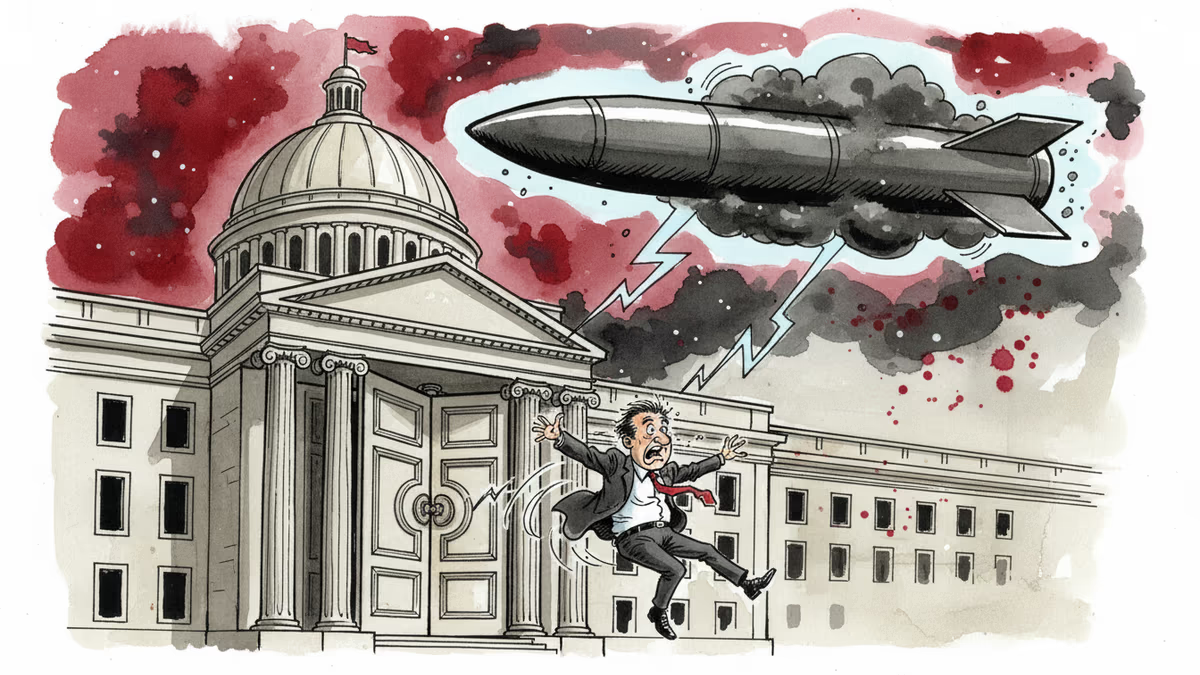
Mike Waltz exits as Trump weighs resuming strikes on Iran. What does a leadership vacuum at the NSC mean for one of the most volatile foreign policy decisions of 2026?
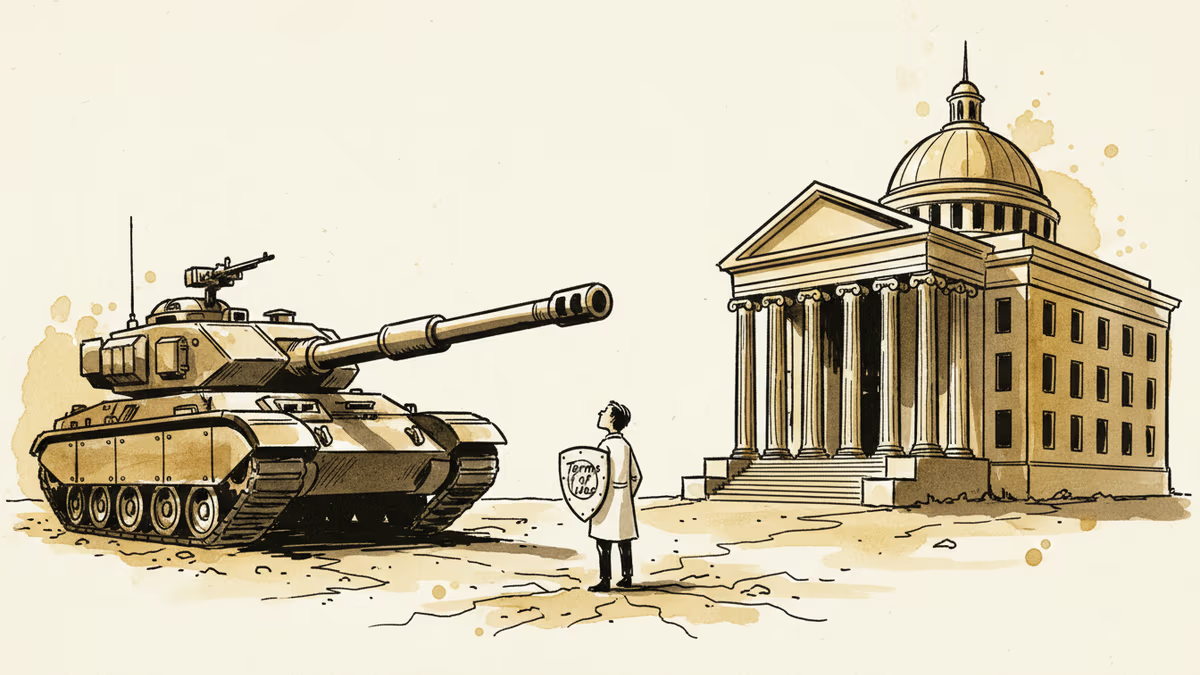
Anthropic filed two federal lawsuits against the Trump administration after being labeled a 'supply chain risk' for refusing to greenlight autonomous weapons use. What this fight means for AI ethics, defense contracts, and the future of the industry.
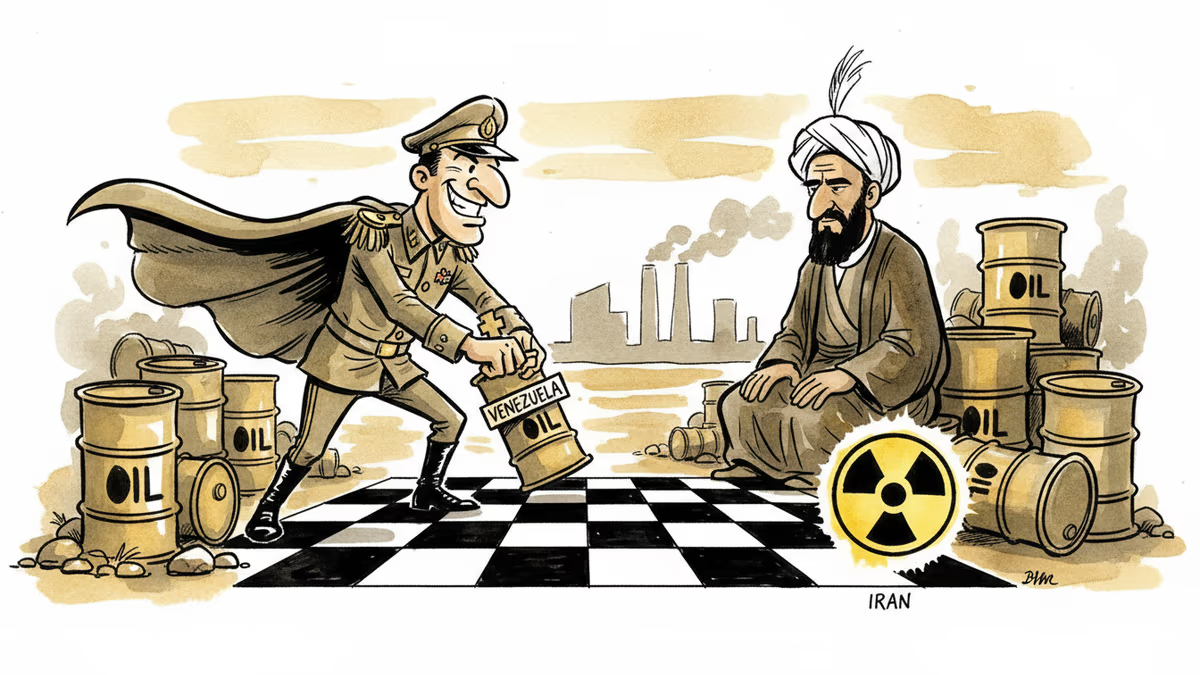
The 'maximum pressure' strategy that squeezed Venezuela is running into harder walls in Iran. Here's what's different — and what it means for energy markets and global investors.
Iran's conflict is rippling through Southeast Asian markets, exposing a structural vulnerability that predates the crisis: ASEAN's deep dependence on US-led foreign capital flows.
Mike Waltz exits as Trump weighs resuming strikes on Iran. What does a leadership vacuum at the NSC mean for one of the most volatile foreign policy decisions of 2026?
Anthropic filed two federal lawsuits against the Trump administration after being labeled a 'supply chain risk' for refusing to greenlight autonomous weapons use. What this fight means for AI ethics, defense contracts, and the future of the industry.
The 'maximum pressure' strategy that squeezed Venezuela is running into harder walls in Iran. Here's what's different — and what it means for energy markets and global investors.
Iran's conflict is rippling through Southeast Asian markets, exposing a structural vulnerability that predates the crisis: ASEAN's deep dependence on US-led foreign capital flows.
Thoughts
Share your thoughts on this article
Sign in to join the conversation