
An $8,000 Bike That's Redefining What 'Gravel' Means
Salsa's full-suspension electric gravel bike challenges traditional cycling categories and hints at the future of personal mobility
What Happens When You Put Suspension on a Gravel Bike?
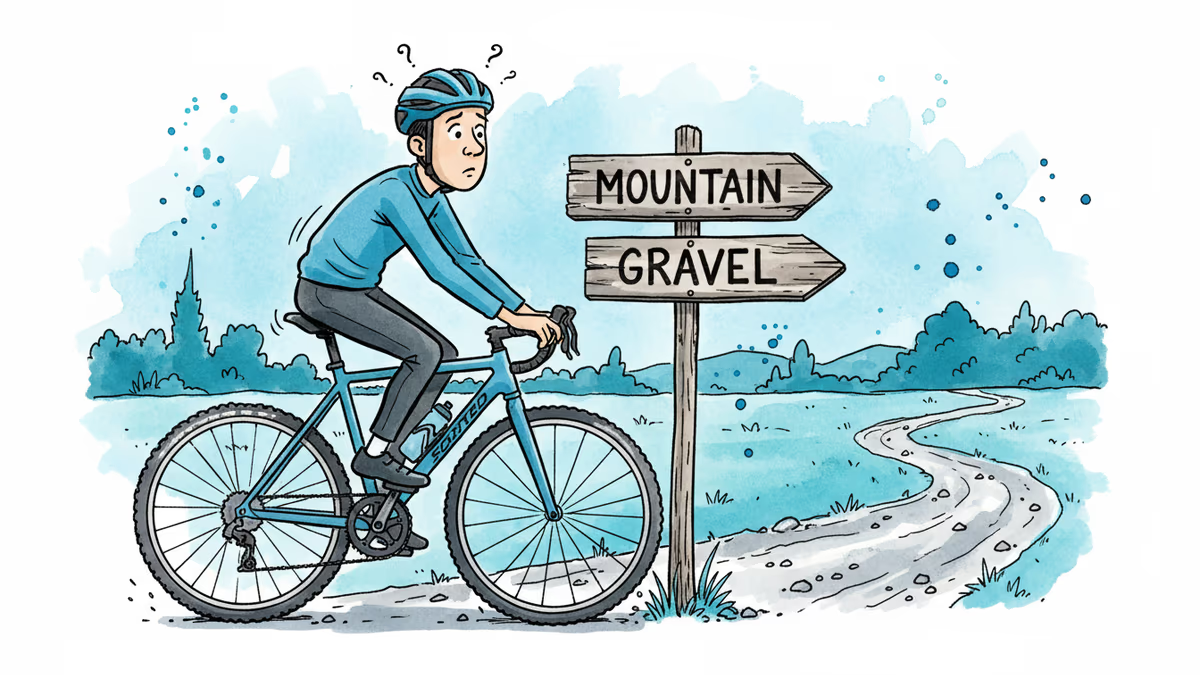
Salsa's new Wanderosa costs $7,999 and sparks an identity crisis. Is it an electric gravel bike with full suspension? A drop-bar mountain bike? Or something entirely new that doesn't fit our neat categories?
The cycling industry has spent decades perfecting specialization. Road bikes for pavement. Mountain bikes for trails. Gravel bikes for everything in between. But the Wanderosa suggests we might be overthinking it. What if the best bike is simply one that adapts to wherever you want to go?
This isn't just about one expensive bicycle. It's about how personal mobility is evolving beyond traditional boundaries.
The Numbers Tell a Story
The Wanderosa's Fazua Ride 60 motor system weighs just 9 pounds—dramatically lighter than competing Bosch systems. The complete bike hits 40 pounds, while comparable e-bikes typically weigh 60-65 pounds. That's not just impressive; it's transformative.
Front suspension offers 120mm of travel, rear gets 110mm, using a flex-stay design borrowed from cross-country mountain bikes. The suspension can be locked out for efficiency when speed matters more than comfort.
Even the smallest XS frame gets 29-inch wheels—a detail that matters more than it might seem. Many manufacturers cheap out on small frames, but Salsa recognizes that shorter riders deserve the same ground-eating capability.
The Riding Experience: Comfort as Revolution
Testing across Portland's mixed surfaces—from the 20-mile Leif Erikson Trail to urban park loops—the Wanderosa delivered something unexpected: genuine versatility without compromise.

"As a gravel biker, I've gotten used to being just a little bit out of place wherever I go," notes the reviewer. "But now I'm on a bike that really can do anything, at any speed."
The Class 3 system assists up to 28 mph with a realistic 50-mile range. But the real revelation is comfort. Full suspension means no more "rattling your arms right out of their sockets" on rough surfaces—a common gravel bike complaint.
Market Disruption in Motion
The Wanderosa represents more than product innovation—it signals a fundamental shift in how we think about personal transportation.
Category Convergence: Traditional bike classifications are blurring. Riders increasingly want experiences, not categories. They want to leave their house and go wherever the day takes them, without worrying whether their bike is "optimized" for that surface.
Demographic Expansion: The 40-something reviewer's enthusiasm—"It just brings me back to the time when the most fun thing I could think to do on the weekend was cover a dozen miles"—hints at e-bikes' power to extend cycling careers. Aging demographics plus electric assist equals new market opportunities.
Infrastructure Implications: Bikes designed for mixed surfaces reflect urban reality. Cities aren't purely paved or purely off-road. They're a patchwork that demands adaptability.
The Skeptics Have Points
Fazua doesn't offer range extenders yet, limiting bikepacking potential. At $7,999, it's hardly accessible. And purists argue that specialized tools outperform generalists.
But the deeper question isn't about this specific bike—it's about philosophy. The cycling industry has long promoted the "right tool for the job" mentality. Multiple bikes for multiple purposes. The Wanderosa challenges that orthodoxy.
Competitive Context
The Santa Cruz Skitch offers similar Fazua performance at comparable pricing but weighs 10 pounds less without suspension. Specialized's Creo line provides range extenders for serious touring. Each represents a different vision of electric gravel's future.
Yet none quite match the Wanderosa's "do everything" ambition. It's betting that riders want one great bike over several good ones—a risky proposition in a market built on specialization.
Authors
Related Articles

Samsung Electronics' union branch revealed that 84% of survey respondents oppose the government's roughly $290 billion (₩400 trillion) semiconductor megaproject in Gwangju. Government, management, the union and shareholders are all reading the same national project in sharply different ways.
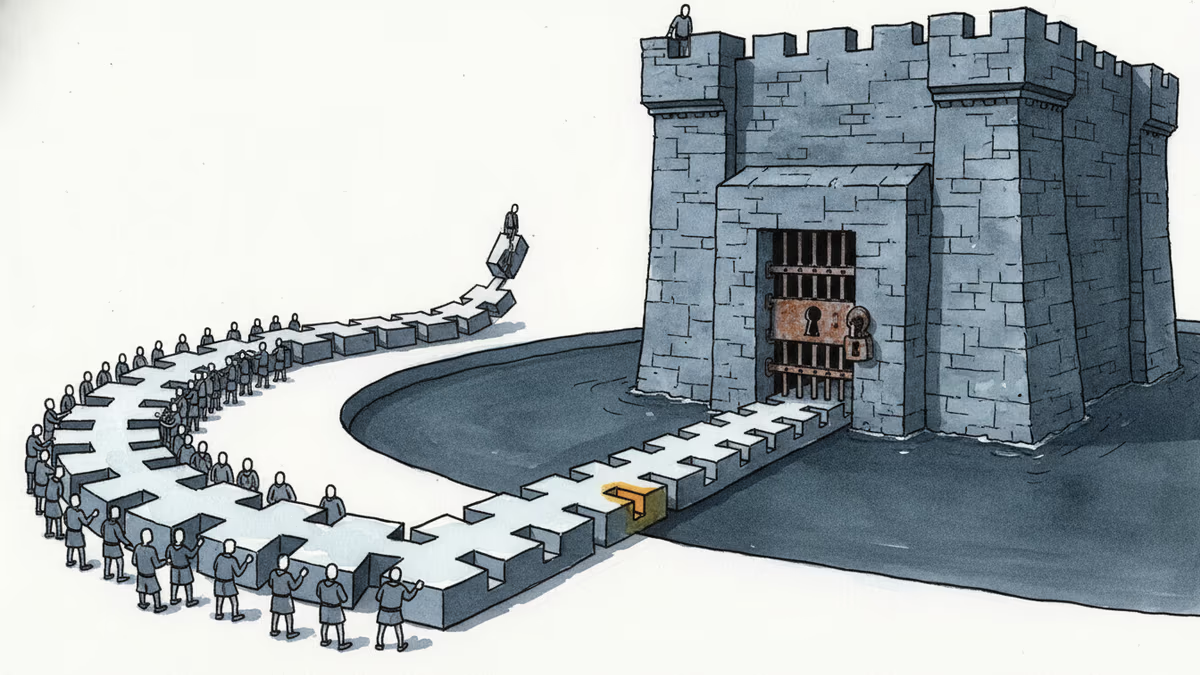
Nvidia shipped roughly a billion RISC-V cores in 2024, then announced it would run CUDA on the open standard. We break down how royalty-free instruction sets and open software stacks are trying to route around CUDA's lock-in. Part 2 of the Semiconductor Sovereignty series.
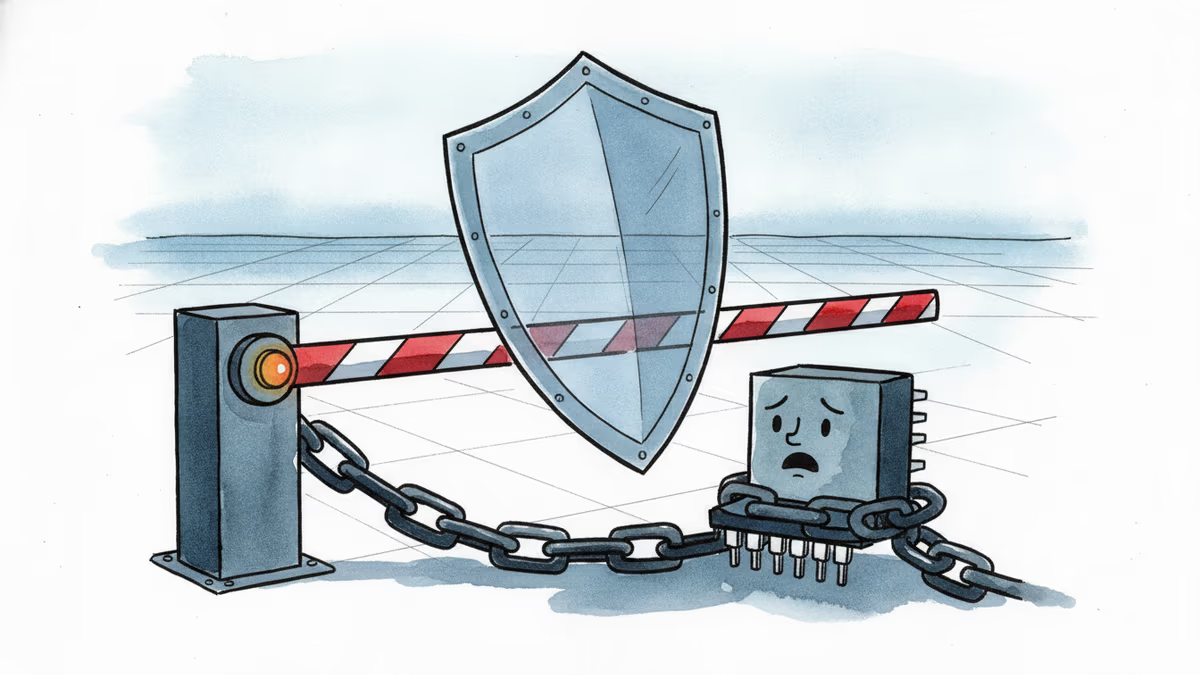
US AI-chip export controls split into three layers in the first half of 2026 — January easing, a May crackdown on circumvention, and a pending bill. Nvidia erased China from its guidance and still posted a record $81.6 billion quarter. A look at the export policy that both shields and cages it.
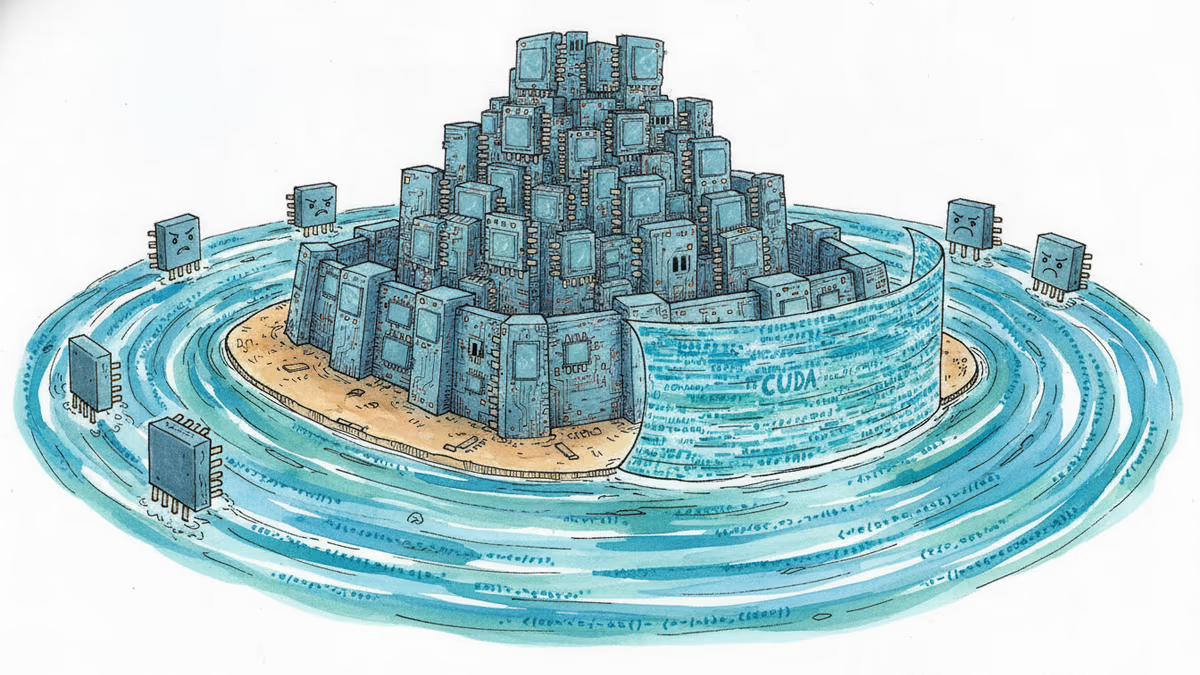
AMD's MI325X matches or beats Nvidia on memory and bandwidth — yet Nvidia's 86-92% share holds. The real moat is CUDA, 20 years in the making. Part 1 of 4.
Samsung Electronics' union branch revealed that 84% of survey respondents oppose the government's roughly $290 billion (₩400 trillion) semiconductor megaproject in Gwangju. Government, management, the union and shareholders are all reading the same national project in sharply different ways.
Nvidia shipped roughly a billion RISC-V cores in 2024, then announced it would run CUDA on the open standard. We break down how royalty-free instruction sets and open software stacks are trying to route around CUDA's lock-in. Part 2 of the Semiconductor Sovereignty series.
US AI-chip export controls split into three layers in the first half of 2026 — January easing, a May crackdown on circumvention, and a pending bill. Nvidia erased China from its guidance and still posted a record $81.6 billion quarter. A look at the export policy that both shields and cages it.
AMD's MI325X matches or beats Nvidia on memory and bandwidth — yet Nvidia's 86-92% share holds. The real moat is CUDA, 20 years in the making. Part 1 of 4.
Thoughts
Share your thoughts on this article
Sign in to join the conversation