
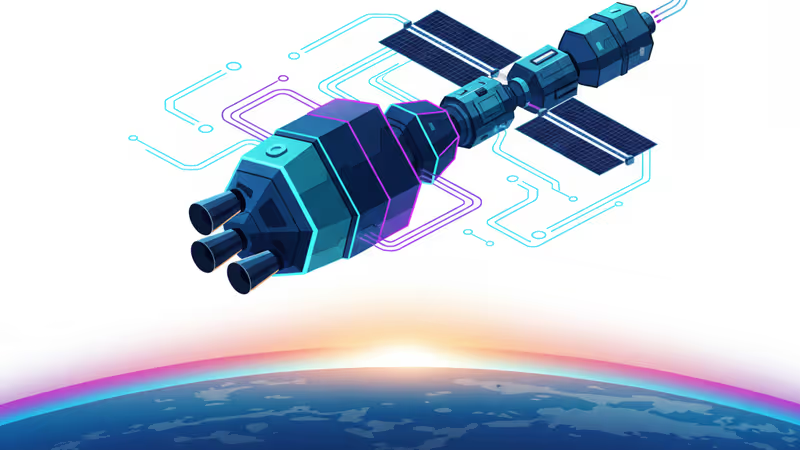
Stranded: How Boeing's Starliner Failure Left NASA Astronauts in Orbit for 9 Months
An in-depth look at the critical malfunctions on Boeing's Starliner that stranded two NASA astronauts on the ISS for nine months, forcing a rescue mission by rival SpaceX.
Two astronauts, launched aboard Boeing's much-delayed spacecraft in June 2024 for what was meant to be a week-long mission, were ultimately forced to return to Earth nine months later aboard a rival SpaceX Dragon capsule. A series of critical malfunctions on the Starliner made it too risky for the return journey, leaving the crew stranded on the International Space Station (ISS) and raising serious questions about Boeing's role in human spaceflight.
A Cascade of Failures En Route
The first crewed flight of the , carrying astronauts Butch Wilmore and Suni Williams, was a milestone over a decade in the making. But trouble began during its trip to the ISS. Engineers detected multiple, pernicious and, more alarmingly, several of the spacecraft's began to fail due to overheating.

The situation became critical as the capsule approached the station. For a short time, Starliner commander Wilmore lost the ability to control the spacecraft's movements. While engineers on the ground managed to recover most thruster functions to allow for a successful docking, the vehicle's reliability was now in serious doubt.
The Long Wait and a Rival's Rescue
After evaluating the thruster and leak issues, officials determined it was too risky to bring Wilmore and Williams home in the compromised Boeing capsule. Their planned one or two-week stay turned into a nine-month orbital marathon while the agency figured out a new ride home.
The solution came from Boeing's chief competitor. Last March, the two astronauts flew back to Earth aboard a spacecraft, a scenario that underscored the severity of the Starliner's problems. A subsequent safety advisory panel found that this uncertainty about the vehicle's health had also permeated NASA's own workforce during the crisis.
Authors
Related Articles
American Airlines just signed Starlink for 500+ aircraft. It's not just about faster inflight internet — it's a calculated move in the run-up to what could be the largest IPO in history.
SpaceX's upgraded Starship V3 completed its first test flight, deploying 20 Starlink simulators but losing the Super Heavy booster. With an IPO weeks away, the stakes just got higher.
SpaceX's IPO filing puts AI at the center, claiming a $26.5 trillion market opportunity. But can Grok compete with OpenAI and Anthropic for enterprise customers?
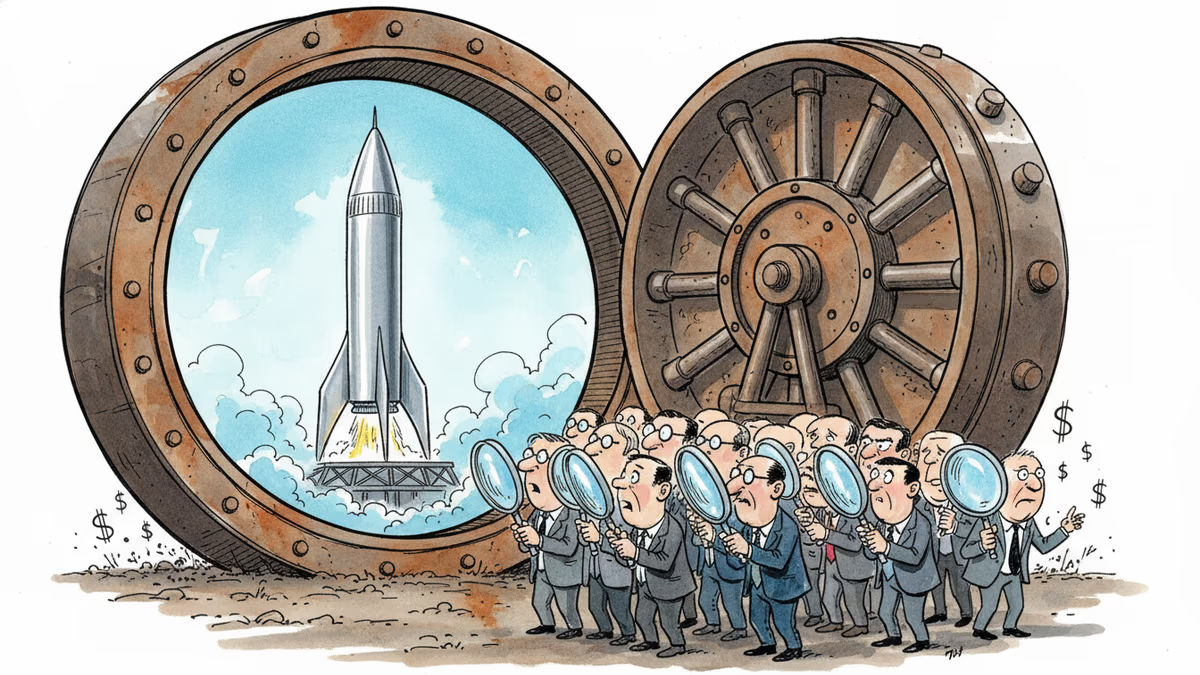
SpaceX filed a nearly 400-page S-1 with the SEC, targeting an IPO as early as June 12. Here's what the filing reveals—and what it doesn't.
American Airlines just signed Starlink for 500+ aircraft. It's not just about faster inflight internet — it's a calculated move in the run-up to what could be the largest IPO in history.
SpaceX's upgraded Starship V3 completed its first test flight, deploying 20 Starlink simulators but losing the Super Heavy booster. With an IPO weeks away, the stakes just got higher.
SpaceX's IPO filing puts AI at the center, claiming a $26.5 trillion market opportunity. But can Grok compete with OpenAI and Anthropic for enterprise customers?
SpaceX filed a nearly 400-page S-1 with the SEC, targeting an IPO as early as June 12. Here's what the filing reveals—and what it doesn't.
Thoughts
Share your thoughts on this article
Sign in to join the conversation