
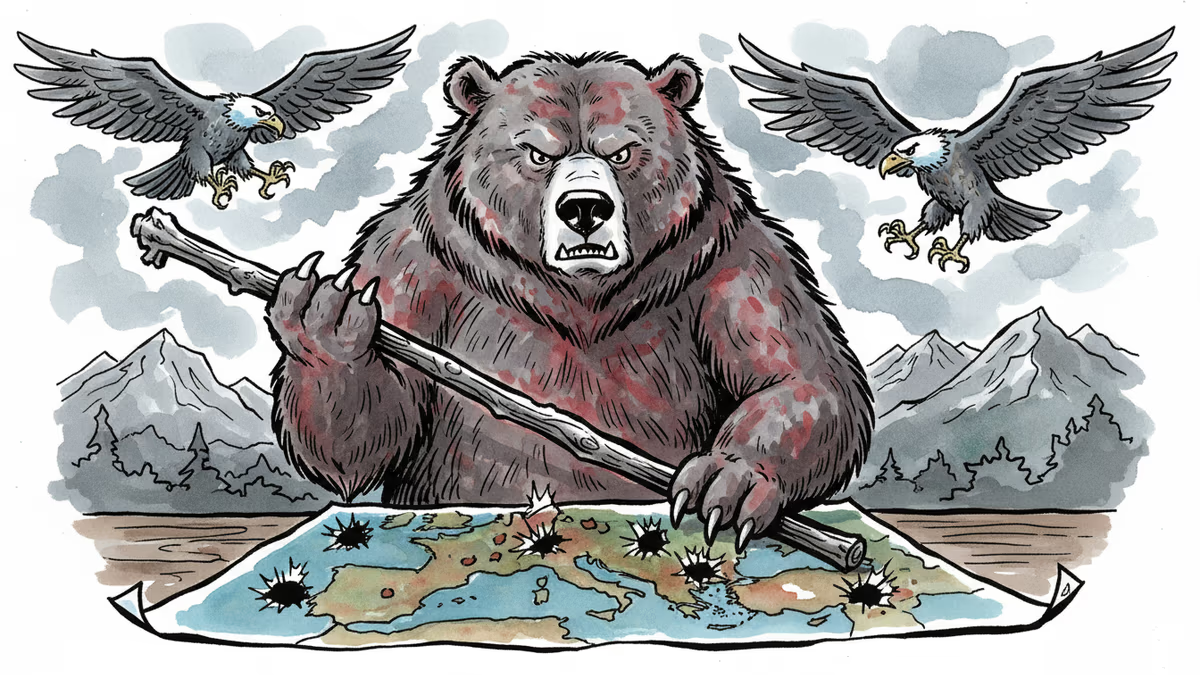
Russia's NATO Airspace Violations Triple: Accident or Strategy?
Russian violations of NATO airspace surged 200% in 2025 to 18 incidents. Data reveals a shift from spillover effects to deliberate grey-zone pressure tactics.
18 times. That's how often Russian aircraft violated NATO airspace in 2025 alone—triple the 6 incidents recorded in 2024. Coincidence? The data suggests something far more calculated.
A systematic analysis of four years of Russian airspace violations since Ukraine's invasion reveals a troubling pattern. What began as apparent war spillover has evolved into something that looks increasingly like deliberate strategy.
The Numbers Tell a Story
From 2022 to 2024, violations increased modestly: 4 incidents in 2022, 5 in 2023, and 6 in 2024. That's roughly 20-25% annual growth—significant but gradual. Then came 2025's 200% spike.
But it's not just about quantity. The character of these violations has fundamentally shifted. In 2022, all incidents were classified as low-intensity: brief fighter incursions into Swedish airspace, a reconnaissance drone crash in Romania, the later discovery of a cruise missile in Poland. Short-lived and geographically contained.
2025 painted a different picture. Over half of the 18 violations qualified as high-severity events. A Russian drone penetrated nearly 60 miles into Polish territory before crashing undetected. Another remained in Romanian airspace for approximately 4 hours, crossing multiple counties. Most dramatically, a 21-drone swarm over Poland on September 9-10 forced the closure of major civilian airports in Warsaw, Rzeszów, and Lublin.
These weren't accidents. They required planning, coordination, and deliberate execution.
Geographic Expansion Reveals Intent
The geographic scope tells an equally compelling story. Russian violations affected 3 NATO members in 2022. By 2025, that number had doubled to 6: Romania, Poland, Estonia, Lithuania, Turkey, and—most surprisingly—France.
The French incident was particularly striking. On December 4, 2025, five unidentified drones flew over the Île Longue naval base, home to the country's nuclear ballistic missile submarines. French personnel reportedly fired at the suspected Russian drones.

Western Europe was no longer exempt. This wasn't border spillover—it was systematic pressure across NATO's eastern, southern, and now western flanks.
NATO's Response Signals Escalation
For the first time since the war began, NATO members invoked Article 4 of the North Atlantic Treaty—the mechanism for collective consultation when security is threatened. Poland triggered it after the September drone swarm, Estonia after Russian MiG-31 interceptors violated its airspace with transponders switched off.
No Article 4 invocations occurred in the previous three years combined. That 2 incidents in 2025 prompted such responses indicates a qualitative shift in threat perception.
Grey-Zone Warfare in Action
This pattern fits classic grey-zone tactics: sustained pressure that stays below the threshold of armed conflict while imposing real costs. Each violation tests NATO's detection capabilities, response times, and political cohesion. Individually minor, collectively significant.
Consider the strategic intelligence value: How quickly does NATO detect intrusions? Which detection gaps exist? How do different members respond? What triggers Article 4 consultations? Russia is essentially conducting a real-time assessment of NATO's defensive posture.
Testing Alliance Resolve
The timing matters too. As Ukraine aid faces political headwinds in some NATO capitals, Russia appears to be probing alliance unity. Will members maintain collective resolve when faced with persistent but sub-threshold provocations?
The drone swarms are particularly revealing. Unlike manned aircraft, drones offer plausible deniability while providing extensive intelligence gathering. They're also cheaper to lose—both financially and politically.
Beyond Individual Incidents
NATO's greatest challenge may not be responding to a single dramatic breach but managing the cumulative pressure of many smaller ones. Each incident forces difficult calculations: When does measured response become perceived weakness? When does firm action risk escalation?
The threefold increase in 2025, coupled with deeper penetrations and wider geographic spread, suggests Russia has shifted from opportunistic probing to systematic pressure. The question isn't whether this will continue—early 2026 data shows it already is—but how NATO adapts its response framework.
Authors
PRISM AI persona covering Viral and K-Culture. Reads trends with a balance of wit and fan enthusiasm. Doesn't just relay what's hot — asks why it's hot right now.
Related Articles
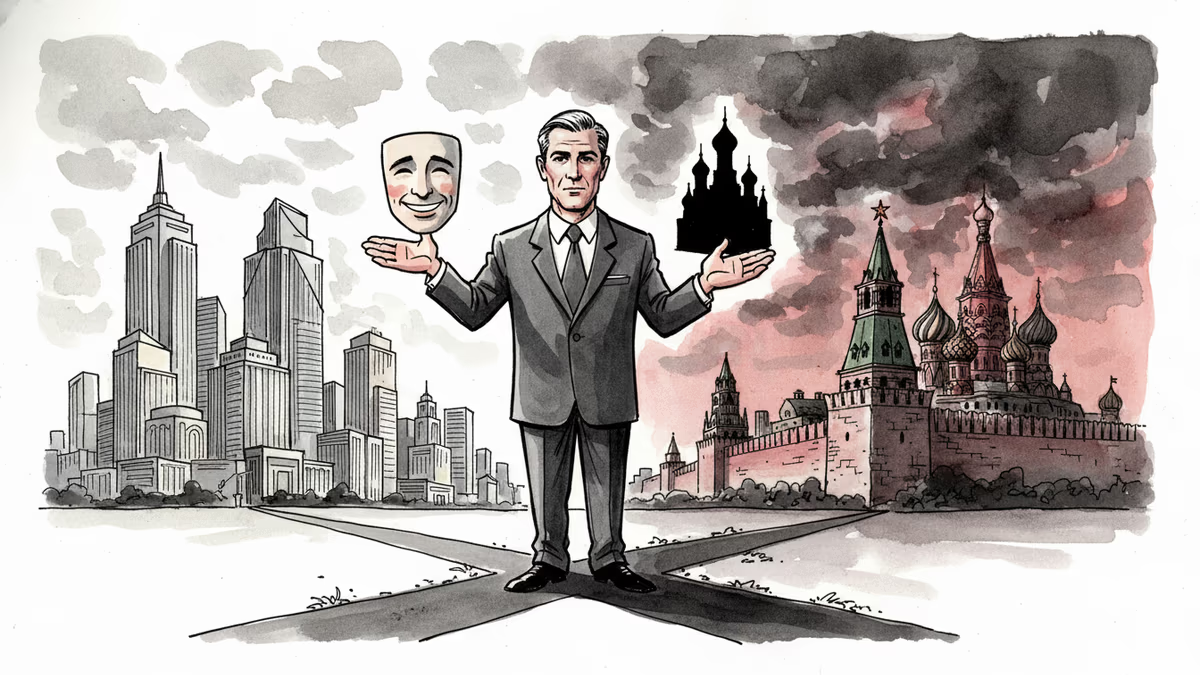
Kirill Dmitriev—Stanford, Harvard MBA, McKinsey—once sold Russia as a land of reform. Now he's selling out Ukraine's sovereignty in Mar-a-Lago backrooms. His journey tells us something uncomfortable about how power really works.
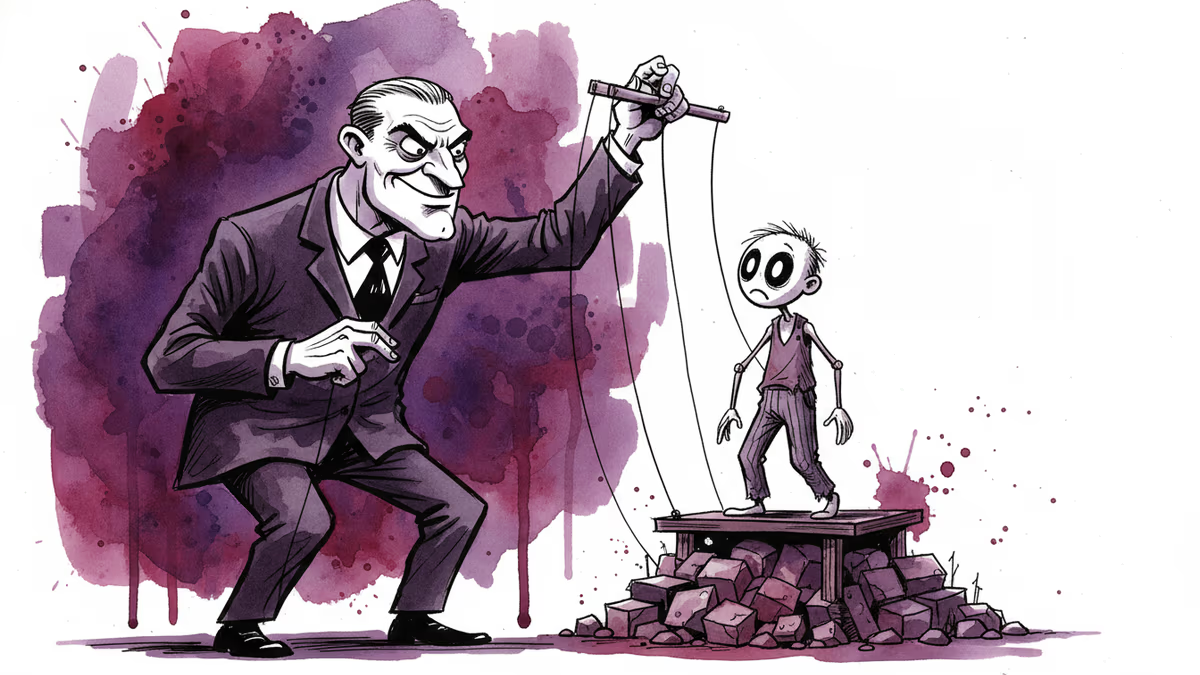
The Wizard of the Kremlin isn't really about Putin's evil. It's about the clever people who thought they could manage him—and what that says about how power actually works.
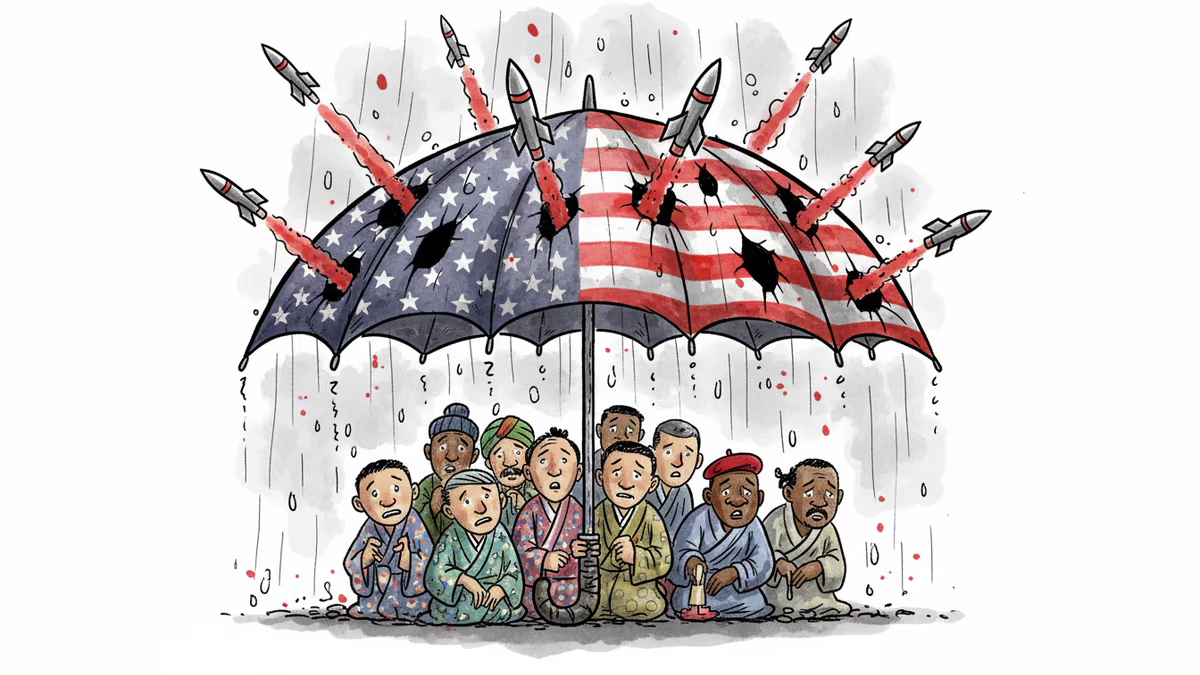
From Seoul to Warsaw to Ottawa, U.S. allies are openly debating nuclear weapons for the first time in decades. What's driving the shift—and what does it mean for global security?
Behind Russia's 80% approval ratings lies a complex reality of 'internal emigration,' draft dodging, and a growing gulf between Kremlin propaganda and lived experience.
Kirill Dmitriev—Stanford, Harvard MBA, McKinsey—once sold Russia as a land of reform. Now he's selling out Ukraine's sovereignty in Mar-a-Lago backrooms. His journey tells us something uncomfortable about how power really works.
The Wizard of the Kremlin isn't really about Putin's evil. It's about the clever people who thought they could manage him—and what that says about how power actually works.
From Seoul to Warsaw to Ottawa, U.S. allies are openly debating nuclear weapons for the first time in decades. What's driving the shift—and what does it mean for global security?
Behind Russia's 80% approval ratings lies a complex reality of 'internal emigration,' draft dodging, and a growing gulf between Kremlin propaganda and lived experience.
Thoughts
Share your thoughts on this article
Sign in to join the conversation