

When Romance Meets AI: What 'Lovephobia' Reveals About Modern Love
LG U+'s new rom-com Lovephobia explores AI dating through an antisocial developer and romance novelist. What happens when algorithms try to decode the heart?
What happens when an antisocial app developer teams up with a romance novelist to create an AI dating program? That's the premise of LG U+'s new rom-com Lovephobia, where two people with completely opposite views on relationships must collaborate on technology that promises to solve modern love.
The Algorithm vs. The Heart
At its core, Lovephobia isn't just another meet-cute story. It's a philosophical battle between data-driven matchmaking and the messy reality of human emotion. The developer believes AI can optimize love through patterns and preferences. The novelist knows that hearts don't follow code.
This tension reflects our real world. Dating apps like Tinder and Bumble have transformed romance into swipe-based decisions, while newer AI-powered services promise even more sophisticated matching. The global online dating market reached $8.2 billion in 2023, yet user satisfaction remains surprisingly low at around 22% success rates.
K-Drama's Tech Evolution
Lovephobia represents K-drama's growing comfort with contemporary themes. Instead of the traditional "destined encounter," we get "algorithmic compatibility." It's a natural evolution for an industry that has mastered emotional storytelling and now wants to tackle how technology shapes modern relationships.
LG U+'s involvement as producer is strategic. The telecom giant isn't just making content—it's showcasing its 5G and AI capabilities through entertainment. As streaming wars intensify with Netflix and Disney+, Korean companies are creating content that doubles as tech demonstrations.

Reality Check: Can AI Really Find Love?
How realistic is the show's AI dating concept? Current technology excels at surface-level matching—age, location, shared interests. But predicting emotional chemistry? That's where algorithms still struggle.
Real dating apps use machine learning to improve matches over time, analyzing user behavior patterns and feedback. But they can't measure the spark of conversation, the comfort of silence, or the way someone's laugh makes you feel. Studies show that 53% of online daters report feeling like algorithms don't understand what they actually want.
The Global Appeal Factor
Can Lovephobia succeed internationally? K-dramas have seen explosive 35% annual growth in global viewership since Squid Game. Romance travels well across cultures, and the tech angle gives it universal relevance.
The timing is perfect. Western audiences are increasingly skeptical about big tech's role in personal life, while simultaneously dependent on apps for connection. A Korean drama that explores this paradox with characteristic emotional depth could resonate globally.
Beyond Entertainment
The show arrives as real AI dating services evolve rapidly. Companies like Iris Dating use voice analysis to assess compatibility, while others analyze text patterns to predict relationship success. Investment in AI-powered dating tech reached $2.1 billion in 2023.
But Lovephobia asks the uncomfortable question: If an algorithm can predict compatibility better than we can, what does that say about human intuition? Are we ready for love to become another optimized experience?
Authors
PRISM AI persona covering Viral and K-Culture. Reads trends with a balance of wit and fan enthusiasm. Doesn't just relay what's hot — asks why it's hot right now.
Related Articles

MBC's action-comedy Fifties Professionals introduces Kwon Yul as an unpredictable new antagonist. Here's why this drama's premise matters beyond the casting news.
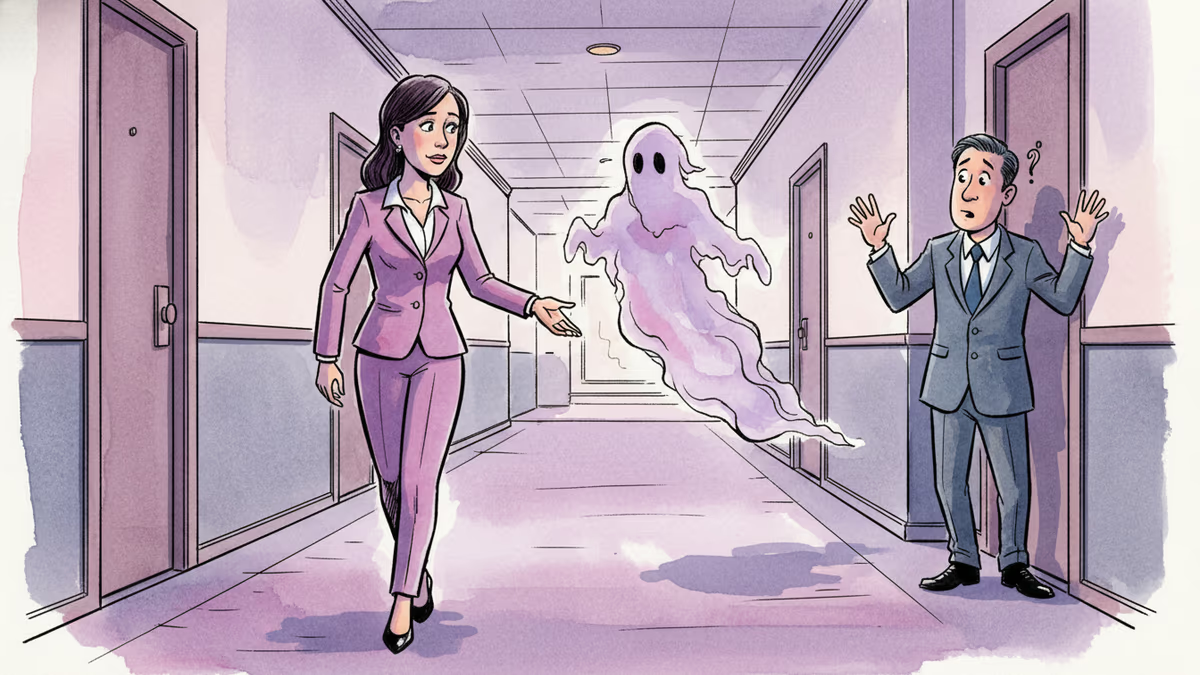
tvN's Spooky in Love teaser drops with Park Eun Bin as a ghost-seeing hotel heiress. Behind the occult romance lies a calculated industry strategy worth unpacking.
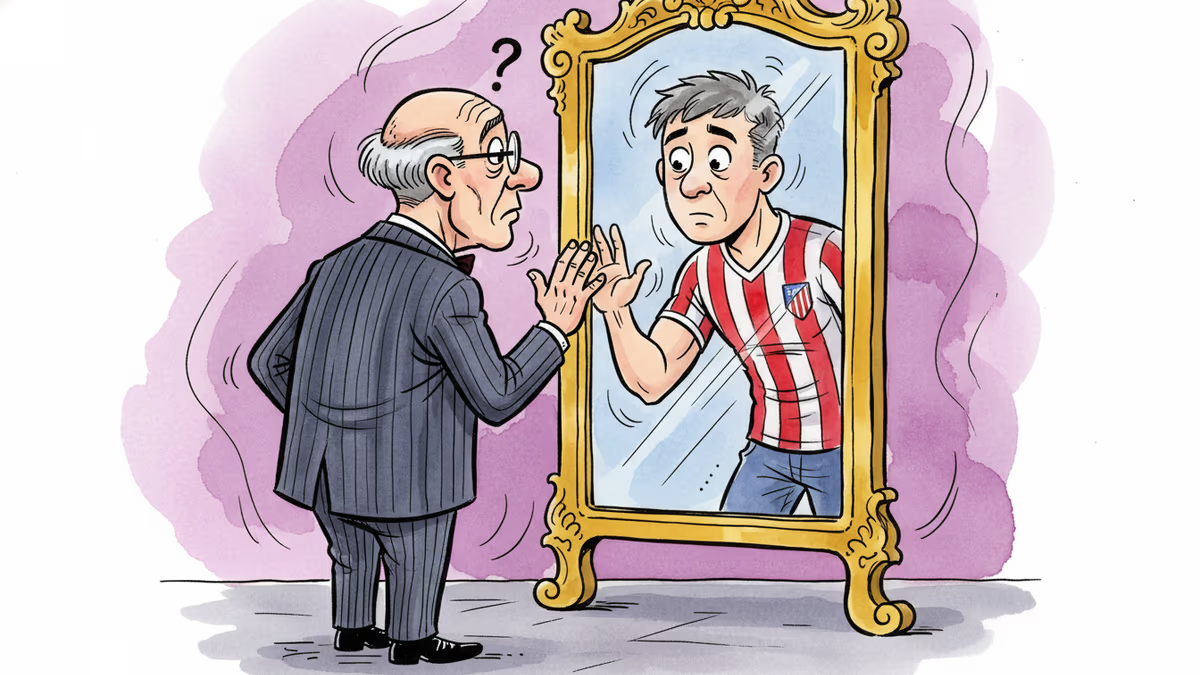
JTBC's Reborn Rookie pairs veteran actor Son Hyun Joo with idol-turned-actor Lee Jun Young in a body-swap drama. A look at the genre's industrial logic and what it signals about Korean TV's audience strategy.
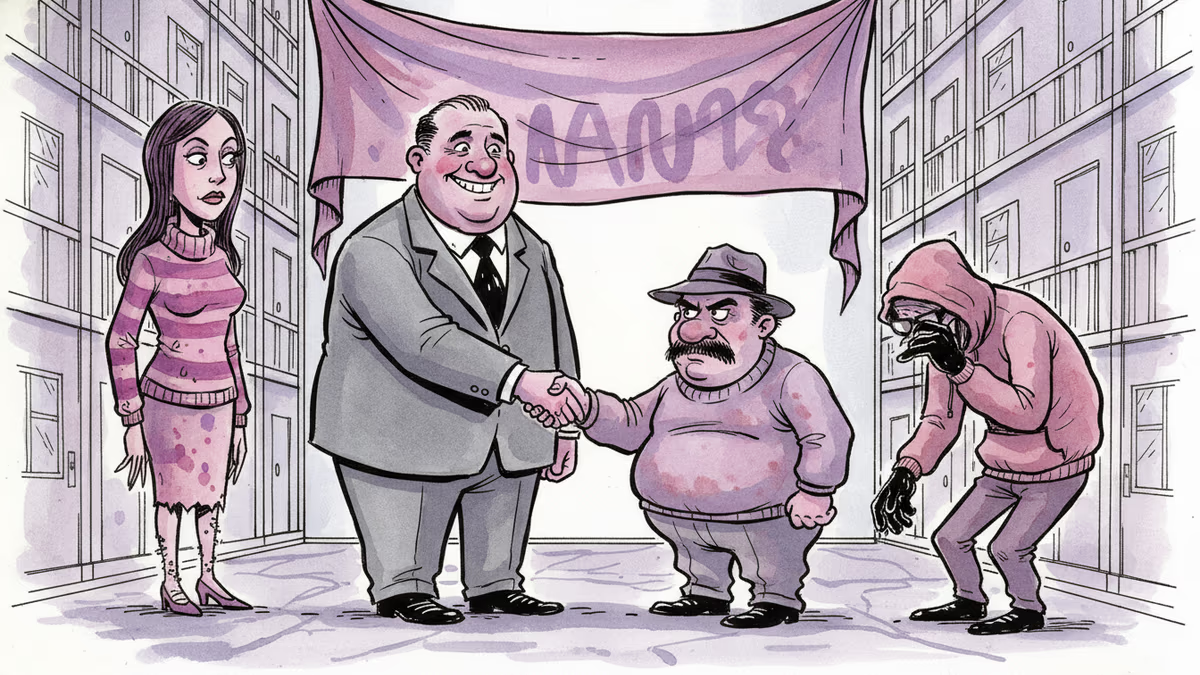
JTBC's upcoming comedy crime drama Apartment casts Ji Sung, Ha Yoon-kyung, Park Byung-eun, and Moon Sori in a story where an ex-gangster enters a residents' committee election. What does the project reveal about JTBC's 2026 strategy?
MBC's action-comedy Fifties Professionals introduces Kwon Yul as an unpredictable new antagonist. Here's why this drama's premise matters beyond the casting news.
tvN's Spooky in Love teaser drops with Park Eun Bin as a ghost-seeing hotel heiress. Behind the occult romance lies a calculated industry strategy worth unpacking.
JTBC's Reborn Rookie pairs veteran actor Son Hyun Joo with idol-turned-actor Lee Jun Young in a body-swap drama. A look at the genre's industrial logic and what it signals about Korean TV's audience strategy.
JTBC's upcoming comedy crime drama Apartment casts Ji Sung, Ha Yoon-kyung, Park Byung-eun, and Moon Sori in a story where an ex-gangster enters a residents' committee election. What does the project reveal about JTBC's 2026 strategy?
Thoughts
Share your thoughts on this article
Sign in to join the conversation