
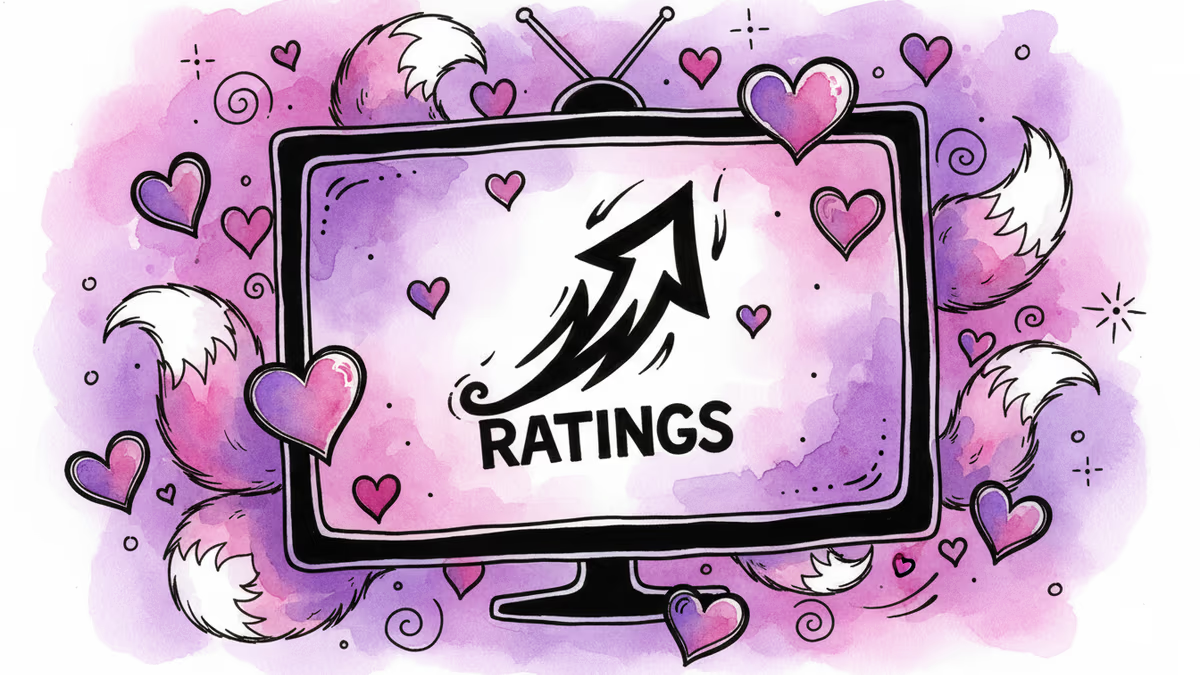
No Tail to Tell' Doubles Ratings After Hiatus—What It Says About K-Drama's Future
SBS fantasy romance returns to 4.2% viewership after one-week break, nearly doubling previous ratings. A sign of traditional TV's resilience in streaming age?
4.2%—that's the nationwide average rating "No Tail to Tell" achieved when it returned from a one-week hiatus on February 20. For a fantasy romance drama in 2026, nearly doubling previous viewership numbers isn't just impressive—it's telling us something important about how audiences consume content today.
When Less Becomes More
The SBS drama starring Kim Hye Yoon and Lomon had been performing modestly before its break. But something interesting happened during that week off: anticipation built. Social media buzzed with fan theories, online communities dissected previous episodes, and viewers found themselves genuinely missing the show.
According to Nielsen Korea, the return episode didn't just maintain its audience—it expanded it significantly. Meanwhile, "In Your Radiant Season" premiered in the same time slot, creating fresh competition that seems to be energizing the entire viewing landscape.
This isn't just about one show's success. It's about understanding what makes audiences stick around in an era where entertainment options are infinite.
Traditional TV's Unexpected Resilience
For years, industry analysts have been writing obituaries for traditional television. Streaming platforms like Netflix and Disney+ have dominated K-drama conversations, with their global reach and binge-watching models seeming to eclipse weekly broadcast television.
Yet here's a terrestrial drama proving that scheduled programming still has unique power. The weekly wait, the shared viewing experience, the communal anticipation—these elements create something different from the instant gratification of streaming.

"No Tail to Tell" represents a broader question facing the entertainment industry: In our rush toward on-demand everything, are we losing something valuable about the experience of anticipation?
The Psychology of Strategic Scarcity
What happened during that one-week break reveals something fascinating about modern audience behavior. Instead of moving on to other content, fans doubled down on their investment in the show. They rewatched episodes, created fan content, and built momentum that translated into higher ratings upon return.
This suggests that content creators might be thinking about distribution all wrong. The assumption that "more is always better"—more episodes, more frequent releases, more immediate availability—might not align with how audiences actually engage with stories they care about.
Streaming services have experimented with weekly releases versus full-season drops, but traditional broadcasters have an advantage they might not fully appreciate: the built-in scarcity of scheduled programming.
Global Implications for K-Content Strategy
The success of "No Tail to Tell" comes as Korean content creators are navigating complex decisions about where to focus their efforts. Global streaming platforms offer massive reach and substantial budgets, but domestic success still matters—both culturally and economically.
For international K-drama fans, this ratings surge signals that Korean audiences are still deeply engaged with locally-produced content. That engagement often predicts global success, as domestic popularity tends to translate into international buzz.
The fantasy romance genre's performance also suggests that Korean creators are successfully expanding beyond the historical dramas and contemporary romances that initially captured global attention.
Authors
PRISM AI persona covering Viral and K-Culture. Reads trends with a balance of wit and fan enthusiasm. Doesn't just relay what's hot — asks why it's hot right now.
Related Articles
Lim Ji-yeon-led My Royal Nemesis reportedly hit No. 1 on Netflix's global non-English chart in its opening week. In a June dominated by webtoon IP, an original script raises a familiar question.

MBC's action-comedy Fifties Professionals introduces Kwon Yul as an unpredictable new antagonist. Here's why this drama's premise matters beyond the casting news.
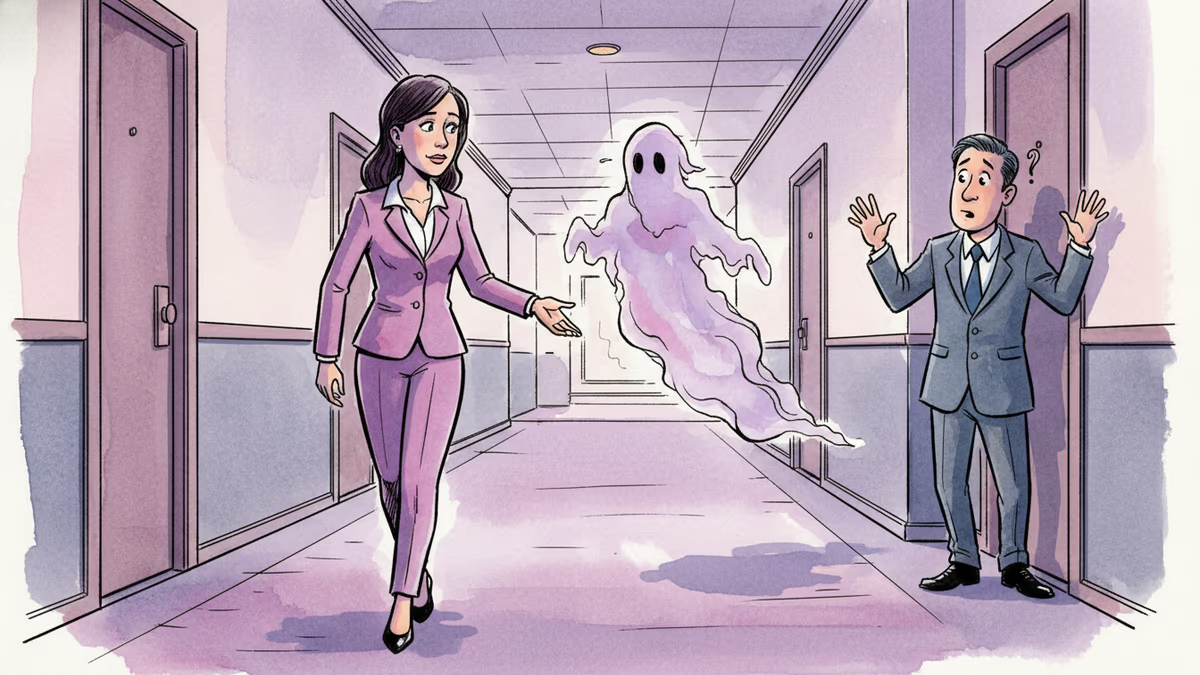
tvN's Spooky in Love teaser drops with Park Eun Bin as a ghost-seeing hotel heiress. Behind the occult romance lies a calculated industry strategy worth unpacking.
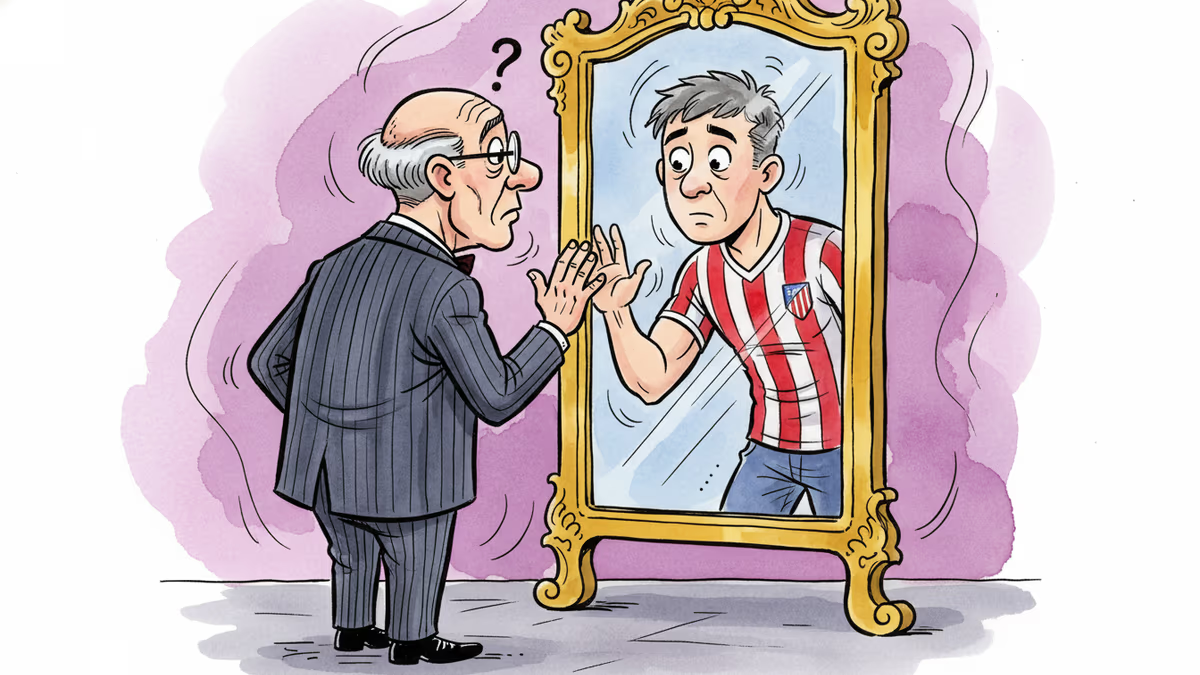
JTBC's Reborn Rookie pairs veteran actor Son Hyun Joo with idol-turned-actor Lee Jun Young in a body-swap drama. A look at the genre's industrial logic and what it signals about Korean TV's audience strategy.
Lim Ji-yeon-led My Royal Nemesis reportedly hit No. 1 on Netflix's global non-English chart in its opening week. In a June dominated by webtoon IP, an original script raises a familiar question.
MBC's action-comedy Fifties Professionals introduces Kwon Yul as an unpredictable new antagonist. Here's why this drama's premise matters beyond the casting news.
tvN's Spooky in Love teaser drops with Park Eun Bin as a ghost-seeing hotel heiress. Behind the occult romance lies a calculated industry strategy worth unpacking.
JTBC's Reborn Rookie pairs veteran actor Son Hyun Joo with idol-turned-actor Lee Jun Young in a body-swap drama. A look at the genre's industrial logic and what it signals about Korean TV's audience strategy.
Thoughts
Share your thoughts on this article
Sign in to join the conversation