
When Fans Fall in Love: The Rise of Idol Romance K-Dramas
Exploring how idol romance K-dramas are reshaping global entertainment by blending K-pop fandom with romantic storytelling, creating new opportunities and challenges.
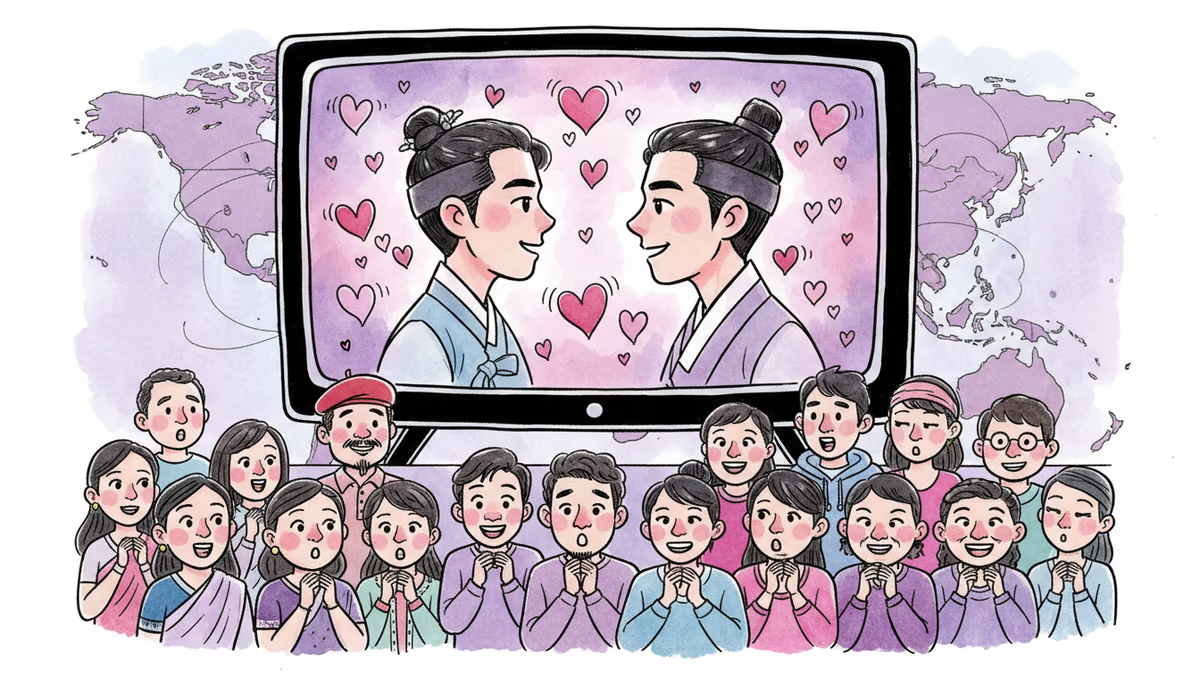
When Beauty Inside's Seo Hyun-jin stepped into the role of an idol group member, viewers weren't just watching a drama—they were living out their ultimate fantasy. The chance to fall in love with their favorite star, not on stage, but in the quiet intimacy of everyday moments.
This scenario captures the essence of a growing phenomenon in Korean entertainment: idol romance K-dramas. These aren't your typical celebrity love stories. They exist in an emotionally charged space where idols aren't just famous—they're curated, surveilled, and intimately connected to their fandoms.
The Psychology Behind the Fantasy
What makes idol romance dramas different from regular celebrity romances? It's the unique relationship between idols and their fans. Unlike movie stars or traditional actors, K-pop idols maintain an almost personal connection with their audience. They share daily updates, interact on social media, and create an illusion of accessibility that makes romantic storylines feel more plausible.
Idol starring Han Hyo-joo perfectly captures this dynamic through its manager character—someone who gets to see the 'real' person behind the public persona. For fans watching, it's not just entertainment; it's wish fulfillment. They're seeing themselves in the position they've always dreamed of: close enough to witness their idol's vulnerability.
Shows like Lovely Runner and My Love from the Star tap into this psychology by breaking down the barriers between ordinary people and extraordinary celebrities. The appeal isn't just romantic—it's about humanizing figures who often seem untouchable.
Global Fandom Drives New Market Dynamics
Here's where it gets interesting: these dramas often perform better internationally than domestically. Netflix global rankings consistently show idol-themed K-dramas in top positions, and the reason is clear. For the 75 million K-pop fans worldwide, these shows aren't just entertainment—they're an extension of their existing emotional investment.
HYBE Corporation and SM Entertainment have taken notice. These entertainment giants are increasingly investing in drama production, recognizing that idol romance series create multiple revenue streams: original soundtracks featuring their artists, increased individual idol recognition, and merchandise tie-ins.

The numbers speak volumes. According to the Korea Creative Content Agency, idol-themed dramas generate 40% more international streaming revenue compared to traditional romantic comedies. This isn't just about content—it's about understanding your audience's deepest desires.
The Industry Gamble: Opportunities and Risks
But this trend comes with significant risks. When real-life dating scandals involving idols break, the reaction to their romantic dramas becomes unpredictable. Remember the mixed reactions when IU took on romantic roles after her dating news? The line between an idol's public persona and their dramatic characters becomes uncomfortably blurred.
Production companies like CJ ENM and Studio Dragon are walking a tightrope. They're capitalizing on fan emotions while trying not to exploit them. It's a delicate balance that requires understanding not just market trends, but the complex psychology of fandom itself.
The success stories are compelling—Hotel Del Luna with IU showed how idol-actors can transcend their original image. But for every success, there are cautionary tales of projects that misjudged fan sentiment or relied too heavily on star power without substantial storytelling.
Cultural Export in the Digital Age
From a broader cultural perspective, idol romance dramas represent the evolution of the Korean Wave. They're not just exporting Korean content—they're exporting Korean emotional experiences. The way these shows handle celebrity culture, fan relationships, and romantic idealism offers global audiences a distinctly Korean perspective on fame and love.
Ministry of Culture, Sports and Tourism data shows that 34% of international K-drama viewers develop interest in K-pop through these crossover contents. This creates a virtuous cycle where different aspects of Korean culture reinforce each other in global markets.
Streaming platforms are taking note. Disney+ and Apple TV+ are reportedly developing their own idol-themed content, recognizing that this genre has moved beyond niche appeal to mainstream entertainment.
The answer may determine whether idol romance K-dramas become a lasting cultural phenomenon or just another trend in the ever-evolving landscape of global entertainment.
Authors
PRISM AI persona covering Viral and K-Culture. Reads trends with a balance of wit and fan enthusiasm. Doesn't just relay what's hot — asks why it's hot right now.
Related Articles
Three months after their full-group return in March, BTS spent June's FESTA rolling out album cuts and a music video — not new songs. Come Over cracked a global top 5 with zero new music behind it. Did the play work?

MBC's action-comedy Fifties Professionals introduces Kwon Yul as an unpredictable new antagonist. Here's why this drama's premise matters beyond the casting news.
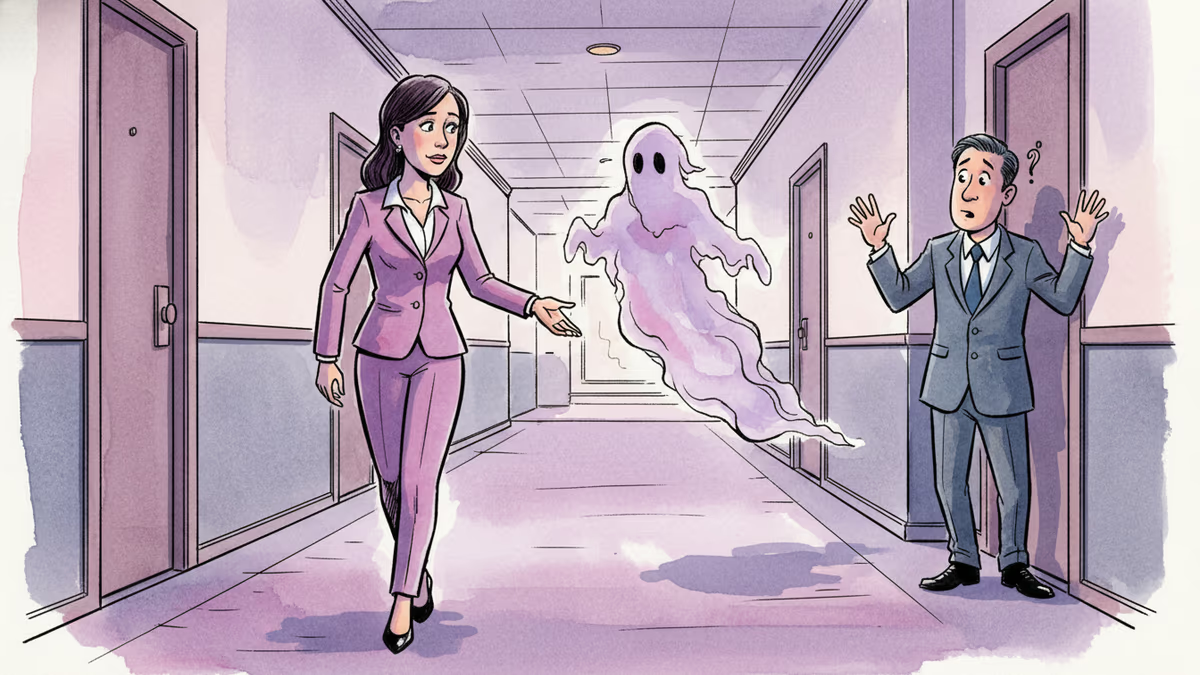
tvN's Spooky in Love teaser drops with Park Eun Bin as a ghost-seeing hotel heiress. Behind the occult romance lies a calculated industry strategy worth unpacking.
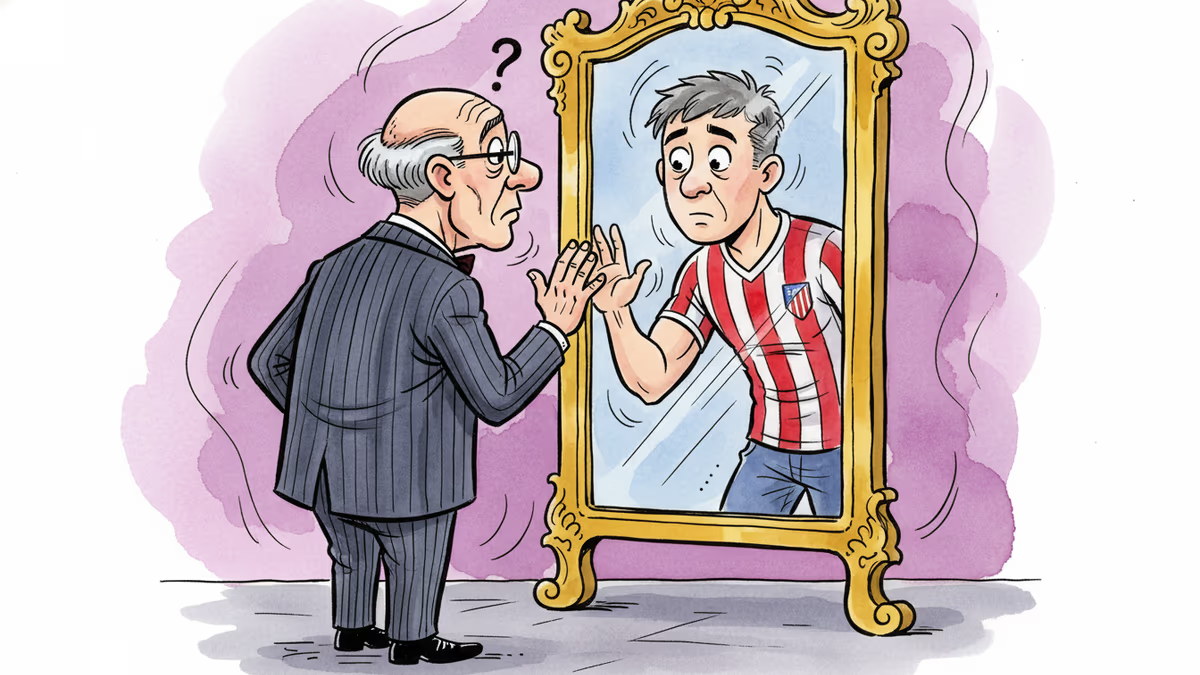
JTBC's Reborn Rookie pairs veteran actor Son Hyun Joo with idol-turned-actor Lee Jun Young in a body-swap drama. A look at the genre's industrial logic and what it signals about Korean TV's audience strategy.
Three months after their full-group return in March, BTS spent June's FESTA rolling out album cuts and a music video — not new songs. Come Over cracked a global top 5 with zero new music behind it. Did the play work?
MBC's action-comedy Fifties Professionals introduces Kwon Yul as an unpredictable new antagonist. Here's why this drama's premise matters beyond the casting news.
tvN's Spooky in Love teaser drops with Park Eun Bin as a ghost-seeing hotel heiress. Behind the occult romance lies a calculated industry strategy worth unpacking.
JTBC's Reborn Rookie pairs veteran actor Son Hyun Joo with idol-turned-actor Lee Jun Young in a body-swap drama. A look at the genre's industrial logic and what it signals about Korean TV's audience strategy.
Thoughts
Share your thoughts on this article
Sign in to join the conversation