
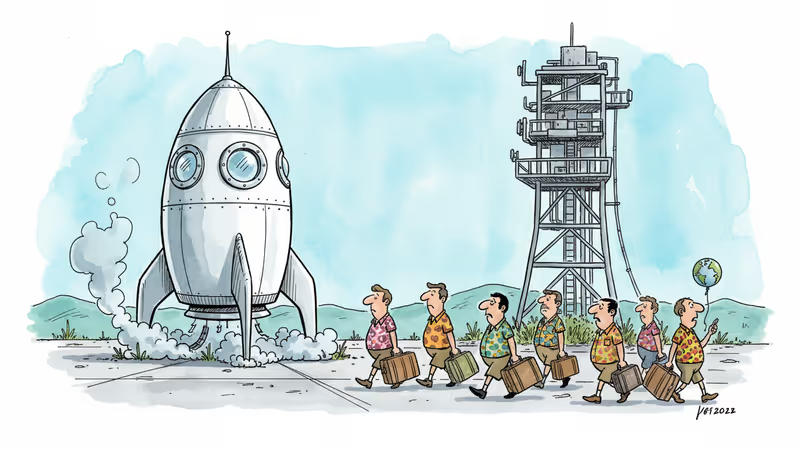
Blue Origin Grounds New Shepard for Two Years—Is Space Tourism's First Chapter Over?
Blue Origin pauses New Shepard suborbital flights for two years, effectively ending a program that flew 98 people to space since 2015. The move signals a strategic shift and raises questions about the commercial viability of space tourism.
98 people have touched the edge of space aboard Blue Origin'sNew Shepard. Now, that journey ends—at least for the next two years. The company calls it a "pause," but industry insiders read between the lines: this looks like a permanent goodbye.
Eleven Years, 38 Flights, One Era
New Shepard began its journey in April 2015 with a simple mission: make space accessible. Over 38 launches, the program achieved near-perfect success, with only one failure marring an otherwise stellar record of 36 safe landings. Along the way, it carried more than 200 scientific payloads to the microgravity environment.
For passengers, the experience lasted just minutes—a brief dance with weightlessness above the Kármán line. But those minutes represented something profound: the democratization of space travel, or so the promise went.
Jeff Bezos himself took that inaugural passenger flight in July 2021, alongside his brother and two others. The moment felt historic—a billionaire's vanity project transforming into something bigger, a new industry taking flight.
Now, Blue Origin says it's shifting focus to New Glenn, its orbital-class rocket designed to compete with SpaceX's Falcon 9. The suborbital tourism dream takes a backseat to the more lucrative satellite launch market.
The Reality Check

What happened to the space tourism revolution? The numbers tell a story of unfulfilled potential. Despite years of operations and significant investment, New Shepard never achieved the scale or frequency needed for a sustainable business model.
The fundamental challenge wasn't technical—the rocket worked beautifully. It was economic. At hundreds of thousands of dollars per seat, the market remained stubbornly niche. Even as costs theoretically could have dropped with scale, that scale never materialized.
Virgin Galactic faces similar headwinds. Both companies bet that suborbital flights would serve as stepping stones to a broader space tourism market. Instead, they may have discovered that brief weightlessness isn't compelling enough to justify the cost and complexity.
Meanwhile, SpaceX took a different approach entirely. Rather than competing for the suborbital market, it leapfrogged to orbital flights and International Space Station visits. Higher costs, yes, but exponentially more value for customers seeking genuine space experiences.
Strategic Pivot or Market Failure?
Blue Origin's decision reflects broader industry dynamics. The company faces intense pressure to deliver New Glenn and compete in the lucrative satellite launch market. Every dollar and engineering hour spent on New Shepard is a dollar not invested in that larger opportunity.
The timing isn't coincidental. SpaceX continues to dominate launch services while expanding into Starship development. Blue Origin can't afford to remain a niche player in space tourism while the real money flows through commercial and government satellite deployments.
This shift mirrors patterns across the space industry. Companies that started with grand visions of space tourism—Virgin Galactic, Blue Origin—increasingly focus on more traditional aerospace markets. The romance of space travel gives way to the pragmatism of profitable business models.
Yet some observers argue this isn't failure but evolution. First-generation space tourism established proof of concept. The next generation might achieve the scale and cost reduction that eluded pioneers like New Shepard.
Authors
Related Articles
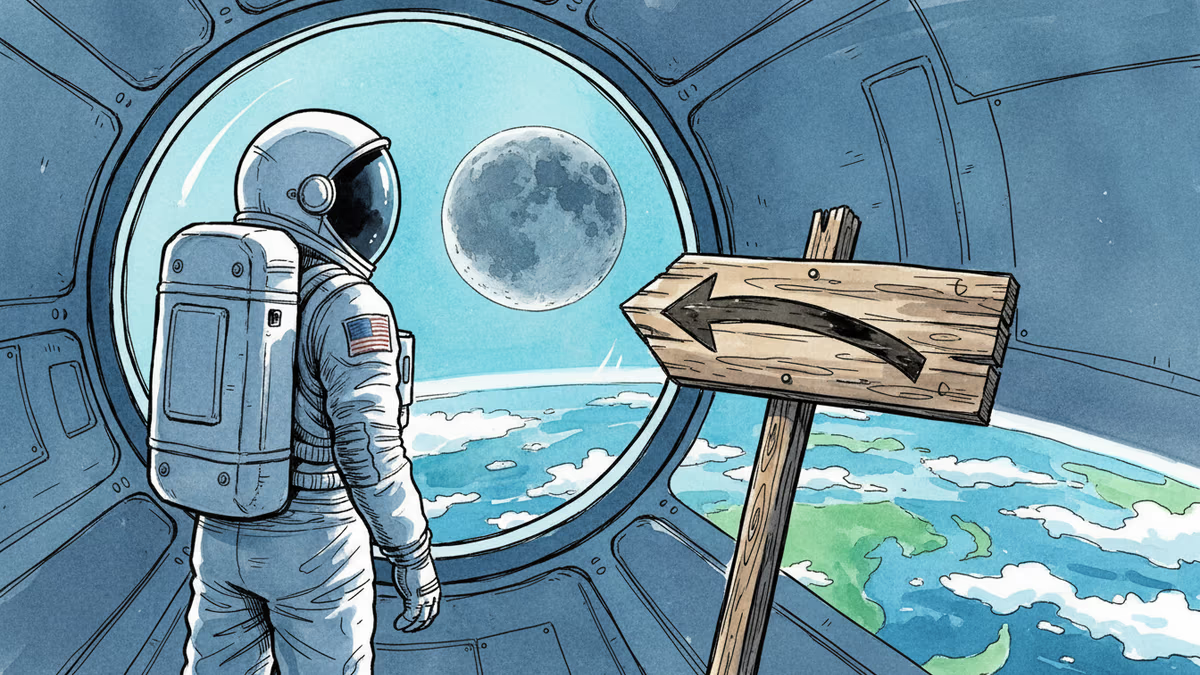
NASA's Artemis III has been redesigned as an Earth-orbit mission. SpaceX and Blue Origin say their landers won't be ready until late 2027. What does this mean for the future of lunar exploration?
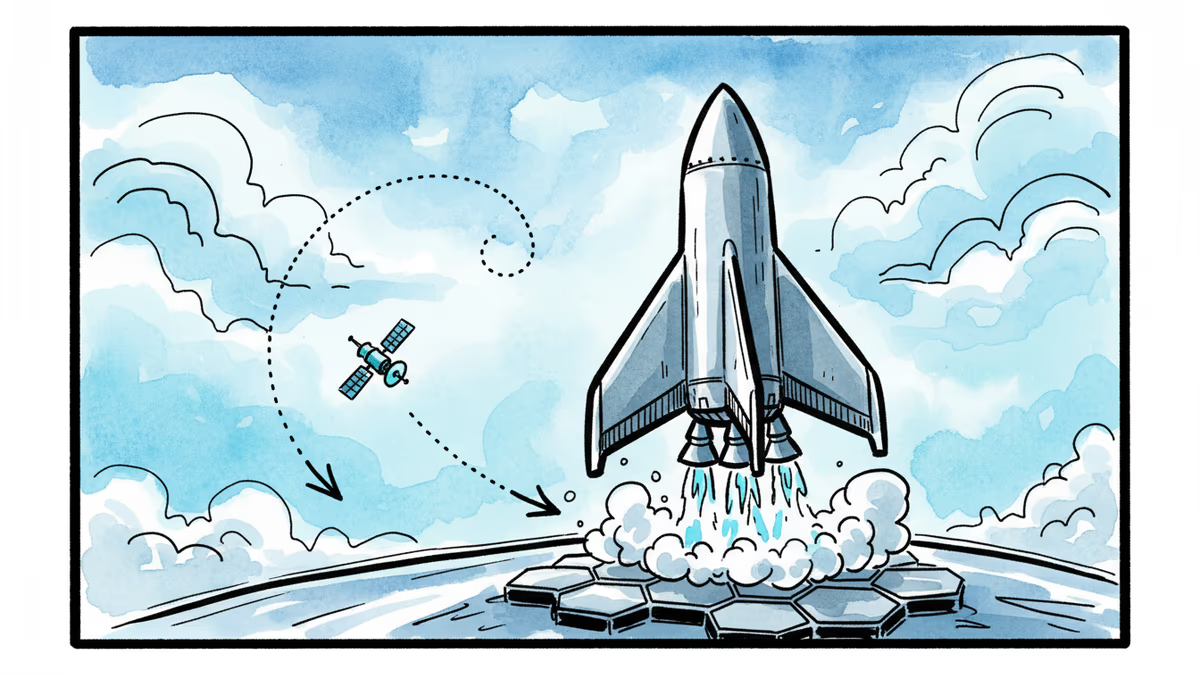
Blue Origin's New Glenn nailed its second booster landing, but AST SpaceMobile's BlueBird 7 satellite ended up in the wrong orbit—effectively useless. What this split outcome reveals about the space race.
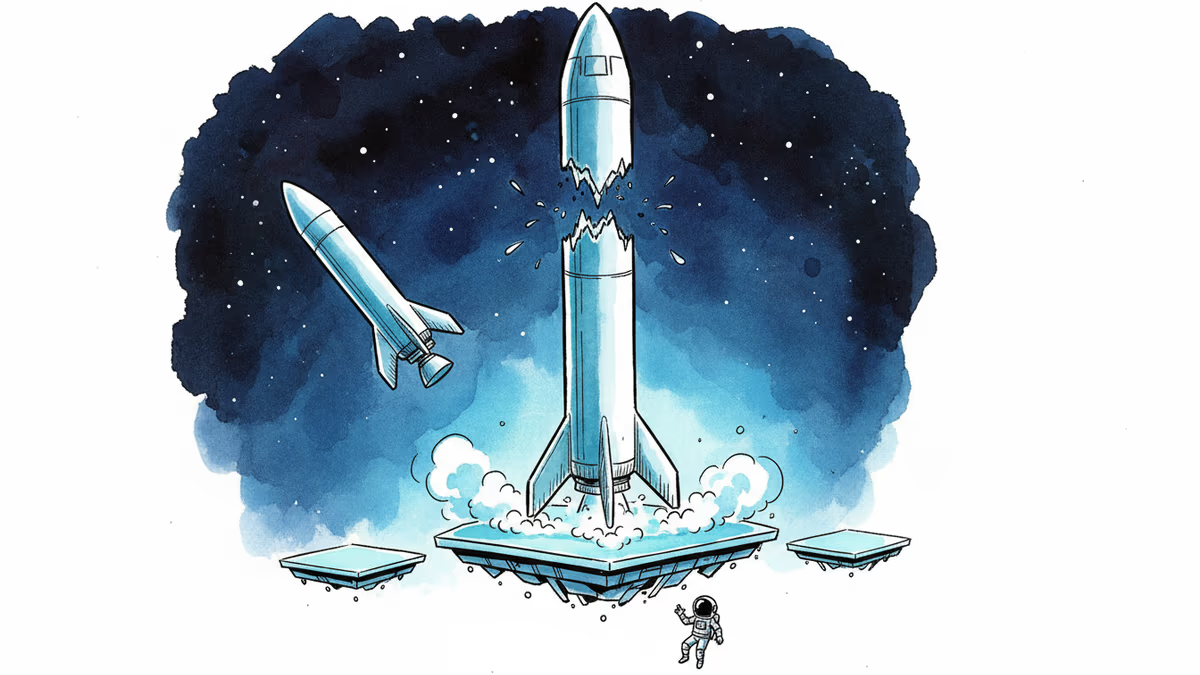
Blue Origin successfully reflew an orbital-class booster for the first time, but New Glenn's upper stage failed on its third mission — raising questions about NASA's Artemis timeline.
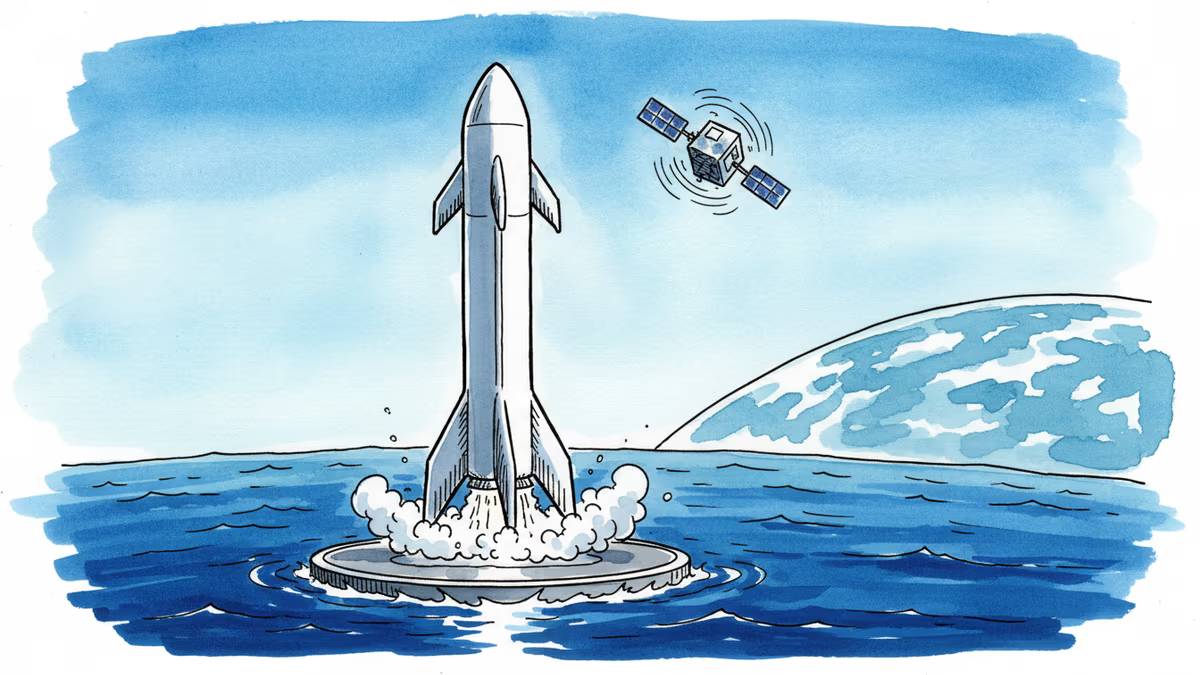
Blue Origin's New Glenn rocket nailed its first booster reuse — but lost a customer satellite to a botched upper stage. What this split verdict means for the space industry, NASA's moon plans, and the race against SpaceX.
NASA's Artemis III has been redesigned as an Earth-orbit mission. SpaceX and Blue Origin say their landers won't be ready until late 2027. What does this mean for the future of lunar exploration?
Blue Origin's New Glenn nailed its second booster landing, but AST SpaceMobile's BlueBird 7 satellite ended up in the wrong orbit—effectively useless. What this split outcome reveals about the space race.
Blue Origin successfully reflew an orbital-class booster for the first time, but New Glenn's upper stage failed on its third mission — raising questions about NASA's Artemis timeline.
Blue Origin's New Glenn rocket nailed its first booster reuse — but lost a customer satellite to a botched upper stage. What this split verdict means for the space industry, NASA's moon plans, and the race against SpaceX.
Thoughts
Share your thoughts on this article
Sign in to join the conversation