

Skild AI $14B Valuation: Robotics Software Giant Triples Worth in 7 Months
Robotics startup Skild AI reaches a $14B valuation after a $1.4B Series C led by SoftBank. Learn how foundation models are revolutionizing robot training and adoption.
A $14 billion valuation in just two years of existence. Skild AI, the startup building the "brain" for future robots, has more than tripled its valuation in only seven months, signaling a massive shift in the robotics investment landscape.
Skild AI $14B Valuation Driven by $1.4 Billion Series C
According to Bloomberg, Skild AI has successfully raised $1.4 billion in its latest Series C funding round. The investment was led by SoftBank, with participation from heavyweight investors including Nvidia, Macquarie Group, and 1789 Capital. This new capital injection brings the company's total funding to date to over $2 billion.
The rapid ascent from a $4.5 billion valuation in the prior summer reflects the growing urgency to solve the 'intelligence' gap in robotics. While the exact details of the previous round remained a rumor—estimated at $500 million—CEO Deepak Pathak confirmed the massive growth in the company's capital strength.

Retrofitting Reality: The Power of Foundation Models
Founded in 2023, Skild AI focuses on developing general-purpose robotic software. Their foundation models can be retrofitted to various robotic hardware, enabling machines to learn tasks by watching humans rather than through exhaustive manual programming. This approach aims to eliminate one of the biggest hurdles in automation: the training bottleneck.
Competition is heating up as companies like 1X—the maker of the Neo humanoid—and Field AI race to deploy similar adaptable software. 1X recently released a 'world model' to help bots interpret visual surroundings better, underscoring the industry's pivot toward software-led capabilities over pure mechanical prowess.
Authors
Related Articles
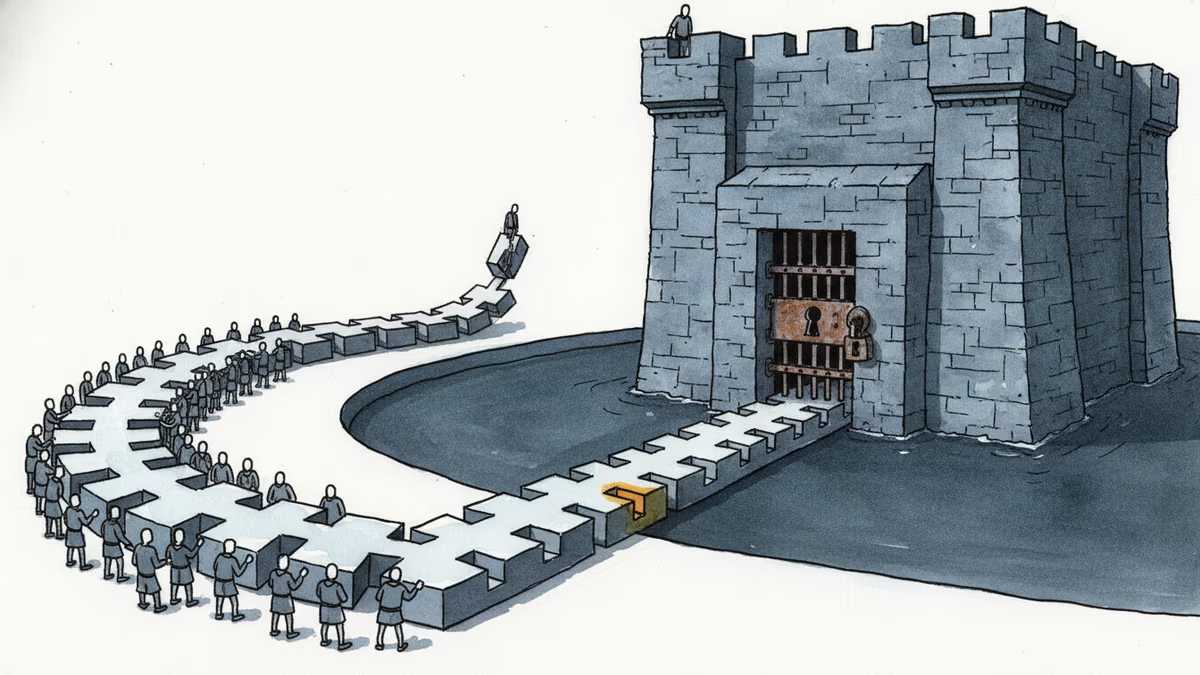
Nvidia shipped roughly a billion RISC-V cores in 2024, then announced it would run CUDA on the open standard. We break down how royalty-free instruction sets and open software stacks are trying to route around CUDA's lock-in. Part 2 of the Semiconductor Sovereignty series.
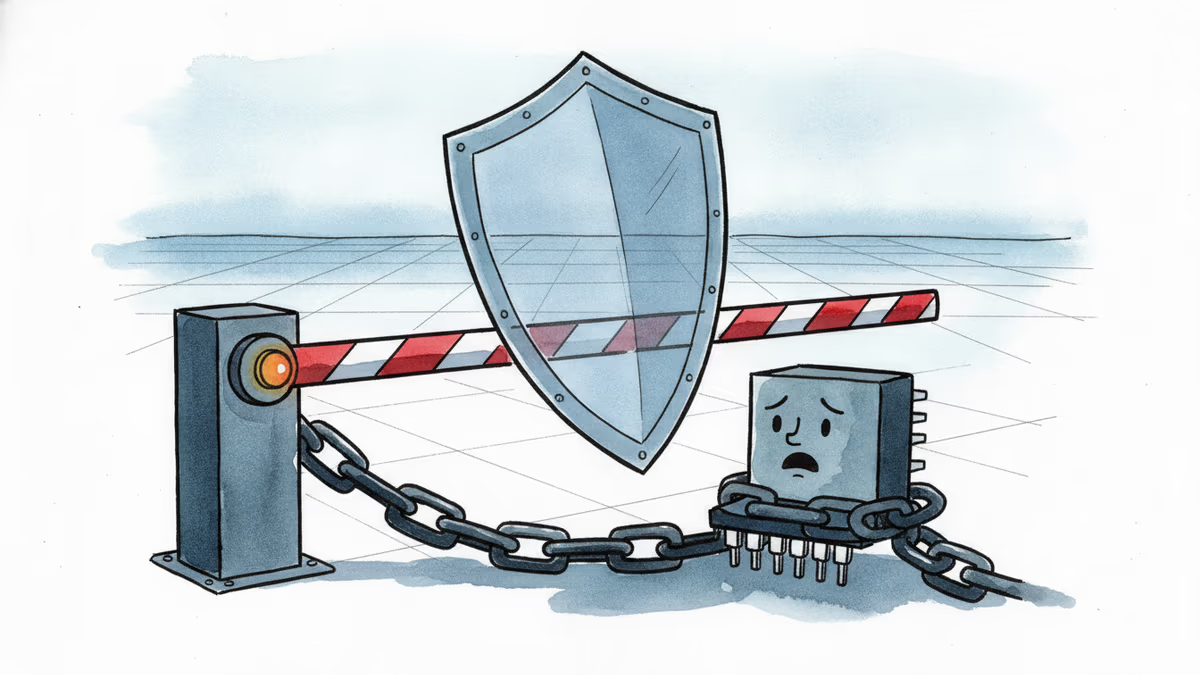
US AI-chip export controls split into three layers in the first half of 2026 — January easing, a May crackdown on circumvention, and a pending bill. Nvidia erased China from its guidance and still posted a record $81.6 billion quarter. A look at the export policy that both shields and cages it.
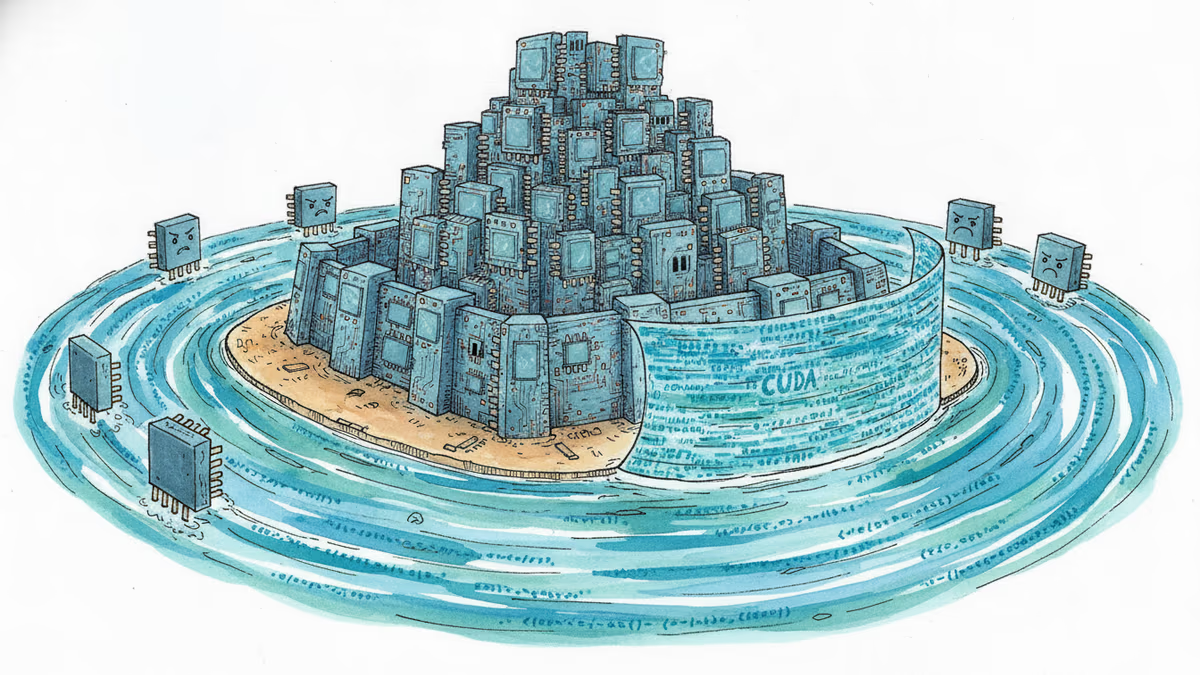
AMD's MI325X matches or beats Nvidia on memory and bandwidth — yet Nvidia's 86-92% share holds. The real moat is CUDA, 20 years in the making. Part 1 of 4.

Snowflake's new $6 billion AWS contract is about more than cloud spending. It signals a shift in AI infrastructure—away from Nvidia GPUs and toward cheaper, homegrown chips for the agent era.
Nvidia shipped roughly a billion RISC-V cores in 2024, then announced it would run CUDA on the open standard. We break down how royalty-free instruction sets and open software stacks are trying to route around CUDA's lock-in. Part 2 of the Semiconductor Sovereignty series.
US AI-chip export controls split into three layers in the first half of 2026 — January easing, a May crackdown on circumvention, and a pending bill. Nvidia erased China from its guidance and still posted a record $81.6 billion quarter. A look at the export policy that both shields and cages it.
AMD's MI325X matches or beats Nvidia on memory and bandwidth — yet Nvidia's 86-92% share holds. The real moat is CUDA, 20 years in the making. Part 1 of 4.
Snowflake's new $6 billion AWS contract is about more than cloud spending. It signals a shift in AI infrastructure—away from Nvidia GPUs and toward cheaper, homegrown chips for the agent era.
Thoughts
Share your thoughts on this article
Sign in to join the conversation