
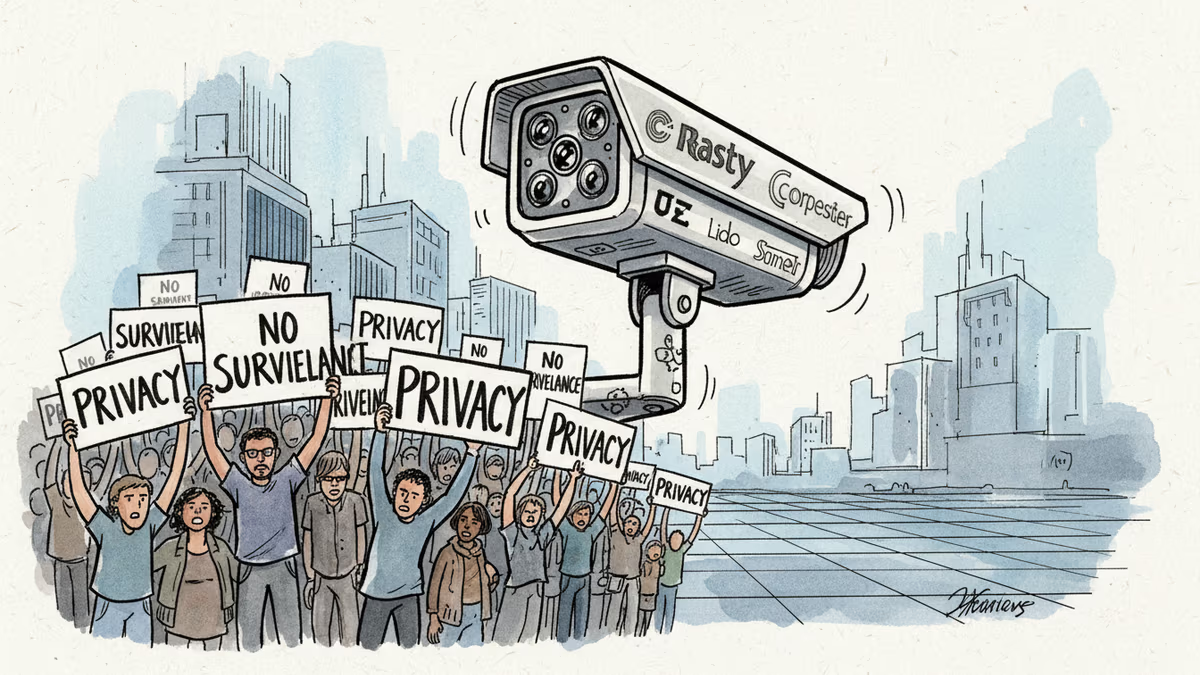
Ring Ditches Flock Safety, But Dodges the Real Questions
Ring ended its partnership with AI camera company Flock Safety, but avoided addressing public concerns about mass surveillance and ICE connections. What does this silence reveal?
What They Didn't Say Speaks Volumes
When Ring announced it was ending its partnership with Flock Safety, the most telling part wasn't what the home security giant said—it was what they carefully avoided saying. No mention of the ICE connections. No acknowledgment of user privacy concerns. No promise to do better.
Instead, Ring offered a sanitized explanation: integrating Flock's AI camera system into their Community Requests tool would "require significantly more time and resources" than expected. Technical difficulties, they claimed. Move along, nothing to see here.
The Surveillance Web We're Already In
But here's what Ring won't tell you: Flock Safety operates 25,000 AI-powered license plate readers across the country. These aren't just traffic cameras—they're building a real-time tracking network that follows your every move, feeding data to police departments and federal agencies.
The company's technology doesn't discriminate. Whether you're a citizen, visitor, or undocumented immigrant, you're in their database. And yes, that data flows to ICE for immigration enforcement. In an increasingly authoritarian climate, this is exactly the kind of mass surveillance infrastructure that civil liberties advocates have been warning about.
The Corporate Playbook for Controversy

Ring's response follows a familiar pattern: when faced with public backlash, quietly retreat while offering technical excuses. Don't acknowledge the real issues. Don't engage with critics. Just fade into the background and hope people forget.
This approach might work for quarterly earnings, but it does nothing to address the fundamental questions users are asking: Whose side are you on? When push comes to shove, will you protect user privacy or cooperate with surveillance programs?
The Bigger Picture: Tech's Accountability Gap
This isn't just about Ring or Flock Safety. It's about how tech companies handle controversial partnerships in an era of heightened political tensions. Amazon (Ring's parent company) has faced similar criticism over its facial recognition technology and cloud services for government agencies.
The pattern is clear: develop powerful surveillance tools, market them as safety solutions, then claim ignorance when they're used for mass surveillance or immigration enforcement. When public pressure mounts, quietly distance yourself without admitting wrongdoing.
What Users Actually Want
Privacy advocates aren't asking companies to abandon security technology entirely. They want transparency about how data is collected and shared. They want user control over who can access their information. They want accountability when things go wrong.
Ring could have used this moment to announce stronger privacy protections or clearer data-sharing policies. Instead, they chose silence on the issues that matter most to their users.
Authors
Related Articles
The FTC fined Cox Media and two ad firms $930,000 — not for actually eavesdropping on users, but for falsely claiming they could. The case raises uncomfortable questions about surveillance capitalism.

A Utah woman was sentenced to life in prison partly because of her Google searches and deleted texts. The Kouri Richins case reveals how digital footprints have become the courtroom's most reliable witness.
After 15 years of fragmented mobile messaging, Apple and Google are rolling out end-to-end encrypted RCS messaging between iPhones and Android devices. Here's what changed, why it took so long, and what it means for your privacy.
New Mexico already won $375 million from Meta. Now it wants something harder to give: a court order forcing Facebook, Instagram, and WhatsApp to redesign themselves. A three-week trial starts Monday.
The FTC fined Cox Media and two ad firms $930,000 — not for actually eavesdropping on users, but for falsely claiming they could. The case raises uncomfortable questions about surveillance capitalism.
A Utah woman was sentenced to life in prison partly because of her Google searches and deleted texts. The Kouri Richins case reveals how digital footprints have become the courtroom's most reliable witness.
After 15 years of fragmented mobile messaging, Apple and Google are rolling out end-to-end encrypted RCS messaging between iPhones and Android devices. Here's what changed, why it took so long, and what it means for your privacy.
New Mexico already won $375 million from Meta. Now it wants something harder to give: a court order forcing Facebook, Instagram, and WhatsApp to redesign themselves. A three-week trial starts Monday.
Thoughts
Share your thoughts on this article
Sign in to join the conversation