
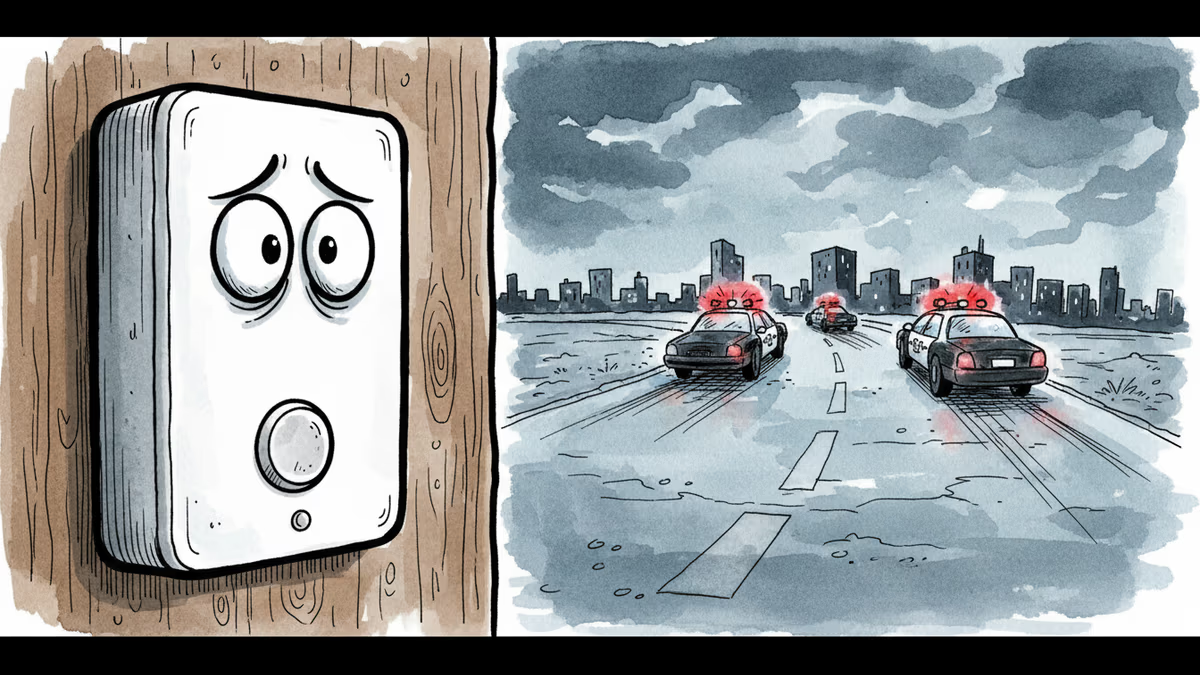
Ring Retreats from Police Surveillance Partnership
Amazon's Ring cancels integration with Flock Safety after intense user backlash, highlighting growing tension between smart home convenience and surveillance concerns.
When 4,000 Communities Weren't Enough
Amazon's Ring has pulled the plug on its planned integration with Flock Safety, a surveillance technology company that partners with law enforcement agencies across 4,000+ communities nationwide. The decision comes just days after privacy advocates and users erupted in protest over what they saw as a bridge too far into surveillance territory.
"Following a comprehensive review, we determined the planned Flock Safety integration would require significantly more time and resources than anticipated," Ring stated in a blog post. Translation: the backlash was swift, loud, and impossible to ignore.
The integration never actually launched, meaning no Ring customer videos were sent to Flock Safety's systems. But the mere announcement was enough to trigger alarm bells among users who've grown increasingly wary of their doorbell cameras becoming nodes in a broader surveillance network.
The Surveillance Creep Dilemma

Flock Safety operates automatic license plate recognition cameras that track vehicles and share data with law enforcement. The company positions itself as a crime-fighting tool, helping solve cases and locate missing persons. But critics see something more troubling: the infrastructure of a surveillance state being built one camera at a time.
Ring's retreat highlights a fundamental tension in the smart home era. Consumers want security and convenience, but they're increasingly uncomfortable with how that data might be used. The company has faced this tension before – in 2022, it revealed it had shared user videos with police 11 times without warrants, citing "emergency" circumstances.
Corporate Accountability in Real Time
What makes this case remarkable isn't just that Ring changed course, but how quickly it happened. In an era when tech companies often weather criticism and push forward anyway, Ring's reversal suggests consumer pushback still carries weight – at least when it's loud enough.
The timing matters too. With growing bipartisan concern about Big Tech's power and data practices, companies are more sensitive to privacy backlash. Ring's parent company Amazon faces ongoing scrutiny from regulators, making any surveillance-related controversy particularly unwelcome.
Authors
Related Articles
The FTC fined Cox Media and two ad firms $930,000 — not for actually eavesdropping on users, but for falsely claiming they could. The case raises uncomfortable questions about surveillance capitalism.
A Utah woman was sentenced to life in prison partly because of her Google searches and deleted texts. The Kouri Richins case reveals how digital footprints have become the courtroom's most reliable witness.
After 15 years of fragmented mobile messaging, Apple and Google are rolling out end-to-end encrypted RCS messaging between iPhones and Android devices. Here's what changed, why it took so long, and what it means for your privacy.
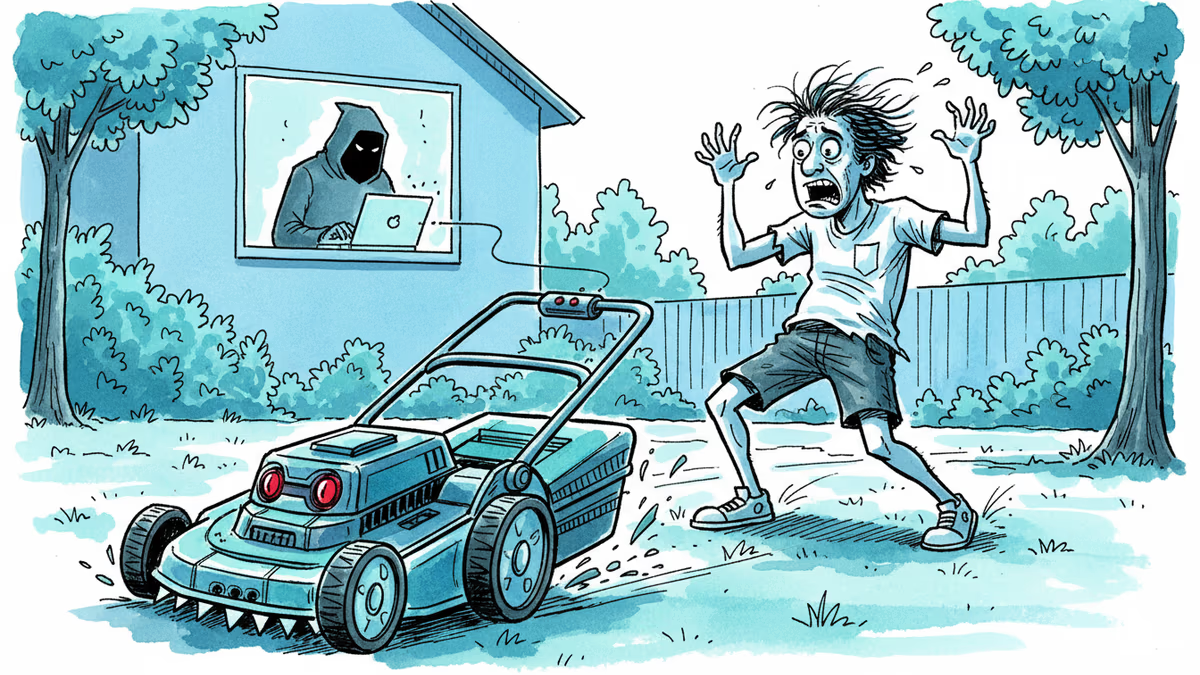
Yarbo's robot lawn mowers had critical security flaws exposing GPS, Wi-Fi passwords, and emails. The company confirmed the findings and cut remote access. But the real issue runs deeper than one brand.
The FTC fined Cox Media and two ad firms $930,000 — not for actually eavesdropping on users, but for falsely claiming they could. The case raises uncomfortable questions about surveillance capitalism.
A Utah woman was sentenced to life in prison partly because of her Google searches and deleted texts. The Kouri Richins case reveals how digital footprints have become the courtroom's most reliable witness.
After 15 years of fragmented mobile messaging, Apple and Google are rolling out end-to-end encrypted RCS messaging between iPhones and Android devices. Here's what changed, why it took so long, and what it means for your privacy.
Yarbo's robot lawn mowers had critical security flaws exposing GPS, Wi-Fi passwords, and emails. The company confirmed the findings and cut remote access. But the real issue runs deeper than one brand.
Thoughts
Share your thoughts on this article
Sign in to join the conversation