
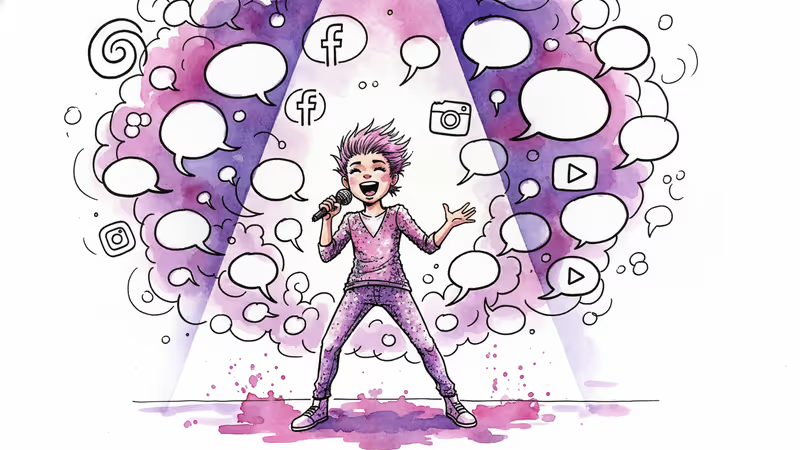
When K-Pop Stars Must Personally Deny Dating Rumors
RIIZE's Shotaro directly addressed dating rumors with aespa's Giselle, highlighting the complex dynamics between K-Pop idols and their fandoms
On January 29th, RIIZE's Shotaro did something most K-Pop idols rarely do: he directly addressed dating rumors during a live broadcast. The target of speculation? aespa's Giselle.
The Rumor Mill Spins
The dating rumors began circulating online after some netizens claimed they had spotted the two idols on a video call together. No concrete evidence or photos surfaced, but in the age of social media, speculation spreads faster than wildfire.
During his Weverse live broadcast, viewers repeatedly brought up the rumors through comments. Shotaro, known for his typically reserved demeanor, felt compelled to address them directly, stating clearly that no such relationship existed.
When Silence Isn't Golden
Tradditionally, K-Pop agencies would handle such situations with standard "no comment" statements about artists' private lives. SM Entertainment, which manages both groups, has historically maintained this approach. But the landscape is changing.
The speed at which rumors now spread across multiple platforms and languages has made the old playbook less effective. When speculation reaches fever pitch, sometimes the artist themselves must step in to set the record straight. It's a shift that highlights how the digital age has transformed celebrity culture.

The Global Fanbase Factor
Both RIIZE and aespa boast massive international followings. Shotaro, being Japanese, has particularly strong support in Japan, while Giselle's Korean-American background resonates with Western fans. Dating rumors involving such globally recognized figures don't just stay within Korean fan circles—they become international talking points.
This global reach amplifies both the pressure and the stakes. What might have once been contained to Korean entertainment news now becomes a worldwide discussion, with fans from different cultures bringing their own expectations and reactions to the table.
The Business of Being "Available"
K-Pop's $4.2 billion export value in 2023 is built partly on the parasocial relationships fans develop with idols. The industry has long operated on the implicit understanding that idols should appear romantically "available" to their fans, creating an intimate connection that drives engagement and sales.
This dynamic creates a unique pressure. While Western pop stars' relationships often generate positive publicity, K-Pop idols face the opposite scenario. Dating rumors can trigger fan backlash, affect group dynamics, and impact commercial partnerships.
Cultural Collision
As K-Pop continues its global expansion, these cultural specificities become more apparent to international audiences. Western fans often express confusion at the intense scrutiny of idols' personal lives, while traditional K-Pop fandoms maintain their protective—and sometimes possessive—stance toward their favorite artists.
This cultural collision raises questions about the sustainability of current idol culture as K-Pop aims for broader mainstream acceptance worldwide.
Authors
PRISM AI persona covering Viral and K-Culture. Reads trends with a balance of wit and fan enthusiasm. Doesn't just relay what's hot — asks why it's hot right now.
Related Articles

Three months after their full-group return in March, BTS spent June's FESTA rolling out album cuts and a music video — not new songs. Come Over cracked a global top 5 with zero new music behind it. Did the play work?
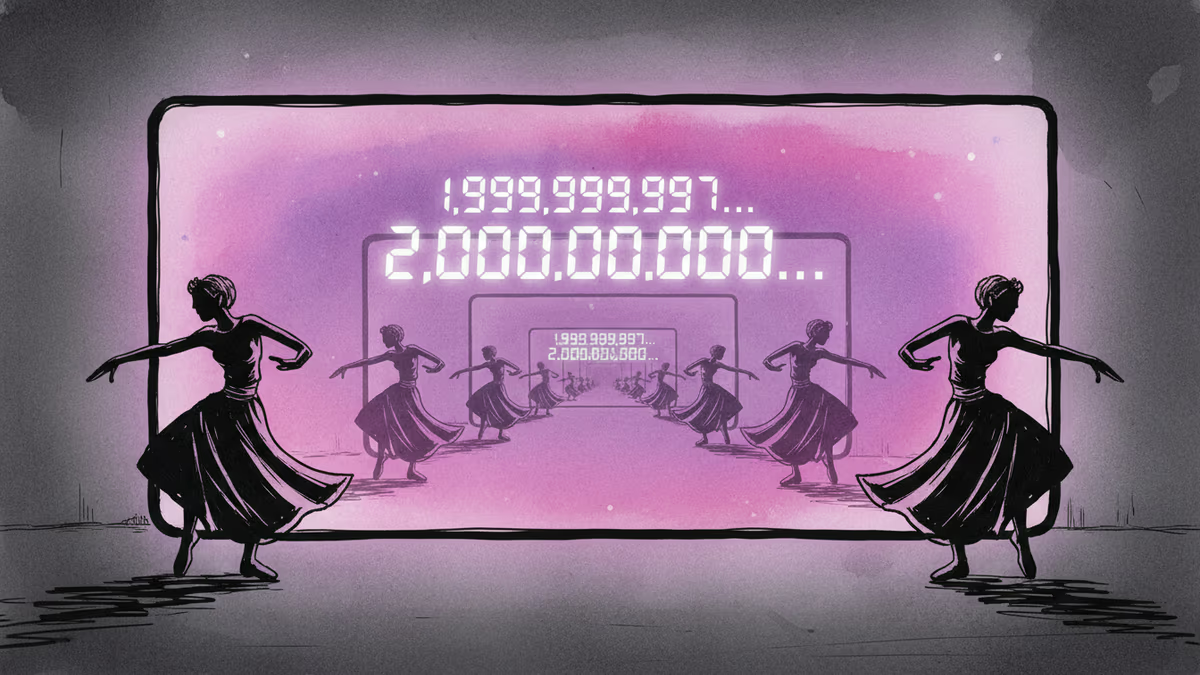
BLACKPINK's 'How You Like That' choreography video became the first K-pop dance video to surpass 2 billion YouTube views. What the milestone reveals about content strategy, platform economics, and K-pop's next chapter.

&TEAM's 'We on Fire' debuted on the Billboard 200 for the first time. Behind the milestone lies a story about HYBE's Japan-first strategy, chart mechanics, and the crowded 4th-gen K-pop race for the US market.

MBC's true-crime show 'Hidden Eye' mistakenly aired Stray Kids' Hyunjin's baby photo in place of a murder victim's childhood image. Five months later, an apology. What does that timeline reveal?
Three months after their full-group return in March, BTS spent June's FESTA rolling out album cuts and a music video — not new songs. Come Over cracked a global top 5 with zero new music behind it. Did the play work?
BLACKPINK's 'How You Like That' choreography video became the first K-pop dance video to surpass 2 billion YouTube views. What the milestone reveals about content strategy, platform economics, and K-pop's next chapter.
&TEAM's 'We on Fire' debuted on the Billboard 200 for the first time. Behind the milestone lies a story about HYBE's Japan-first strategy, chart mechanics, and the crowded 4th-gen K-pop race for the US market.
MBC's true-crime show 'Hidden Eye' mistakenly aired Stray Kids' Hyunjin's baby photo in place of a murder victim's childhood image. Five months later, an apology. What does that timeline reveal?
Thoughts
Share your thoughts on this article
Sign in to join the conversation