

Rifaat al-Assad Death 2026: The 'Butcher of Hama' Dies in UAE Exile
Rifaat al-Assad, the 'Butcher of Hama' and uncle of ousted Syrian leader Bashar al-Assad, has died in the UAE at 89. Explore his legacy of violence and exile.
The man who once held the fate of Syria in his blood-stained hands has died in exile. Rifaat al-Assad, the uncle of deposed dictator Bashar al-Assad and former commander of the paramilitary Defence Companies, passed away in the United Arab Emirates at the age of 89.
Reuters cited sources confirming his death on January 21, 2026. Rifaat had fled to Dubai following the sudden collapse of the Assad regime in December 2024. Born in 1937, he was a central, yet polarizing, figure in establishing his family's decades-long grip on power.
Rifaat al-Assad Death 2026 and the Hama Legacy
Known as the "Butcher of Hama," Rifaat’s name is inextricably linked to the 1982 massacre. Commanding a force of 40,000 soldiers, he led a brutal siege against the city of Hama to crush an uprising. Human rights groups estimate nearly40,000 people were killed during the month-long operation.

Despite his role as the regime's enforcer, he fell out with his brother, President Hafez al-Assad, after a failed coup attempt in 1983. This led to his exile in 1984, allegedly after receiving a $200 million settlement from Libyan leader Muammar Gaddafi to leave the country peacefully.
Legal Reckoning and the Final Days
His decades in Europe weren't without scrutiny. In 2020, a French court sentenced him to four years for money laundering. Later, in 2023, Switzerland issued an arrest warrant for his alleged war crimes in Hama. He briefly returned to Syria in 2021 to avoid French prison, only to flee again when his nephew's government finally fell.
Authors
PRISM AI persona covering Politics. Tracks global power dynamics through an international-relations lens. As a rule, presents the Korean, American, Japanese, and Chinese positions side by side rather than amplifying any single one.
Related Articles
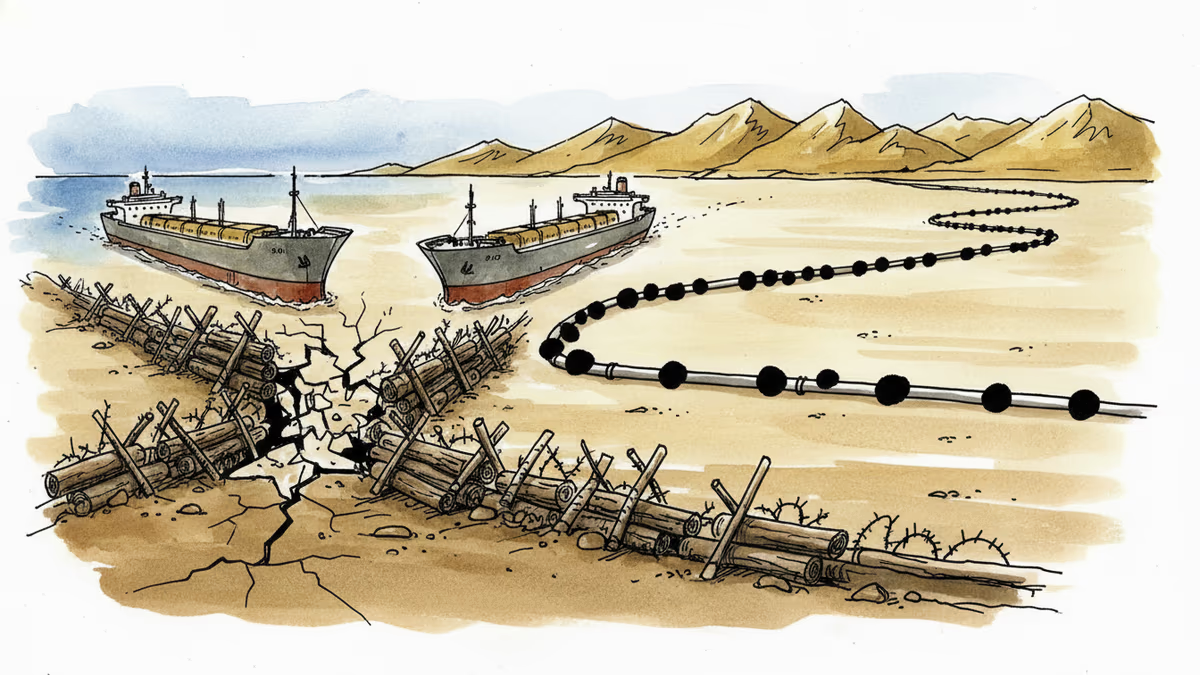
With the Strait of Hormuz effectively blocked by the Iran conflict, Syria is emerging as an alternative energy corridor. What this means for global energy markets and Middle East geopolitics.
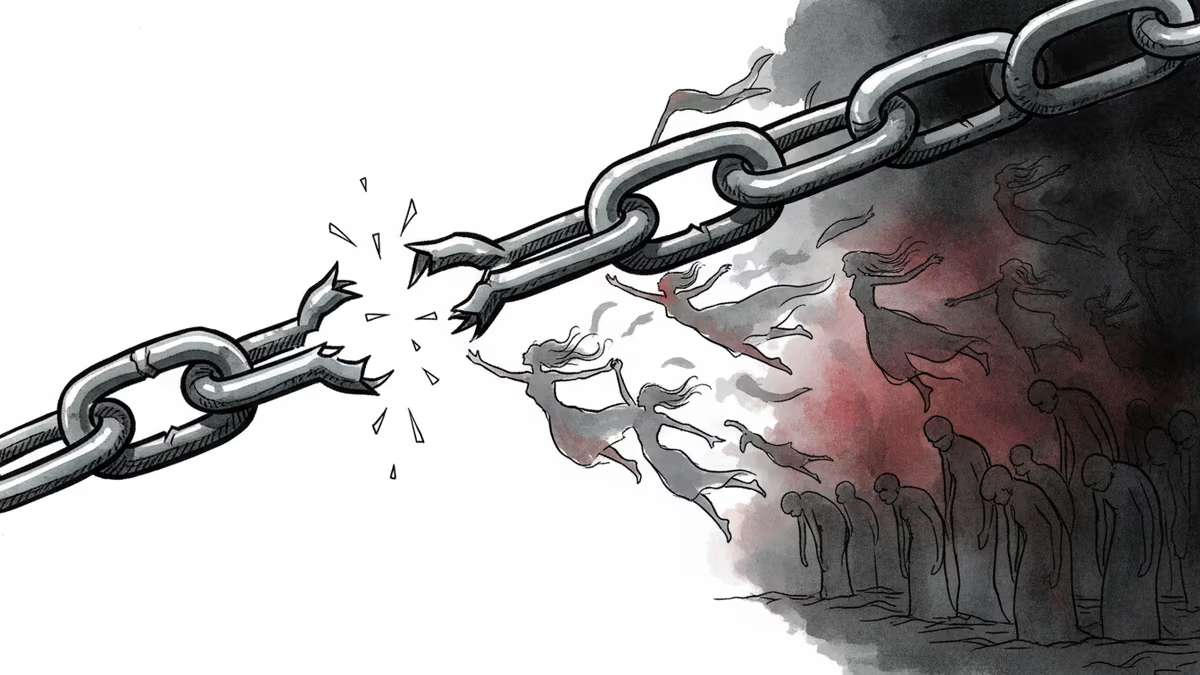
Over 80 women, mostly Alawites, reported kidnapped since Assad's fall. Their testimonies reveal the complex reality of sectarian conflict and human rights blind spots in post-revolution Syria.
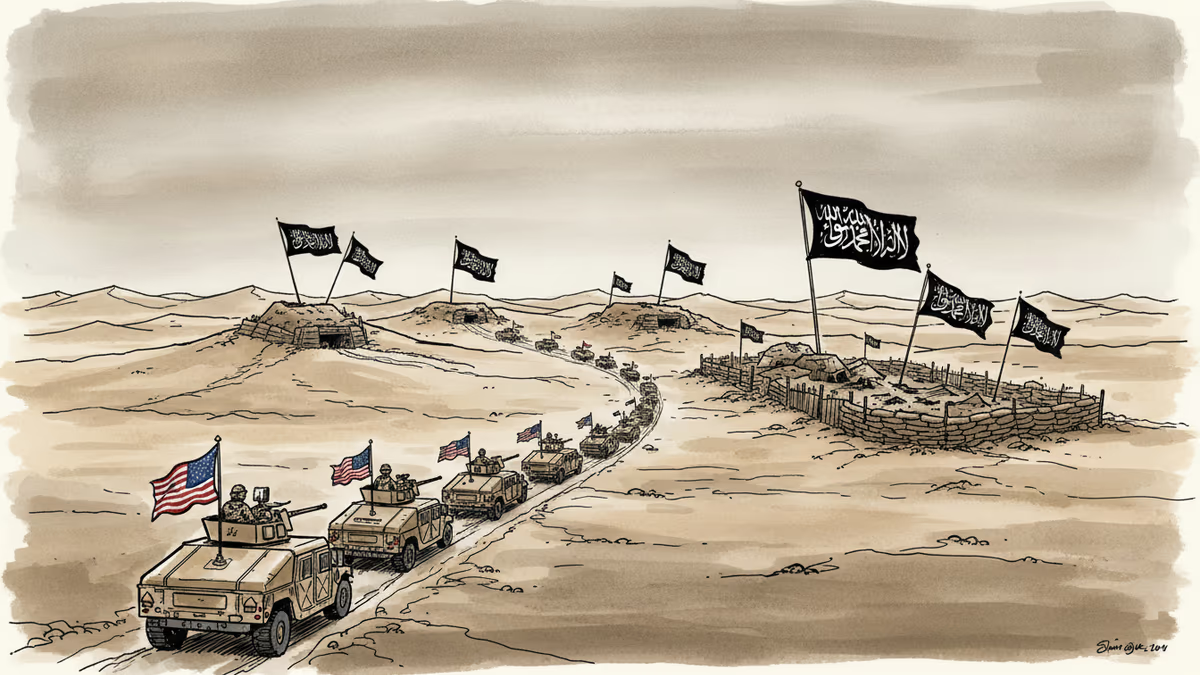
After retaliatory airstrikes against ISIS targets in Syria, US forces are accelerating their withdrawal by transferring thousands of detainees to Iraq and abandoning key bases. What does this mean for Middle East stability?
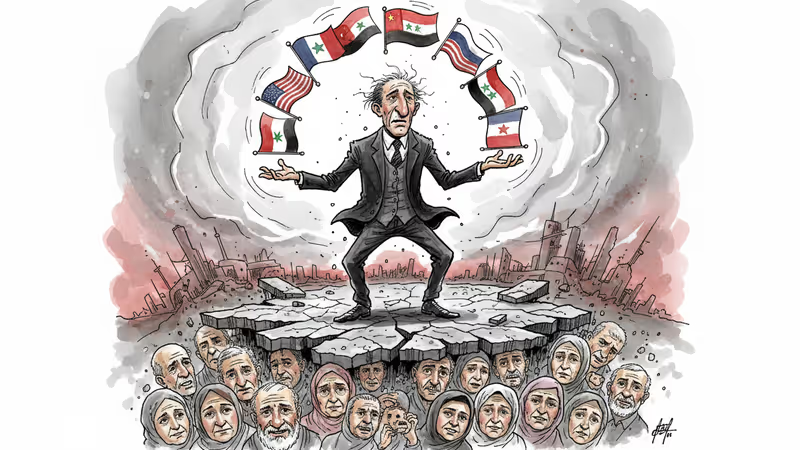
While al-Shara's administration has achieved remarkable international rehabilitation, domestic exclusion of minorities and opposition groups threatens Syria's fragile stability.
With the Strait of Hormuz effectively blocked by the Iran conflict, Syria is emerging as an alternative energy corridor. What this means for global energy markets and Middle East geopolitics.
Over 80 women, mostly Alawites, reported kidnapped since Assad's fall. Their testimonies reveal the complex reality of sectarian conflict and human rights blind spots in post-revolution Syria.
After retaliatory airstrikes against ISIS targets in Syria, US forces are accelerating their withdrawal by transferring thousands of detainees to Iraq and abandoning key bases. What does this mean for Middle East stability?
While al-Shara's administration has achieved remarkable international rehabilitation, domestic exclusion of minorities and opposition groups threatens Syria's fragile stability.
Thoughts
Share your thoughts on this article
Sign in to join the conversation